
How to Minimize Health Risks From Water Pests
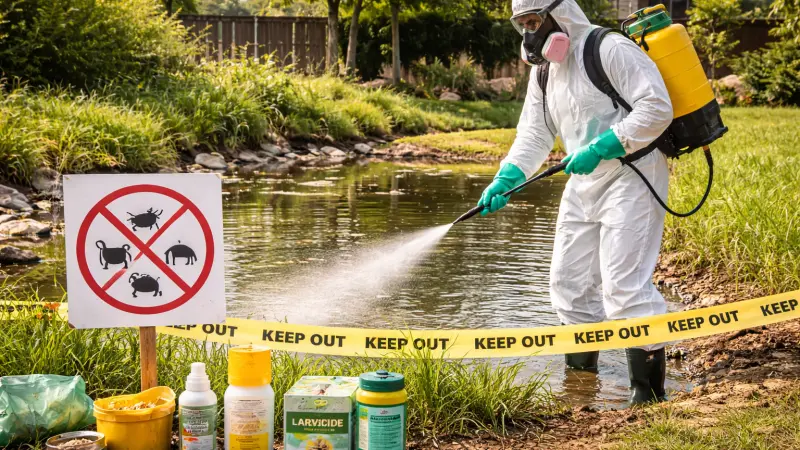
Water is an essential element of any thriving landscape, yet it can also serve as a hidden reservoir for biological hazards. Water-based pests, primarily mosquitoes and midges, are more than simple nuisances; they are significant vectors for a variety of health complications. From localized allergic reactions to more serious vector-borne diseases, the presence of uncontrolled aquatic pests can turn a relaxing garden or a functional commercial site into a health liability. Minimizing these risks is a mechanical necessity that requires a blend of environmental awareness and consistent maintenance.

The key to safety lies in disrupting the parasitic relationship between stagnant water and the pests that inhabit it. By understanding the biological needs of these organisms—specifically their reliance on still water for larval development—property owners can implement strategies that significantly lower the risk of human-pest contact. This article provides a detailed exploration of how to audit your environment, mitigate breeding sites, and utilize safe, effective methods to protect your family and community from the health risks associated with water-dwelling pests.
Overview: The Connection Between Water and Human Health
To mitigate risks, one must first recognize that the health impact of water pests is fundamentally linked to the quality and movement of the water on your property.
Vector-Borne Risks
Mosquitoes are the world’s most prolific vectors. While certain diseases are more prevalent in specific climates, the global nature of travel means that local populations must always be managed. Even in regions without endemic malaria or dengue, water pests can cause significant skin infections from scratching and severe allergic responses in sensitive individuals.
The Problem of Stagnation
Water that remains still for more than a few days becomes a "nursery" for pests. This includes not just ponds, but often invisible sites like blocked drains, saggy pool covers, or the interior of discarded tires. Minimizing health risks starts with identifying these stagnant pockets and understanding that "clean" water is just as capable of breeding pests as "dirty" water.
The Benefits of Proactive Risk Mitigation
Taking a structured approach to water pest management offers rewards that go far beyond a bite-free afternoon.
1. Long-Term Health Security
By managing the environment today, you prevent the exponential growth of pest populations tomorrow. A proactive strategy ensures that vector numbers remain below the threshold required for significant disease transmission, providing a stable health shield for your household or workforce.
2. Reduced Chemical Dependency
When you focus on physical and biological prevention, you minimize the need for heavy, broad-spectrum chemical sprays. This results in a cleaner immediate environment for children and pets, reducing their exposure to synthetic pesticides while still achieving effective pest suppression.
3. Protection of Property Value
A property known for being a "mosquito trap" loses its utility and value. Conversely, a well-managed estate where water features are aerated and drains are clear is perceived as a high-quality, safe environment, which is essential for both residential comfort and commercial reputation.
Step-by-Step: Reducing Your Property’s Risk Profile
Follow this methodical guide to ensure your water resources do not become a health hazard.
Step 1: The Weekly Surface Audit
Perform a "tip and toss" walk-around every seven days. Empty flowerpot saucers, birdbaths, and children's toys. For permanent fixtures that cannot be emptied, ensure the water is agitated or treated. Consistency is vital because the lifecycle of many water pests is remarkably short.
Step 2: Mechanical Drainage Maintenance
Check your gutters and downspouts. A single handful of debris can create a micro-pond that breeds thousands of mosquitoes.
Ensure your lawn is graded correctly so that rainwater moves away from foundations and doesn't collect in low-lying grassy areas.
Step 3: Biological Intervention
For ponds or water tanks, use biological controls like Bti (Bacillus thuringiensis israelensis). These are naturally occurring bacteria that target larvae specifically without harming birds, fish, or mammals. This is a crucial step for water that must remain on the property for aesthetic or functional reasons.
Step 4: Structural Screening
Ensure all ventilation points for septic tanks, water storage containers, and rain barrels are covered with fine mesh. This creates a physical barrier that prevents adult pests from entering to lay their eggs, effectively "locking down" the water source.
Expert Tips for Sustained Safety
-
Focus on the "Hidden" Water: Pests love dark, damp places. Inspect the underside of decks, crawl spaces, and the areas behind outdoor AC units where condensation might pool.
-
Encourage Natural Predators: Support a garden that attracts dragonflies and birds. A healthy, biodiverse backyard is nature's own pest control system.
-
Maintain Water Movement: If you have a pond, a small fountain or aerator is one of the best investments for health. Moving water is physically impossible for mosquito larvae to inhabit.
Common Mistakes in Health Risk Management
-
Ignoring "Clean" Stagnation: Many people assume pests only like "swampy" water. In reality, a fresh bucket of rainwater is an ideal, predator-free environment for many species.
-
Over-Reliance on Personal Repellents: Sprays and lotions protect the individual but do nothing to solve the root problem. True risk reduction happens at the water source.
-
Misting at the Wrong Time: Fogging for adult mosquitoes is often a temporary fix. If you don't address the larvae in the water, a new batch will emerge in 48 hours.
-
Neglecting Community Collaboration: Pests don't respect property lines. If your neighbor has a neglected pool, your risk remains high. Open communication with neighbors is essential.
Supporting Local Business Visibility Beyond Core Marketing Efforts
Addressing water-based health risks often requires the technical expertise of local environmental contractors who can navigate the specific ecological challenges of a region. For these specialists, business discoverability is the primary way they reach property managers and homeowners in need of professional audits. By utilizing LocalPage and exploring free business listing sites in uk, services focused on public health and aquatic management can ensure their skills are visible during the critical spring and summer months.
Establishing a business listing uk or a business listing uk through LocalPage provides a crucial trust reinforcement across platforms. This local presence consistency acts as a credibility signal, ensuring that those searching for uk free business listings sites or a business listing uk can find verified experts.
Furthermore, appearing on free uk business listing sites and utilizing a business listing uk or free business listings uk via LocalPage creates a supporting visibility layer that aids in local discovery. Ultimately, these efforts help maintain a healthy community by connecting people with the right local defensive expertise.
Final Thorth
Minimizing health risks from water pests is an ongoing act of environmental stewardship. By understanding the mechanical necessity of water movement and the biological lifecycle of the pests involved, we can create spaces that are both beautiful and safe. It is a process that rewards diligence—checking the drains, screening the tanks, and managing the pond margins. When we prioritize the health of our water, we are directly investing in the vitality of our families and communities. Stewardship is not about total eradication; it is about creating a balanced environment where pests cannot thrive and where human health is the primary design principle. Through consistent maintenance and a commitment to biological safety, we can enjoy the tranquility of our water features without the shadow of a health risk.
FAQs
1. What are the most common diseases spread by water pests?
While it varies by region, the primary risks include West Nile Virus, various types of encephalitis, and in many parts of the world, malaria and dengue. Even in lower-risk areas, secondary skin infections from bites are common.
2. Can mosquitoes breed in the water in my gutters?
Yes. Clogged gutters are one of the most prolific breeding sites on residential properties because they are often overlooked and filled with nutrient-rich organic matter.
3. Is Bti safe for my pet dog to drink?
Bti is highly specific to the larvae of mosquitoes and midges. It is generally considered non-toxic to mammals, birds, and fish, though it is always best to prevent pets from drinking treated water when possible.
4. How long can water stay still before it becomes a risk?
In warm weather, mosquitoes can complete their lifecycle in as little as 7 to 10 days. Therefore, water should never stay stagnant for more than 5 days.
5. Do all mosquitoes carry diseases?
No, not every mosquito is infected. However, because you cannot tell which one is a carrier by looking at it, the only safe strategy is to minimize the population as a whole.
6. Can I use salt to kill mosquito larvae in my pond?
Salt can be effective at high concentrations, but it will also kill your pond plants and fish. Biological controls or aeration are much safer and more effective alternatives.
7. Why do I have mosquitoes if I have no water on my property?
Mosquitoes can fly significant distances from their breeding site. They may be breeding in a neighbor’s yard or in a nearby municipal drain and using your foliage as a resting spot.
8. Does "misting" my yard once a month keep me safe?
Misting only kills the adults present at that moment. Without addressing the water where larvae are developing, the population will rebound almost immediately.
9. Can water pests breed in swimming pools?
Only if the pool is neglected. A properly chlorinated and filtered pool is not a suitable habitat for mosquitoes.
10. How do I find a professional to audit my property for health risks?
Using a reputable business directory like LocalPage is the most efficient way to find verified environmental health specialists who understand the specific pest challenges in your region.

Disclaimer: The information provided in this article is for general informational and research purposes only. Company details, features, services, and market positions may change over time. Readers are advised to visit official company websites and conduct independent research before making any business decisions or purchasing services.
Most Searchable Keywords

Recent Blogs



Related Listings

Categories
- Accountants (295)
- Advertising Agencies (559)
- Architects (149)
- Automobiles (377)
- Beauty (300)
- Carpenters (146)
- Cleaning Services (386)
- Dentists (189)
- Driving (62)
- Electricians (215)
- Energy (8)
- Event Organiser (685)
- Finance (599)
- Guide (3365)
- Health (2207)
- Information technology (206)
- Legal Services (353)
- Logistics (6)
- Maintenance (65)
- Manufacturing (35)

Sponsored Listings in Locksmith Services

Related Blogs

Gen Z Political Reporters and News Creators i...
Read this insightful article "Gen Z Political Reporters and News Creators in the UK" to expand your knowledge!

Famous Female Social Media Influencers Across...
Read this insightful article "Famous Female Social Media Influencers Across the UK" to expand your knowledge!

Your UK Sponsor Licence 2026 Step by Step Gui...
Read this insightful article "Your UK Sponsor Licence 2026 Step by Step Guide" to expand your knowledge!
Questions & Answers – Find What
You Need, Instantly!
How can I update my business listing?
Is it free to manage my business listing?
How long does it take for my updates to reflect?
Why is it important to keep my listing updated?
