
How to Start a Profitable Home Cleaning Business UK 2026 Guide
- 👤 Alex
- 👁️ 122 Views
- Last Updated: March 24, 2026
- 🏷️ Cleaning Services
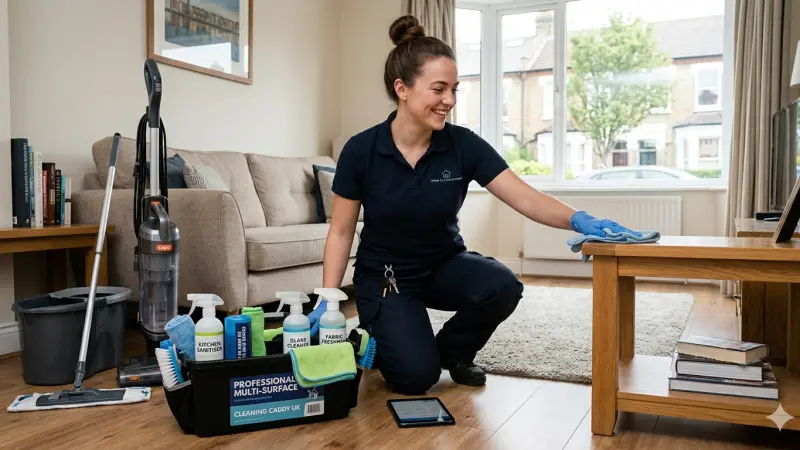
A Comprehensive 2026 Blueprint for Entrepreneurial Success

The UK Domestic Cleaning Market: An Unparalleled Opportunity
The domestic cleaning sector in the United Kingdom is currently witnessing a renaissance. As the "sandwich generation"—those balancing full-time careers with the care of both children and ageing parents—continues to grow, the outsourcing of household chores has shifted from being a luxury for the ultra-wealthy to a essential service for the middle-class professional. In 2024, the demand for reliable, high-quality residential cleaning has never been higher, yet the market remains fragmented, often occupied by unreliable or under-insured operators.
This gap in the market represents a significant opportunity for a savvy entrepreneur. Starting a home cleaning business in the UK doesn't just offer "pocket money"; it offers a path to a highly profitable career with profit margins that would make a Silicon Valley startup envious. When run correctly as a solo venture or a small partnership, the domestic cleaning business is a masterclass in efficiency, with low barriers to entry and immediate cash flow.
95%
Potential Net Profit Margin
£1.2B+
UK Domestic Cleaning Market Value
£15-£25
Average Hourly Rate (UK)
The Logic of Profitability: Why It Works
The core of this business’s profitability lies in the "Service-to-Overhead Ratio." Unlike retail, there is no stock to spoil. Unlike hospitality, there are no expensive premises to maintain. In a home cleaning service, you are essentially selling your expertise and time, with the only "raw materials" being cleaning fluids and equipment that last for hundreds of hours of use.
The author’s experience from decades ago still holds a fundamental truth: grossing substantial sums with expenses hovering around 3% to 5% is entirely achievable today. In a modern UK context, if you generate £50,000 in turnover as a solo operator, your actual expenses—fuel, insurance, and consumables—might only total £2,500 for the year. The remainder is yours. Compare this to a franchise or a large-scale agency where management fees, staff wages, and office rent can swallow 80% of the revenue.
Operational Parameters: Defining Your Niche
One of the primary causes of business failure is "scope creep"—the tendency to say yes to every request regardless of expertise.
To maintain high profitability, you must define rigid parameters for your service. By specialising, you become more efficient, your equipment stays light, and your risk remains low.
The "Surface-Only" Strategy
A highly profitable model focuses on what we call "General Maintenance Cleaning." This includes kitchens, bathrooms, dusting, and floor care. Why ignore carpet steam cleaning or external window washing in the early stages? Because they require heavy, expensive machinery, specialised transport (like a dedicated van), and a higher level of insurance. By sticking to domestic surfaces, you can operate out of a small hatchback, keeping your fuel and insurance costs at the bare minimum.
Targeting the Right Geography
Profitability is also a function of travel time. In the UK, high-density residential areas or affluent "commuter belt" towns are ideal. If you spend 45 minutes driving between jobs, you are losing money. A profitable cleaner targets a specific 3-to-5 mile radius, allowing for "back-to-back" bookings where travel time is less than 10 minutes. This increases your billable hours significantly without adding to your workload.
HMRC, Legal Framework & Insurance in the UK
Operating "under the radar" is a recipe for disaster. To build a sustainable, trusted brand, you must align with UK regulations from day one. This professionalism allows you to charge premium rates that cash-in-hand cleaners simply cannot demand.
Self-Employment and HMRC
You must register as a Sole Trader with HMRC. You will be responsible for paying Class 2 and Class 4 National Insurance contributions and Income Tax through the Self Assessment system. It is vital to keep digital records of every expense—from the sponges you buy at Tesco to the mileage on your car. Apps like QuickBooks or Sage are popular in the UK for this purpose, and since "Making Tax Digital" (MTD) is expanding, being digital-first is a smart move.
Insurance: Your Non-Negotiable Safety Net
A single accident, such as scratching a granite worktop or a client tripping over a vacuum cable, can bankrupt an uninsured business. In the UK, you need Public Liability Insurance. Most clients will ask to see your certificate before handing over their keys. For a solo cleaner, a £1 million cover policy is the standard baseline, often costing as little as £120 per year. If you decide to work as a duo and hire someone, Employers' Liability Insurance becomes a legal requirement.
DBS Checks and Trust
In the UK, a "Basic DBS check" is a background check that confirms you have no unspent criminal convictions. While not legally mandatory for cleaning a private home, it is a powerful psychological tool. Presenting a clean DBS certificate during a consultation instantly sets you apart as a "Vetted Professional," justifying a higher hourly rate.
The Pro-Cleaner's Toolkit: Investing for Efficiency
While we emphasize low overheads, you should never skimp on the tools that directly impact your speed and the quality of the finish. In the UK, the "Henry" or "Hetty" vacuum (Numatic) is an industry icon for a reason—they are virtually indestructible and perform excellently on most domestic surfaces.
Essential Supplies
- High-quality Microfibre cloths (Colour-coded for hygiene)
- Eco-friendly multi-surface cleaners (Method or Ecover)
- Professional-grade glass cleaner
- White vinegar and Bicarbonate of soda (for natural descaling)
- High-performance Mop system (Vileda or similar)
Safety & Admin Gear
- Durable rubber gloves
- Wet floor hazard signs (for polished floors)
- Key-safe or secure key-coding system
- Portable card reader (SumUp or Zettle)
- First-aid kit for the car
Psychological Pricing: Hourly Rate vs. Fixed Fee
One of the most debated topics in the UK cleaning industry is pricing. While the "National Living Wage" sets a floor, your ceiling should be determined by the value you provide. A profitable service avoids the "race to the bottom" on price.
The "Service Pack" Model
Instead of saying "I charge £18 an hour," consider offering a "Weekly Maintenance Pack" for a fixed fee of £55. If the job takes you 2.5 hours, your effective hourly rate is £22.
As you become more skilled and efficient, you can finish the same quality of work in 2 hours, raising your effective rate to £27.50. This rewards your efficiency rather than punishing it.
Regional Price Indexing
Pricing must reflect your local UK market. A cleaner in Central London may charge £25-£30 per hour, whereas someone in a rural village in the North East may find £15-£18 more realistic. Conduct thorough competitor research—call other agencies as a "prospective client" to understand the local price ceiling.
Customer Acquisition: Building the "Trust Engine"
In domestic cleaning, word-of-mouth is the ultimate marketing channel. However, you need an initial "engine" to get those first five clients. In the UK, local digital communities are exceptionally active and are the best place to start.
The "Nextdoor" and Facebook Strategy: Join local community groups. Instead of posting a generic "I am a cleaner, hire me" message, offer value. Post a tip on "How to remove limescale from UK kettles" or "The best way to clean Victorian tiles." Establish yourself as an expert. When someone eventually asks for a recommendation, your name will be the first one mentioned.
The "Golden Review" Loop: Once you have a client, your goal is to get a Google or Facebook review immediately. In the UK, consumers are highly influenced by "social proof." A profile with 20 five-star reviews allows you to charge 20% more than a competitor with none.
Efficiency & Managing Growth Without the Stress
There comes a point where your schedule is full. You have two choices: hire staff or raise prices. For a high-profit "lifestyle business," the second option is often better. By raising your prices, you might lose your "cheapest" clients, but you replace them with higher-paying ones, making the same money for less work.
If you do choose to grow, consider the "Partnership" model. Working with a spouse or a trusted colleague allows you to tackle larger homes (4-5 bedrooms) much faster. In the UK, two cleaners working for 3 hours is often perceived as better value than one cleaner working for 6 hours, as the disruption to the homeowner’s day is halved.
Contracts, Keys and Administration
Professionalism is reinforced by the "small things." Providing a branded invoice and having a clear policy on "Key Holding" builds massive confidence. In the UK, many cleaners use a "Service Agreement" that outlines what happens if a client cancels at the last minute.
A 50% cancellation fee for less than 24 hours' notice is a standard and fair industry practice to protect your income.
Expert Frequently Asked Questions
Only if your annual turnover exceeds the VAT threshold, which is currently £90,000. Most solo or duo domestic cleaners stay comfortably below this. If you are not VAT registered, you cannot charge VAT to your clients, which makes you 20% cheaper than large agencies for residential customers.
Stick to your parameters. If a client asks you to clean an oven that is heavily carbonised or to climb a ladder to clean a chandelier, politely decline and refer them to a specialist. Taking on high-risk, low-expertise jobs is the fastest way to lose money through damage or injury.
While some older clients prefer cash, BACS (bank transfer) is the standard for modern UK businesses. It creates an automatic paper trail for your tax returns and eliminates the risk of carrying large amounts of cash. Using a portable card reader like Zettle or SumUp is also highly recommended for "one-off" deep cleans.
Ensure your "Terms of Service" are signed (digitally or on paper) during the initial consultation. Explicitly state that "No-shows" or "Lock-outs" will be charged at the full rate. If they value your time, they will respect this; if they don't, they are not the right client for a profitable business.
It is safer to use your own. You know your equipment is well-maintained and safe (PAT tested). Using a client's old or faulty vacuum can be slow, ineffective, or even dangerous. Bringing your own equipment also reinforces the "Professional Service" image.
Portable Appliance Testing (PAT) is the examination of electrical appliances to ensure they are safe to use. While not a strict legal requirement for solo traders, many UK insurers and "high-end" clients expect it. It usually costs about £2-£5 per item and gives you a "Safety Passed" sticker for your vacuum and steamer.
Domestic cleaning is physically demanding. Invest in a lightweight vacuum, use long-handled mops to avoid excessive bending, and always wear supportive footwear. Remember, in this business, your body is your most important asset.
In the UK, you can either claim a percentage of your actual car running costs (fuel, insurance, tax) or use the HMRC "Flat Rate" mileage allowance (currently 45p per mile for the first 10,000 miles). The mileage allowance is usually simpler and often more tax-efficient for small businesses.
Always charge a higher premium for the first visit. A "Initial Deep Clean" usually takes twice as long as a weekly maintenance clean.
This brings the house up to your standard, making subsequent visits much more profitable.
Use a "Key Holding Agreement" form. Never put the client's address on the key tag; use a code instead. Many UK homeowners now prefer to install a "Key Safe" outside their home, which is the safest option for both parties.

Disclaimer: The information provided in this article is for general informational and research purposes only. Company details, features, services, and market positions may change over time. Readers are advised to visit official company websites and conduct independent research before making any business decisions or purchasing services.
Most Searchable Keywords

Recent Blogs
-

Explore Supermarkets in Chepstow and the Surrounding Wye Valley
-
Elite Guide to Taxi and Private Hire Services in Hereford
-
Explore Fuel and Roadside Convenience Across Beckington Today
-
Explore Abergavenny Tyre Services with Expert Local Fitters
-
Claim Your HMRC UK Tax Refund Before Application Deadlines


Related Listings
-
Platinum Exterior Cleaning
-
End of Tenancy Cleaning Agency
-
Royal Cleaning
-
FastKlean
-
Fantastic Services


Categories
- Accountants (295)
- Advertising Agencies (559)
- Architects (149)
- Automobiles (376)
- Beauty (300)
- Carpenters (146)
- Cleaning Services (386)
- Dentists (189)
- Driving (61)
- Electricians (215)
- Energy (7)
- Event Organiser (683)
- Finance (597)
- Guide (3358)
- Health (2205)
- Information technology (206)
- Legal Services (352)
- Logistics (6)
- Maintenance (65)
- Manufacturing (35)

Sponsored Listings in Cleaning Services

Related Blogs

Explore Supermarkets in Chepstow and the Surr...
Read this insightful article "Explore Supermarkets in Chepstow and the Surrounding Wye Valley" to expand your knowledge!

Elite Guide to Taxi and Private Hire Services...
Read this insightful article "Elite Guide to Taxi and Private Hire Services in Hereford" to expand your knowledge!

Explore Fuel and Roadside Convenience Across...
Read this insightful article "Explore Fuel and Roadside Convenience Across Beckington Today" to expand your knowledge!
Questions & Answers – Find What
You Need, Instantly!
How can I update my business listing?
Is it free to manage my business listing?
How long does it take for my updates to reflect?
Why is it important to keep my listing updated?
