
Imports Exports And Transportation A UK Kids Guide to Global Trade
Have you ever looked at the bottom of your favorite plastic dinosaur, the tag on your school jumper, or even the sticker on your breakfast banana? If you look closely, you will often see words like "Made in China," "Product of Spain," or "Designed in the UK."
When you go to a shop in the UK—whether it’s a big supermarket like Tesco, a toy shop like Hamleys, or a local corner shop—you give the shopkeeper money, and they give you an item in return. This simple act is called trade. You are trading your pocket money for a new toy or a snack.
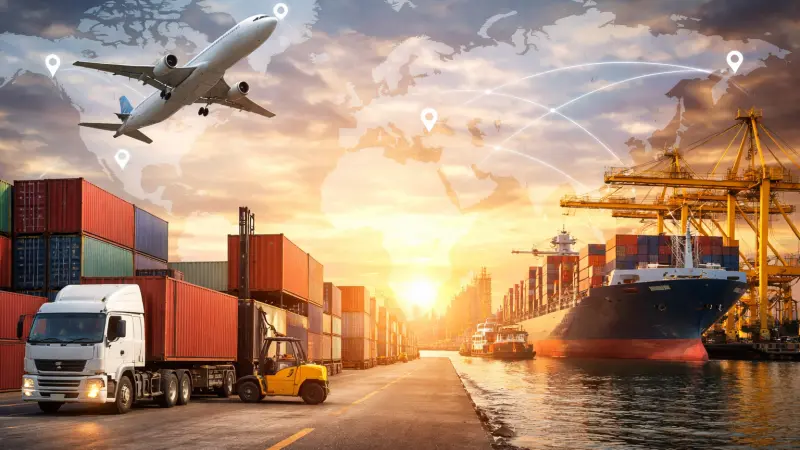
But have you ever stopped to wonder how that toy actually got to the shelf in the first place? It didn’t just appear there by magic! It had to travel across vast oceans, through massive English ports, along our busy motorways, and perhaps even on a rattling freight train. This is the story of how the world stays connected through buying, selling, and moving things.
The Language of Trade: What are Imports and Exports?
To understand how your stuff gets to you, we need to learn two very important "Econ-words."
Like people, countries trade with each other. Because the United Kingdom is an island, we are very good at trading with other countries across the sea.
What is an Import?
When the UK buys something from another country and brings it into our country, it is called an import.
-
Think of it this way: The prefix "Im-" sounds like "In." So, an Import is something coming In.
-
Example: Most of the bananas we eat in the UK don't grow here because it’s too cold! We buy them from sunny places like Colombia or Costa Rica. When those bananas arrive at a UK port, they are imports.
What is an Export?
When the UK sells something we made here to another country and sends it out, it is called an export.
-
Think of it this way: The prefix "Ex-" sounds like "Exit." So, an Export is something Exiting the country.
-
Example: The UK is famous for making amazing cars, like Mini Coopers or Land Rovers. When a car made in a factory in Oxford is sent to a family in France or America, that car is an export.
Why do we Trade?
You might wonder: "Why doesn't the UK just make everything itself?" Well, some things are hard to grow here (like pineapples and cocoa beans for chocolate). Other times, another country might have a special factory or a specific skill that makes them really good at building something, like smartphones or high-tech computers. By trading, countries can share what they are best at making, and everyone gets to have the things they need and want.
The Great Voyage: Ports and Giant Ships
Imagine your favorite toy was made in a factory in a city in China. That factory is thousands of miles away from your house in the UK. To get here, it has to go on a massive adventure.
The Starting Point: The Foreign Port
First, the toy is packed into a sturdy cardboard box. Then, that box is put into a massive metal box called a container.
These containers are like giant LEGO bricks for grown-ups! They are all the same size so they can be stacked perfectly.
The container is taken to a port. A port is a special place on the coast where land meets the sea, specifically designed for big ships to dock. In China, ports like Shanghai are some of the busiest in the whole world.
The Container Ship (The Ocean Giant)
Your toy is lifted by a humongous crane and placed onto a container ship (also called a cargo ship or a freighter). These ships are absolutely enormous—some are as long as four football pitches! They can carry thousands of containers at once.
The ship then begins its long journey. To get to the UK from China, the ship has to sail across the Indian Ocean, through a narrow gap called the Suez Canal in Egypt, across the Mediterranean Sea, and finally into the Atlantic Ocean before reaching the British Isles. This journey can take about 30 to 40 days. That’s over a month of sailing!
Welcome to Britain: The UK's Gateway Ports
When the ship finally arrives in the UK, it doesn't just pull up at a beach. It has to go to a massive, high-tech port.
Felixstowe: The UK’s Busiest Port
If you live in the East of England, you might have heard of Felixstowe. It is the biggest container port in the UK. Almost half of all the containers coming into the UK arrive here!
Other Important UK Ports
-
Southampton: Located on the south coast, this port handles lots of cars (exports going out and imports coming in) and is also famous for cruise ships.
-
London Gateway: A very modern port on the River Thames that uses lots of robots and automatic cranes to move containers.
-
Liverpool: An important port in the North West that connects the UK to America and Ireland.
-
Immingham: A huge port on the east coast (near Hull) that handles lots of energy supplies like oil and coal.
The Unloading Process
At the port, giant "Quayside Cranes" reach out over the ship. The crane operators are very skilled; they use a special frame called a "spreader" to lock onto the corners of a container and lift it high into the air, swinging it onto the dock. It’s like a giant game of "The Claw" at an arcade, but with things that weigh as much as several elephants!
On the Move: Trains, Trucks, and Logistics
Once your toy is off the ship and on British soil, it still isn't at the toy shop. It has to travel the "Last Mile."
The Warehouse: The Giant Waiting Room
Often, containers are taken to a warehouse or a "Distribution Centre." These are massive buildings, often found near motorways like the M1 or M6. Inside, workers (and sometimes robots!) open the containers, take out the boxes, and organize them. Your toy might sit in a warehouse for a few days until the toy shop is ready for a delivery.
Freight Trains: The Steel Highway
Have you ever been stuck at a railway crossing and watched a very long train go past with big colorful boxes on it? Those are freight trains.
-
Container Branding: Look closely at the sides of the containers. You will see names like Maersk (usually blue), MSC (usually yellow), Hapag-Lloyd (orange), or COSCO (blue/white).
These are the names of the shipping companies that own the ships and the containers.
-
Double Stacking? In America, they often stack two containers on top of each other on a train. In the UK, we usually only stack them one high because our bridges and tunnels were built a long time ago and are too low for "double-stacked" trains!
The Heavy Goods Vehicle (HGV)
The final part of the journey is usually on a lorry or a truck. In the UK, we call these HGVs (Heavy Goods Vehicles). A lorry driver will back their trailer under a container or a pallet of boxes at the warehouse, secure it tightly, and drive it down the motorway to your local town.
The UK’s Special Exports: What do we send Out?
Trade isn't just about us buying things from other people. The UK makes a lot of amazing things that the rest of the world wants to buy. Remember, these are our exports.
1. Cars and Engines
We mentioned Mini and Land Rover, but we also make world-famous luxury cars like Bentley, Rolls-Royce, and McLaren. We also build engines for huge airplanes!
2. Video Games and Movies
Did you know that some of the world's most famous video games (like Grand Theft Auto or Forza Horizon) and movies (like Star Wars or James Bond) are made right here in the UK? When people in Japan or Canada pay to play a British game or watch a British movie, that is an "invisible" export of our skills and creativity.
3. Food and Drink
The UK exports things like Scottish Salmon, Welsh Lamb, and English cheese (like Cheddar!) to fancy restaurants all over the world.
4. Medicines and Science
British scientists are very good at inventing new medicines. When a UK company creates a vaccine or a cure for a cough and sells it to hospitals in Africa or Asia, that is a life-saving export.
Why is Transportation Important?
Without transportation, our lives would be very different.
-
Choice: Because of ships and planes, you can choose from hundreds of different toys and books.
-
Freshness: Because of fast trucks and refrigerated containers, we can have fresh milk and fruit every day.
-
Jobs: Millions of people in the UK work in trade. This includes ship captains, crane operators, lorry drivers,
Also Read: How to Appeal School Decision UKwarehouse workers, and the people who work in the shops where you buy your things.
The Environment and Trade
Moving all these things around the world uses a lot of fuel, which can be tough on our planet. This is why many shipping companies are now trying to build ships that use wind power or cleaner fuels, and why more goods are being moved by trains (which are better for the environment than lots of small vans).
A Fun Activity: Become a Trade Detective!
Next time you are at home or in a shop, you can be a Trade Detective.
-
Check the Label: Look at five items in your kitchen or toy box. Where were they made?
-
Map it Out: Find a map of the world. Can you find the UK? Can you find the countries where your items came from?
-
Trace the Route: If something came from Vietnam, how did it get here? (Hint: It probably went through the South China Sea, the Indian Ocean, and docked at Felixstowe!)
-
The Export Challenge: Can you think of one thing that is made in your town or city that might be sent to another country?
The Global Connection
The next time you hold a toy, eat a piece of fruit, or put on your shoes, remember the incredible journey they have taken.
They started as an idea, were built in a factory (perhaps halfway around the world), were packed into a giant metal container, sailed across stormy seas on a massive ship, were lifted by giant cranes in a UK port like Felixstowe, traveled down our motorways in a big lorry, and finally landed in your hands.
The UK is part of a giant, global team where every country helps provide the things we need. That is the magic of Imports, Exports, and Transportation!
Glossary of Terms:
-
Trade: Swapping one thing for another (usually goods for money).
-
Import: A product brought into the UK from another country.
-
Export: A product sent out of the UK to be sold elsewhere.
-
Port: A place where ships load and unload goods.
-
Container: A large, standard-sized metal box used for transporting goods.
-
Cargo: The actual goods being carried by a ship, train, or plane.
-
Logistics: The detailed organization of moving things from one place to another.
Disclaimer: The information provided in this article is for general informational and research purposes only. Company details, features, services, and market positions may change over time. Readers are advised to visit official company websites and conduct independent research before making any business decisions or purchasing services.
Most Searchable Keywords
Recent Blogs


Related Listings

Categories
- Accountants (295)
- Advertising Agencies (559)
- Architects (149)
- Automobiles (377)
- Beauty (300)
- Carpenters (146)
- Cleaning Services (387)
- Dentists (189)
- Driving (62)
- Education (1)
- Electricians (215)
- Energy (8)
- Event Organiser (687)
- Finance (602)
- Guide (3482)
- Health (2207)
- Information technology (206)
- Legal Services (361)
- Logistics (6)
- Maintenance (65)
Sponsored Listings in Plumbers


Related Blogs

Ghost Brokers Fake Car Insurance Scam Explain...
Read this insightful article "Ghost Brokers Fake Car Insurance Scam Explained" to expand your knowledge!

UK Baby Names Fastest Rising and Falling Name...
Read this insightful article "UK Baby Names Fastest Rising and Falling Names" to expand your knowledge!

How to Claim for Pothole Damage From Your Cou...
Read this insightful article "How to Claim for Pothole Damage From Your Council" to expand your knowledge!
Questions & Answers – Find What
You Need, Instantly!
How can I update my business listing?
Is it free to manage my business listing?
How long does it take for my updates to reflect?
Why is it important to keep my listing updated?
