
Microsoft UK Job Cuts: Impact of Global Restructuring
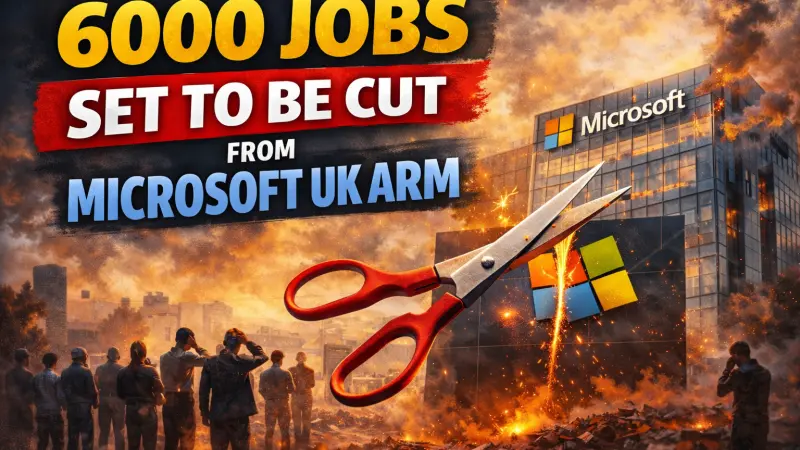
In a significant move that reflects the broader volatility of the global technology sector, Microsoft has announced a major restructuring plan involving the reduction of approximately 6,000 roles worldwide. For the UK arm of the business, these cuts mark a pivotal moment in the company's transition from traditional software services to an AI-first infrastructure model.
The Strategy Behind the Numbers
Despite reporting record profits, Microsoft’s leadership, led by CEO Satya Nadella, has emphasized that these reductions are strategic rather than reactive. The 6,000 job cuts—roughly 3% of the company's global workforce—are designed to "flatten" the organization and eliminate layers of middle management.
Efficiency Drive: The goal is to increase agility by reducing bureaucracy and streamlining decision-making processes.
Capital Realignment: Funds previously allocated to these roles are being redirected toward
massive investments in AI hardware, specifically GPUs and data center expansion.
Not Performance-Related: The company has clarified that the layoffs are a result of organizational restructuring and do not reflect the performance of the individuals affected.
Impact on the UK Workforce
While the 6,000 figure is global, the UK offices in London, Reading, and Manchester are expected to see a proportional impact. The "UK arm" has historically been a hub for sales, marketing, and Azure cloud operations—all sectors identified as primary targets for this efficiency drive.
Management Layers: Senior and middle-management roles are expected to bear the brunt of the cuts as the company moves toward a leaner reporting structure.
Support and Operations: Overlapping corporate functions and administrative roles are being consolidated or automated using internal AI tools.
Talent Redistribution: Analysts expect many of these highly skilled workers to be absorbed into the UK’s thriving tech startup ecosystem, particularly in Fintech and HealthTech.
The Role of AI and Automation
Ironically, the same technology Microsoft is selling to the world is playing a role in its internal downsizing. Microsoft AI CEO Mustafa Suleyman recently noted that many white-collar tasks—including project management and marketing—will see increased automation over the next 18 months.
The restructuring is viewed by some as a "soft layoff" tool to encourage a shift toward high-priority AI projects.
By automating routine administrative tasks, Microsoft aims to empower a smaller, more specialized workforce to focus on the next generation of "human-level" AI performance.
Looking Ahead: The 2026 Landscape
As the 2026 fiscal year progresses, Microsoft remains a financial powerhouse with a $4 trillion valuation. However, these job cuts signal a "messy" transition period for the tech industry at large.
Focus on Copilot: The company is betting its future on the mass adoption of Copilot and other generative AI agents.
Leaner Operations: Investors are cautiously optimistic that a leaner Microsoft will be
better positioned to dominate the enterprise AI market.
Workforce Sentiment: For the remaining "survivors," the focus has shifted to upskilling in AI-assisted workflows to remain relevant in a rapidly evolving job market.
Disclaimer: The information provided in this article is for general informational and research purposes only. Company details, features, services, and market positions may change over time. Readers are advised to visit official company websites and conduct independent research before making any business decisions or purchasing services.
Most Searchable Keywords
Recent Blogs


Related Listings

Categories
- Accountants (295)
- Advertising Agencies (559)
- Architects (149)
- Automobiles (377)
- Beauty (300)
- Carpenters (146)
- Cleaning Services (387)
- Dentists (189)
- Driving (62)
- Electricians (215)
- Energy (8)
- Event Organiser (686)
- Finance (602)
- Guide (3374)
- Health (2207)
- Information technology (206)
- Legal Services (354)
- Logistics (6)
- Maintenance (65)
- Manufacturing (35)
Sponsored Listings in Travel Agencies


Related Blogs

Meet the Fair Work Agency Changing UK Work Ru...
Read this insightful article "Meet the Fair Work Agency Changing UK Work Rules in 2026" to expand your knowledge!

Collective Redundancy Errors Now Carry Higher...
Read this insightful article "Collective Redundancy Errors Now Carry Higher 2026 Penalties" to expand your knowledge!

Explore Dog Friendly Walks in the Cotswolds f...
Read this insightful article "Explore Dog Friendly Walks in the Cotswolds for 2026" to expand your knowledge!
Questions & Answers – Find What
You Need, Instantly!
How can I update my business listing?
Is it free to manage my business listing?
How long does it take for my updates to reflect?
Why is it important to keep my listing updated?
