
Point of Use vs Whole House Water Systems UK Guide
Have you ever paused to consider the journey your tap water takes before it reaches your glass or shower head? In the United Kingdom we are fortunate to have access to some of the highest quality drinking water in the world yet many households still find themselves debating the merits of additional filtration. The central dilemma often revolves around whether to install point of use vs whole house water systems to manage specific concerns such as limescale heavy metals or chlorine byproducts. Making an informed choice requires a deep understanding of how these technologies differ in scope maintenance and long term efficiency within a British domestic context.

Understanding the Fundamental Differences in Water Filtration
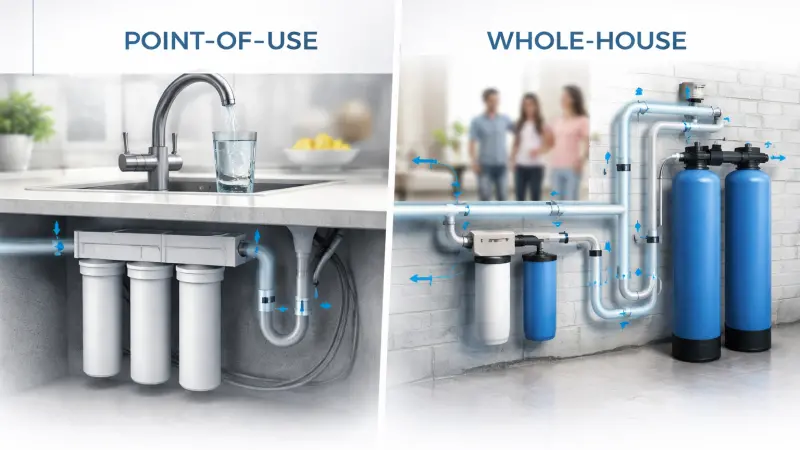
Water purification in the home generally falls into two distinct categories based on where the treatment occurs. Point of use systems often abbreviated as POU are designed to treat water at a single specific outlet such as a kitchen sink or a bathroom tap. These are highly targeted solutions ideal for improving the taste and safety of drinking water. Conversely whole house systems or point of entry POE units are installed where the main water line enters the property. This ensures that every single drop of water used within the building from the garden hose to the master ensuite shower has undergone the same level of treatment.
The choice between these two approaches depends heavily on the primary goals of the homeowner. If the concern is purely the flavour of tea or the clarity of drinking water a small under sink filter might suffice. However if the objective is to protect the entire plumbing infrastructure from the aggressive effects of hard water or to ensure chemical free bathing then a comprehensive whole house installation becomes a necessity. Each system has its own set of technical requirements and economic implications that must be weighed carefully against the unique water profile of your local area.
The Mechanics of Point of Use Systems
Point of use filtration is perhaps the most common entry point for UK consumers looking to enhance their water quality. These systems are typically compact and can be installed with minimal disruption to existing pipework. Common examples include jug filters faucet mounted devices and sophisticated reverse osmosis units tucked away inside kitchen cupboards. Because they only process a fraction of the total water used in a home the filtration media can be extremely fine and specialized without causing a significant drop in pressure across the rest of the house.
Reverse Osmosis and Activated Carbon
Many POU systems utilise activated carbon blocks which are incredibly effective at removing chlorine pesticides and organic compounds that affect taste and odour. For those seeking the highest level of purity reverse osmosis systems provide a multi stage process that forces water through a semi permeable membrane. This level of filtration removes almost all dissolved solids including fluoride and nitrates. While highly effective these systems often require a dedicated faucet and produce a small amount of waste water which is a factor to consider for the environmentally conscious homeowner.
Exploring Whole House Water Purification
A whole house system represents a significant investment in the property itself. By treating water at the point of entry these systems provide a uniform standard of water throughout the home. This is particularly beneficial in regions of the UK plagued by hard water. In places like South East England and the East Midlands high mineral content can lead to rapid scale buildup in kettles boilers and washing machines. A whole house softener or filter prevents this damage before it can even start protecting expensive appliances and reducing the need for aggressive chemical descalers.
Sediment and Chemical Removal on a Large Scale
Whole house filters usually consist of large tanks filled with various media. A common setup might include a sediment pre filter to catch rust and silt followed by a large carbon bed to remove chlorine and chloramines. This ensures that when you step into the shower your skin and hair are not exposed to the drying effects of disinfectants used by water utilities. Furthermore it eliminates the smell of chlorine from all taps making the home environment more pleasant overall. These systems are robust but require professional installation and sufficient space near the internal stopcock.
Comparative Analysis Performance and Capability
When comparing point of use vs whole house water systems performance is a primary metric. POU systems generally offer more intensive filtration for drinking purposes because they do not have to maintain the high flow rates required for showers or baths.
You can achieve a much higher level of purity at a single tap for a lower initial cost. However this means the water in your shower remains untreated which may be an issue for individuals with sensitive skin or respiratory conditions aggravated by chlorine vapours.
Whole house systems offer the convenience of treated water everywhere but the level of filtration is often less granular than a POU reverse osmosis system. While they excel at removing broad contaminants and minerals they might not achieve the same "polished" taste that a dedicated drinking water filter provides. Many homeowners find that the ideal solution is a hybrid approach using a whole house system for general protection and a POU system in the kitchen for premium drinking water.
Installation and Maintenance Requirements
Maintenance is an inevitable part of owning any water purification system. For point of use units this usually involves changing small cartridges every six to twelve months. This is a simple task that most people can perform themselves without tools. The cost of these filters is relatively low but they must be replaced regularly to prevent bacterial growth and ensure continued effectiveness.
Whole house systems require a different maintenance schedule. Depending on the technology used you might need to add salt pellets to a softener every month or replace large filter media every few years. While the intervals between major maintenance are longer the tasks can be more physically demanding or require a service visit from a qualified technician. It is essential to factor in these ongoing costs and the time commitment when choosing a system for your household.
Financial Considerations and ROI
From a budgetary perspective point of use systems are the more accessible option. A high quality under sink filter can be purchased and installed for a few hundred pounds. This provides an immediate improvement in drinking water quality and can save money over time by eliminating the need for bottled water. It is a cost effective way to address specific concerns without a major financial layout.
Whole house systems carry a higher upfront cost often running into the thousands when professional installation is included. However the return on investment can be substantial. By preventing limescale buildup these systems extend the life of boilers and appliances potentially saving thousands in repair and replacement costs over a decade. Additionally soft water requires less soap and detergent to achieve a lather which can reduce monthly grocery bills. For long term homeowners the whole house approach often proves more economical despite the initial price tag.
Impact on Lifestyle and Home Value
The choice of water system can also influence your daily lifestyle. Softened or filtered water throughout the house means less time spent scrubbing limescale off shower screens and taps. It can lead to softer skin and more manageable hair which are significant benefits for many families. Furthermore a professionally installed whole house water treatment system can be an attractive feature for potential buyers if you decide to sell your property in the future as it demonstrates a commitment to home maintenance and quality of life.
Common Myths and Misconceptions
There are several misconceptions surrounding water filtration in the UK. One common myth is that all tap water is identical across the country. In reality water chemistry varies significantly by region. Another myth is that water filters remove essential minerals.
While some systems like reverse osmosis do remove minerals the vast majority of our mineral intake comes from food not water. Understanding the science behind these systems helps in ignoring marketing fluff and focusing on the actual benefits provided by the technology.
Environmental Implications
Both types of systems contribute to a more sustainable lifestyle by reducing the reliance on single use plastic bottles. The UK consumes billions of plastic bottles annually many of which end up in landfills or the ocean. By producing high quality water at home you significantly lower your carbon footprint. While reverse osmosis systems produce some waste water modern units are becoming increasingly efficient and the overall environmental impact is still far lower than the production and transport of bottled water.
Technical Specifications to Look For
When shopping for a system look for certifications such as the WRAS approval in the UK which ensures the product meets high safety standards. Check the micron rating of the filters; a lower micron rating indicates the ability to trap smaller particles. For whole house systems ensure the flow rate is sufficient for your household size so that you do not experience a drop in pressure when multiple taps are running simultaneously.
The Role of Professional Advice
Given the complexity of plumbing and water chemistry consulting with a professional is often wise. A qualified plumber or water treatment specialist can test your water and recommend a system that specifically addresses the contaminants or mineral levels found in your local supply. This prevents the mistake of buying an over-specified system or one that fails to solve your primary issues.
Health Benefits of Filtered Water
While UK tap water is safe to drink removing trace contaminants can have subtle health benefits. Reducing chlorine exposure can help those with eczema or asthma. Removing heavy metals like lead which can still be present in older internal pipework is a clear safety advantage for families with young children. Pure water also encourages better hydration as people are more likely to drink water that tastes clean and refreshing.
Future Trends in Domestic Water Treatment
The industry is moving towards smarter systems that can monitor filter life and water usage in real time via smartphone apps. We are also seeing the development of more eco friendly filter media that lasts longer and is easier to recycle. As technology advances the gap between the convenience of point of use and the power of whole house systems continues to narrow providing more options for the modern consumer.
Final Thoughts on System Selection
Choosing between point of use and whole house water systems is ultimately a personal decision based on your specific needs budget and home configuration. If you only care about your morning coffee go for a point of use filter.
If you want to protect your home and enjoy a spa like experience in every room a whole house system is the way forward. In both cases you are making a positive step towards better health and a more efficient home.
Improving Your Home Management Strategy
Managing a household efficiently requires staying informed about the best tools and services available in your local area. Whether you are looking for a qualified plumber to install your new purification system or seeking ways to enhance your home's infrastructure finding reliable professionals is key. Exploring a business listing uk can be an excellent starting point for discovering reputable local experts who can assist with your home improvement projects. For those running businesses in the water treatment sector or related trades utilizing free business directories uk is a strategic move to increase visibility. Platforms like Local page UK provide a valuable resource for connecting homeowners with service providers ensuring that whether you need advice on a uk business directory free or an online business directory uk free you can find the right support to keep your home running smoothly.
Frequently Asked Questions
Can I install a whole house system myself?
While some confident DIY enthusiasts might attempt it we generally recommend professional installation for whole house systems. This involves cutting into the main rising water pipe and ensuring all connections are watertight to avoid flooding risks and comply with local water regulations.
Does a point of use filter remove limescale?
Standard carbon point of use filters do not remove the minerals that cause limescale. To address limescale at a single tap you would need a specific ion exchange filter or a reverse osmosis system. For comprehensive limescale protection a whole house softener is much more effective.
How often do I need to change the filters?
For most point of use systems the filters should be replaced every six months. Whole house sediment filters might last up to a year while larger media tanks can function for five to ten years depending on usage and water quality.
Will these systems affect my water pressure?
A correctly sized system should not have a noticeable impact on your water pressure. However if a whole house filter is too small for the property or if the filters become clogged you may experience a decrease in flow rate especially at upstairs taps.
Are water softeners and water filters the same thing?
No they serve different purposes. A water softener specifically targets calcium and magnesium to prevent limescale. A water filter targets chemicals bacteria and sediment to improve safety and taste. Many whole house systems combine both technologies for the best results.
Is filtered water better for indoor plants?
Yes many indoor plants are sensitive to the chlorine and fluoride found in tap water.
Using filtered water can prevent leaf tip burn and help your more delicate botanical specimens thrive.
Do I still need to boil water if I have a filter?
In the UK tap water is already microbiologically safe so boiling is not usually necessary. However if there is a local "boil water notice" issued by your utility company you should follow their advice regardless of whether you have a domestic filter unless you have a specialized UV sterilization system.

Disclaimer: The information provided in this article is for general informational and research purposes only. Company details, features, services, and market positions may change over time. Readers are advised to visit official company websites and conduct independent research before making any business decisions or purchasing services.
Most Searchable Keywords

Recent Blogs



Related Listings




Categories
- Accountants (295)
- Advertising Agencies (559)
- Architects (149)
- Automobiles (376)
- Beauty (300)
- Carpenters (146)
- Cleaning Services (386)
- Dentists (189)
- Driving (61)
- Electricians (215)
- Energy (8)
- Event Organiser (684)
- Finance (598)
- Guide (3363)
- Health (2205)
- Information technology (206)
- Legal Services (352)
- Logistics (6)
- Maintenance (65)
- Manufacturing (35)

Sponsored Listings in Plumbers

Related Blogs

Bristol Firework Displays Every Local Should...
Read this insightful article "Bristol Firework Displays Every Local Should Experience" to expand your knowledge!

Self Assessment Registration 2026 Common Erro...
Read this insightful article "Self Assessment Registration 2026 Common Errors and Rules" to expand your knowledge!

Calculate Your 2026 Employer National Insuran...
Read this insightful article "Calculate Your 2026 Employer National Insurance Bill Easily" to expand your knowledge!
Questions & Answers – Find What
You Need, Instantly!
How can I update my business listing?
Is it free to manage my business listing?
How long does it take for my updates to reflect?
Why is it important to keep my listing updated?
