
Solar Panel Grants UK: Your Essential Guide to Free Government Funding
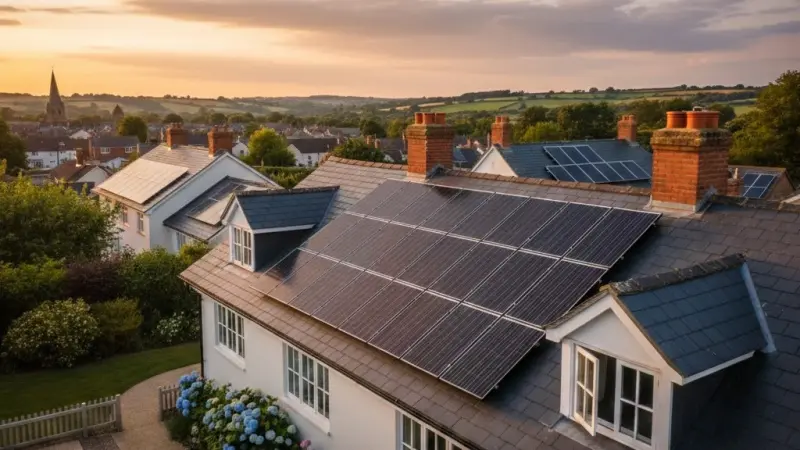
Solar panel grants in the UK provide vital financial assistance to homeowners and tenants looking to reduce their carbon footprint and energy costs. Currently, the most significant funding route is the Energy Company Obligation (ECO4) scheme, which can cover the full cost of installation for eligible low-income or vulnerable households. Additionally, the Home Upgrade Grant (HUG2) supports homes off the gas grid. While the previous Green Homes Grant has closed, the government continues to incentivise solar through zero-rated VAT on installations and the Smart Export Guarantee (SEG). By accessing these grants, qualifying residents can eliminate the high upfront costs of renewable technology, potentially saving over £500 annually on electricity bills while contributing to the UK’s net-zero targets for a sustainable future.
For those wondering how to qualify for a solar panel grant in the UK, the process typically hinges on your property's current energy efficiency rating and your personal financial circumstances. Most successful applicants reside in homes with an EPC rating of D, E, F, or G and receive specific means-tested benefits. Local authorities also manage "Flexible Eligibility" routes for those not on benefits but facing fuel poverty. Securing these funds is the most effective way to transition to clean energy without the traditional financial burden.
Financial Assistance for Renewable Energy Adoption
The landscape of renewable energy funding in the United Kingdom has shifted significantly towards targeted support for those who need it most. Rather than universal rebates, current schemes focus on deep retrofitting, ensuring that solar panels are part of a broader strategy to make homes thermally efficient. This holistic approach prevents energy waste and ensures the maximum possible return on the solar investment. Understanding these mechanisms is the first step toward energy independence and long-term financial stability.
The Energy Company Obligation Framework
The ECO4 scheme is the cornerstone of the government’s current strategy to combat fuel poverty. Large energy suppliers are legally mandated to fund energy-saving measures for households that meet strict criteria. Unlike previous iterations, ECO4 prioritises a "multi-measure" approach. This means that if you qualify for solar panels, you might also receive upgraded insulation or advanced heating controls. This ensures that the electricity generated by your new solar array isn't being used to heat an inefficient, drafty home, thereby maximising the environmental and financial benefits for the resident.
Specific Eligibility Requirements
To access this specific tier of funding, a member of the household must typically receive benefits such as Income Support, Pension Credit, or Universal Credit. Furthermore, the property must be deemed inefficient enough to warrant the intervention. Assessment involves a professional survey to determine the feasibility of solar PV installation on your specific roof type and orientation.
Home Upgrade Grant Opportunities for Rural Properties
For homeowners living in properties that are not connected to the mains gas grid, the Home Upgrade Grant (HUG2) offers a significant lifeline. Rural areas often face higher energy costs due to a reliance on expensive electric heating or oil. This grant is specifically designed to bridge the gap between urban and rural energy parity. By providing capital for solar installations, the scheme helps those in the countryside transition away from fossil fuels, providing a hedge against the volatile prices of traditional heating oils and bottled gas.
Application Channels via Local Authorities
HUG2 is delivered by local councils rather than national energy companies. This localized delivery model allows for a more tailored approach to the unique housing stock found in different regions of the UK. Prospective applicants should contact their local authority’s energy hub to express interest. The funding is often released in waves, so staying informed about your council’s specific deadlines and budget allocations is crucial for a successful application. This route is particularly beneficial for traditional stone cottages or older farmhouses that require substantial upgrades.
Property Standards and Assessments
Successful applications require the property to have an Energy Performance Certificate (EPC) rating within the lower tiers. If your home hasn't been assessed recently, the grant process usually includes a new survey to verify the current state of the building. This professional oversight ensures that the solar system is sized correctly for your family's needs and the building’s structural capacity.
Value Added Tax Incentives for Residential Installations
While direct grants are targeted at specific demographics, the UK government has introduced a broader incentive that applies to all homeowners. Until March 2027, the VAT on the installation of energy-saving materials, including solar panels and battery storage, has been reduced to zero per cent. This represents an immediate saving of twenty per cent compared to standard tax rates. This incentive significantly shortens the payback period for those who do not qualify for means-tested grants but still wish to invest in their home’s future.
Impact on Total System Costs
The removal of VAT applies to both the materials and the labour costs of the installation. For a standard four-kilowatt system, this could equate to a saving of over one thousand pounds. This tax break is a clear signal from the Treasury that residential solar is a priority for the national infrastructure.
It encourages those with savings to move their capital into an asset that provides a tax-free "yield" through reduced utility bills, which is often more lucrative than traditional savings accounts in the current economic climate.
Combining Tax Relief with Other Schemes
It is important to note that the zero-rate VAT can be combined with other incentives like the Smart Export Guarantee. While you pay less for the installation upfront, you can still earn money for the surplus electricity you send back to the grid. This dual-benefit approach makes the financial case for solar stronger than it has been in decades, even without a direct cash grant from the local council or energy supplier.
Revenue Generation via the Smart Export Guarantee
The Smart Export Guarantee (SEG) is not a grant in the traditional sense, but it is a government-mandated mechanism that ensures you get paid for the energy you produce. All energy suppliers with more than one hundred and fifty thousand customers are required by law to offer an export tariff to solar owners. This means that every unit of electricity your panels generate that you do not use yourself becomes a source of income. It transforms your home from a mere consumer of energy into a micro-power station.
Comparing Market Export Tariffs
The rates offered under the SEG vary significantly between different suppliers. Some may offer a modest three pence per kilowatt-hour, while others, particularly those focusing on green energy, might offer fifteen pence or more. Smart homeowners should shop around for the best export rate, as you are not required to have your import and export contracts with the same company. Switching your export provider can significantly boost the annual earnings of your solar array, helping the system pay for itself much faster.
Role of Smart Metering
To participate in the SEG, your property must be equipped with a smart meter capable of communicating half-hourly export data. This technology ensures that you are paid accurately for what you actually contribute to the grid. Without a smart meter, you cannot prove your export volumes, making this a mandatory prerequisite for anyone looking to monetise their roof space. Most installers will assist with the necessary paperwork to get your system registered for these payments.
Strategic Planning and Step by Step Guidance
Navigating the world of grants requires a methodical approach to ensure you don't miss out on available funds. The first step is always to verify your property's current EPC rating via the official government register. If your rating is higher than a D, you may need to look at tax incentives rather than direct grants. Once you have established your eligibility, you should gather evidence of any qualifying benefits or household income statements to streamline the application process with your chosen provider or local council.
Selecting Accredited Installation Partners
For any grant-funded work, the installation must be carried out by a company registered with the Microgeneration Certification Scheme (MCS). This accreditation is the industry gold standard and a mandatory requirement for both grants and the Smart Export Guarantee. Using an unaccredited installer will immediately disqualify you from any government funding or export payments. Always ask to see an installer’s MCS certificate and check their reviews on independent platforms to ensure they have a history of quality workmanship and reliable aftercare.
Understanding the Technical Survey
Before any panels are fitted, a surveyor will visit your home to check the roof’s structural integrity and the condition of your electrical consumer unit. They will also look for shading issues from nearby trees or chimneys that could impact performance. This survey is the time to ask questions about the expected yield of your system and how the battery storage, if included, will interact with your daily energy usage patterns. A thorough survey prevents hidden costs from emerging during the installation phase.
Common Pitfalls and Mistakes to Avoid
One of the most frequent mistakes homeowners make is falling for high-pressure sales tactics from companies claiming to offer "free" solar panels that are actually hidden long-term leases. These "rent-a-roof" schemes can complicate the process of selling your home and may not offer the same financial benefits as a government-backed grant. Always verify that a "free" offer is tied to a legitimate scheme like ECO4 or HUG2. If a company asks for a large upfront deposit for a grant-funded installation, proceed with extreme caution and verify their credentials.
Checking Structural Compatibility Early
Another common oversight is failing to check the age and condition of the roof before applying for a grant. If your roof needs replacing in five years, it is counterproductive to install solar panels now, as they will have to be removed and reinstalled at a significant cost.
Many grants do not cover roof repairs, only the solar system itself. Ensuring your roof is in good condition ensures that your solar investment remains undisturbed for its twenty-five-year expected lifespan, maximizing the total energy savings achieved.
Avoiding Inadequate System Sizing
Some residents attempt to save money by opting for a smaller system than they actually need. However, the labour and scaffolding costs are largely the same regardless of the number of panels. Under-sizing your system means you will still rely heavily on the grid during peak times, reducing your overall savings. Use your annual electricity statement to calculate your average daily usage and ensure the proposed solar array is designed to meet at least sixty to seventy per cent of that demand during daylight hours.
Technological Evolution and Future Outlook
The efficiency of solar panels is increasing every year, with new "n-type" and "perovskite" technologies promising even higher yields from smaller areas. As the UK moves towards 2030 and beyond, we can expect solar grants to become increasingly integrated with electric vehicle charging and heat pump technology. The "smart home" of the future will automatically direct solar power to where it is needed most, whether that is heating your water or charging your car, further reducing reliance on external energy suppliers.
Integration with National Grid Demand
In the coming years, residential solar owners will play a more active role in balancing the national grid. We are likely to see "time-of-use" grants where homeowners are incentivised to install batteries that can discharge power during national peaks. This decentralised energy model will make the UK’s energy infrastructure more resilient and less dependent on imported gas. Investing in solar now positions your household at the forefront of this energy revolution, ensuring you are prepared for the transition to a fully electrified economy.
The Transition to Community Energy
We may also see the rise of community solar grants, where entire streets or neighbourhoods apply for funding together. This collective approach can lower costs through bulk purchasing and shared infrastructure. As local authorities take more control over their energy destiny, these community-led projects will likely become a primary focus for government green funding, fostering a sense of local pride and collective action against the climate crisis while providing tangible financial relief to all participants.
Maximising the Return on Your Solar Investment
Securing the grant is only half the battle; the other half is changing your energy habits to match your production. To get the most out of your panels, you should shift high-energy tasks—like running the dishwasher or washing machine—to the middle of the day when the sun is at its peak. This "self-consumption" is more valuable than exporting energy, as you avoid paying the retail price for electricity. Monitoring apps provided by most modern inverters can help you track your production in real-time, making it easier to adjust your lifestyle accordingly.
Benefits of Adding Battery Storage
While many basic grants focus on the panels, adding a battery can transform your savings. A battery allows you to store the energy generated during the day for use in the evening, potentially increasing your self-consumption from thirty per cent to over eighty per cent. While batteries are not always fully covered by every grant, the zero-rated VAT applies to them, making them a worthy addition. Having a battery also provides a level of protection against future energy price spikes and potential grid instability, offering true peace of mind.
Long Term Maintenance and Care
Solar panels are remarkably low-maintenance, but they aren't "set and forget." Annual inspections to check for debris, bird nesting, or electrical wear and tear will ensure the system operates at peak efficiency. Most systems come with a ten-year warranty for the inverter and a twenty-five-year warranty for the panels, but these often require proof of professional installation and occasional maintenance.
Keeping your panels clean, especially in areas with high pollution or bird activity, can prevent "hotspots" and maintain the high yield necessary to justify the initial grant funding.
FAQ
Who is eligible for a free solar panel grant in the UK?
Eligibility for free solar panels primarily depends on your household income and property efficiency. Under the ECO4 scheme, if someone in your home receives means-tested benefits like Universal Credit or Pension Credit and your EPC rating is D or lower, you may qualify. Additionally, the Home Upgrade Grant targets low-income households off the gas grid. Local authorities also have flexible rules for those in fuel poverty without benefits.
Can I get a solar grant if I am a tenant?
Yes, tenants can benefit from solar grants, but they must have the explicit permission of their landlord. Under the ECO4 scheme, both social housing and private rental tenants can qualify if they meet the income and benefit criteria. Landlords are often supportive as the installation increases the property value and EPC rating at no cost to them, while the tenant enjoys significantly lower monthly electricity bills.
How much money can I save with solar panels in the UK?
A typical UK household with a standard solar array can save between £400 and £600 per year on electricity bills at current price levels. These savings increase if you add a battery to store daytime energy for evening use. Furthermore, through the Smart Export Guarantee, you can earn an additional £100 to £150 annually by selling excess power back to the grid, making the total annual benefit quite substantial.
Do I need planning permission for solar panels on my roof?
In most cases, solar panels are considered "Permitted Development" and do not require formal planning permission in the UK. However, there are exceptions for properties in Conservation Areas, AONBs, or for Listed Buildings. In these instances, you should consult your local planning office. Even under permitted development, panels must be installed in a way that minimises their effect on the external appearance of the building and the local area.
What happens to the grant if I decide to move house?
The solar grant is tied to the property, not the individual who applied for it. Once the panels are installed, they become a permanent fixture of the home. This usually adds significant value to your property and makes it more attractive to potential buyers who are looking for energy-efficient homes. You do not have to pay back the grant when you sell, as the funding was intended to improve the UK’s national housing stock.
Disclaimer: The information provided in this article is for general informational and research purposes only. Company details, features, services, and market positions may change over time. Readers are advised to visit official company websites and conduct independent research before making any business decisions or purchasing services.
Most Searchable Keywords
Recent Blogs


Related Listings

Categories
- Accountants (295)
- Advertising Agencies (559)
- Architects (149)
- Automobiles (377)
- Beauty (300)
- Carpenters (146)
- Cleaning Services (387)
- Dentists (189)
- Driving (62)
- Education (1)
- Electricians (215)
- Energy (8)
- Event Organiser (687)
- Finance (602)
- Guide (3434)
- Health (2207)
- Information technology (206)
- Legal Services (361)
- Logistics (6)
- Maintenance (65)
Sponsored Listings in Plumbers


Related Blogs

Driving Test Waiting Times How to Get Seen So...
Read this insightful article "Driving Test Waiting Times How to Get Seen Sooner" to expand your knowledge!

How to SORN Your Car Rules Refunds and Fines
Read this insightful article "How to SORN Your Car Rules Refunds and Fines" to expand your knowledge!

Employment Rights Act Changes Full UK Timelin...
Read this insightful article "Employment Rights Act Changes Full UK Timeline" to expand your knowledge!
Questions & Answers – Find What
You Need, Instantly!
How can I update my business listing?
Is it free to manage my business listing?
How long does it take for my updates to reflect?
Why is it important to keep my listing updated?
