
Home Electricity Scams How to Spot Unlimited Energy Frauds
- 👤 Alex
- 👁️ 314 Views
- Last Updated: March 24, 2026
- 🏷️ Electricians
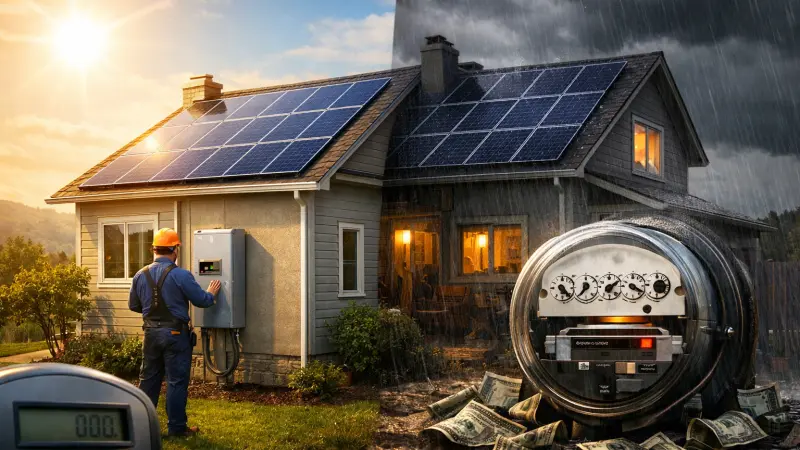
Have you ever encountered a social media advertisement promising "unlimited home electricity" for a small monthly flat fee, regardless of your actual consumption? In an era where the cost of living and utility prices dominate the national conversation in the United Kingdom, such offers appear as a financial lifeline. However, the laws of physics and the strict regulatory framework of the UK energy market suggest that if an offer seems too good to be true, it almost certainly constitutes a sophisticated fraudulent scheme.
The transition toward renewable energy and the proliferation of smart technology have created a "grey area" that digital fraudsters are increasingly exploiting. By leveraging the public's general understanding that solar power is "free" once installed, scammers are convincing vulnerable households to part with their hard-earned money in exchange for non-existent energy contracts. This comprehensive guide dissects the anatomy of home electricity scams, providing the technical and practical knowledge required to protect your household and finances.
The Myth of "Unlimited" Power in a Grid-Connected World
To understand why "unlimited electricity" is a fraudulent concept for the average consumer, one must first understand the fundamental economics of the National Grid. Electricity is a commodity that must be generated, balanced, and transmitted in real-time. Whether it is produced through gas-fired power stations, offshore wind farms in the North Sea, or nuclear plants, there is a tangible cost associated with every kilowatt-hour (kWh) delivered to your doorstep.
The Solar Energy Paradox
Scammers often lead with the premise that "The Sun is Free." While solar radiation is indeed a limitless resource, the infrastructure required to capture, convert, and store that energy is not. A domestic Photovoltaic (PV) system has a fixed maximum capacity. Even a highly efficient 4kWp system can only generate a finite amount of electricity based on daylight hours and weather conditions. Once a household exceeds the generation of their panels, they must draw from the grid at standard market rates. Therefore, any third party claiming to provide "unlimited" access to solar energy without installing physical hardware on your property is misrepresenting the basic mechanics of energy production.
Energy Supply vs. Energy Generation
In the UK, there is a clear distinction between the Distribution Network Operator (DNO)—the entities that maintain the physical cables—and the Energy Suppliers, who buy energy on the wholesale market to sell to you. Both of these entities have overheads. An "unlimited" plan would represent a massive financial risk to any legitimate supplier, as they would be liable for the wholesale costs of whatever volume a customer chooses to consume. This is why legitimate "unlimited" tariffs are virtually non-existent in the current UK market, replaced instead by "fixed-rate" or "capped" deals that still monitor usage.
The 15-Year Perspective How Legitimate Energy Companies Operate
Industry veterans understand that the energy sector operates on razor-thin margins. Historically, it takes a significant period—often between three to six months—for an energy supplier to break even on the acquisition of a new customer. This period covers the administrative costs of switching, the setup of metering, and the initial procurement of energy on the customer's behalf.
Because of these thin margins, legitimate companies prioritize customer retention and creditworthiness. In the United Kingdom, while credit checks are standard for "pay monthly" contracts, the focus is on ensuring the customer can sustain the ongoing costs of their energy habits.
If a provider shows zero interest in your credit history, your identity, or your previous energy consumption patterns, they are not operating a sustainable business model; they are likely harvesting data or preparing for a "push payment" fraud.
Identifying Red Flags: An Anatomy of a Social Media Energy Scam
The rise of platforms like Facebook, Instagram, and TikTok has provided a low-cost, high-reach environment for scammers to pose as "energy brokers" or "independent agents." Through a recent investigation into these "unlimited energy" ads, several consistent red flags have emerged that every consumer should be aware of.
1. The Use of Non-Existent Company Entities
Fraudsters frequently operate under vague, generic names like "Direct Energy Solutions UK" or "Eco-Power Unlimited." These names are designed to sound authoritative and official. However, a quick search on Companies House or the Ofgem (Office of Gas and Electricity Markets) list of licensed providers usually reveals that no such entity exists. Legitimate energy suppliers in the UK must hold a specific license to supply electricity to domestic premises.
2. Absence of Digital Infrastructure
In the 21st century, a legitimate energy supplier will have a robust, secure website. This site should include a "Customer Portal," a clear privacy policy, and detailed Terms and Conditions. Scammers often rely solely on social media pages or "Linktree" sites. If the "company" does not have a professional website with a registered UK domain (.co.uk or .org.uk), you are likely dealing with a fraudulent setup.
3. Minimal Information Requirements
A standard energy switch requires a significant amount of data: your Meter Point Administration Number (MPAN), your current supplier details, and accurate historical usage data. If a "sales agent" only asks for your name and address, they are not setting up an energy contract. They are likely using your address to find out which legitimate supplier is currently serving that property to perform a "hostile switch" or simply taking your money for a service they have no intention of providing.
The Psychological Trap: Why Consumers Fall for Energy Scams
Scammers are masters of social engineering. They exploit "Pain Points" in the consumer's life—specifically the fear of rising bills and the desire for "green" energy. By framing their scam as a "Solar Farm Initiative" or a "Government-backed Energy Loophole," they bypass the victim's critical thinking. They create a sense of exclusivity, suggesting that this "deal" is only available through their specific social media link and not on comparison websites like MoneySuperMarket or Uswitch.
Furthermore, they utilize fake social proof. Many of these fraudulent posts are flooded with "bot" comments claiming, "I've been on this plan for six months
and haven't paid a penny over £50!" These comments are designed to build a false sense of security and community trust.
A Practical Checklist: How to Verify an Energy Offer
Before engaging with any "agent" online, perform the following due diligence steps to ensure your financial safety:
- Verify the Ofgem License: Every legal energy supplier in the UK must be listed on the Ofgem website. If they aren't there, they cannot legally sell you electricity.
- Check the PUC/Company Number: Ask the agent for their company registration number. Cross-reference this on the Companies House website to see their filing history and registered office.
- Investigate the Social Media Profile: A profile created three weeks ago with stock images of solar panels is a major warning sign. Look for a history of genuine engagement and a long-term presence.
- Search for "Scam" Reviews: Type the name of the company followed by the word "scam" into a search engine. Often, forums like Trustpilot or Reddit will already have threads warning other users.
- Review the Payment Structure: Legitimate utilities use Direct Debit, which offers protection under the Direct Debit Guarantee. Never pay for utilities via bank transfer to an individual.
Technological Realities: Why Unlimited Electricity is Not Yet Possible
It is helpful to compare electricity to other home services like broadband or mobile data. While we have "unlimited data" plans, these are possible because the marginal cost of sending one extra gigabyte over a fibre-optic cable is nearly zero once the infrastructure is built. The "hub" already exists, and the data is essentially a digital signal.
Electricity is physical energy. It requires the consumption of fuel (gas, biomass) or the physical rotation of turbines (wind, hydro). There is a direct, linear cost to production. For a company to offer "unlimited" electricity, they would need a breakthrough in energy storage (batteries) or fusion technology that simply does not exist on a commercial scale for domestic use in 2024. Even homes with extensive solar arrays are limited by the capacity of their inverters and the chemical limitations of their battery storage systems.
The Role of Solar Farms and Community Energy
While solar farms are a genuine solution to the climate crisis, they do not offer "free" energy to individuals through social media links. Community energy projects allow local residents to invest in a solar farm and receive a credit on their bills, but this is always handled through established, regulated partnerships with licensed suppliers. It is never a "pay-by-app" transaction with a stranger on Facebook.
Steps to Take if You Have Been Scammed
If you have already shared information or sent money to a fraudulent
energy agent, time is of the essence. Follow these steps immediately:
- Contact Your Bank: If you paid via bank transfer or card, notify your bank's fraud department. They may be able to freeze the transaction or recover funds under the Contingent Reimbursement Model (CRM) if they are a signatory.
- Report to Action Fraud: Contact the UK’s national reporting centre for fraud and cybercrime. This helps the police track and shut down the scammers' infrastructure.
- Check Your Credit Report: If you provided personal details (SSN, ID, Date of Birth), monitor your credit file through services like Experian or ClearScore to ensure the scammers aren't attempting to take out loans in your name.
- Secure Your Energy Account: Contact your actual current energy supplier to ensure no unauthorized "switches" have been initiated on your meter.
Conclusion: The Path to Safe Energy Consumption
The transition to a greener economy is an exciting development, but it requires a high degree of consumer vigilance. Fraudsters will continue to hide behind the "Unlimited Energy" promise as long as energy prices remain a concern for households. Remember that the UK energy market is one of the most strictly regulated in the world; legitimate savings are found through efficiency, insulation, and regulated tariffs—not through "secret deals" on social media.
By staying informed, questioning "impossible" offers, and verifying every agent's credentials, you can protect your home and ensure your energy budget is used effectively. The only truly "unlimited" thing in these scams is the audacity of the scammers. Protect yourself with research, ask the right questions, and act only when you are certain of a provider's legitimacy.
Frequently Asked Questions (FAQ)
Can I actually get an unlimited electricity tariff in the UK?Currently, there are no true "all-you-can-eat" unlimited electricity tariffs for domestic consumers in the UK. Some suppliers offer "Fixed Price" plans where your standing charge and unit rate remain the same, but you still pay for what you use. A few "EV" (Electric Vehicle) tariffs offer unlimited charging during specific off-peak hours, but these are highly regulated and require a smart meter.
Why do scammers ask for payment via apps like Revolut or PayPal?Scammers prefer these apps because the transactions are often instant and harder to reverse than traditional bank transfers or Direct Debits. By asking for "Friends and Family" payments on PayPal, they strip you of your consumer buyer protection rights.
Is it legal for an energy company to not run a credit check?In the UK, many "Pay As You Go" (Prepayment) plans do not require a detailed credit check. However, any "Pay Monthly" plan—where you use energy first and pay later—will almost always involve a credit check to mitigate the supplier's risk. If a monthly plan omits this step, it is a significant red flag.
How do I know if an energy broker is legitimate?A legitimate broker should be able to provide their ADR (Alternative Dispute Resolution) scheme membership, their registered office address, and their Ofgem-approved status.
They will never pressure you into an immediate payment over the phone or social media.
What is a PUC number?While "PUC" is a term often used in the US (Public Utility Commission), in the UK, the equivalent is the Ofgem Supply License. You should ask for the company's registered name and check it against the Ofgem Electronic Public Register.
Disclaimer: The information provided in this article is for general informational and research purposes only. Company details, features, services, and market positions may change over time. Readers are advised to visit official company websites and conduct independent research before making any business decisions or purchasing services.
Most Searchable Keywords
Recent Blogs

Related Listings

Categories
- Accountants (295)
- Advertising Agencies (559)
- Architects (149)
- Automobiles (377)
- Beauty (300)
- Carpenters (146)
- Cleaning Services (387)
- Dentists (189)
- Driving (62)
- Education (1)
- Electricians (215)
- Energy (8)
- Event Organiser (689)
- Finance (602)
- Guide (3492)
- Health (2207)
- Information technology (207)
- Legal Services (361)
- Logistics (6)
- Maintenance (65)
Sponsored Listings in Electricians
Related Blogs

Creamfields Daresbury: Impact on Local Reside...
Read this insightful article "Creamfields Daresbury: Impact on Local Residents" to expand your knowledge!
UK High Street Businesses in 2026-27: Which S...
Read this insightful article "UK High Street Businesses in 2026-27: Which Sectors Are Growing?" to expand your knowledge!

Why Complete Business Listings Matter More Th...
Read this insightful article "Why Complete Business Listings Matter More Than You Think" to expand your knowledge!
Questions & Answers – Find What You Need, Instantly!
Connect with local business experts, share verified insights, and find trusted answers across the Local Page UK network.
Ask Community
Ask questions to the Local Page UK community
Share Knowledge
Share your knowledge to help out others
Find Solutions
Find answers or offer instant solutions
Some of the most popular fantasy TV shows include "Game of Thrones," known for its epic battles and political intrigue, "The Witcher," which features monster hunting and magic, and "Stranger Things," blending supernatural elements with 1980s nostalgia. Other notable mentions are "His Dark Materials," "Shadow and Bone," and "The Mandalorian," each offering unique worlds and captivating storytelling that have garnered large fan bases.
When seeking bathroom renovation providers that handle both plumbing and tiling, it's advisable to look for licensed contractors who specialize in comprehensive bathroom remodels. Companies such as Home Depot, Lowe's, and Bath Fitter offer these services, often providing a seamless experience by managing all aspects of the renovation process. Additionally, local contractors with positive reviews in platforms like Angie's List or Houzz may also offer tailored solutions for your bathroom needs.
Absolutely, there are several distributors that supply crash mats and soft play equipment to gymnastics clubs in and around Birmingham. National companies like Gymnova, S & G (Spieth Gymnastics), and Jaques of London offer a wide range of crash mats, foam pits, and soft play pieces, and they typically deliver to the Birmingham area. For more local options, you might try The Gym Equipment Company, which has a showroom in the West Midlands, or check out smaller specialist suppliers like Playtime UK. Many of these distributors cater specifically to clubs, offering high-density foam mats that meet safety standards. I'd recommend reaching out to a few to compare pricing, delivery times, and whether they offer custom sizes or installation services. It's also worth checking if any of them have a physical showroom near Birmingham so you can test the equipment before buying. Happy tumbling!
For professionals seeking a reliable sanitaryware supplier in Manchester with trade account facilities, several established merchants combine extensive product ranges, competitive pricing, and dedicated trade support. The most reputable option is Graham Plumbers Merchant, which operates multiple branches across Manchester, including Salford Quays and Oldham. They offer a dedicated trade account service with preferential pricing, priority delivery scheduling, and access to a vast inventory of leading sanitaryware brands such as Villeroy & Boch, Duravit, Ideal Standard, and Roca. Their trade accounts typically include net 30-day payment terms, online account management, and a tailored project quotation system. Similarly, City Plumbing Supplies has several Manchester-based depots (such as Ashton-under-Lyne and Stockport) that cater specifically to trade customers, providing a rapid order-and-collect service, trade-only promotions, and a loyalty programme offering rebates on repeat purchases. Their product range covers everything from basins and WCs to complete bathroom suites and brassware, with in-house technical advisors available for specification support. Another key player is Plumb Center, part of the Wolseley Group, which offers trade accounts with bespoke pricing structures, direct-to-site deliveries within the Greater Manchester area, and access to over 10,000 lines of sanitaryware, including premium brands like Grohe and Hansgrohe. Their trade portal allows for real-time stock checking and order history tracking, facilitating efficient project management. For those seeking a more specialist or high-end option, Bathroom Spares in Manchester provides trade accounts with a focus on hard-to-find sanitaryware and discontinued ranges, which can be invaluable for refurbishment projects. Additionally, independent merchants such as M&B Plumbase in Trafford Park offer flexible trade terms, personalised service, and competitive pricing on both mainstream and luxury sanitaryware. When evaluating suppliers, trade customers should consider factors beyond price: reliability of stock availability, delivery timescales within Manchester’s often congested zones, clarity of returns policies, and the quality of after-sales support for warranty claims. It is advisable to request a trade account application from at least two to three suppliers to compare discounts, minimum order values, and payment terms. Many suppliers also offer showroom access for trade clients, allowing you to inspect finishes and dimensions before committing to large orders. For ongoing projects, establishing a relationship with a single supplier who offers consolidated invoicing and dedicated account management can streamline procurement. Ultimately, the most reliable supplier for your trade account in Manchester will be one that aligns with your volume requirements, preferred brands, and service expectations, so a site visit to their local branch and a discussion about your specific trade needs is highly recommended before committing to an account.
People in Leeds are loving their local florists—customers often mention gorgeous, fresh arrangements and super friendly service. Many rave about reliable same-day delivery and creative wedding bouquets. A few note pricing can vary, but overall, the buzz is all about quality and that personal touch making every order feel special.
Common problems for commercial gardening in Bristol include weed overgrowth, soil degradation, pest infestations, and irrigation malfunctions. Additionally, managing seasonal transitions, adhering to sustainability regulations, and maintaining consistent aesthetics pose significant challenges. Expert services mitigate these via structured maintenance, integrated pest management, and soil analysis to ensure long-term landscape health.