
The Role of Transparency and Reviews in Home Automation Marketplaces
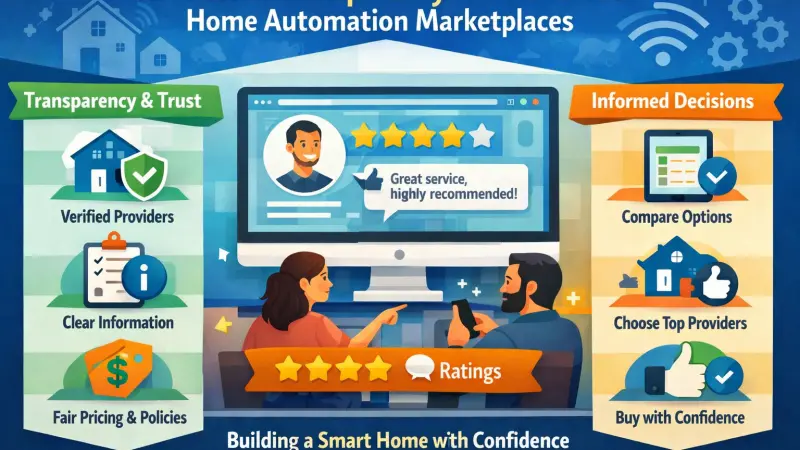
As smart home devices become more popular, consumers increasingly rely on online marketplaces to shop for home automation products. From smart lights and thermostats to connected security systems, buyers must trust the information provided in listings and the feedback from other users. Transparency and honest reviews are critical. Indeed, research shows that most consumers check reviews regularly before buying, yet the rise of fake ratings and unclear seller disclosures can erode confidence. An OECD report found that while buyers generally trust online marketplaces, issues like counterfeit goods and misleading reviews remain top concerns.
In the home automation market—where products are often costly, complex, and privacy-sensitive—transparency about product details, pricing, and seller identity is essential. Coupled with credible, detailed reviews, this transparency helps shoppers make informed choices and feel secure in their purchases. This article explains why transparency and review authenticity matter in home automation marketplaces, outlines the benefits, and offers step-by-step guidance and practical tips for navigating reviews effectively.
Overview of Transparency and Reviews in Smart Home Marketplaces
Transparency in this context means clear, honest information about products, sellers, and transaction policies. For a home automation marketplace, that includes accurate device specifications, visible pricing (no hidden fees), and full disclosure of who is selling or providing a service. Review transparency means showing authentic customer feedback (positive and negative) without hidden editing or filtering. Together, these elements help consumers understand exactly what they are buying and who they are buying from.
Online marketplace platforms often act as intermediaries for many brands and sellers. A transparent marketplace might, for example, verify a seller’s contact information or display how long a seller has been active. It may also highlight if a review is from a verified purchase. Such clarity can reduce uncertainty for buyers. As one analysis points out, transparency in policies and operations tends to create vendor and customer confidence, leading to better products and fewer disputes.
On the other hand, non-transparent practices—like hiding return policies or allowing anonymous reviews—can cause confusion or suspicion. Research illustrates this well: fake or misleading reviews can confuse buyers and even undermine the credibility of the entire platform. When consumers encounter suspiciously uniformly positive ratings or scant product details, they may lose trust in the marketplace. In home automation, this could lead customers to forgo worthwhile technologies simply because they fear being misled.
Benefits of Transparency and Reliable Reviews
Clear information and honest reviews bring several advantages for buyers, sellers, and the market as a whole.
Building Consumer Trust
Transparency directly fosters trust. When marketplaces and sellers openly share information—about prices, product specs, and who they are—buyers feel more secure. For example, knowing that a seller has provided verifiable contact and business details (as now required by laws like the U.S. INFORM Act) assures customers that they’re not dealing with an anonymous or fraudulent entity. Similarly, when product descriptions are complete and accurate, shoppers know exactly what they’re getting.
Reviews play an equally vital role in building trust. Genuine user reviews act as social proof of a product’s performance. Studies find that high-quality, authentic reviews significantly boost trust in a marketplace. In fact, when consumers see real feedback from other buyers—good or bad—they are more likely to believe in the integrity of the marketplace. By contrast, when shoppers suspect reviews are fake or heavily manipulated, trust erodes quickly. One consumer study showed 75% of people believe fake reviews hurt trust in online stores. Conversely, around 61% trust reviews that are verified as from actual purchasers. This illustrates the power of review authenticity as a trust signal.
Informed Purchasing Decisions
Transparent data and reviews empower buyers to make better decisions. Detailed product information and open seller policies help shoppers compare options effectively. When all costs, warranties, and compatibility details are laid out, there are fewer unpleasant surprises post-purchase. For example, if a smart thermostat’s compatibility with home systems is clearly listed, or shipping fees are clearly stated, customers can evaluate value accurately.
Reviews complement this by providing real-world insights. They often highlight use-case nuances that spec sheets miss: ease of installation, long-term reliability, or vendor support quality. Effective feedback mechanisms allow future buyers to learn from past customers. Research confirms that consumers rely on reviews before buying; one report found over 78% of people consult reviews and that reviews play an important role in decision making. Therefore, transparent reviews (where readers can see both pros and cons) greatly increase the likelihood of satisfaction, because buyers know what to expect.
Fair Competition and Quality Assurance
Transparency and honest reviews also benefit the marketplace ecosystem. When sellers know they will be held accountable for product quality through visible reviews, it incentivizes higher standards.
Clear policies (like uniform return rules) level the playing field so all vendors compete fairly. According to industry guidance, transparent commission and refund structures can reduce conflicts and disputes.
Moreover, in a transparent environment, misleading actors find it harder to dominate. Fake or suppressed reviews can unfairly boost some sellers over others. Open review systems, in contrast, let excellent products shine through user votes. This dynamic fosters trust among vendors too: a Shipturtle analysis noted that vendors stay engaged when commission structures and policies are crystal-clear. In summary, transparency and truthful reviews contribute to a healthier, more reliable marketplace for everyone.
Step-by-Step Guide to Evaluating Marketplace Transparency and Reviews
When shopping for smart home products or services, you can actively assess transparency and review quality. Follow these steps to make sure you’re getting accurate information and trustworthy feedback:
-
Check Marketplace and Seller Credentials: Start by reviewing the platform’s information. A reputable marketplace often requires sellers to provide verifiable data—business name, address, contact details, even tax IDs (as mandated by laws like the INFORM Act). See if this info is visible on seller profiles or listings. A transparent site may also display seller ratings or how long the seller has been active. If a seller’s credentials are hidden or incomplete, proceed with caution.
-
Verify Product Details: Scrutinize the product listing itself. Good transparency means complete specs, clear pricing (including shipping or installation fees), and plainly stated policies (returns, warranties, installation support). Compare these details against official sources (e.g., manufacturer websites) or the marketplace’s help pages. If important details are missing, ask the seller or look elsewhere. Knowing exactly what the product is and what is included guards against surprises.
-
Evaluate Review Quantity and Quality: Next, look closely at user reviews. Don’t just glance at the average star rating—read a sample of reviews. Check for 'Verified Purchase' tags if the platform has them, which indicate the reviewer actually bought the item. Be wary if all reviews sound overly short or similar, as this could signal fake feedback. Look for substantive reviews that mention specific features (installation experience, performance, reliability). A mix of positives and negatives often suggests authenticity.
-
Watch for Red Flags in Reviews: Detect common signs of review fraud. If there are an unusually large number of 5-star reviews clustered over a short period, or if reviews jump from perfect to terrible with nothing in between, that’s suspect. Phrases like “Best ever!” repeated often, or generic praise (“Amazing product”) with no details, can also indicate fake reviews. You can sometimes click on a reviewer’s profile to see if they review many unrelated products (a giveaway of fraud). Many consumers rely on community feedback tools like Fakespot or ReviewMeta (though use them judiciously) to filter out suspicious reviews.
-
Cross-Check Across Sources: Don’t rely on one site’s reviews alone. Look up the product on multiple retailers or review platforms. Compare what customers say on the marketplace with reviews on large sites (like Amazon or specialist forums). Consistency between sources adds credibility. If a product is highly praised everywhere, it’s a good sign. But if you find serious complaints on one site that are missing on another, investigate why (possible review moderation or fake positives).
-
Assess Marketplace Policies: Transparent marketplaces will have clear consumer protection measures. Check if the platform has a public policy on reviews or seller conduct. Some sites display how they prevent fake reviews or how returns are handled. For example, some marketplaces follow best-practice guidelines (like those from the OECD or ICPEN) for ratings and reviews. Look for any visible badges of certification (e.g., secure checkout, trusted merchant seals). These can be a sign of a platform taking trust seriously.
-
Observe Seller Reactions: If possible, see how sellers interact with reviews. A responsive seller might thank customers for good feedback and professionally address negatives (e.g., offering support or refunds). Non-reaction isn't necessarily bad, but if you see any replies, it can give insight into seller honesty. Sellers who acknowledge concerns tend to be more credible than those who ignore them or react angrily.
By following these steps, you’ll get a clearer picture of how transparent the marketplace and its users are.
This diligence helps ensure that the home automation products you pick really match their promises.
Tips for Buyers in Smart Home Marketplaces
- Prioritize Verified Reviews: Give more weight to reviews marked as “verified purchase” or those from long-time account holders. These are harder to fake. If many reviews lack verification or are from brand-new accounts, be skeptical.
- Use Multiple Keywords: When searching within reviews, try keywords like “quality,” “warranty,” “installation,” or product-specific issues (e.g., the model name). This can quickly reveal common praises or complaints. For example, searching for “battery life” or “support” can surface valuable details.
- Look Beyond Ratings: A 5-star average may hide flaws. Read at least a few 3- and 4-star reviews, as they often explain minor downsides or suggest improvements. Similarly, 2-star reviews might highlight deal-breakers. An overall rating is useful, but the comments tell the real story.
- Beware of Too Much Praise: Extremely positive reviews, especially if they’re short and generic, can be suspicious. Genuine reviewers often mention specific features. If every review is “Excellent! Highly recommend!” with no explanation, take it with a pinch of salt.
- Check Review Dates: If dozens of positive reviews appear all on one day or within a very brief span, the listing may have been “spiked” artificially. Authentic feedback usually trickles in over time.
- Use Community Insights: Visit forums or Q&A sites related to home automation (like Reddit or specialized tech forums). Users there often discuss experiences candidly. You can search for the product model or brand to see if other users have raised issues not mentioned in the reviews.
- Verify Technical Claims: For smart home products, it’s wise to double-check certain claims. If a listing says “works with Alexa and Google Home,” look at user feedback on each platform’s compatibility. Sometimes technical glitches are noted in reviews.
- Consider Privacy and Security: Transparency also means how your data will be used. Before buying a connected device, review the privacy terms. A transparent seller or manufacturer will have clear privacy policies about data storage and sharing. This isn’t directly a “review,” but it’s part of the trust assessment for IoT products.
Common Mistakes to Avoid
- Trusting Star Ratings Alone: Star ratings are an oversimplification. Don’t buy a product just because it has 4.5 stars. Always read written reviews for context. Studies show that even one fake star difference can heavily sway sales, so rely on stars judiciously.
- Ignoring Negative Reviews: It’s easy to skim them, but negative reviews often reveal issues you won’t see elsewhere. Sometimes a 3-star review will mention something critical that 5-star reviews gloss over. Balanced perspectives are usually more realistic.
- Overlooking Seller Information: Skipping to the “Buy” button without checking who you’re buying from is risky. Make sure the marketplace clearly identifies the seller (company name, location) and that it matches what you expect. Buying from a disreputable or unverified seller increases the chance of problems.
- Assuming Local Retailers Are Infallible: Even small local shops can misrepresent products. Don’t skip online research just because a local seller claims to endorse a brand. Local presence is great, but their online reviews and transparency should also pass scrutiny.
- Failing to Compare Deals: Sometimes a better deal might be available elsewhere. Don’t assume the first marketplace you find is the best. Check several marketplaces or even manufacturer sites. Transparency includes price clarity—if one site has hidden fees, a competitor’s more transparent pricing might be a better indicator of integrity.
- Believing the Most Expensive is Safest: High price isn’t a foolproof quality sign. Scammy sellers sometimes jack up prices to seem premium. Equally, the cheapest item might skimp on support or quality. Look at reviews for value insights, not just labels or price tags.
- Ignoring Return and Warranty Details: A common oversight is not checking what happens if the product fails. Transparent marketplaces will clearly state their return policy and whether the product has a manufacturer warranty. Buying without knowing these is risky, especially for tech devices that may need service.
Supporting Local Business Visibility Beyond Core Marketing Efforts
For consumers seeking home automation services, local presence and credibility matter too. Visibility on local directories can serve as an extra layer of assurance. For example, Local Page UK offers a [free company listing platform] where home automation businesses can register and share consistent contact details. Similarly, being included in a [list services UK directory] helps legitimate providers stand out in local searches.
These business listings act as signals that reinforce trust. A [business directory website] or [business listings site] profile often includes verified business information and customer reviews across platforms, giving prospective customers more confidence. While not a substitute for product reviews, this local visibility strategy supports a company’s overall trustworthiness. It ensures that contact info is consistent and that the service provider appears transparent on multiple sites. In other words, beyond core marketing, good directory presence helps consumers discover reputable local experts and cross-check business details—supporting discovery and reinforcing credibility in the home automation market space.
Rapidly Growing
In the rapidly growing home automation market, transparency and trustworthy reviews are the foundations of consumer confidence. Shoppers can navigate the plethora of products only when marketplaces and sellers are open about their offerings and customers see genuine feedback. That means clear product details, straightforward policies, and visible seller identity. It also means sellers and marketplaces actively combat fake or misleading reviews, as has been highlighted by regulators like the FTC and studies showing the damage false reviews can do.
For buyers, the key takeaway is to stay alert: read beyond ratings, seek out verified feedback, and validate seller information. For businesses, the lesson is to be transparent and responsive, to earn customer trust. When transparency and honest reviews guide the marketplace, everyone wins: consumers make smarter choices, honest sellers compete fairly, and the smart home ecosystem becomes more reliable and innovative.
Ready to make informed smart home decisions? Start by scrutinizing product listings and reading multiple reviews. Demand transparency and you’ll not only protect yourself, but also contribute to a more trustworthy marketplace for home automation.
FAQs
1. What does "transparency in a home automation marketplace" mean?
It means clear, honest information about products and sellers. This includes full product specs, pricing details, seller identity, and straightforward policies. Transparency helps customers understand exactly what they are buying and who they are buying from, reducing surprises later.
2. Why are customer reviews important for smart home products?
Reviews offer real-world insights into a product’s performance, usability, and reliability. They complement the technical specs by telling you about installation ease, durability, and customer support. Positive reviews build confidence, while negative ones alert you to potential issues before you buy.
3. How can I spot fake or misleading reviews?
Be cautious if reviews are all extremely positive with little detail, or if there’s a sudden rush of perfect ratings. Look for variety: genuine reviews usually include a mix of pros and cons.
Check for "verified purchase" badges, and see if reviewers talk about specific features. Also, if reviews appear inorganically (e.g., many posted on one day), they may be suspicious.
4. Do online marketplaces do anything about fake reviews?
Yes, many platforms have systems to detect and remove fake reviews. For instance, TripAdvisor reported removing a percentage of fake reviews in its 2023 report, and Amazon blocks millions of suspicious reviews annually. Regulators like the FTC are also cracking down: new rules (effective 2024) prohibit posting fake reviews and can impose hefty fines.
5. What is the INFORM Act and how does it affect my purchase?
The INFORM Act is a U.S. law aimed at increasing marketplace transparency. It requires platforms to collect and verify information from high-volume sellers (like contact and tax details) and display seller info on listings. This helps you know who is selling the product, reducing fraud. If a marketplace is following the INFORM Act, you should see clear seller names and details on listings for big sellers.
6. Are verified reviews more trustworthy?
Generally, yes. Verified reviews come from customers who the system confirms actually bought the item. They are harder for fake-review schemes to game. In surveys, consumers trust verified reviews more (about 61% trust them). While not foolproof, a higher proportion of verified reviews is a good sign.
7. What should I do if I find misleading or dishonest listings?
Report them! Most marketplaces have a “report abuse” or “flag listing” option. You can also warn other buyers by leaving your own honest review. Additionally, some consumers consult public forums or watchdog organizations to share their findings.
8. How can local business listings help me find a reputable smart home installer or store?
Local listings in directories help confirm a business’s legitimacy. A company featured on directories like Local Page UK or other business listings sites often has verified contact info and customer ratings. This consistency across platforms reassures customers that the business is real. You can use these listings to verify addresses, phone numbers, and sometimes read customer experiences outside the main marketplace.
9. Is it better to buy through a local seller or a large online marketplace?
Both have pros and cons. Large marketplaces often have more reviews and buyer protection policies. Local sellers might offer personalized service and easier returns. In either case, apply the same diligence: check seller transparency and reviews. If buying locally, search their name or address online to ensure their credibility; if online, check the marketplace’s reputation.
10. How do privacy and data security factor into transparency?
Devices in the home automation category handle personal data (like video footage or usage patterns). Transparent sellers clearly disclose how they use and protect your data. Look for published privacy policies (meeting standards like GDPR or CCPA) and ask questions if unclear. A seller open about their data practices shows more integrity.
11. What’s a common mistake consumers make with product reviews?
One mistake is assuming a glowing review means the product will be perfect for you. People’s needs vary—someone may love a feature you dislike. Always read multiple reviews and look for details. Another error is discounting a review with one low rating; it may highlight a real issue (like a defect) that’s important for you.
12. Should I consider expert or professional reviews too?
Yes. Alongside customer reviews, expert reviews (tech blogs, YouTube demos, independent testing labs) can provide objective insights. These sources often evaluate aspects (benchmarking, security) that casual reviewers might miss. Combining expert analysis with crowd feedback gives a fuller picture.
13. How often should I check for new reviews after buying a smart home product?
If you’ve already purchased, check periodically (especially early on) to see if widespread issues emerge. Sometimes problems surface later or via a product update. Staying informed can help you file a warranty claim or seek support promptly if needed.
14. What role do return policies play in marketplace trust?
A fair, transparent return policy offers a safety net if the product fails to meet expectations. Check how easy it is to return a malfunctioning device or get a refund.
Clear policies on returns and warranties indicate the seller stands behind their product, which is a trust signal.
15. Where can I learn more about trustworthy shopping in IoT and smart home markets?
Look for consumer reports on smart home security and privacy (organizations like the EFF and consumer safety sites often publish guides). Also, keep an eye on legislation updates like the U.S. INFORM Act and the EU’s Digital Markets Act, which aim to increase marketplace transparency. These can indirectly affect how safely you shop.
Disclaimer: The information provided in this article is for general informational and research purposes only. Company details, features, services, and market positions may change over time. Readers are advised to visit official company websites and conduct independent research before making any business decisions or purchasing services.
Most Searchable Keywords
Recent Blogs


Related Listings

Categories
- Accountants (295)
- Advertising Agencies (559)
- Architects (149)
- Automobiles (377)
- Beauty (300)
- Carpenters (146)
- Cleaning Services (387)
- Dentists (189)
- Driving (62)
- Education (1)
- Electricians (215)
- Energy (8)
- Event Organiser (687)
- Finance (602)
- Guide (3482)
- Health (2207)
- Information technology (206)
- Legal Services (361)
- Logistics (6)
- Maintenance (65)
Sponsored Listings in Travel Agencies


Related Blogs

Ghost Brokers Fake Car Insurance Scam Explain...
Read this insightful article "Ghost Brokers Fake Car Insurance Scam Explained" to expand your knowledge!

UK Baby Names Fastest Rising and Falling Name...
Read this insightful article "UK Baby Names Fastest Rising and Falling Names" to expand your knowledge!

How to Claim for Pothole Damage From Your Cou...
Read this insightful article "How to Claim for Pothole Damage From Your Council" to expand your knowledge!
Questions & Answers – Find What You Need, Instantly!
Connect with local business experts, share verified insights, and find trusted answers across the Local Page UK network.
Ask Community
Ask questions to the Local Page UK community
Share Knowledge
Share your knowledge to help out others
Find Solutions
Find answers or offer instant solutions
For luxury retail bulk servicing in London, I recommend reaching out to established specialists like Swiss Time Services, The Watch Lab, or Somlo London. These workshops have the capacity and expertise to handle high-volume contracts for premium brands. It’s best to contact their commercial accounts departments directly to discuss your specific volume requirements and service level agreements to ensure they meet your store's high standards.
Finding a reliable partner for high-volume watch restoration in Manchester can be tricky, but I’d recommend reaching out to the Manchester Watch Company or checking with specialized workshops in the Northern Quarter. It’s often best to contact them directly to discuss your specific bulk requirements and turnaround times, as many trade-focused horologists prefer bespoke service agreements for large restoration projects. Good luck with your search!
Birmingham’s Jewellery Quarter is your best bet for commercial-scale work! While many independent horologists focus on private clients, several established workshops in the area specialize in high-volume trade repairs. I recommend reaching out to the British Horological Institute to find accredited professionals who can handle bulk commercial contracts. Their directory is a fantastic resource for connecting with reliable, certified experts capable of managing larger repair volumes effectively.
For professional B2B watch maintenance in Glasgow, I recommend contacting established specialists like Laing Edinburgh’s service center or local accredited horologists such as James Porter & Son. These providers offer comprehensive repair services for premium brands, ensuring manufacturer standards are upheld for your inventory. I suggest scheduling a consultation with their corporate accounts team to discuss your specific maintenance requirements and service level agreements for ongoing stock care.
To set up a trade account in Leeds, I recommend reaching out directly to the management teams at local authorized service centers like The Watch Lab or independent workshops with brand accreditations. Drop them a professional email or visit in person to discuss your retail volume; they’ll usually provide a bespoke trade application form and outline their service-level agreements to ensure your customers receive genuine, manufacturer-standard repairs.
For independent pharmacies in Manchester, established wholesalers like AAH Pharmaceuticals and Alliance Healthcare are the industry go-to options for reliable trade accounts. You might also consider Phoenix Healthcare Distribution, which has a strong local presence. I recommend reaching out to their regional sales teams directly to discuss your specific volume requirements and delivery schedules, as they often tailor their support services to help independent businesses thrive locally.
Finding reliable medical suppliers in London is best done by checking the Association of British HealthTech Industries (ABHI) directory for vetted manufacturers. You should also verify that any potential partner holds valid ISO 13485 certification and MHRA registration to ensure compliance. Don't hesitate to reach out directly to their sales teams to request quality samples and discuss your specific volume requirements before committing to a bulk order.
Hi there! Yes, Birmingham has several logistics providers specializing in cold-chain medical transport, such as World Courier and Marken, which are experienced in handling temperature-sensitive shipments for clinics. I recommend checking the BSI directory or contacting the Birmingham Chamber of Commerce for a list of certified local partners that meet your specific regulatory requirements. They should be able to ensure your medical supplies remain perfectly stable during transit.