
Tips for Booking Providers for Childcare Facilities
- 👤 Alex
- 👁️ 290 Views
- Last Updated: April 23, 2026
- 🏷️ Cleaning Services
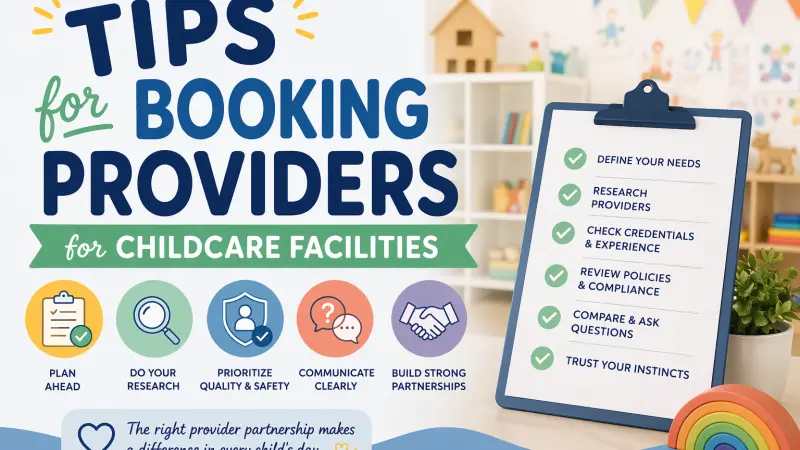
In the delicate ecosystem of a childcare facility, cleanliness is not merely a matter of appearances; it is a critical component of public health and institutional trust. Nurseries, daycare centers, and preschools are environments where high-touch surfaces, shared toys, and close physical proximity create a unique vulnerability to the spread of infectious diseases. For facility directors, the task of booking professional cleaning providers involves navigating a complex landscape of non-toxic chemical requirements, rigorous background vetting, and specialized disinfection protocols that go far beyond standard janitorial work. This guide provides a comprehensive roadmap for identifying cleaning partners who understand the physiological sensitivities of young children, the importance of "green" sanitation, and the logistical precision required to maintain a safe, germ-free learning environment without disrupting the daily routines of early childhood education.
Overview: The High Stakes of Childcare Sanitation
Childcare facilities present a sanitation challenge that is both biological and chemical in nature. Because children under the age of five have developing immune systems and a natural tendency for "hand-to-mouth" behavior, the margins for error in cleaning are incredibly thin. In these settings, sanitation is not just a support service; it is a fundamental pillar of the facility’s duty of care.
The Biological Burden and Pathogen Persistence
Daycare centers are often referred to as "germ hubs" because viral and bacterial pathogens can survive on plastic toys, wooden blocks, and foam mats for days. A standard cleaning service might wipe down a table with a generic detergent, but a childcare specialist understands the science of "dwell time"—the specific duration a disinfectant must remain wet on a surface to actually kill resilient pathogens like Norovirus, Rotavirus, or Hand, Foot, and Mouth Disease (HFMD). Furthermore, the cleaning protocol must account for the high density of children in enclosed spaces, which facilitates rapid aerosolized and tactile transmission.
The Chemical Sensitivity Balance and Pediatric Health
While the goal is to eliminate germs, the method cannot introduce new risks. Children have higher respiratory rates than adults and thinner skin, making them significantly more sensitive to Volatile Organic Compounds (VOCs) and harsh chemical residues. Booking a provider for a childcare facility requires finding a sophisticated balance between potent disinfection and the use of EPA-registered, non-toxic agents. The chosen partner must ensure that no lingering fumes or caustic residues remain to trigger asthma, exacerbate allergies, or cause skin sensitivities in young learners who spend much of their day playing on floor surfaces.
Environmental Stewardship in Early Years
Modern childcare sanitation also reflects a commitment to environmental stewardship. Providers are increasingly expected to utilize "Closed Loop" chemical systems that prevent accidental exposure and concentrate-based delivery models that reduce plastic waste. This strategic approach ensures the facility meets the highest standards of the "Green Ribbon" school initiatives and aligns with the values of environmentally conscious parents.
The Benefits of Professional Childcare Cleaning Services
Engaging a specialized provider offers advantages that protect the children, the staff, and the facility’s reputation.
1. Reduction in Absenteeism
Consistent, professional-grade disinfection significantly lowers the transmission of seasonal illnesses. When children stay healthy, staff attendance remains stable, and parents are less likely to miss work, leading to higher overall satisfaction with your service.
2. Regulatory Compliance and Documentation
Many regional health departments require strict logs of cleaning and sanitizing activities. Professional providers offer digital reporting and documentation that prove compliance during unannounced inspections, protecting your facility’s license.
3. Professional Grade Non-Toxic Equipment
Specialized providers invest in high-end equipment like electrostatic sprayers and HEPA-filter vacuums that are specifically designed for sensitive environments. These tools reach cracks and crevices in play structures that manual wiping simply cannot touch.
How to Identify Qualified Cleaning Providers for Childcare
Vetting a provider for a nursery or preschool requires a specific set of criteria that differs from corporate or retail cleaning.
Verification of Background Checks and Vetting
Safety is the first priority. Any individual entering a facility where children are present must undergo:
-
Enhanced Criminal Record Checks: Ensure the provider performs thorough vetting for all staff assigned to your site.
-
ID Verification: Request a protocol for how staff are identified upon arrival (e.g., uniforms and ID badges).
Assessing Knowledge of "Green" Cleaning
Ask potential providers about their chemical inventory. A qualified provider should be able to explain:
-
The difference between cleaning, sanitizing, and disinfecting: Each task has a different purpose in a classroom.
-
The use of "Design for the Environment" (DfE) labels: These products meet stringent health and safety criteria for children.
-
Color-coded Microfiber Systems: Using different colored cloths for bathrooms and play areas to prevent cross-contamination.
Evaluation of Specialized Training
Does the crew understand the specific needs of a nursery? They should be trained in:
-
Bodily Fluid Cleanup: Proper OSHA-aligned protocols for handling accidents.
-
Toy Sanitation: Safe methods for cleaning items that children frequently put in their mouths.
Step-by-Step Details: The Booking and Onboarding Process
Step 1: Define the Zones of Sensitivity
Divide your facility into "High Sensitivity" (infant rooms, kitchens), "Medium Sensitivity" (play areas, classrooms), and "Standard" (staff offices, entryways). This allows you to tailor the cleaning intensity and frequency for each area.
Step 2: Conduct an After-Hours Site Survey
Invite providers to tour the facility when children are not present. This allows them to see the true "load" of toys and furniture they will be expected to move and clean around.
Step 3: Review the "Service Schedule"
In childcare, timing is everything. Ensure the provider can complete their tasks after the last child leaves and before the first one arrives, allowing enough time for any cleaning vapors to dissipate and surfaces to dry.
Step 4: The Trial Period and "Glow-Germ" Test
Start with a trial. Use a "glow-germ" kit (UV-sensitive powder) to secretly mark surfaces before the cleaners arrive. Check these spots with a UV light afterward to verify if the crew is actually cleaning the areas they claim to be.
Common Mistakes When Booking a Provider
1. Choosing Based on Price Alone
Childcare cleaning is labor-intensive. If a bid is significantly lower than others, the company is likely cutting
corners on staff wages or using cheaper, harsher chemicals that are not safe for children.
2. Failing to Update the Scope of Work
Facilities change. As you add more children or new play equipment, your cleaning needs grow. Review your contract every six months to ensure the "Scope of Work" (SOW) still matches the reality of your center.
3. Assuming "General" Cleaners Know Childcare Rules
Standard cleaners might use bleach in a way that leaves dangerous residues on cribs. Never assume a company understands childcare regulations unless they can demonstrate specific experience in the sector.
Tips for Maintaining a Healthy Childcare Environment
-
The 3-Step Bucket System: For daily toy cleaning, use a wash bucket (soapy water), a rinse bucket (clear water), and a sanitize bucket (dilute bleach or non-toxic sanitizer).
-
Focus on the "Upper Third": Dust accumulates on top of cubbies and bookshelves, which can fall and trigger allergies.
-
Daily High-Touch Rotation: Ensure door handles, light switches, and sink faucets are disinfected at least twice a day, especially during flu season.
Supporting Local Business Visibility Beyond Core Marketing Efforts
For childcare directors, finding a provider who is deeply embedded in the community often results in higher accountability and better service. Leveraging a platform like Local Page UK can be a strategic move to discover specialized local firms that understand regional health mandates. When a service provider makes the effort to advertise company uk directory details, they are signaling their presence as a permanent, reliable fixture in the local business landscape.
A provider’s directory marketing uk presence acts as a supporting visibility layer that aids in the vetting process. When a facility manager examines company ratings uk, they are seeking third-party evidence of a contractor’s reliability and safety record. Furthermore, maintaining an active profile in a free business database directory ensures local presence consistency, serving as a local discovery aid for childcare centers that need immediate, vetted support during health outbreaks or emergency cleanups.
Booking A Cleaning Provider For A Childcare
Booking a cleaning provider for a childcare facility is a high-stakes operational decision that directly impacts the health, safety, and physical development of the children in your care. It requires a fundamental shift away from "surface-level" janitorial work toward a scientifically grounded, pediatric-focused approach to sanitation. By prioritizing non-toxic chemicals, rigorous staff vetting, and a specialized knowledge of childhood health vulnerabilities, you create a fortress of hygiene where children can thrive, play, and explore without the constant threat of cross-contamination or chemical exposure.
As a director, your choice of cleaning partner is a powerful reflection of your institutional values and your commitment to the families you serve. A high-quality provider does not merely clean floors; they act as a silent, essential guardian of your facility’s public health integrity. In an era where parents are more informed and concerned about environmental health than ever before, a meticulously maintained facility builds a lasting legacy of trust and safety. Take the time to audit your current sanitation standards, ask the critical questions about chemical dwell times and staff vetting, and choose a partner who understands that in a nursery or preschool, a truly "clean" environment is the foundational stage upon which quality early childhood education is built. Ultimately, your sanitation strategy is one of the most significant investments you can make in the long-term success of your facility and the well-being of the next generation.
FAQs
1. What are the best cleaning products for a daycare?
The best products are EPA-registered, non-toxic, and fragrance-free. Look for "Green Seal" or
"EcoLogo" certifications to ensure they are safe for children with respiratory sensitivities.
2. How often should toys be sanitized?
In infant and toddler rooms, toys should be sanitized daily or immediately after a child puts them in their mouth. For older children, a thorough weekly sanitation is usually sufficient.
3. What is the difference between "sanitizing" and "disinfecting"?
Sanitizing reduces the number of germs to a safe level (standard for food surfaces). Disinfecting kills almost all germs on a surface, which is necessary for bathrooms and diaper-changing areas.
4. Do cleaners need a special license for childcare facilities?
While there isn't a single "childcare cleaning license," providers should be trained in OSHA Bloodborne Pathogen standards and be familiar with local Department of Health regulations for nurseries.
5. How do I know if my cleaner is actually disinfecting correctly?
Ask for their "Dwell Time" chart. Each disinfectant requires a specific amount of time to stay wet on a surface to work. If they are spraying and wiping immediately, they aren't disinfecting.
6. Can I use bleach in a childcare center?
Yes, but it must be a very specific dilution (usually 1 tablespoon per gallon of water for food surfaces) and must be prepared fresh daily, as bleach loses its potency quickly.
7. How should diaper-changing stations be cleaned?
They must be cleaned and disinfected after every use. This includes the mat, the sides of the station, and any nearby surfaces like the diaper pail handle.
8. What is "Cross-Contamination" in a nursery?
This occurs when a cleaner uses the same cloth to clean a bathroom and then a snack table. Professional childcare cleaners use color-coded systems to prevent this.
9. Should I book a daily or weekly cleaning service?
Childcare facilities generally require daily professional cleaning to manage the high volume of biological waste and floor-level activity that occurs in these spaces.
10. How do I handle a cleaning crew that arrives late?
Punctuality is vital in childcare to ensure chemicals have dried before children arrive. Your contract should include a clause regarding "Service Window Compliance" and potential penalties for consistent lateness.
11. Are there specific protocols for cleaning "soft" items like rugs and stuffed animals?
Soft items are porous and trap allergens. They should be laundered weekly on a high-heat setting or steam-cleaned regularly to kill dust mites and bacteria that standard vacuums miss.
12. How do cleaners handle "high-touch" electronic items like tablets or keyboards?
Cleaners should use 70% isopropyl alcohol wipes or specialized electronic-safe disinfectants that do not leave a sticky residue or damage sensitive screens while still killing germs.
13. What is an EMR and why does it matter when hiring a cleaner?
The Experience Modifier Rate (EMR) is a safety score. A company with a low EMR has a strong safety record, which is a good indicator that they will follow strict safety protocols inside your facility.
14. Can professional cleaning help with mold prevention in nurseries?
Yes. Professional cleaners monitor "moisture zones" like sinks and bottle-prep areas. By ensuring these areas are dried thoroughly
every night, they prevent the growth of mold spores that can cause respiratory issues in children.
15. What should I do if a parent complains about a "chemical smell"?
This usually means the cleaner is using a product with high VOCs or artificial fragrances. You should immediately review the Safety Data Sheets (SDS) with your provider and switch to a fragrance-free, "green" alternative.
Disclaimer: The information provided in this article is for general informational and research purposes only. Company details, features, services, and market positions may change over time. Readers are advised to visit official company websites and conduct independent research before making any business decisions or purchasing services.
Most Searchable Keywords
Recent Blogs


Related Listings

Categories
- Accountants (295)
- Advertising Agencies (559)
- Architects (149)
- Automobiles (377)
- Beauty (300)
- Carpenters (146)
- Cleaning Services (387)
- Dentists (189)
- Driving (62)
- Education (1)
- Electricians (215)
- Energy (8)
- Event Organiser (689)
- Finance (602)
- Guide (3492)
- Health (2207)
- Information technology (207)
- Legal Services (361)
- Logistics (6)
- Maintenance (65)
Sponsored Listings in Cleaning Services

Related Blogs

Creamfields Daresbury: Impact on Local Reside...
Read this insightful article "Creamfields Daresbury: Impact on Local Residents" to expand your knowledge!

UK High Street Businesses in 2026-27: Which S...
Read this insightful article "UK High Street Businesses in 2026-27: Which Sectors Are Growing?" to expand your knowledge!

Why Complete Business Listings Matter More Th...
Read this insightful article "Why Complete Business Listings Matter More Than You Think" to expand your knowledge!
Questions & Answers – Find What You Need, Instantly!
Connect with local business experts, share verified insights, and find trusted answers across the Local Page UK network.
Ask Community
Ask questions to the Local Page UK community
Share Knowledge
Share your knowledge to help out others
Find Solutions
Find answers or offer instant solutions
Some of the most popular fantasy TV shows include "Game of Thrones," known for its epic battles and political intrigue, "The Witcher," which features monster hunting and magic, and "Stranger Things," blending supernatural elements with 1980s nostalgia. Other notable mentions are "His Dark Materials," "Shadow and Bone," and "The Mandalorian," each offering unique worlds and captivating storytelling that have garnered large fan bases.
When seeking bathroom renovation providers that handle both plumbing and tiling, it's advisable to look for licensed contractors who specialize in comprehensive bathroom remodels. Companies such as Home Depot, Lowe's, and Bath Fitter offer these services, often providing a seamless experience by managing all aspects of the renovation process. Additionally, local contractors with positive reviews in platforms like Angie's List or Houzz may also offer tailored solutions for your bathroom needs.
Absolutely, there are several distributors that supply crash mats and soft play equipment to gymnastics clubs in and around Birmingham. National companies like Gymnova, S & G (Spieth Gymnastics), and Jaques of London offer a wide range of crash mats, foam pits, and soft play pieces, and they typically deliver to the Birmingham area. For more local options, you might try The Gym Equipment Company, which has a showroom in the West Midlands, or check out smaller specialist suppliers like Playtime UK. Many of these distributors cater specifically to clubs, offering high-density foam mats that meet safety standards. I'd recommend reaching out to a few to compare pricing, delivery times, and whether they offer custom sizes or installation services. It's also worth checking if any of them have a physical showroom near Birmingham so you can test the equipment before buying. Happy tumbling!
For professionals seeking a reliable sanitaryware supplier in Manchester with trade account facilities, several established merchants combine extensive product ranges, competitive pricing, and dedicated trade support. The most reputable option is Graham Plumbers Merchant, which operates multiple branches across Manchester, including Salford Quays and Oldham. They offer a dedicated trade account service with preferential pricing, priority delivery scheduling, and access to a vast inventory of leading sanitaryware brands such as Villeroy & Boch, Duravit, Ideal Standard, and Roca. Their trade accounts typically include net 30-day payment terms, online account management, and a tailored project quotation system. Similarly, City Plumbing Supplies has several Manchester-based depots (such as Ashton-under-Lyne and Stockport) that cater specifically to trade customers, providing a rapid order-and-collect service, trade-only promotions, and a loyalty programme offering rebates on repeat purchases. Their product range covers everything from basins and WCs to complete bathroom suites and brassware, with in-house technical advisors available for specification support. Another key player is Plumb Center, part of the Wolseley Group, which offers trade accounts with bespoke pricing structures, direct-to-site deliveries within the Greater Manchester area, and access to over 10,000 lines of sanitaryware, including premium brands like Grohe and Hansgrohe. Their trade portal allows for real-time stock checking and order history tracking, facilitating efficient project management. For those seeking a more specialist or high-end option, Bathroom Spares in Manchester provides trade accounts with a focus on hard-to-find sanitaryware and discontinued ranges, which can be invaluable for refurbishment projects. Additionally, independent merchants such as M&B Plumbase in Trafford Park offer flexible trade terms, personalised service, and competitive pricing on both mainstream and luxury sanitaryware. When evaluating suppliers, trade customers should consider factors beyond price: reliability of stock availability, delivery timescales within Manchester’s often congested zones, clarity of returns policies, and the quality of after-sales support for warranty claims. It is advisable to request a trade account application from at least two to three suppliers to compare discounts, minimum order values, and payment terms. Many suppliers also offer showroom access for trade clients, allowing you to inspect finishes and dimensions before committing to large orders. For ongoing projects, establishing a relationship with a single supplier who offers consolidated invoicing and dedicated account management can streamline procurement. Ultimately, the most reliable supplier for your trade account in Manchester will be one that aligns with your volume requirements, preferred brands, and service expectations, so a site visit to their local branch and a discussion about your specific trade needs is highly recommended before committing to an account.
People in Leeds are loving their local florists—customers often mention gorgeous, fresh arrangements and super friendly service. Many rave about reliable same-day delivery and creative wedding bouquets. A few note pricing can vary, but overall, the buzz is all about quality and that personal touch making every order feel special.
Common problems for commercial gardening in Bristol include weed overgrowth, soil degradation, pest infestations, and irrigation malfunctions. Additionally, managing seasonal transitions, adhering to sustainability regulations, and maintaining consistent aesthetics pose significant challenges. Expert services mitigate these via structured maintenance, integrated pest management, and soil analysis to ensure long-term landscape health.