
Top Builders’ Tool Manufacturers: Quality, Safety & Performance Guide
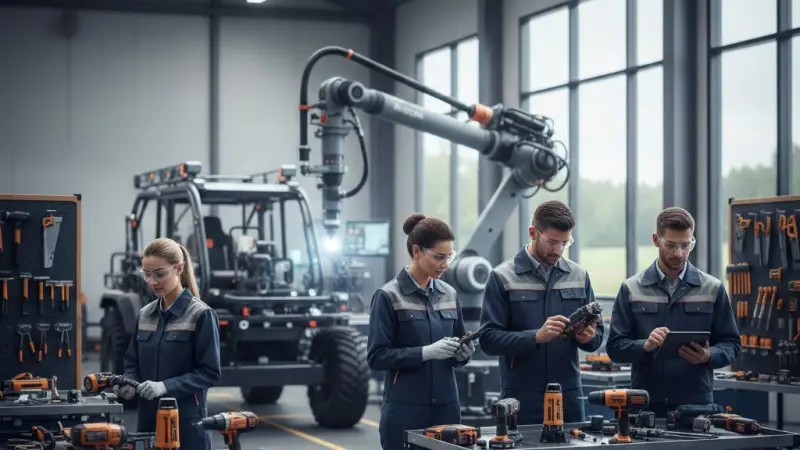
The Builders’ Tools & Equipment Mnfrs sector is a fundamental pillar of the UK’s industrial infrastructure. Contributing billions to the national GDP, this industry ensures that the nation’s ambitious residential, commercial, and civil engineering projects are executed with precision. In 2026, the sector is defined by a unique blend of traditional craftsmanship and cutting-edge innovation. British-made tools are not merely implements; they are the result of rigorous research and development aimed at enhancing site productivity and worker safety.
For any professional in the trade, understanding the pedigree of their equipment is vital. Whether it is hand tools designed for ergonomic comfort or heavy-duty machinery engineered for the harshest site conditions, the quality of these products directly impacts project timelines and bottom-line profitability. Furthermore, the industry plays a massive role in employment, supporting tens of thousands of skilled jobs across the United Kingdom. As digital transformation takes hold, the ability to find and connect with these elite manufacturers through a uk online business directory has become a cornerstone of modern procurement strategies.
The Landscape of Builders’ Tools & Equipment Mnfrs in the UK
The current market for builders' tools and equipment in the UK has reached a valuation exceeding £15 billion, showcasing remarkable resilience in a post-pandemic world. Following the disruptions of the early 2020s, the industry has undergone a significant evolution. Manufacturers have moved away from "just-in-time" supply chains toward more resilient, domestic-focused production models. This shift has revitalised traditional manufacturing hubs in Yorkshire, the North West, and the Midlands, where a new generation of "Smart Factories" is emerging.
Post-pandemic, there has been a 14% increase in unit production, driven by a surge in infrastructure projects like HS2 and a chronic need for new housing. The industry is no longer just about forging steel; it is about integrating IoT sensors into equipment to track usage and maintenance. This "servicification" of the sector means that manufacturers are now as much service providers as they are hardware creators. For businesses looking to navigate this dense landscape of suppliers, the most efficient route is to consult a comprehensive uk business directory to identify regional specialists who can meet specific project requirements.
The geographical concentration of these manufacturers remains a point of pride for the UK. Sheffield continues to lead in high-grade hand tools and cutting implements, while regions like Staffordshire and the South East host global leaders in heavy plant and compact construction machinery. This regional expertise ensures that whether a contractor needs a bespoke masonry chisel or a fleet of electric excavators, the UK’s manufacturing base is equipped to deliver.
Comprehensive Services Breakdown
The diversity of products and services within the Builders’ Tools & Equipment Mnfrs sector is vast. To understand the market, one must look at the three primary categories that define the industry’s output:
1. Hand Tools & Manual Equipment
This remains the most traditional segment, focusing on hammers, chisels, trowels, and saws. Modern British manufacturers like Footprint and King Dick are pioneering the use of advanced alloys that offer higher tensile strength with lower weight. Ergonomics is a major service focus here, with tools designed to reduce Repetitive Strain Injury (RSI) among tradespeople.
2. Power Tools & Pneumatics
The shift toward cordless technology is almost complete in 2026. Manufacturers now provide integrated battery ecosystems where a single power source fits a range of tools. Services in this niche often include "Tool-as-a-Service" (TaaS), where companies provide maintenance and software updates for smart power tools that track torque and performance data.
3. Heavy Plant & Site Equipment
This category includes earthmoving machinery, material handling equipment, and site safety gear like scaffolding and temporary fencing. Manufacturers in this space are increasingly offering a business listing uk to ensure their specialised rental and maintenance services are visible to large-scale contractors. Services often extend to on-site training, telematics monitoring, and bespoke engineering for unique architectural challenges.
By offering a holistic approach—combining the physical tool with digital tracking and after-sales support—UK manufacturers ensure that they remain the first choice for the global construction industry.
How to Choose the Right Service Provider
Selecting a manufacturer or supplier in the building tools sector requires more than just looking at the price tag.
In 2026, the "lowest bid" often leads to the highest long-term cost if safety or durability is compromised. When vetting a provider, consider the following four pillars:
Accreditations & Standards: Ensure the manufacturer adheres to ISO 9001 for quality management and ISO 45001 for occupational health and safety. For electrical equipment, UKCA marking is non-negotiable.
Sustainability Credentials: With the UK’s Net Zero targets, look for manufacturers who use recycled steel or have carbon-neutral production facilities.
Reviews & Peer Feedback: Don't just take the manufacturer's word for it. Check local business listings uk to see verified reviews from other tradespeople and contractors. A manufacturer’s reputation on the ground is the best indicator of their product's real-world performance.
After-Sales Support: Does the provider offer a robust warranty? Are spare parts readily available in the UK? A tool is only useful if it can be kept in operation.
A reliable provider will be transparent about their supply chain and testing protocols. They should be able to provide data sheets that prove their tools can withstand the rigours of a modern British building site.
Industry Challenges & Future Outlook
Despite the growth, the Builders’ Tools & Equipment Mnfrs sector faces significant hurdles. The most pressing is the "Skills Gap." As tools become more digital and machinery moves toward automation, there is a desperate need for technicians who understand both mechanical engineering and software. Additionally, material price volatility—particularly for high-grade steel and lithium for batteries—continues to squeeze margins.
Looking toward the future, the "Green Industrial Revolution" is the dominant trend. We are seeing the rise of hydrogen-powered heavy machinery and 3D-printed tool components that reduce waste. Regulatory changes, such as the Building Safety Act, are also forcing manufacturers to provide more granular data about the "Golden Thread" of information for every piece of equipment used on a high-risk building.
To stay ahead, many smaller manufacturers are embracing digital transformation. By securing a business listing uk profile, they can signal their readiness to participate in modern, data-driven supply chains. The future belongs to those who can marry the durability of the past with the connectivity of the future.
Business Tips for Professionals
For those operating within the tool manufacturing or distribution space, local visibility is your most valuable asset. While you may produce world-class equipment, it counts for little if the site manager ten miles away cannot find you during an urgent procurement phase.
1. Optimise for Local Search: Ensure your business is listed on a uk service listings platform. Local SEO is critical; when a contractor searches
for "tool hire near me" or "drill bit manufacturer Midlands," you need to be at the top of that list.
2. Showcase Expertise through Content: Don’t just list your products. Create videos showing your tools in action, publish safety guides, and share "behind-the-scenes" footage of your manufacturing process. This builds the "Human-centric storytelling" that is proving to be a major differentiator in 2026.
3. Leverage Digital Tools: Use AI-driven CRM systems to manage your B2B relationships and stay top-of-mind with regular, helpful email updates. In an era of fragmenting search, being present across multiple digital touchpoints is the only way to ensure sustained growth.
Wrapping Up & Local Page Integration
The UK’s Builders’ Tools & Equipment Mnfrs industry is a testament to British ingenuity and resilience. From the smallest hand-forged chisel to the largest autonomous excavator, the quality of our tools defines the quality of our built environment. As the industry moves further into the digital age, the bridge between the workshop and the customer is increasingly digital.
For businesses looking to amplify their presence and for contractors seeking the best the UK has to offer, Local Page UK serves as the definitive hub. In a marketplace where trust and visibility are the ultimate currencies, having a verified presence on a premier uk local business directory is no longer optional—it is a strategic necessity.
Boost Your Visibility with Local Page UK
Is your manufacturing business getting the attention it deserves? In the fast-paced construction sector, being found online is the difference between a thriving order book and a silent factory floor. We encourage you to claim your business listing uk today. Join the thousands of elite UK trade services and manufacturers who use Local Page to connect with customers, build authority, and drive growth.
Frequently Asked Questions
1. What are the most important safety certifications for UK builders' tools?
When evaluating tools from any manufacturer, the most critical certification is the UKCA (UK Conformity Assessed) mark, which replaced the CE mark for the Great Britain market. This ensures the product meets high safety, health, and environmental protection standards. For electrical equipment, look for the BS 7671 (IET Wiring Regulations) compliance, especially with the 2026 Amendment 4 updates. Additionally, ISO 45001 is a vital international standard for occupational health and safety management systems. Choosing tools from manufacturers who adhere to these rigorous testing protocols significantly reduces the risk of site accidents and ensures long-term compliance with UK health and safety legislation.
2. How has the post-pandemic era changed tool manufacturing in the UK?
The post-pandemic landscape has triggered a shift from globalised "just-in-time" supply chains to "just-in-case" domestic resilience. UK manufacturers have invested heavily in local production to avoid the shipping delays and cost spikes seen in previous years. There is also a much greater emphasis on "Smart" tools—equipment integrated with IoT sensors that allow for remote diagnostics and usage tracking. This evolution means manufacturers are now providing more comprehensive data along with their physical products, helping contractors manage their inventory more efficiently. This resilience has solidified the UK's position as a global leader in construction equipment, ranking 1st in Europe for unit sales.
3. Are British-made tools generally better than imported alternatives?
While many international brands offer high-quality products, British-made tools carry a legacy of precision engineering and specific adaptation to the UK’s unique site conditions and regulatory environment. Manufacturers in hubs like Sheffield use high-grade steel and traditional forging techniques that often result in superior durability and a longer life cycle.
Furthermore, buying British ensures easier access to after-sales support, calibration services, and genuine spare parts. In 2026, the "Total Cost of Ownership" (TCO) is a better metric than the initial purchase price, and British tools often win on TCO due to their longevity and the reduced downtime associated with local support.
4. What role does sustainability play in modern tool manufacturing?
Sustainability is no longer an optional "extra"; it is a core regulatory and market requirement. Manufacturers are increasingly using "Green Steel" (produced with lower carbon emissions) and adopting circular economy principles, such as tool refurbishment and recycling programmes. In 2026, many UK manufacturers are also focusing on reducing the "embodied carbon" of their tools. This is particularly important for contractors working on public sector projects, where whole-life carbon assessments are mandatory. Choosing a manufacturer with a transparent sustainability roadmap not only helps the environment but also future-proofs your business against tightening environmental regulations and carbon taxes.
5. Where can I find a reliable list of UK tool manufacturers?
The most effective way to source high-quality, verified manufacturers is through a dedicated professional directory. Using a platform like Localpage allows you to filter results by region, specialty, and accreditation. These directories provide more than just a phone number; they offer a window into the manufacturer's reputation through verified user reviews and detailed service descriptions. For procurement officers and small business owners alike, these platforms save time by aggregating the most relevant local suppliers into a single, searchable interface, ensuring that you are connecting with legitimate, UK-based businesses that meet modern industrial standards.
6. What is the "Golden Thread" in relation to builders' equipment?
The "Golden Thread" refers to the digital record of information regarding a building’s design, construction, and ongoing management, as mandated by the Building Safety Act. For tool and equipment manufacturers, this means providing detailed digital data sheets and maintenance logs for every piece of critical equipment used on high-rise or high-risk buildings. This data ensures that if a failure occurs, there is a clear audit trail of the equipment’s specifications and service history. Manufacturers who provide this level of transparency are becoming the preferred partners for major construction firms, as they help the main contractor fulfill their legal obligations under the new safety regime.
7. How are AI and IoT changing the way builders use tools on site?
In 2026, "Agentic AI" is being integrated into heavy machinery and even high-end power tools. IoT sensors track the vibration, temperature, and torque of a tool in real-time, feeding this data back to a central dashboard. This allows for "Predictive Maintenance"—the system can alert a manager that a drill is about to fail before it actually breaks down, preventing costly site delays. AI also helps in "Reality Capture," where drones and sensors create a digital twin of the site, ensuring that the work being done matches the original architectural plans. This level of technology drastically improves both the speed of construction and the safety of the workers involved.
8. What should I look for in a warranty for professional-grade tools?
A professional-grade warranty should go beyond a simple "one-year repair" guarantee. Look for manufacturers that offer "No-Cost" wear-and-tear coverage for the first year or two, including batteries and chargers for cordless tools. In 2026, many top-tier manufacturers also provide a "Repair Turnaround Guarantee," promising to fix or replace a tool within 24 to 48 hours to minimise downtime. Additionally, check if the warranty is linked to a digital registration system; this makes it much easier to manage a fleet of tools and ensures that you have proof of purchase and service history readily available for any safety audits or resale purposes.
9. Why is ergonomics so important in tool design today?
Ergonomics is a critical factor in both worker welfare and economic productivity. Musculoskeletal disorders (MSDs) are one of the leading causes of lost workdays in the UK construction industry. Modern manufacturers work with physiotherapists to design "Human-centric" tools that reduce vibration (Hand-Arm Vibration Syndrome or HAVS) and require less physical force to operate. Features like over-moulded grips, balanced weight distribution, and reactive torque control not only protect the health of the tradesperson but also allow for higher precision and longer periods of productive work without fatigue, ultimately leading to higher-quality finishes on the job.
10. How can small tool manufacturers compete with global giants?
Small, local manufacturers in the UK compete by focusing on "Niche Specialisation" and superior customer service. While global giants excel at mass-producing generic tools, local firms often produce specialized implements for heritage restoration, bespoke masonry, or unique engineering tasks that require a high degree of craftsmanship. Furthermore, small manufacturers can offer a more agile service, creating custom solutions for specific project challenges. By leveraging digital platforms to increase their visibility, these SMEs can reach a national audience while maintaining the personal touch and technical expertise that large corporations often struggle to provide at scale.
11. What are the benefits of cordless (battery-powered) tools in 2026?
The primary benefit of cordless tools is site safety; the removal of trailing cables significantly reduces trip hazards, which are a major cause of site accidents. By 2026, battery technology has advanced to the point where cordless tools match or exceed the power of their corded predecessors. Modern "High-Output" batteries provide all-day runtime and can be fast-charged in minutes. Furthermore, the integration of smart chips allows these batteries to communicate with the tool to prevent overheating and overloading, extending the lifespan of both the battery and the motor. This makes cordless fleets a more cost-effective and safer choice for modern construction environments.
12. How do I verify the reputation of a local tool supplier?
Verification should be a multi-step process. First, check for physical office or factory locations within the UK to ensure they aren't just a drop-shipping front. Second, consult professional trade directories that verify business credentials. Third, look for case studies or "Success Stories" on their website that demonstrate their involvement in reputable construction projects. Finally, engage with their social media presence—especially LinkedIn—to see their interactions with the industry. A reputable supplier will be active in the professional community, transparent about their manufacturing processes, and willing to provide references from long-term clients or large-scale contractors.
13. What is the impact of the "Skills Shortage" on the tool industry?
The skills shortage is a double-edged sword. On one hand, it makes it harder for manufacturers to find skilled machinists and engineers. On the other hand, it is driving the development of more "Intuitive" and automated tools. Manufacturers are designing equipment that is easier to use correctly with minimal training, helping to bridge the gap for less experienced workers. However, the need for technicians who can maintain these high-tech systems is growing. This has led to a rise in "Apprenticeship Partnerships" where manufacturers work directly with colleges to ensure the next generation of workers has the digital and mechanical skills required for 21st-century tool making.
14. Are there specific regulations for tools used in "High-Risk" environments?
Yes, tools used in environments such as oil and gas, chemical plants, or underground mining must meet "ATEX" or "IECEx" standards for explosive atmospheres. These tools are designed to be "non-sparking" or intrinsically safe to prevent ignition. In the general building sector, tools used for working at height must be "Tethered-Ready," featuring integrated attachment points for safety lanyards to prevent dropped-object accidents.
When procuring equipment for these environments, it is vital to consult with a specialist manufacturer who can provide the necessary certification and training to ensure the equipment is used correctly and safely.
15. How can I keep my manufacturing business visible to UK contractors?
To maintain high visibility in 2026, you must adopt an "Omnichannel" marketing strategy. This means having a fast, mobile-friendly website that serves as a technical resource, an active presence on professional social networks, and a verified listing on a prominent Local page. Consistency is key—your technical specifications, brand story, and contact information should be the same across all platforms. By positioning your business as a helpful thought leader—offering guides, safety tips, and clear data—you build the trust necessary to convert a simple search into a long-term B2B partnership. High-quality digital visibility ensures you are always in the running for the UK's biggest construction contracts.
Disclaimer: The information provided in this article is for general informational and research purposes only. Company details, features, services, and market positions may change over time. Readers are advised to visit official company websites and conduct independent research before making any business decisions or purchasing services.
Most Searchable Keywords
Recent Blogs


Related Listings

Categories
- Accountants (295)
- Advertising Agencies (559)
- Architects (149)
- Automobiles (377)
- Beauty (300)
- Carpenters (146)
- Cleaning Services (387)
- Dentists (189)
- Driving (62)
- Electricians (215)
- Energy (8)
- Event Organiser (686)
- Finance (602)
- Guide (3373)
- Health (2207)
- Information technology (206)
- Legal Services (353)
- Logistics (6)
- Maintenance (65)
- Manufacturing (35)
Sponsored Listings in Travel Agencies


Related Blogs

Explore Dog Friendly Walks in the Cotswolds f...
Read this insightful article "Explore Dog Friendly Walks in the Cotswolds for 2026" to expand your knowledge!

How Much Do UK Actors Really Earn Full Indust...
Read this insightful article "How Much Do UK Actors Really Earn Full Industry Breakdown" to expand your knowledge!

Blue Light Card UK 2026 Check Eligibility and...
Read this insightful article "Blue Light Card UK 2026 Check Eligibility and Claim" to expand your knowledge!
Questions & Answers – Find What
You Need, Instantly!
How can I update my business listing?
Is it free to manage my business listing?
How long does it take for my updates to reflect?
Why is it important to keep my listing updated?
