
Top Smart Home Automation Trends
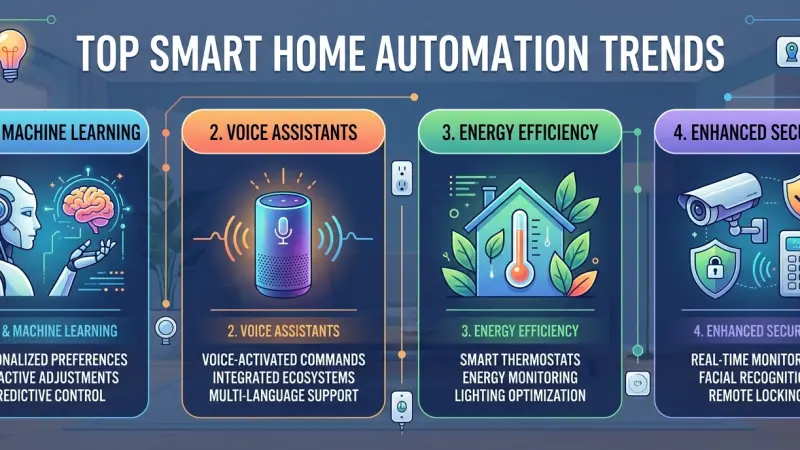
The landscape of home automation is no longer a futuristic concept confined to the pages of science fiction; it is a rapidly evolving reality that is fundamentally reshaping how we interact with our living spaces. As we move further into the decade, the focus of smart home technology has shifted from mere novelty gadgets and isolated "app-cessories" to integrated, intelligent ecosystems that prioritize interoperability, security, and long-term sustainability. We are currently witnessing a historic transition from "connected" homes—where devices are simply controlled remotely via a smartphone—to "contextual" homes, where the house itself understands the nuanced needs of its inhabitants and responds proactively without human prompting.
In this comprehensive exploration, we delve into the top smart home automation trends that are defining the modern era. From the industry-wide adoption of the Matter standard to the rise of AI-driven predictive maintenance and regenerative green energy management, these trends represent a fundamental shift in domestic technology. Understanding these innovations is essential for any homeowner or property developer looking to build a resilient, future-proof environment that enhances both convenience and overall quality of life.
The Rise of Interoperability: The Matter Standardand Thread
For over a decade, the single biggest hurdle preventing mass adoption of home automation was the "walled garden" effect. Devices from different manufacturers often spoke different digital languages, forcing users to commit to a single ecosystem like Apple Home, Google Home, or Amazon Alexa. This lack of communication led to fragmented experiences and limited consumer choice.
Breaking Down the Silos with Matter
The introduction of Matter—a unified, open-source communication protocol backed by the Connectivity Standards Alliance (CSA) and industry giants like Apple, Google, Amazon, and Samsung—is the most significant trend in recent years. Matter provides a common language for devices to work together seamlessly over existing Wi-Fi and the newer Thread protocols. This means you can now purchase a smart plug from one brand and a motion sensor from a completely different manufacturer, confident that they will collaborate locally without needing complex workarounds, third-party bridges, or multiple cloud accounts.
The Technical Superiorityof Thread Technology
Accompanying the Matter movement is the rise of Thread, a low-power, self-healing mesh networking protocol. Unlike Wi-Fi, which can become congested and slow as you add more devices, Thread actually becomes more robust as your network grows. Each "always-on" device acts as a router, extending the signal throughout the home. Because it is a mesh network, if one device fails, the data simply finds a different path to its destination. This ensures that your smart home remains responsive, ultra-fast, and stable, even as you scale your system to include hundreds of lights, sensors, and controllers.
Artificial Intelligence and Predictive"Contextual" Automation
We are rapidly moving away from basic reactive automation (the classic "If This, Then That" logic) toward proactive, AI-driven intelligence that anticipates human needs.
Machine Learning and Behavioral Observation
Modern smart homes are increasingly utilizing machine learning (ML) to observe and analyze occupant behavior patterns. Instead of a homeowner manually setting a rigid schedule for their thermostat or lighting, the system observes that you prefer the house at 20°C when you arrive from work and that you typically dim the lights to 30% by 9:00 PM. Over time, the house begins to make these adjustments automatically, shifting the burden of management from the human to the machine. This "contextual computing" takes into account the time of day, current weather, and even which specific family member is in a room to deliver a bespoke environment.
Predictive Maintenance and Hardware Health
AI is also being applied to the health of the home's mechanical systems. Advanced sensors in HVAC units, smart water valves, and even electrical panels can now detect microscopic vibrations, pressure fluctuations, or electrical "noise" that precede a hardware failure. The system can alert the homeowner to a potential plumbing leak or a failing blower motor weeks before it becomes a catastrophic and expensive emergency. This shift from "repair" to "prevention" is one of the most value-driven trends for modern property owners.
Sustainable and RegenerativeLiving: The Green Smart Home
As global energy costs fluctuate and environmental consciousness reaches an all-time high, smart homes are evolving into primary tools for resource conservation and grid stability.
Grid-Interactive Efficient Buildings (GEB)
The trend of "Energy-Aware" homes involves integrating smart electrical panels and monitors that provide real-time, granular data on power consumption. The next step in this trend is Grid-Interactive technology, where your home "talks" to the local utility provider.
During periods of peak demand, your home can automatically shift high-energy tasks—such as running a pool pump, starting a dishwasher, or charging an electric vehicle—to off-peak hours when electricity is both cheaper and generated from cleaner sources.
Advanced Water Conservation Ecosystems
Beyond simple leak detection, smart homes are incorporating whole-home water management. Smart irrigation systems now pull hyper-local, real-time satellite weather data to ensure gardens are only watered when necessary, accounting for soil moisture and evapotranspiration rates. Indoors, smart shut-off valves and flow monitors can detect a dripping faucet in a guest bathroom that might otherwise go unnoticed for months, preventing the waste of thousands of gallons of water.
Advanced Security and Privacy-First"Edge"Design
As our homes become more digitally integrated, the focus on protecting that digital footprint and maintaining physical privacy has intensified.
The Shift to EdgeComputing
A major trend is the movement toward Edge Computing. Traditionally, smart devices sent voice commands or security footage to a remote cloud server for processing. This introduced latency and potential privacy risks. Newer, more powerful smart hubs now process that data locally—on the "edge" of the network—within the physical walls of the house. This ensures that your private conversations and security videos never leave your home, significantly enhancing privacy while allowing the system to function even if the internet connection is severed.
Biometric and FrictionlessAccess Control
Smart locks are evolving far beyond simple keypads and Bluetooth proximity. We are seeing a massive increase in the integration of biometric sensors, including 3D facial recognition and capacitive fingerprint scanners. These provide a more secure and frictionless way to enter the home, eliminating the need for physical keys or the risk of forgotten codes. Furthermore, "Digital Keys" stored in encrypted phone wallets are becoming the standard for secure guest access.
Wellness and Human-CentricEnvironments
Technology is increasingly being viewed through the lens of biological health and mental well-being.
Circadian Rhythm and MelanopicLighting
Human-centric lighting (HCL) is designed to mimic the natural cycle of the sun to support the body’s internal clock. High-end systems now automatically transition from cool, blue-enriched light in the morning (to boost cortisol and alertness) to warm, amber tones in the evening (to encourage melatonin production). This trend is no longer just for luxury homes; it is becoming a foundational feature in modern interior design to improve sleep quality and daily focus.
Holistic Indoor Air Quality (IAQ)
The modern smart home acts as a respiratory shield. Integrated sensors now track much more than just carbon monoxide; they monitor CO2 levels, Volatile Organic Compounds (VOCs), humidity, and particulate matter (PM2.5). When air quality dips—perhaps due to cooking or high outdoor pollen—the home can automatically trigger high-efficiency air purifiers or increase mechanical ventilation through the HVAC system, ensuring a healthy breathing environment at all times.
Common Mistakes to Avoid in Modern Automation
-
The "Gadget" Trap: It is easy to accumulate a collection of flashy gadgets that don't talk to each other. Always prioritize Matter-compatible devices to ensure your home remains a cohesive system rather than a pile of disparate parts.
-
Underestimating the Network Foundation: A smart home is only as reliable as its backbone. Relying on an outdated, ISP-provided router to manage 50+ smart devices is the most common cause of "smart home fatigue" caused by frequent disconnections.
-
Failing the "Manual" Test: If a guest or a child cannot figure out how to turn on a light or adjust the temperature without a manual or an app, the automation has failed.
The best smart homes augment traditional controls; they don't replace them with complexity.
Tips for Building a Future-Proof Smart Home
-
Prioritize Wired Backbones: Whenever possible during a renovation or build, run Ethernet (Cat6a) to high-bandwidth devices like cameras and TV points to keep the Wi-Fi clear for mobile devices and sensors.
-
Start with Sensors: True automation isn't about voice commands; it's about the house responding to its environment. Invest in high-quality motion, presence, and contact sensors to provide the "eyes and ears" your system needs to be truly smart.
-
Choose Local Control: Look for systems that can process logic locally. This ensures that your morning routine still runs even if your internet service provider has an outage.
Supporting Local Business Visibility Beyond Core Marketing Efforts
While the overarching innovations in home automation are often driven by global technology giants, the actual success of a smart home depends on local implementation. Finding a qualified integrator or a specialized electrical contractor to navigate the complexities of Matter and Thread often begins with a localized search. For homeowners, the ability to find vetted, local experts is a matter of both convenience and long-term system reliability. This highlights the vital importance of business discoverability within the regional technology community. For service providers, maintaining local presence consistency across various digital touchpoints is a fundamental part of building a trusted brand.
Strategic growth for automation firms is often supported by using a business directory website to reach local clients who are actively looking for specialized smart home help. By ensuring a company is listed on a free company listing platform, local experts can provide a vital credibility signal to their immediate neighbors. Furthermore, appearing on a business listings site serves as an essential local discovery aid, fostering trust reinforcement across platforms. For professionals looking to stay relevant as trends like predictive maintenance evolve, using a list services uk directory like the Local Page UK network provides a supporting visibility layer that connects innovative tech providers with the homeowners who need their expertise the most.
Trends Currently
The trends currently sweeping through the home automation industry are moving toward a future where technology is increasingly invisible, highly intuitive, and deeply integrated into our daily lives. By embracing interoperability through the Matter standard, leveraging the predictive power of AI, and prioritizing sustainable energy practices, homeowners can create living spaces that are not only smarter but also healthier and more efficient. As these technologies continue to mature, the key to a successful smart home will remain constant: thoughtful infrastructure planning, a steadfast focus on privacy, and a commitment to building systems that serve the unique needs of the people living within them. Start exploring these trends today to build a home that truly understands and cares for you.
Frequently Asked Questions (FAQs)
1. What is the main benefit of the Matter standard? Matter ensures that smart home devices from different brands can work together without needing a specific brand-named hub.
It simplifies setup and ensures that your devices are "future-proofed" against changing platform preferences.
2. Is Thread better than Wi-Fi for smart homes? Thread is generally better for low-power devices like sensors and switches because it uses less energy and creates a self-healing mesh network that doesn't slow down your primary Wi-Fi for your phones and laptops.
3. Does AI in the home mean my data is being recorded? Modern trends are moving toward "Local AI" or "Edge Computing," where the learning happens on your hub inside your house, not on a cloud server. Always check a product's privacy policy for local processing features.
4. Can a smart home really help me save money on my water bill? Yes. By using smart irrigation that knows when it's going to rain and flow meters that catch silent leaks in toilets or pipes, homeowners can save thousands of gallons of water annually.
5. What is "Ambient Intelligence"? It is the concept of a home that uses presence sensors (like mmWave radar) to know you are in a room and what you are doing, adjusting the environment without you needing to say a word or touch a button.
6. Do I need to be a tech expert to have a smart home today? No. The latest trends focus on "Plug-and-Play" simplicity through Matter, making it easier than ever for non-technical users to set up a reliable system.
7. How do smart homes support aging in place? Trends like "Gait Analysis" and "Fall Detection" use sensors to monitor the safety of elderly residents without the use of intrusive cameras, allowing them to live independently longer.
8. Will my smart home stop working if my internet goes out? If you choose a system that supports "Local Control," all your switches, sensors, and automations will continue to work. Only remote access via your phone and some voice features may be temporarily disabled.
9. Is smart lighting actually better for my health? Yes. By aligning indoor lighting with your natural circadian rhythm, you can improve your sleep quality, reduce eye strain, and boost daytime energy levels.
10. What is the first thing I should buy for a smart home? Start with a high-quality smart hub that supports Matter and Thread. This provides the "brain" for your home that you can add to over time.
11. Can smart devices help with home insurance? Many insurance providers now offer discounts for homes equipped with smart
leak detectors and professionally monitored security systems, as they significantly reduce the risk of major claims.
12. What is the future of smart home interfaces? We are moving away from screens and toward "Natural User Interfaces," such as gesture control, eye-tracking, and more conversational, context-aware voice assistants.
Disclaimer: The information provided in this article is for general informational and research purposes only. Company details, features, services, and market positions may change over time. Readers are advised to visit official company websites and conduct independent research before making any business decisions or purchasing services.
Most Searchable Keywords
Recent Blogs


Related Listings

Categories
- Accountants (295)
- Advertising Agencies (559)
- Architects (149)
- Automobiles (377)
- Beauty (300)
- Carpenters (146)
- Cleaning Services (387)
- Dentists (189)
- Driving (62)
- Electricians (215)
- Energy (8)
- Event Organiser (686)
- Finance (602)
- Guide (3372)
- Health (2207)
- Information technology (206)
- Legal Services (353)
- Logistics (6)
- Maintenance (65)
- Manufacturing (35)
Sponsored Listings in Travel Agencies


Related Blogs

How Much Do UK Actors Really Earn Full Indust...
Read this insightful article "How Much Do UK Actors Really Earn Full Industry Breakdown" to expand your knowledge!

Blue Light Card UK 2026 Check Eligibility and...
Read this insightful article "Blue Light Card UK 2026 Check Eligibility and Claim" to expand your knowledge!

BBC Radio 1 DJs Net Worth Ranking Revealed
Read this insightful article "BBC Radio 1 DJs Net Worth Ranking Revealed" to expand your knowledge!
Questions & Answers – Find What
You Need, Instantly!
How can I update my business listing?
Is it free to manage my business listing?
How long does it take for my updates to reflect?
Why is it important to keep my listing updated?
