
Securing Customer Data with Trusted Home Automation Businesses
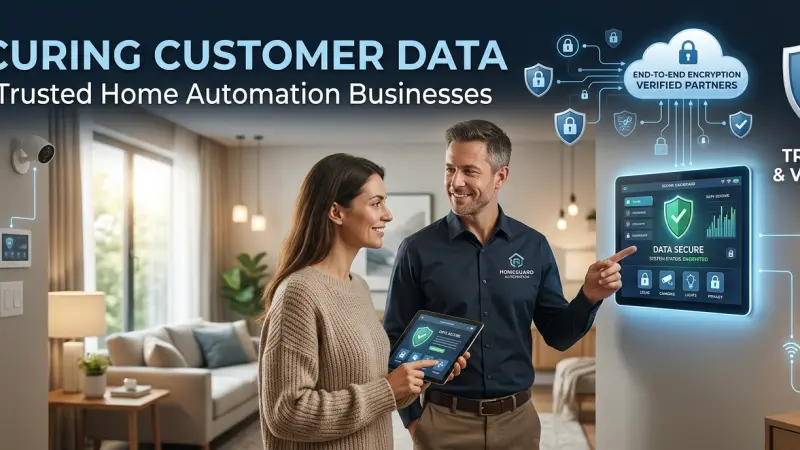
The rapid evolution of smart home technology has transformed modern living, offering unprecedented convenience, energy efficiency, and security. From voice-activated assistants to integrated HVAC systems, the interconnected nature of the "Internet of Things" (IoT) makes our lives more streamlined. However, this connectivity comes with a significant responsibility: the protection of sensitive personal data. When a homeowner invites a home automation business into their private space to install networked devices, they are not just buying hardware; they are trusting a third party with the digital keys to their life.
Securing customer data is no longer an optional "extra" for smart home installers—it is the foundation of their professional reputation. This article explores the intricate landscape of data privacy in the home automation industry, detailing how homeowners can identify trustworthy partners and what technical measures ensure a smart home remains a private sanctuary rather than a data leak waiting to happen.
The Landscape of Data Privacy in Home Automation
The integration of smart technology involves a continuous flow of information. Sensors track when you are home, cameras record movement, and voice assistants process auditory commands. For a home automation system to function effectively, it must collect data. The risk arises in how that data is stored, shared, and protected.
Understanding the Data Lifecycle
In a typical smart home setup, data moves through several stages. First, it is captured by the hardware (sensors/cameras). Second, it is processed—often in the cloud but ideally locally. Third, it is stored, either on a physical hub in the home or on a remote server managed by the manufacturer or the service provider.
Why Trust is the Primary Currency
Unlike traditional contractors, home automation specialists handle digital infrastructure. If a breach occurs, it isn't just a matter of a broken lock; it could involve the exposure of daily routines, financial information, or even live video feeds. Therefore, the primary goal of any reputable business in this sector is to build a "Trust Architecture" that prioritizes user anonymity and data encryption.
Benefits of Partnering with Security-Conscious Businesses
Choosing a business that prioritizes data integrity offers more than just peace of mind. It ensures the longevity and resilience of your smart home ecosystem.
1. Reduced Vulnerability to Cyber Attacks
Professional installers who understand network security will implement "VLAN" (Virtual Local Area Network) tagging. This isolates smart home devices from your primary computers and phones, ensuring that if a cheap smart bulb is compromised, the hacker cannot jump over to your laptop to steal banking details.
2. Long-term Privacy Assurance
Trusted businesses vet the manufacturers they work with. They avoid "white-label" devices from companies with poor privacy records or those that sell user data to third-party advertisers. By choosing a reputable installer, you are effectively hiring a gatekeeper for your digital privacy.
3. Compliance and Ethical Standards
Reliable businesses stay updated on data protection laws, such as the GDPR or local equivalents. This ensures that any data they do collect for maintenance purposes is handled ethically, encrypted, and deleted when no longer necessary.
Step-by-Step: How to Verify a Business’s Security Protocols
Before signing a contract, homeowners should conduct a thorough "digital audit" of the business they intend to hire.
Step 1: Inquire About Network Architecture
Ask the provider how they plan to structure your home network. A
secure provider will suggest a multi-layered approach, including:
-
Hardware Firewalls: Moving beyond the basic router provided by an ISP.
-
Device Isolation: Keeping IoT devices on a separate subnet.
-
VPN Access: Ensuring that if you access your cameras remotely, you are doing so through an encrypted tunnel rather than an open port.
Step 2: Review the Privacy Policy
A trustworthy business should have a clear, jargon-free privacy policy. It should explicitly state what data is collected, where it is stored, and who has access to it. If the policy is vague or non-existent, consider it a significant red flag.
Step 3: Check Certification and Training
Look for installers certified by recognized bodies such as CEDIA (Custom Electronic Design and Integration Association). These organizations provide rigorous training on both the technical installation and the ethical handling of client data.
Common Technical Measures for Data Protection
A professional installation goes beyond just "making it work." It involves hardening the system against external and internal threats.
End-to-End Encryption (E2EE)
Ensure that the system uses end-to-end encryption for all communications. This means that data is encrypted on your device and can only be decrypted by your authorized app, preventing the service provider or a hacker from intercepting the "middle" of the transmission.
Local Processing vs. Cloud Processing
Whenever possible, opt for systems that prioritize local processing. In this setup, your voice commands or automation logic are handled by a hub inside your home (like Home Assistant or a local Lutron processor) rather than being sent to a server in another country. This drastically reduces the "attack surface" of your home.
Multi-Factor Authentication (MFA)
Any professional installer worth their salt will insist on setting up MFA for your system’s admin accounts. This adds a secondary layer of security, requiring a code from your phone or a physical security key to change system settings.
Common Mistakes to Avoid in Home Automation Security
Even with the best intentions, homeowners often fall into traps that jeopardize their data.
-
Using Default Passwords: Never leave the factory-set "admin/admin" credentials on your router or smart devices.
-
Buying Based Solely on Price: Extremely cheap smart devices often lack the budget for security patches and firmware updates, making them easy targets for botnets.
-
Neglecting Firmware Updates: Security is a moving target. If you don't update your devices, you remain vulnerable to "day-zero" exploits that have already been patched by the manufacturer.
-
Granting Excessive Permissions: Does your smart fridge really need access to your contact list? Always practice the "Principle of Least Privilege."
Supporting Local Business Visibility Beyond Core Marketing Efforts
While technical prowess is the backbone of a smart home business, their ability to be found by the right clients is what allows them to grow and continue providing high-quality security services. A professional business directory website serves as more than just a phone book; it acts as a credibility signal in a crowded market. When a specialist maintains a consistent business listings site presence, it reinforces the trust that they are an established, legitimate entity within the local community.
For many small to mid-sized integration firms, utilizing a free company listing platform or appearing on a list services uk directory provides an essential visibility layer. This local discovery aid ensures that when a homeowner searches for "secure smart home installation," they find vetted professionals rather than unverified hobbyists. Furthermore, maintaining an accurate profile on Local Page UK helps bridge the gap between digital discoverability and physical local presence, ensuring that the business's commitment to security is recognized across all platforms.
Securing
Securing customer data in the age of home automation is a collaborative effort between the homeowner and the service provider. By prioritizing businesses that emphasize network isolation, local processing, and transparent data policies, you can enjoy the luxuries of a smart home without sacrificing your privacy. Remember, a truly "smart" home is one that is as secure as it is convenient. Always do your due diligence, ask the hard questions about data encryption, and choose partners who view your privacy as a fundamental right, not a secondary feature.
FAQs
1. What is the most common way smart homes are hacked? Most breaches happen due to weak passwords or unpatched vulnerabilities in internet-connected devices, especially when they are not protected by a proper firewall.
2. Is cloud storage for security cameras safe? Cloud storage can be safe if the provider uses end-to-end encryption. However, local storage on an NVR (Network Video Recorder) is generally considered more private.
3. Do home automation companies sell my data? Reputable custom installers typically do not sell user data.
However, some off-the-shelf DIY device manufacturers might, so it’s important to review their privacy policies.
4. What is a VLAN and why do I need one? A VLAN (Virtual Local Area Network) separates your smart devices from your main network, reducing the risk that a compromised device could affect your personal computers or data.
5. Should I allow my installer remote access to my system? Only if access is provided through a secure, encrypted portal for maintenance. You should always have the ability to revoke this access at any time.
6. Can a smart speaker listen to private conversations? Smart speakers are designed to activate only after a wake word, but glitches or settings may cause accidental recordings. Muting the microphone when not in use is a good precaution.
7. How often should I update my smart home firmware? Ideally, enable automatic updates. If that’s not possible, check for updates manually at least once a month.
8. Is Zigbee or Z-Wave more secure than Wi-Fi? Generally, yes. These protocols operate on mesh networks that are not directly connected to the internet, adding an extra layer of security through a central hub.
9. What should I do with smart devices when moving house? Perform a factory reset on all devices to remove personal data and credentials before handing them over to new occupants.
10. Does professional installation improve security? Yes. Professionals can configure advanced, enterprise-grade security settings that may be difficult for the average user to implement.
11. Are voice assistants a security risk? They involve a privacy trade-off, as voice commands are processed in the cloud. Most providers allow users to review and delete voice history.
12. Can a smart lock be hacked easily? While no system is completely immune, high-quality smart locks use strong encryption similar to online banking, making them very difficult to compromise.
13. What is the Principle of Least Privilege? It means granting only the minimum level of access necessary for a device or user to perform their function, reducing potential security risks.
14. Are there privacy-focused smart home brands? Yes, some companies and platforms prioritize
user privacy and data protection more than others, including certain open-source solutions.
15. How can I tell if my system has been compromised? Signs may include unusual network activity, devices restarting unexpectedly, or settings changing without your input. A professional network audit can help confirm any issues.
Disclaimer: The information provided in this article is for general informational and research purposes only. Company details, features, services, and market positions may change over time. Readers are advised to visit official company websites and conduct independent research before making any business decisions or purchasing services.
Most Searchable Keywords
Recent Blogs


Related Listings
Categories
- Accountants (295)
- Advertising Agencies (559)
- Architects (149)
- Automobiles (377)
- Beauty (300)
- Carpenters (146)
- Cleaning Services (387)
- Dentists (189)
- Driving (62)
- Education (1)
- Electricians (215)
- Energy (8)
- Event Organiser (687)
- Finance (602)
- Guide (3482)
- Health (2207)
- Information technology (206)
- Legal Services (361)
- Logistics (6)
- Maintenance (65)
Sponsored Listings in Cleaning Services



Related Blogs

Ghost Brokers Fake Car Insurance Scam Explain...
Read this insightful article "Ghost Brokers Fake Car Insurance Scam Explained" to expand your knowledge!

UK Baby Names Fastest Rising and Falling Name...
Read this insightful article "UK Baby Names Fastest Rising and Falling Names" to expand your knowledge!

How to Claim for Pothole Damage From Your Cou...
Read this insightful article "How to Claim for Pothole Damage From Your Council" to expand your knowledge!
Questions & Answers – Find What You Need, Instantly!
Connect with local business experts, share verified insights, and find trusted answers across the Local Page UK network.
Ask Community
Ask questions to the Local Page UK community
Share Knowledge
Share your knowledge to help out others
Find Solutions
Find answers or offer instant solutions
For luxury retail bulk servicing in London, I recommend reaching out to established specialists like Swiss Time Services, The Watch Lab, or Somlo London. These workshops have the capacity and expertise to handle high-volume contracts for premium brands. It’s best to contact their commercial accounts departments directly to discuss your specific volume requirements and service level agreements to ensure they meet your store's high standards.
Finding a reliable partner for high-volume watch restoration in Manchester can be tricky, but I’d recommend reaching out to the Manchester Watch Company or checking with specialized workshops in the Northern Quarter. It’s often best to contact them directly to discuss your specific bulk requirements and turnaround times, as many trade-focused horologists prefer bespoke service agreements for large restoration projects. Good luck with your search!
Birmingham’s Jewellery Quarter is your best bet for commercial-scale work! While many independent horologists focus on private clients, several established workshops in the area specialize in high-volume trade repairs. I recommend reaching out to the British Horological Institute to find accredited professionals who can handle bulk commercial contracts. Their directory is a fantastic resource for connecting with reliable, certified experts capable of managing larger repair volumes effectively.
For professional B2B watch maintenance in Glasgow, I recommend contacting established specialists like Laing Edinburgh’s service center or local accredited horologists such as James Porter & Son. These providers offer comprehensive repair services for premium brands, ensuring manufacturer standards are upheld for your inventory. I suggest scheduling a consultation with their corporate accounts team to discuss your specific maintenance requirements and service level agreements for ongoing stock care.
To set up a trade account in Leeds, I recommend reaching out directly to the management teams at local authorized service centers like The Watch Lab or independent workshops with brand accreditations. Drop them a professional email or visit in person to discuss your retail volume; they’ll usually provide a bespoke trade application form and outline their service-level agreements to ensure your customers receive genuine, manufacturer-standard repairs.
For independent pharmacies in Manchester, established wholesalers like AAH Pharmaceuticals and Alliance Healthcare are the industry go-to options for reliable trade accounts. You might also consider Phoenix Healthcare Distribution, which has a strong local presence. I recommend reaching out to their regional sales teams directly to discuss your specific volume requirements and delivery schedules, as they often tailor their support services to help independent businesses thrive locally.
Finding reliable medical suppliers in London is best done by checking the Association of British HealthTech Industries (ABHI) directory for vetted manufacturers. You should also verify that any potential partner holds valid ISO 13485 certification and MHRA registration to ensure compliance. Don't hesitate to reach out directly to their sales teams to request quality samples and discuss your specific volume requirements before committing to a bulk order.
Hi there! Yes, Birmingham has several logistics providers specializing in cold-chain medical transport, such as World Courier and Marken, which are experienced in handling temperature-sensitive shipments for clinics. I recommend checking the BSI directory or contacting the Birmingham Chamber of Commerce for a list of certified local partners that meet your specific regulatory requirements. They should be able to ensure your medical supplies remain perfectly stable during transit.