
UK Snow Forecast: When and Where to Expect Heavy Winter Snowfall
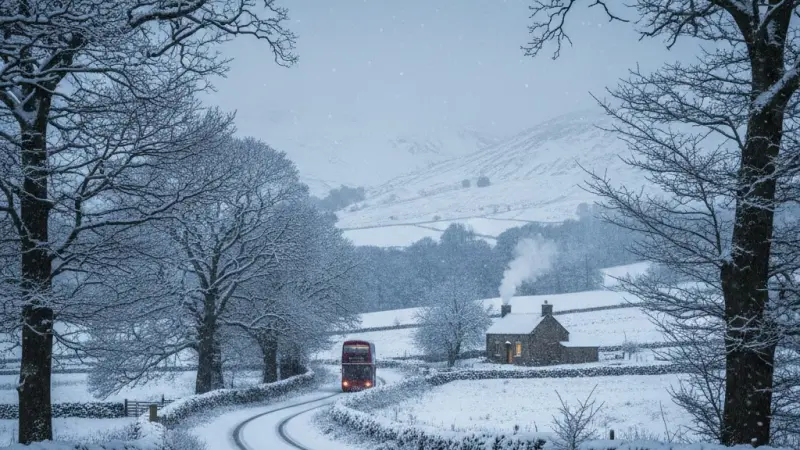
The current snow forecast UK indicates a shift towards more unsettled, colder conditions as maritime polar air masses begin to influence national weather patterns. For those asking when it will snow, the immediate outlook suggests that northern higher ground is most at risk, with the potential for transient snowfall reaching lower levels during periods of intense precipitation. To directly answer the query: significant snowfall in the UK typically requires a "Best from the East" or a "Northerly Plunge," where cold continental or arctic air meets moist Atlantic systems. While the forecast fluctuates, the highest probability of settling snow remains across the Scottish Highlands, the Pennines, and the Welsh mountains, with southeastern regions seeing a lower but present risk during late winter cold snaps.
Understanding the mechanics of British snowfall is essential for accurate planning. Because the UK is an island nation surrounded by relatively warm seas, the "snow line" is often a matter of just one or two degrees Celsius. This narrow margin means that a forecast for heavy rain can quickly transition into a significant snow event if the temperature drops slightly more than anticipated or if evaporative cooling occurs during heavy bursts. Monitoring the freezing level and dew point is therefore more critical than simply looking at the surface temperature. As we move deeper into the season, stay prepared for rapid changes in road conditions and public transport availability.
Atmospheric Drivers Shaping the Winter Landscape
The primary driver for any significant snow event in the British Isles is the position of the jet stream. When this high-altitude ribbon of air shifts south of the UK, it allows cold arctic or polar air to flood the country. Conversely, a northern track brings milder, wetter weather from the Atlantic. This year, meteorologists are paying close attention to the North Atlantic Oscillation and the strength of the Stratospheric Polar Vortex. A "disrupted" vortex often leads to high-pressure blocking over Scandinavia or Greenland, which acts as a catalyst for prolonged cold spells and heavy snowfall across eastern and central counties.
The Impact of Sudden Stratospheric Warming
Sudden Stratospheric Warming is a phenomenon that occurs high above the North Pole but has profound effects on our surface weather weeks later. When the stratosphere warms rapidly, it can reverse the direction of the polar easterlies, causing the jet stream to buckle. This often results in "blocking" patterns that prevent mild westerly winds from reaching us, instead pulling in frigid air from Siberia. Historical events like the "Beast from the East" were direct results of this atmospheric shift, leading to the deepest snow drifts seen in decades across the UK.
Identifying Early Warning Signs
Vigilance is key when tracking these high-altitude shifts. Analysts look for a slowing of the zonal winds and a rise in polar temperatures. Once the warming is confirmed, there is usually a ten to fourteen-day window before the UK feels the impact. During this time, forecast models often show high volatility, with "spaghetti plots" indicating a wide range of potential outcomes before converging on a cold solution.
Regional Variations and Altitudinal Influence
Snowfall in the UK is never a uniform experience. While the Highlands of Scotland might see snow for over a hundred days a year, parts of Cornwall may go several winters without a single flake settling. This disparity is due to the "urban heat island" effect in major cities and the proximity of southern coastal areas to the warming influence of the English Channel. Elevation plays the most significant role; for every hundred metres of ascent, the temperature typically drops by nearly one degree, which is often the difference between a cold drizzle and a winter wonderland.
Northern Territories and Highland Resilience
The north of England and Scotland are the traditional strongholds for winter weather. Areas like the Cairngorms and the Lake District are better equipped for heavy accumulations, with infrastructure designed to handle prolonged periods of sub-zero temperatures. In these regions, the snow forecast is a part of daily life, influencing everything from school closures to agricultural schedules. Snow here tends to be "drier" and more likely to drift due to higher wind speeds across the open moors and peaks.
Southern Vulnerability to Sudden Extremes
In contrast, the south of England often struggles with even minor accumulations. Because snow is less frequent, local authorities may have smaller grit reserves, and motorists are often less experienced in winter driving.
A mere two centimetres of snow in London or the Home Counties can cause more disruption than twenty centimetres in Aberdeenshire. The "maritime influence" also means snow in the south is often "wet" and heavy, leading to increased risk of fallen branches and power line damage.
Common Mistakes in Interpreting Weather Charts
One of the biggest errors the public makes is over-reliance on automated weather apps that provide a simple "snow icon." These apps often fail to account for the complex topography of the UK. For example, a forecast might show snow for a specific postcode, but if you live at the bottom of a valley rather than on the hillside, you may only see rain. Another mistake is ignoring the "dew point"—if the dew point is above one or two degrees, snow is unlikely to settle regardless of what the thermometer says. It is vital to look at the "feels like" temperature and wind chill for a true sense of the conditions.
The Pitfalls of Long Range Speculation
Tabloid headlines often scream about "weeks of snow" based on a single erratic run of a long-range forecast model. These models are designed to show trends, not specific daily events. Relying on a forecast more than seven days in advance is risky, as the positioning of a low-pressure system by just fifty miles can be the difference between a sunny day and a blizzard. A more professional approach involves looking at ensemble averages, which provide a percentage probability of cold weather rather than a definitive "yes" or "no."
Understanding the Rain Snow Transition Zone
The transition zone is perhaps the most difficult aspect of the snow forecast UK. This is a moving boundary where cold air meets warm air. Because the UK is so small, this boundary often sits directly over the country. If the boundary moves slightly north, the whole country gets rain; slightly south, and the whole country is under snow. Most "failed" snow forecasts are actually correct regarding the moisture and cold air being present, but the two elements simply failed to overlap at the exact right moment.
Practical Steps for Winter Preparation
Preparation should begin long before the first flake falls. For homeowners, this means checking that pipes are adequately insulated to prevent bursts during a "deep freeze." Ensuring your boiler has been serviced and that you have a supply of rock salt for paths and driveways is essential. It is also wise to keep a "winter kit" in your vehicle, including a shovel, a warm blanket, a torch, and some high-energy snacks. If the forecast indicates heavy snow, try to complete any essential travel before the precipitation starts, as conditions can deteriorate in minutes.
Home Maintenance and Energy Efficiency
Keeping your home warm during a cold snap doesn't have to break the bank. Closing curtains at dusk helps retain heat, and using draft excluders around doors can significantly reduce heat loss. If you have an older property, ensure your loft insulation is up to the current recommended depth of 270mm. During periods of heavy snow, remember to clear your gutters; if they become blocked with ice, melting snow can back up under the roof tiles and cause dampness inside the home.
Vehicle Safety and Driving Techniques
Driving in snow requires a completely different mindset. Use high gears to pull away to avoid wheel spin, and maintain a much larger following distance than usual—stopping distances can increase tenfold on icy roads. Ensure your tyres have at least 3mm of tread; while the legal limit is 1.6mm, winter performance drops off sharply below 3mm. If you find yourself skidding, steer into the skid and avoid slamming on the brakes, as this will only lock the wheels and result in a total loss of control.
Future Outlook and Climate Considerations
The long-term snow forecast UK is being influenced by broader climatic changes. While global temperatures are rising, some scientists suggest that a weakening of the Gulf Stream could actually lead to harsher winters for the UK in the future. We are seeing a trend towards "weather extremes," where we go from record-breaking warmth to sudden, intense cold snaps. This volatility makes accurate forecasting more difficult but also more important. The "traditional" winter may be disappearing, replaced by shorter, more intense bursts of arctic weather.
The Role of Ocean Currents
The Atlantic Meridional Overturning Circulation (AMOC) acts as a giant conveyor belt, bringing warm water to our shores. If this current slows down due to melting arctic ice, the "buffer" that keeps British winters mild could disappear.
This would result in the UK having a climate more similar to Labrador in Canada, which sits at the same latitude but experiences much more severe winters. While this is a long-term projection, small shifts in ocean temperatures are already affecting the path of storms reaching our coastlines.
Technological Advances in Forecasting
Despite the challenges, our ability to predict snow has improved vastly. Supercomputers now run billions of calculations every second, allowing meteorologists to track small-scale features like "lake effect" snow or "convective showers" that were previously impossible to pinpoint. We are moving towards a future where "nowcasting"—providing highly accurate forecasts for the next two to six hours—will become the standard, allowing people to make real-time decisions about their safety and travel plans.
Winter Wellness and Community Support
Cold weather isn't just a logistical challenge; it’s a health consideration. Staying active and eating warm, nutritious meals is vital for maintaining body temperature. It is also a time to look out for vulnerable neighbours, particularly the elderly, who may struggle to get out for supplies or keep their homes adequately heated. A quick check to see if they have enough milk, bread, and their prescriptions can make a world of difference during a prolonged cold spell. Community spirit is often at its strongest when the weather is at its worst.
Mental Health During Darker Months
The "winter blues" or Seasonal Affective Disorder (SAD) can be exacerbated by long periods of grey, snowy weather. Maximising your exposure to natural light is crucial; even on a cloudy day, spending thirty minutes outside can improve your mood. If the snow prevents you from going out, try to keep your indoor environment bright and airy. Remember that winter is a season of rest for nature, and taking a slower pace can be a healthy response to the environment around us.
Supporting Local Services
During heavy snowfall, our emergency services and healthcare providers come under immense pressure. Using services like 111 for non-emergencies and only calling 999 in life-threatening situations helps ensure that those in desperate need get help quickly. Similarly, following the advice of local councils regarding bin collections and school closures helps the community function more smoothly. By staying informed through the official snow forecast UK, you contribute to a more resilient and prepared society.
FAQ
Will it snow in London this winter?
London often sees less snow than the rest of the UK due to its southern location and the urban heat island effect, which keeps the city a few degrees warmer than the surrounding countryside.
However, during intense easterly blasts or when cold air is trapped under high pressure, the capital can see significant accumulations. Residents should monitor the short-term forecast for any signs of "thames streamers" which bring localised heavy bursts.
What is the best way to clear snow from a driveway?
The most effective method is to clear the snow as soon as it falls, before it has a chance to be compacted into ice by footfall or vehicle tyres. Use a wide snow shovel and push the snow to the edges of the path rather than lifting it, to save your back. Once cleared, spreading a thin layer of rock salt or even dishwasher salt will prevent any remaining moisture from freezing overnight.
How can I tell if snow will settle on the ground?
For snow to settle, the ground temperature needs to be at or below freezing. If the ground has been warm for several days, the first few hours of snowfall may simply melt upon contact. Look at the "dew point" on your weather app; a dew point below zero degrees is a strong indicator that snow will settle and remain dry rather than turning into slush.
Is the UK prepared for a heavy winter this year?
The UK government and local councils maintain significant strategic reserves of grit and salt, typically enough to last through several weeks of severe conditions. National Highways also operates a fleet of gritters and snowploughs to keep primary routes open. However, individual preparedness is equally important, as side roads and rural lanes are often the last to be treated, making personal vehicle preparation essential for many.
Does a white Christmas happen often in the UK?
Statistically, a white Christmas (defined as one snowflake falling in the 24 hours of December 25th) occurs about once every six years in the UK. However, the "picture postcard" version with deep snow on the ground is much rarer, especially in southern England. The most likely places to experience a white Christmas are the Scottish Highlands and the northern peaks, where temperatures remain consistently lower throughout the month.
Disclaimer: The information provided in this article is for general informational and research purposes only. Company details, features, services, and market positions may change over time. Readers are advised to visit official company websites and conduct independent research before making any business decisions or purchasing services.
Most Searchable Keywords
Recent Blogs


Related Listings


Categories
- Accountants (295)
- Advertising Agencies (559)
- Architects (149)
- Automobiles (377)
- Beauty (300)
- Carpenters (146)
- Cleaning Services (387)
- Dentists (189)
- Driving (62)
- Electricians (215)
- Energy (8)
- Event Organiser (686)
- Finance (602)
- Guide (3377)
- Health (2207)
- Information technology (206)
- Legal Services (357)
- Logistics (6)
- Maintenance (65)
- Manufacturing (35)
Sponsored Listings in Hotels

Related Blogs

How Much BBC Radio 4 Today Programme Hosts Re...
Read this insightful article "How Much BBC Radio 4 Today Programme Hosts Really Earn" to expand your knowledge!

New UK Trade Union Access Rules for Employers...
Read this insightful article "New UK Trade Union Access Rules for Employers in 2026" to expand your knowledge!
Winter Fuel Payment Eligibility and How Much...
Read this insightful article "Winter Fuel Payment Eligibility and How Much You Could Get" to expand your knowledge!
Questions & Answers – Find What
You Need, Instantly!
How can I update my business listing?
Is it free to manage my business listing?
How long does it take for my updates to reflect?
Why is it important to keep my listing updated?
