
UK V2X FastHub Guide EV Technology for National Grid Stability
- 👤 Alex
- 👁️ 180 Views
- Last Updated: March 25, 2026
- 🏷️ Electricians
Target Audience: UK SMEs, Fleet Managers, and Energy Contractors|Topic Sustainable Energy Infrastructure
Did you know that by 2030, the UK's collective electric vehicle fleet could represent a mobile battery storage capacity exceeding several gigawatt-hours, potentially enough to power millions of homes during peak demand? As the United Kingdom transitions toward a net-zero economy, the challenge of managing intermittent renewable energy sources—such as wind and solar—has become a central concern for the National Grid and private energy stakeholders alike. The traditional model of one-way energy consumption is rapidly becoming obsolete, replaced by a sophisticated, decentralised ecosystem where every parked vehicle becomes a vital cog in the nation’s power infrastructure.

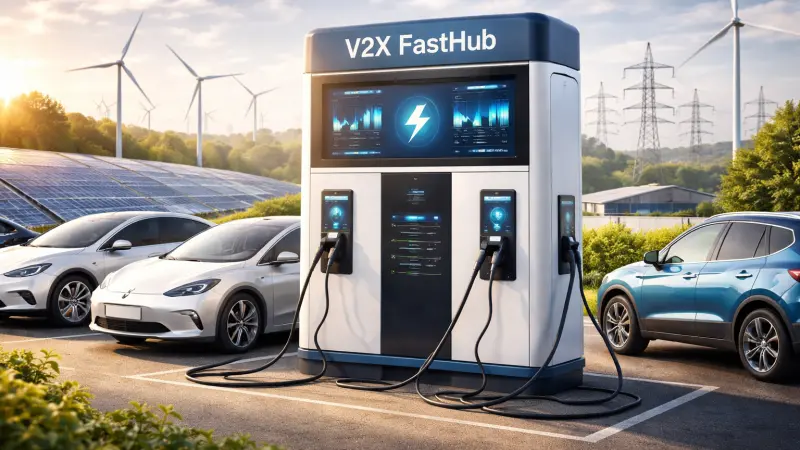
The V2X FastHub project, led by the innovative Leatherhead-based firm 3ti, represents the vanguard of this energy revolution. By securing over £1.3 million in government backing through the Department for Energy Security and Net Zero (DESNZ), this initiative is not merely testing a new type of charger; it is redesigning the fundamental relationship between transport and the electricity grid. Through the integration of Vehicle-to-Everything (V2X) technology into workplace and public charging hubs, the project aims to solve the "duck curve" of energy demand—the period where solar production drops just as evening demand spikes.
Understanding the Mechanics of V2X Technology
To appreciate the significance of the FastHub project, one must first understand the distinction between standard smart charging (V1G) and the bidirectional capabilities of V2X. While standard smart charging simply pauses or slows a charge during peak times, V2X allows the vehicle to actually discharge energy back into a building (V2B), a specific site (V2S), or the wider National Grid (V2G). This transformational capability effectively turns an EV from a passive load into a dynamic asset.
The Role of Bi-Directional DC Charging
Most existing V2X trials have relied on Alternating Current (AC) systems, which can be limited by the vehicle’s on-board inverter capacity and higher conversion losses. The V2X FastHub project breaks new ground by utilising Direct Current (DC) microgrids. DC-to-DC charging bypasses the vehicle’s internal limitations, allowing for much higher efficiency and faster response times when the grid requires immediate support. For UK businesses, this means less energy wasted as heat and more revenue-generating potential from their parked fleets.
By using a DC microgrid system, the project consortium—which includes Turbo Power Systems (TPS)—claims the system can deliver bi-directional charging up to three times faster than traditional methods. This speed is crucial for "frequency response" services, where the National Grid pays operators to balance the system's frequency within seconds of a fluctuation. For a contractor or SME manager, this translates into a high-performance infrastructure that supports the core business while silently earning "grid services" revenue in the background.
The Papilio3 Innovation Modular Solar Car Parks
At the heart of the FastHub project is the Papilio3, a flagship product from 3ti. Often described as a "pop-up" solar car park, the Papilio3 is a modular unit housed in a recycled shipping container. It combines three critical elements of the modern energy mix:
- Solar Generation: An overhead canopy of photovoltaic panels.
- On-site Storage: A 280 kWh DC battery storage system.
- EV Interconnectivity: Capacity to charge up to 12 vehicles simultaneously.
Strategic Partnerships: The Consortium Behind the Success
Large-scale infrastructure shifts require a multidisciplinary approach. The V2X FastHub project is supported by a consortium of industry leaders, each bringing a specific expertise to the Leatherhead headquarters and beyond:
1. 3ti: The Visionaries and Lead Partners
As the lead partner, 3ti is responsible for the overall systems integration. Their focus is on making the technology "invisible" to the end user. An employee should be able to plug in their car at work and trust that the system will manage the battery levels to ensure they have enough range for their journey home, while still contributing to grid stability in the intervening hours.
2. Turbo Power Systems (TPS): The Power Electronics Experts
TPS provides the "brains" of the electrical conversion process. Their contribution of advanced DC microgrid technology is what allows the system to achieve its high efficiency. By managing the flow of electricity at a high-frequency DC level, they reduce the number of conversion steps, which is traditionally where energy "leaks" occur in renewable systems.
3. GridBeyond: Energy Management and Aggregation
A single car cannot balance the National Grid. However, a thousand cars can. GridBeyond specialises in "aggregation"—grouping hundreds of smaller energy assets together to act as a single, virtual power plant. They provide the software interface that talks to the National Grid, bidding the available energy from the FastHubs into the various balancing markets, ensuring maximum financial return for the hub owners.
4. Cenex: Data, Research, and Validation
As a non-profit research and technology organisation, Cenex manages the real-world trials. They monitor a fleet of over 10 EVs, collecting granular data on battery degradation, user behaviour, and system performance. This data is vital for Innovate UK and the Department for Energy Security and Net Zero to justify further rollouts of the technology across the country.
Economic Impact for UK Businesses and SMEs
For many UK businesses, the transition to electric vehicles is often viewed through the lens of cost—high upfront vehicle prices and expensive charging point installations. The V2X FastHub project aims to flip this narrative by introducing the 'Charge-as-a-Service' (CaaS) model.
Under a CaaS model, the initial capital expenditure (CAPEX) for the charging hub is often covered by the provider or an investor. The business pays a subscription or a per-kWh fee, much like a utility bill.
However, because the V2X hub generates revenue by selling energy back to the grid, the net cost of the charging service can be significantly lower than traditional "dumb" charging. In some scenarios, if grid services revenue is high enough, the charging could theoretically become cost-neutral for the host site.
Reducing the Need for Grid Reinforcement
One of the quietest but most significant barriers to EV adoption in the UK is the capacity of local substations. Many business parks and industrial estates find that if they want to install ten rapid chargers, they must pay tens of thousands of pounds to the District Network Operator (DNO) for a "grid reinforcement" (upgrading the local cables and transformers). The FastHub project bypasses this. Because it has its own solar generation and a massive 280 kWh battery, it can "buffer" the load. It draws energy slowly from the grid when capacity is available and delivers it rapidly to the cars when needed, avoiding the need for expensive infrastructure upgrades.
Environmental Governance and Net-Zero Goals
The UK government has set a legally binding target to reach net-zero emissions by 2050. Achieving this requires more than just "clean" cars; it requires a "clean" grid. The primary weakness of wind and solar power is their intermittency—the wind doesn't always blow, and the sun doesn't always shine. Historically, the grid has relied on gas-fired "peaker" plants to fill these gaps.
V2X FastHubs offer a sustainable alternative to gas peakers. By using the stored energy in millions of EV batteries, the grid can ride through periods of low renewable generation without firing up fossil fuel plants. This makes the entire UK energy system more resilient and significantly reduces the carbon intensity of the electricity we all use. For contractors and service providers, being associated with such a project is not just a PR win; it is a future-proofing strategy against increasingly stringent ESG (Environmental, Social, and Governance) reporting requirements.
The Real-World Trial What to Expect
The 17-month trial period is designed to push the technology to its limits in a live environment. Unlike laboratory tests, the FastHub trial will deal with the unpredictability of British weather and varied driver habits.
- Fleet Performance: Monitoring how different EV models handle bidirectional flow.
- Battery Longevity: Addressing the common concern that V2G might "wear out" car batteries (recent studies suggest that intelligent management can actually improve battery health by preventing them from sitting at 100% charge for too long).
- User Interface: Ensuring that the apps and software used by drivers are intuitive and provide clear information about their contribution to the grid.
Challenges and the Path to Ubiquity
Despite the optimism, several hurdles remain for V2X to become the standard across the UK. Currently, not all EVs support bidirectional charging. While brands like Nissan and Mitsubishi have led the way with CHAdeMO connectors, the industry-standard CCS (Combined Charging System) is only recently finalising its V2G protocols. The V2X FastHub project is essential because it demonstrates to manufacturers that there is a viable, high-demand infrastructure ready and waiting for compatible vehicles.
Regulatory alignment is also key. The UK’s energy markets are complex, and the FastHub project is working closely with regulators to simplify how small-scale assets can participate in national energy auctions. As these barriers fall, the model established by 3ti and its partners will likely become the blueprint for every new car park in the country.
Frequently Asked Questions (FAQ)
V2X stands for "Vehicle-to-Everything." It is an umbrella term for technologies that allow an electric vehicle battery to return power to the grid (V2G), a building (V2B), or another load. It essentially treats the car as a high-capacity mobile power bank.
It provides a way to install EV charging infrastructure without massive upfront costs or expensive grid upgrades. By using solar power and grid-balancing revenue, it can significantly lower the total cost of ownership for a company fleet.
The FastHub project uses smart management software to ensure batteries are only discharged within safe limits. Modern research suggests that small, controlled cycles can actually be beneficial for certain battery chemistries, and the financial incentives often far outweigh any negligible wear.
The project is funded by the UK Government’s Department for Energy Security and Net Zero, delivered through Innovate UK as part of the V2X Innovation Programme.
The Papilio3 units are designed and developed in the UK, specifically by
3ti in Leatherhead, emphasizing British engineering and sustainability expertise.
Conclusion: A Greener, More Efficient Future
The V2X FastHub project is more than just a technological curiosity; it is a necessary evolution of our national infrastructure. As the UK moves away from fossil fuels, the ability to store and redistribute energy intelligently will be the difference between a strained, expensive grid and a resilient, affordable one. For the UK’s SMEs, contractors, and energy professionals, the lessons learned from this 17-month trial will define the next decade of development in the built environment. By turning vehicles into assets, we are not just changing how we drive—we are changing how we power our lives.

Disclaimer: The information provided in this article is for general informational and research purposes only. Company details, features, services, and market positions may change over time. Readers are advised to visit official company websites and conduct independent research before making any business decisions or purchasing services.
Most Searchable Keywords

Recent Blogs
-

Explore Supermarkets in Chepstow and the Surrounding Wye Valley
-
Elite Guide to Taxi and Private Hire Services in Hereford
-
Explore Fuel and Roadside Convenience Across Beckington Today
-
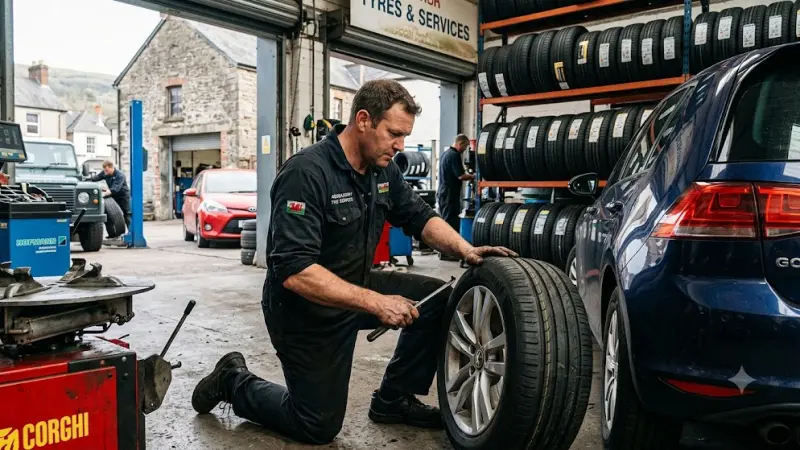
Explore Abergavenny Tyre Services with Expert Local Fitters
-
Claim Your HMRC UK Tax Refund Before Application Deadlines


Related Listings
-
Welton Renewables and Electrical
-
EV Home Charger UK
-
A1 Gas Force Nuneaton
-
A1 Gas Force Warwick
-
A1 Gas Force Solihull





Categories
- Accountants (295)
- Advertising Agencies (559)
- Architects (149)
- Automobiles (376)
- Beauty (300)
- Carpenters (146)
- Cleaning Services (386)
- Dentists (189)
- Driving (61)
- Electricians (215)
- Energy (7)
- Event Organiser (683)
- Finance (597)
- Guide (3358)
- Health (2205)
- Information technology (206)
- Legal Services (352)
- Logistics (6)
- Maintenance (65)
- Manufacturing (35)

Sponsored Listings in Electricians
Related Blogs

Explore Supermarkets in Chepstow and the Surr...
Read this insightful article "Explore Supermarkets in Chepstow and the Surrounding Wye Valley" to expand your knowledge!
Elite Guide to Taxi and Private Hire Services...
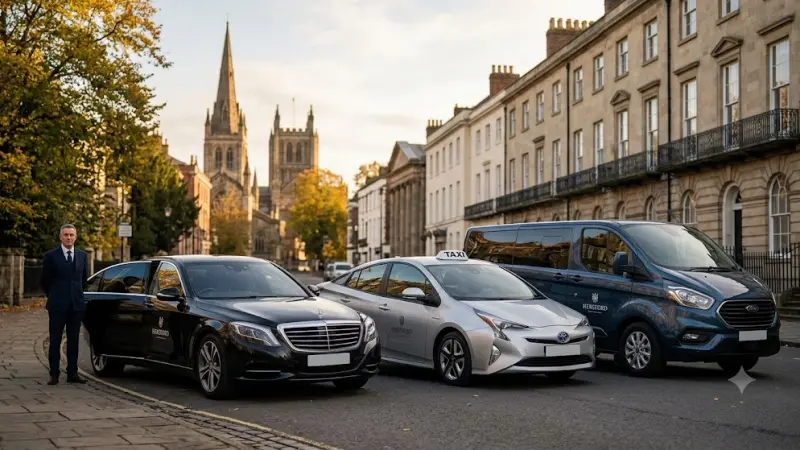
Read this insightful article "Elite Guide to Taxi and Private Hire Services in Hereford" to expand your knowledge!
Explore Fuel and Roadside Convenience Across...
Read this insightful article "Explore Fuel and Roadside Convenience Across Beckington Today" to expand your knowledge!
Questions & Answers – Find What
You Need, Instantly!
How can I update my business listing?
Is it free to manage my business listing?
How long does it take for my updates to reflect?
Why is it important to keep my listing updated?
