
Understanding Cleaning Service Licensing Requirements UK
- 👤 Alex
- 👁️ 137 Views
- Last Updated: April 13, 2026
- 🏷️ Cleaning Services
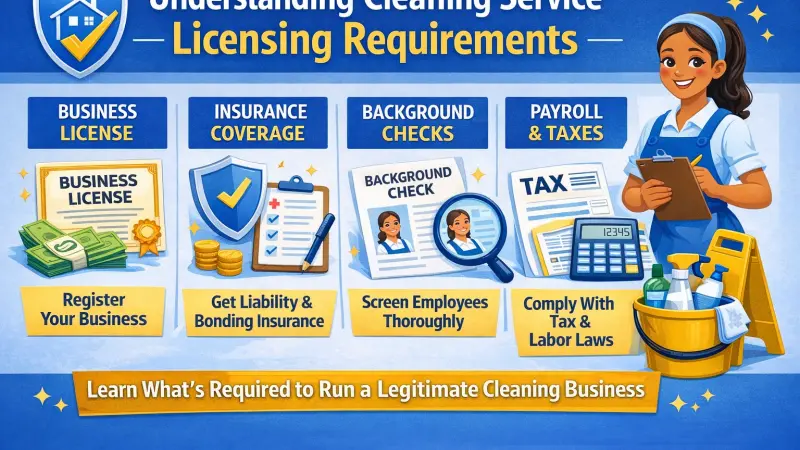
Navigating the legal landscape of the domestic and commercial cleaning industry in the United Kingdom can be surprisingly complex. While there is no single, mandatory "cleaning license" required by a central government body to scrub a floor, a web of regulations, health and safety laws, and local requirements governs how these businesses must operate. For homeowners and business managers alike, understanding these requirements is the difference between hiring a legitimate professional and inviting significant legal or physical risk into your property.

This guide provides a deep dive into the regulatory framework of the UK cleaning industry. We will explore the difference between trade association memberships and legal mandates, the importance of chemical safety regulations, and the background checks that ensure your sanctuary remains secure. By the end of this article, you will be equipped with the knowledge to vet cleaning services with the scrutiny of a legal expert, ensuring that the team you hire is not only capable but fully compliant with British law.
Overview: The Reality of Cleaning Regulations in the UK
Unlike the gas or electrical trades, which have mandatory registers like Gas Safe, the cleaning industry is largely self-regulated. However, "self-regulated" does not mean "unregulated." A cleaning business must still adhere to several core pillars of UK law to operate legally and ethically.
1. Business Registration and HMRC
Every cleaning provider, whether a sole trader or a limited company, must be registered for tax purposes. A legitimate cleaner will have a Unique Taxpayer Reference (UTR) or a Company House registration number. This is the first "license" to look for; it proves the business is a recognized legal entity.
2. The COSHH Framework
The Control of Substances Hazardous to Health (COSHH) regulations are the most critical "license-like" requirement for cleaners. Any professional handling chemicals—from bleach to industrial degreasers—must be trained in COSHH. This ensures they understand how to store, use, and dispose of substances without causing harm to themselves, your family, or the environment.
3. Local Authority Requirements
Some local councils in the UK require specific permits, especially if the cleaning business involves high-pressure water usage on public footpaths or specialized waste removal. While rare for domestic cleaning, it is a vital check for commercial contracts.
The Benefits of Hiring a Fully Compliant Cleaning Service
1. Legal Protection for the Property Owner
If you hire an unregistered, "cash-in-hand" cleaner who doesn't follow UK employment or safety laws, you could find yourself legally vulnerable if an accident occurs on your property. A compliant service shifts that liability away from you.
2. Environmental and Physical Safety
Compliance with COSHH and environmental regulations ensures that the air quality in your home isn't compromised by toxic fumes and that your local waterways aren't polluted by improperly disposed of chemicals.
3. Reliability and Professionalism
A company that takes the time to navigate the complexities of UK business law is a company that is likely to take the same level of care with your home. Compliance is a surrogate for quality.
Step-by-Step Details: What to Verify Before Hiring
Step 1: Request Proof of Insurance
While not a "license," insurance is a legal necessity for professional operation. Ask for:
-
Public Liability Insurance: To cover damage to your property.
-
Employer’s Liability Insurance: A legal requirement if they have even one employee.
Step 2: Inquire About COSHH Training
Ask the provider if their staff have up-to-date COSHH training. A professional company will often have certificates
or a training log showing that their technicians understand chemical safety data sheets (SDS).
Step 3: Check DBS Status
For domestic cleaning, a DBS (Disclosure and Barring Service) check is the gold standard for security. While not a license to clean, it is a license to be trusted. Ensure the checks are "Basic" at minimum and have been conducted within the last 12-24 months.
Step 4: Verify Trade Memberships
Associations like the British Institute of Cleaning Science (BICSc) or the Domestic Cleaning Alliance (DCA) act as a secondary licensing layer. Members must adhere to strict codes of conduct and technical standards, providing an extra level of vetting for the consumer.
Professional Tips for Navigating Compliance
-
The "Limited" Check: If a company claims to be a "Ltd" company, check their status on the UK Government’s Companies House website. It’s free and shows if the company is active or dissolved.
-
Ask About Waste Disposal: If a cleaner is removing "waste" (more than just standard household rubbish), they must have a Waste Carrier License from the Environment Agency.
-
Review Training Protocols: A company that invests in NVQs or specialized diplomas for its staff is operating at a higher professional tier than a "bucket and mop" operation.
-
Look for ISO Certifications: For larger commercial contracts, look for ISO 9001 (Quality Management) or ISO 14001 (Environmental Management).
Common Mistakes to Avoid
-
Assuming "Registration" Means "Qualified": A business can be registered with HMRC without knowing how to clean a delicate marble floor. Always look for technical training alongside legal registration.
-
Skipping the Paperwork for Independents: If you hire a sole trader, you must ensure they have their own insurance. Never assume your home insurance will cover a professional worker.
-
Ignoring the "Work Direction" Rule: If you provide the equipment and dictate exactly how and when an independent cleaner works, the UK government may classify you as an employer, making you responsible for their NI and pension.
-
Accepting Outdated DBS Checks: A DBS check is a snapshot in time. A check from five years ago is essentially meaningless. Ask for recent verification.
Supporting Local Business Visibility Beyond Core Marketing Efforts
Understanding the technical and legal requirements of the cleaning industry is essential for safety, but finding these compliant professionals is often the first hurdle for a homeowner. In the UK, the most reputable businesses prioritize their digital footprint to ensure they are found by clients who value standards. This process of business discoverability is what separates a fly-by-night operation from a pillar of the local community. For a local service provider, maintaining local presence consistency is a fundamental trust signal; it proves that they are an established, transparent entity across multiple verification points.
A strategic approach to directory marketing uk allows these compliant firms to showcase their credentials to a wider audience. When a professional cleaning service ensures their details are correctly listed on a free business database directory, they are providing a local discovery aid that helps consumers bypass unverified social media ads.
This supporting visibility layer is crucial for the modern consumer who wants to verify a company's standing before picking up the phone.
Furthermore, the role of company ratings uk cannot be overstated in a sector where trust is the primary currency. Before a client ever asks to see a COSHH certificate, they will likely look for peer-reviewed evidence of the company’s reliability. When local businesses advertise company uk directory presence on platforms like Local Page UK, they are effectively reinforcing their trust through transparency. This ecosystem of visibility ensures that the most professional, licensed, and insured cleaners are the ones who thrive in the competitive UK marketplace.
Licensing Cleaning Service
The world of cleaning service licensing and requirements in the UK is built on a foundation of professional responsibility rather than a single government certificate. By focusing on the "Big Three"—Business Registration, Insurance, and Safety Compliance (COSHH)—you can successfully navigate the market and find a provider that offers both pristine results and legal security.
A truly professional cleaner doesn't just "know how to clean"; they know how to run a safe, legal, and ethical business. As you search for your next home or office specialist, use these requirements as your checklist. The peace of mind that comes with hiring a fully compliant professional is well worth the extra time spent on due diligence.
Frequently Asked Questions (FAQs)
1. Is there a mandatory government license for cleaners in the UK?
No, there is no single "cleaning license." However, businesses must be registered for tax, follow COSHH health and safety laws, and have Employer’s Liability insurance if they have staff.
2. What is COSHH, and why does it matter to me?
COSHH stands for Control of Substances Hazardous to Health. It matters because it ensures your cleaner knows how to use chemicals safely, preventing toxic reactions or damage to your home’s surfaces.
3. Do independent cleaners need a license?
They do not need a specific cleaning license, but they should be registered
as self-employed with HMRC and carry their own Public Liability insurance.
4. How can I check if a cleaning company is legitimate?
Check their registration on Companies House, ask for their insurance certificate, and look for memberships in professional bodies like the BICSc or DCA.
5. What insurance should a cleaning service have?
At a minimum, they should have Public Liability (to cover damage to your home) and Employer’s Liability (if they employ others).
6. Is a DBS check required by law?
No, it is not a legal requirement for cleaners, but it is a standard industry practice for security and peace of mind when allowing someone into a private home.
7. What is a Waste Carrier License?
It is a permit from the Environment Agency required if a business transports waste. If your cleaner is taking away large amounts of rubbish or specialized waste, they must have this.
8. Can I hire a cleaner who doesn't have insurance?
You can, but it is extremely risky. If they damage your home or are injured on your property, you could be held financially responsible.
9. Why do some cleaners have ISO certifications?
ISO certifications like 9001 or 14001 are voluntary international standards that prove a company follows rigorous quality and environmental management processes.
10. How do I find highly-rated, compliant cleaners in my area?
The best way is to utilize company ratings uk on a reputable free business database directory to see which providers have been vetted by your local community.

Disclaimer: The information provided in this article is for general informational and research purposes only. Company details, features, services, and market positions may change over time. Readers are advised to visit official company websites and conduct independent research before making any business decisions or purchasing services.
Most Searchable Keywords
Recent Blogs
-

Explore Supermarkets in Chepstow and the Surrounding Wye Valley
-
Elite Guide to Taxi and Private Hire Services in Hereford
-
Explore Fuel and Roadside Convenience Across Beckington Today
-
Explore Abergavenny Tyre Services with Expert Local Fitters
-
Claim Your HMRC UK Tax Refund Before Application Deadlines


Related Listings
-
Platinum Exterior Cleaning
-
End of Tenancy Cleaning Agency
-
Royal Cleaning
-
FastKlean
-
Fantastic Services


Categories
- Accountants (295)
- Advertising Agencies (559)
- Architects (149)
- Automobiles (376)
- Beauty (300)
- Carpenters (146)
- Cleaning Services (386)
- Dentists (189)
- Driving (61)
- Electricians (215)
- Energy (7)
- Event Organiser (683)
- Finance (597)
- Guide (3358)
- Health (2205)
- Information technology (206)
- Legal Services (352)
- Logistics (6)
- Maintenance (65)
- Manufacturing (35)

Sponsored Listings in Cleaning Services

Related Blogs

Explore Supermarkets in Chepstow and the Surr...
Read this insightful article "Explore Supermarkets in Chepstow and the Surrounding Wye Valley" to expand your knowledge!

Elite Guide to Taxi and Private Hire Services...
Read this insightful article "Elite Guide to Taxi and Private Hire Services in Hereford" to expand your knowledge!
Explore Fuel and Roadside Convenience Across...
Read this insightful article "Explore Fuel and Roadside Convenience Across Beckington Today" to expand your knowledge!
Questions & Answers – Find What
You Need, Instantly!
How can I update my business listing?
Is it free to manage my business listing?
How long does it take for my updates to reflect?
Why is it important to keep my listing updated?
