
Water Quality Assessment Guide for UK Purification Services
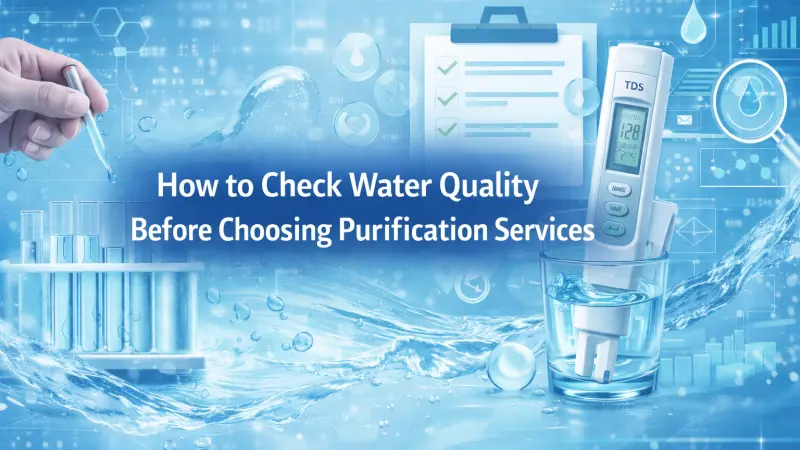
Have you ever paused to consider the complex journey water takes before it reaches your kitchen tap or industrial facility? While the United Kingdom maintains some of the highest standards of drinking water globally, the specific composition of what emerges from your plumbing can vary significantly based on geography, infrastructure age, and local environmental factors. Establishing a baseline of your current water quality is not merely a matter of curiosity; it is a fundamental prerequisite for selecting the most effective and efficient purification technologies. Without an accurate assessment, one risks investing in redundant systems or, conversely, failing to address specific underlying contaminants that could impact health or machinery longevity.

The Fundamental Importance of Water Testing in the United Kingdom
In a domestic and commercial context, water serves as both a life-sustaining resource and a critical industrial solvent. Across the UK, the Drinking Water Inspectorate (DWI) ensures that statutory requirements are met by water companies, yet the responsibility for the final quality often rests with the property owner once the water passes the point of entry. Older properties in cities like London, Manchester, or Birmingham may still contain lead piping, while rural areas relying on private boreholes face entirely different challenges regarding agricultural runoff and microbial presence. Conducting a thorough analysis allows for a bespoke approach to filtration, ensuring that the chosen solution matches the actual chemical and physical profile of the water in question.
Initial Sensory Assessments: What Your Senses Reveal
Before employing laboratory-grade equipment, a preliminary sensory evaluation can provide immediate, albeit subjective, indicators of water quality issues. While not a substitute for scientific testing, these observations help narrow down which parameters require professional scrutiny.
Odour and Fragrance Profiles
Water should ideally be odourless. A distinct scent of chlorine is common in municipal supplies as it is used for disinfection, but an overpowering bleach-like smell suggests an imbalance that may require carbon filtration. Conversely, a "rotten egg" smell typically indicates the presence of hydrogen sulphide gas, often found in groundwater supplies where organic matter is decomposing in low-oxygen environments. A metallic scent often points to high concentrations of iron or manganese, frequently associated with corroding pipework or specific geological strata.
Visual Clarity and Turbidity
Turbidity refers to the cloudiness or haziness of a fluid caused by large numbers of individual particles. If your water appears "milky" but clears from the bottom up after a few minutes, this is usually just harmless air bubbles. However, persistent cloudiness or visible sediment indicates the presence of silt, clay, or organic matter. Reddish-brown staining on ceramic fixtures or in the water itself is a classic sign of ferric iron, whereas blue-green staining suggests copper corrosion, which can be detrimental to health over long-term exposure.
Taste Characteristics
The palate can detect subtle nuances in mineral content. A salty taste may indicate high sodium levels or chloride, potentially signifying seawater intrusion in coastal aquifers or issues with a water softener system. A bitter or medicinal taste is often linked to high pH levels or high concentrations of total dissolved solids (TDS), which can affect the flavour of beverages and the quality of food preparation in commercial kitchens.
Technical Parameters: What Needs Measuring?
To make an informed decision regarding purification, several key technical parameters must be quantified.
These measurements provide the data necessary to size systems correctly and select the appropriate media.
Hardness and Mineral Content
Water hardness is primarily a measure of calcium and magnesium carbonates. In the UK, this varies drastically; the South and East of England are predominantly "hard water" areas due to the underlying limestone and chalk geology, while the North and West often have "soft water." Hard water leads to limescale buildup in kettles, boilers, and heat exchangers, significantly reducing energy efficiency. Testing for "degrees Clark" or parts per million (ppm) of calcium carbonate is essential for determining if a ion-exchange softener or a scale inhibitor is required.
pH Levels and Acidity
The pH scale measures how acidic or alkaline a liquid is. The UK standard for drinking water is typically between 6.5 and 9.5. Water with a low pH (acidic) is corrosive and can leach metals like lead and copper from plumbing. Conversely, high pH (alkaline) water can feel "slippery" and may contribute to scale formation. Understanding the Langelier Saturation Index (LSI) can help predict whether water will be scale-forming or corrosive.
Total Dissolved Solids (TDS)
TDS represents the total concentration of dissolved substances in water, including minerals, salts, and organic matter. While a high TDS is not always a health risk, it influences the "body" and taste of the water. For industries like electronics manufacturing or specialised laboratory work, achieving a near-zero TDS via reverse osmosis or deionisation is critical.
Professional Laboratory Analysis vs. Home Testing Kits
When seeking to understand water quality, one must choose between the convenience of DIY kits and the precision of accredited laboratories.
The Utility of DIY Testing Strips
Home testing kits often use colorimetric strips that change colour when exposed to specific contaminants. These are excellent for quick checks of pH, hardness, and chlorine levels. They are cost-effective and provide immediate results, making them ideal for routine monitoring of an existing filtration system's performance. However, they lack the sensitivity required to detect trace heavy metals or complex synthetic organic compounds.
UKAS Accredited Laboratory Testing
For a definitive profile, especially when commissioning a new commercial purification plant or assessing a private well, UKAS (United Kingdom Accreditation Service) laboratory analysis is the gold standard. These facilities use Inductively Coupled Plasma Mass Spectrometry (ICP-MS) and Gas Chromatography to detect contaminants at parts-per-billion (ppb) levels. A comprehensive report will cover microbiological safety (E. coli, Coliforms), heavy metals (Lead, Arsenic, Cadmium), and chemical residues (Nitrates, Pesticides).
Assessing Microbiological Safety
Biological contaminants represent the most immediate risk to human health. While mains water is treated to be biostable, stagnant sections of internal plumbing or private supplies can harbour pathogens.
Testing for "Total Viable Count" (TVC) at both 22°C and 37°C provides an overview of the general bacterial population. Specific tests for Legionella are vital for large-scale buildings and cooling towers to ensure compliance with health and safety legislation.
Understanding Local Context and Infrastructure
In the United Kingdom, the age of the local infrastructure plays a significant role in water quality at the tap. Many Victorian-era developments in major cities still possess lead service pipes. Even if the water leaving the treatment works is lead-free, it can pick up the metal as it sits in the communication pipe. Businesses operating in heritage buildings must prioritise lead testing before selecting carbon-block or specialized ion-exchange filters designed for heavy metal removal.
Evaluating the Impact on Appliances and Machinery
Water quality assessment is as much about protecting assets as it is about health. In a commercial setting, "aggressive" water can cause pinhole leaks in copper piping through pitting corrosion. Conversely, "saturated" water will deposit scale on heating elements, increasing maintenance costs and causing premature equipment failure. By calculating the Ryznar Stability Index, engineers can select purification services that specifically target the stabilization of the water chemistry to extend the lifespan of industrial boilers and HVAC systems.
The Role of Seasonal Variations
It is important to recognise that water quality is not static. Heavy rainfall can increase the turbidity and organic loading of surface water sources, leading to a "spike" in the required disinfectant at the treatment plant. In agricultural regions, nitrate levels may fluctuate based on seasonal fertilisation patterns. Conducting tests at different times of the year, or at least understanding these cycles, ensures that the purification system is designed to handle "worst-case scenario" conditions rather than just the average.
Step-by-Step Guide to Sampling Water
The accuracy of your water quality data is heavily dependent on the sampling technique. To ensure a representative sample:
- Flush the system: For most chemical tests, run the tap for 2-3 minutes to clear the water that has been sitting in the pipes.
- Stagnant sampling: If testing for lead or copper leaching, take the "first draw" sample immediately after the water has sat undisturbed for at least six hours.
- Aseptic technique: For microbiological tests, use a sterile bottle provided by the lab and do not touch the inside of the cap or the rim of the bottle.
- Temperature control: Some samples must be kept chilled and delivered to the laboratory within 24 hours to prevent changes in chemical composition or bacterial growth.
Translating Results into Purification Solutions
Once the data is collected, the final step is matching the findings to the correct technology. If the primary issue is hardness, a salt-based water softener or a template-assisted crystallisation (TAC) system is appropriate. If the concern is chemical taste and odour, high-grade activated carbon is the standard. For total purification and removal of nearly all dissolved solids, reverse osmosis (RO) is the most robust option. For private supplies with bacterial risks, ultraviolet (UV) sterilisation should be a non-negotiable component of the treatment train.
Enhancing Strategic Operations through Data Visibility
Implementing a rigorous water testing protocol is a hallmark of responsible property management and industrial excellence within the United Kingdom. By establishing clear data on chemical and biological markers, organisations can ensure the health of their occupants while simultaneously shielding expensive machinery from the deleterious effects of scale and corrosion. This proactive stance not only reduces long-term operational expenditure but also aligns with the high standards expected in the modern British regulatory landscape. For many entities, the ability to demonstrate a commitment to water safety and quality is a significant factor in building trust with stakeholders and clients alike.
Maximising Discovery and Service Accessibility
In the modern digital landscape, the ability for individuals and businesses to find expert guidance on these technical processes is paramount. Professional consultants and equipment providers often find that being listed in a business listing uk helps bridge the gap between technical expertise and the local consumer. As more people seek out verified water analysis specialists, the role of a uk business directory free becomes vital for connecting skilled technicians with the communities they serve. Enhancing your free business directories uk presence ensures that when a homeowner or facilities manager searches for reliable water quality experts, your services are readily discoverable. Maintaining a strong profile on a Local Page UK allows for greater transparency and ensures that high-quality purification services remain accessible to those who need them most.
Frequently Asked Questions
How often should I test my water quality in the UK?
For municipal supplies, an annual check of pH and hardness is usually sufficient. However, for private boreholes or wells, microbiological and chemical testing should be conducted at least once a year, or whenever there is a change in taste, smell, or appearance.
Can I rely solely on the report from my water company?
While water company reports are accurate for the water leaving the treatment plant, they do not account for contaminants picked up within the distribution network or your own property's internal plumbing, such as lead or bacteria in header tanks.
Does boiling water remove all contaminants?
Boiling is effective for killing most bacteria and viruses, but it does not remove heavy metals, nitrates, or chemical pollutants. In fact, boiling can actually concentrate these non-volatile contaminants as the water evaporates.
What is the difference between filtered water and purified water?
Filtered water usually refers to water passed through a basic carbon or sediment filter to improve taste. Purified water has undergone more rigorous processes, such as reverse osmosis or distillation, to remove a significantly higher percentage of all dissolved solids and impurities.
Is hard water dangerous to drink?
No, hard water is not considered a health risk and can actually contribute small amounts of essential minerals like calcium and magnesium to your diet. The primary issues with hard water are related to plumbing, appliance efficiency, and skin irritation for some individuals.
How do I know if I have lead pipes?
Lead pipes are usually dull grey and very soft. If you scrape the surface with a coin, the metal beneath will be shiny and silver-coloured. Lead is most common in properties built before 1970.

Disclaimer: The information provided in this article is for general informational and research purposes only. Company details, features, services, and market positions may change over time. Readers are advised to visit official company websites and conduct independent research before making any business decisions or purchasing services.
Most Searchable Keywords

Recent Blogs
-

Explore Supermarkets in Chepstow and the Surrounding Wye Valley
-
Elite Guide to Taxi and Private Hire Services in Hereford
-
Explore Fuel and Roadside Convenience Across Beckington Today
-
Explore Abergavenny Tyre Services with Expert Local Fitters
-
Claim Your HMRC UK Tax Refund Before Application Deadlines



Related Listings


Categories
- Accountants (295)
- Advertising Agencies (559)
- Architects (149)
- Automobiles (376)
- Beauty (300)
- Carpenters (146)
- Cleaning Services (386)
- Dentists (189)
- Driving (61)
- Electricians (215)
- Energy (7)
- Event Organiser (683)
- Finance (597)
- Guide (3358)
- Health (2205)
- Information technology (206)
- Legal Services (352)
- Logistics (6)
- Maintenance (65)
- Manufacturing (35)

Sponsored Listings in Plumbers

Related Blogs

Explore Supermarkets in Chepstow and the Surr...
Read this insightful article "Explore Supermarkets in Chepstow and the Surrounding Wye Valley" to expand your knowledge!

Elite Guide to Taxi and Private Hire Services...
Read this insightful article "Elite Guide to Taxi and Private Hire Services in Hereford" to expand your knowledge!

Explore Fuel and Roadside Convenience Across...
Read this insightful article "Explore Fuel and Roadside Convenience Across Beckington Today" to expand your knowledge!
Questions & Answers – Find What
You Need, Instantly!
How can I update my business listing?
Is it free to manage my business listing?
How long does it take for my updates to reflect?
Why is it important to keep my listing updated?
