Imagine, if you will, the chaos of a midnight movie premiere mixed with the adrenaline of a sports stadium, all condensed into a few glowing pixels on a smartphone screen. You’re sitting on your sofa, the soft hum of a new release streaming in the background, but your attention isn't on the screen. It’s on a chart. A jagged, neon-green line that is currently defying every known law of traditional gravity. This is the habitat of the "meme stock," a creature born of the internet, fed by streaming buzz, and propelled into the stratosphere by pure, unadulterated cultural momentum. In the early 2020s, the stock market ceased to be just a gray monolith of numbers and spreadsheets; it became an extension of entertainment news, a viral series where every retail investor is a character and every trade is a plot twist. To understand meme stocks is to understand the modern zeitgeist: a world where "fundamentals" are secondary to "vibes," and where a digital community can bring a multibillion-dollar hedge fund to its knees with nothing but a cartoon frog and a dream.

The Anatomy of a Phenomenon
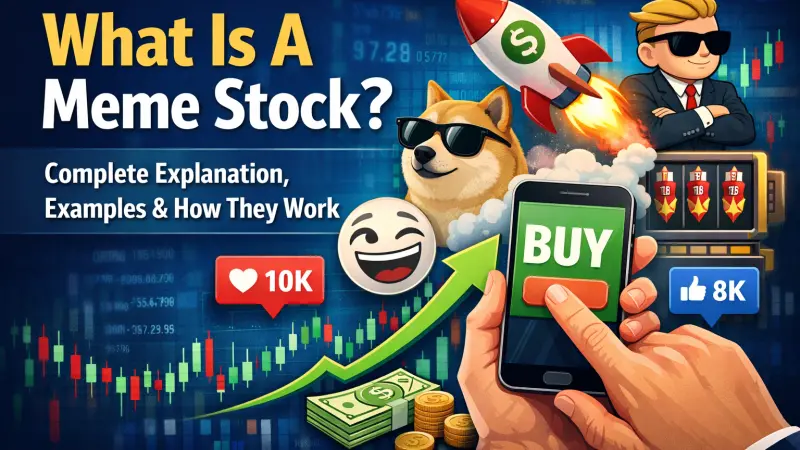
At its core, a meme stock is any security that experiences a massive, rapid, and often inexplicable price surge driven by social media enthusiasm rather than the underlying health of the business. If traditional investing is like a meticulously curated museum tour, meme stock investing is like a flash mob in a department store. It’s loud, it’s disorganized, and it’s brilliantly effective at drawing a crowd. We see these trends emerge on platforms like Reddit’s r/WallStreetBets or TikTok, where "financial influencers" (who often look more like college students in dorm rooms than Wall Street titans) break down complex market mechanics into bite-sized, irony-laced videos. These stocks often belong to legacy brands—names like GameStop, AMC, or BlackBerry—that represent a shared nostalgic childhood for the digital generation. They are the "underdogs" of the corporate world, often targeted by short-sellers who bet on their failure. When the internet rallies around these companies, it isn't just about the balance sheet; it’s a form of financial performance art, a viral series that turns the act of buying a share into a vote for a specific cultural narrative.
Consider the "Short Squeeze," the technical engine that often powers these movements. To the uninitiated, shorting a stock is like betting that a movie will flop at the box office. If you’re right, you profit. If the movie becomes a surprise hit, however, you’re forced to buy tickets at a premium just to cover your losses. In January 2021, a group of retail investors realized that institutional giants had shorted GameStop far beyond what was reasonable. They didn't just buy the stock; they created a trend that forced the giants to buy back their shares at astronomical prices, creating a feedback loop that sent the stock price from $20 to nearly $500 in a matter of weeks. The sensory detail of that moment was palpable: the frantic refresh of the Robinhood app, the "diamond hands" emojis flooding every comment section, and the collective gasp from traditional analysts on CNBC who looked like they were watching a magic trick they couldn't explain. It was a new release of a financial blockbuster, and the whole world had a front-row seat.
The Cast of Characters: From Roaring Kitty to the Apes
Every great viral series needs a protagonist, and the meme stock saga found its hero in Keith Gill, known online as "Roaring Kitty." Clad in a red headband and broadcasting from a basement decorated with cat posters, Gill became the face of the GameStop revolution. He didn't offer the dry, sterile advice of a wealth manager; he offered conviction. His presence turned the market into a spectator sport, blurring the lines between entertainment news and personal finance. His followers, who affectionately call themselves "Apes," represent a new breed of investor: one who values community and "memetic power" over traditional P/E ratios. This community-driven approach creates a sense of belonging that traditional banking can never replicate. When you buy a meme stock, you aren't just an entry in a ledger; you're a member of a digital resistance. It’s like being part of a fandom for a cult-classic movie—there are inside jokes, secret terminologies like "tendies" (profits) and "to the moon" (unlimited growth), and a shared enemy in the form of the "suit-and-tie" establishment.
This tribalism is what makes the streaming buzz around these stocks so potent. When a stock like AMC starts trending, it’s not because the company suddenly found a way to sell more popcorn. It’s because the narrative has taken hold. The theaters become a "church of the cinema," a symbol of the struggle against the digital-only future. The comparison here is to the way a niche television show suddenly becomes a global hit because of a viral clip on social media. The quality of the show (or the company’s revenue) remains the same, but the *attention* has shifted. In the attention economy, attention *is* value. A meme stock is essentially a "fame-backed security." Its price fluctuates based on how many people are talking about it at any given moment. It’s as volatile as a celebrity's reputation, and just as capable of being rehabilitated overnight by a well-timed tweet from Elon Musk or a cryptic post on a message board.
How It Works: The Machinery of Hype
The mechanics of a meme stock rally are a fascinating blend of high-speed technology and ancient psychology. It begins with the "Discovery Phase," where a few eagle-eyed traders notice a discrepancy—perhaps high short interest or an undervalued brand—and start posting about it. Then comes the "Social Proliferation," where the trend begins to spread through memes, emojis, and screenshots of massive gains. This is the streaming buzz phase, where the fear of missing out (FOMO) starts to itch at the back of every retail investor's mind. It feels like hearing about a secret party that everyone is attending; the longer you wait to join, the more you feel like you're losing. This is where the viral series reaches its climax. The surge in demand drives the price up, which attracts more headlines, which attracts more investors. It is a self-fulfilling prophecy of wealth, a financial perpetual motion machine that works beautifully—right until it doesn't.
The "Exit Phase" is where the sensory experience turns from euphoric to visceral. When the momentum shifts, the descent is often as steep as the ascent. The green lines turn red, the "diamond hands" start to crack, and the "bag holders"—those who bought in at the peak—are left with shares worth a fraction of what they paid. It’s the feeling of leaving a concert and realizing you’ve lost your wallet in the mosh pit. Yet, the cycle persists because the infrastructure for it is now permanent. With zero-commission trading apps and 24/7 social media connectivity, every day carries the potential for a new trend to ignite. The stock market has been gamified, turned into an interactive viral series where the stakes are real, the players are global, and the script is written in real-time by millions of anonymous authors.
Cultural Impact and the Future of Finance
The legacy of the meme stock movement isn't just a few millionaires and a few bankruptcies; it’s a fundamental shift in how we perceive value. It has democratized (and perhaps demonized) the act of speculation. We are seeing this crossover in all forms of entertainment news, from the rise of NFTs to the "memecoins" of the crypto world.
Even traditional companies are starting to realize that they need a "social strategy" as much as a "business strategy." If you aren't part of the streaming buzz, you don't exist. We are living in an era where the boundary between "investor" and "fan" has evaporated. A company’s stock price is now a metric of its cultural relevance, a "like" button with a dollar sign attached to it. It’s a new release of capitalism, one that is louder, faster, and infinitely more unpredictable than the one our parents knew.
As we look forward, the "meme-ification" of everything seems inevitable. Whether it’s a viral series on Netflix or a struggling retail chain, the power of the crowd to dictate reality is the defining force of the decade. Meme stocks are the canary in the coal mine, a vivid, neon-lit warning that the old rules of the game are being rewritten. They remind us that the market is not a cold, logical machine; it is a human drama, filled with greed, hope, humor, and a desperate desire for connection. In the end, a meme stock is more than just a ticker symbol; it’s a story we tell ourselves about who has the power, who gets to win, and what it means to be "all in."
The Permanent Afterglow
The meme stock era didn't end with the GameStop crash of 2021; it simply matured. It became a permanent fixture of our financial diet, a recurring trend that pops up every time the internet finds a new underdog to champion. It’s the financial equivalent of a "guilty pleasure" movie that somehow wins an Oscar—it shouldn't work, it defies the critics, and yet, you can’t look away. As an entertainment journalist, I’ve seen stars rise and fall, and I’ve seen viral series disappear into the digital ether. But the meme stock is different. It’s a marriage of money and myth, a high-stakes game played in the light of our smartphone screens. Whether you view it as a dangerous bubble or a heroic rebellion, one thing is certain: the stock market will never be "boring" again. So, keep your streaming buzz alerts on and your apps open. The next new release is just one meme away.