There is a specific kind of silence that precedes a cultural earthquake. It’s the same quiet you feel just before the lights dim for a highly anticipated new release in a packed theater, or that fleeting moment of buffering before the latest episode of a viral series begins to play. In early 2021, that silence was broken not by a Hollywood fanfare, but by the frantic clicking of mechanical keyboards and the rhythmic pinging of smartphone notifications. Somewhere between the boredom of a global lockdown and the rise of zero-fee trading apps, a new generation of investors realized that the stock market wasn't a gated community of geniuses in pinstripe suits—it was an open-world RPG. They didn't just want to play the game; they wanted to rewrite the code. This was the birth of the "Meme Stock" revolution, a moment where entertainment news and high finance collided with such force that it left the traditional Wall Street establishment looking like a group of confused extras in their own movie.

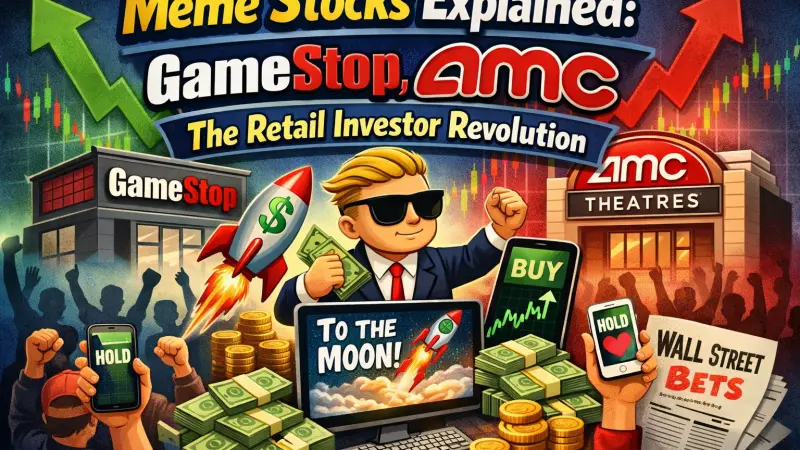
To understand the phenomenon of GameStop (GME) and AMC Entertainment, one must first look at them not as balance sheets, but as symbols. For the retail investor, GameStop was the dusty sanctuary of their teenage years, the place where they traded in old consoles for the promise of a new adventure. AMC was the sticky-floored palace of their first dates and summer blockbusters. When hedge funds began betting heavily on the demise of these companies—"shorting" them into oblivion—it felt to the internet like a personal attack on a shared childhood. The response was a form of collective, digital alchemy. Armed with nothing but streaming buzz and a defiant sense of irony, thousands of individual traders on platforms like Reddit's r/WallStreetBets decided that these companies weren't dying. They were going to be the protagonists of the greatest underdog story ever told.
The Physics of a Short Squeeze: A High-Stakes Thriller
The mechanical heart of this revolution is a concept known as the "Short Squeeze." In the dry, clinical language of a brokerage, it’s a technical correction. In the vibrant world of a viral series, it’s more like a scene from a heist film where the vault door slams shut, and the security guards realize *they* are the ones trapped inside. Imagine you've borrowed a rare, limited-edition vinyl record from a friend, planning to sell it for $100 today because you’re certain you can buy a replacement for $20 tomorrow. You sell it, pocket the $100, and wait for the price to drop. But instead of dropping, a massive trend erupts. Suddenly, everyone wants that record. The price jumps to $500, then $1,000. Your friend wants their record back now. To return it, you are forced to buy it at that astronomical price, losing $900 in the process.
In the case of GameStop, institutional short-sellers had borrowed and sold more shares than actually existed. When the retail crowd realized this, they didn't just buy the stock; they locked the doors. The resulting surge wasn't just a price increase; it was a vertical ascent that felt like a glitch in the simulation. At its peak, GameStop's valuation reached heights that made absolutely no sense to traditional analysts. They pointed at the company’s declining revenue and outdated brick-and-mortar model, but they were speaking a dead language. They were trying to critique a rave by measuring the decibels of the music, missing the fact that the dancers were there for the experience, not the acoustics. This disconnect is the defining feature of a meme stock: the price is a measure of participation, not profitability.
The Narrative Economy: Streaming Buzz and Cultural Capital
We now live in what economists are beginning to call the "Narrative Economy." In this world, a well-timed tweet or a cryptic emoji carries more weight than a quarterly earnings report. Look at AMC Entertainment. During the height of the streaming buzz, the company’s CEO, Adam Aron, did something unprecedented: he embraced the "Apes." He didn't hide in a boardroom; he went on YouTube, spoke their language, and even offered free popcorn to retail shareholders. He understood that in the era of entertainment news, his company wasn't just a theater chain; it was a community project. This transformed the AMC stock into a digital membership card. Buying a share became an act of fandom, much like buying a ticket to a new release specifically to support a director you love.
The sensory detail of these rallies is intoxicating. There is the "refresh-rate adrenaline"—the physical sensation of watching your brokerage account balance fluctuate by the thousands every few seconds. There is the "echo-chamber euphoria"—the feeling of reading a thousand comments all screaming "TO THE MOON" in unison. It creates a psychological feedback loop that is incredibly difficult to break. For many, the money became secondary to the "lolz." The irony was the point. By investing in "failing" businesses, the retail crowd was effectively trolling the people who think they own the world. It was a digital Occupy Wall Street, but with better memes and the potential for a massive payout.
The Fallout: When the Credits Roll
However, every viral series eventually reaches its season finale, and in the world of finance, the endings aren't always happy. The darker side of the meme stock revolution is the "bag holder." For every person who turned a $500 stimulus check into a million dollars, there are hundreds who bought in at the peak, fueled by FOMO (Fear Of Missing Out), only to watch their life savings evaporate as the trend cooled.
The descent of a meme stock is a visceral experience—a sickening, hollow feeling in the pit of your stomach as the green lines turn blood-red and stay there. It is the cold realization that while the "revolution" was real, the market remains a zero-sum game.
The comparison here is to a crowded nightclub at 3:00 AM when the lights suddenly flick on. The music stops, the glamour vanishes, and you’re left looking at the sticky floors and the exhausted faces of people who stayed too long. The institutions eventually adjusted. They developed new algorithms to track streaming buzz and sentiment on social media. They learned to play the game, too. Yet, the retail investor hasn't gone away. They’ve simply become a permanent part of the ecosystem. The "Revolution" wasn't about taking over the market; it was about proving that the crowd could move it.
The New Normal of the Market
As we look at the landscape of 2024 and beyond, the influence of the meme stock is everywhere. It has changed how companies communicate, how brokerages operate, and how the media covers the economy. The stock market is no longer a separate, boring section of the evening news; it is a core pillar of entertainment news. It is a viral series that never truly ends, with new characters, new villains, and new plot twists emerging every week. Whether it's the latest tech IPO or a struggling retail brand, we now ask: "Is it a meme?"
In the end, the retail investor revolution taught us that value is a collective hallucination. A stock is worth exactly what the most passionate group of people says it is worth. As long as we have the internet, we will have the power to create trends that defy logic. So, keep your streaming buzz alerts active and your "diamond hands" ready. The next new release on the NYSE might just be the one that changes everything—again.