
What to Expect During Customs Inspections of Freight Shipments
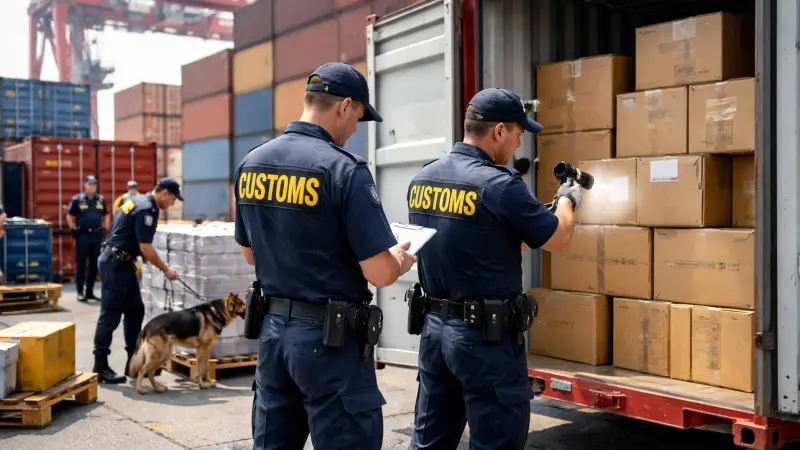
Your consignment has crossed thousands of miles by sea, air, or road — and then it stops. Not because anything is necessarily wrong, but because customs inspections of freight shipments are a routine and legally mandated part of international trade. For importers and logistics managers alike, the uncertainty surrounding what actually happens during a customs examination can be a source of real anxiety. This guide removes that uncertainty.
Whether you are importing goods into the United Kingdom for the first time or are a seasoned freight professional seeking a clearer understanding of compliance obligations, knowing what to expect at the border makes the process less daunting — and far more manageable.
What Are Customs Inspections of Freight Shipments?
A customs inspection is a formal examination of goods entering or leaving a country, carried out by the relevant border authority. In the United Kingdom, this responsibility falls primarily to His Majesty's Revenue and Customs (HMRC) and Border Force, which operate at ports, airports, and inland clearance facilities.
The purpose of these inspections is threefold: to verify that goods match their declared description and value, to ensure that applicable duties and taxes are correctly assessed, and to prevent prohibited or restricted items from entering the country. Not every shipment is inspected — in fact, the majority of commercial freight passes through customs on the basis of electronic declarations alone. However, when a consignment is selected for physical examination, importers must be prepared to cooperate fully and promptly.
Post-Brexit, the UK's customs framework has operated independently of the European Union's single market and customs union. This means that goods arriving from EU member states are now subject to customs procedures that were previously unnecessary, making a thorough understanding of the inspection process more important than ever for British importers and exporters.
Why Are Freight Shipments Selected for Inspection?
Customs authorities do not inspect every consignment manually — that would be logistically impossible. Instead, they rely on risk profiling systems, intelligence data, and automated screening tools to identify shipments that warrant closer scrutiny.
Common Reasons a Shipment May Be Flagged
- Discrepancies in documentation: If the declared value, weight, or quantity does not align with the product type or trade norms, the shipment is likely to be queried.
- High-risk commodity codes: Certain product categories — such as foodstuffs, chemicals, pharmaceuticals, and electronics — are subject to enhanced controls and are inspected more frequently.
- Unknown or infrequent traders: New importers with no established compliance history are statistically more likely to be examined than regular, trusted traders.
- Intelligence-led targeting: Border Force may act on specific intelligence suggesting a consignment contains prohibited or under-declared goods.
- Random selection: A proportion of inspections are carried out at random to maintain broad compliance across all trade lanes.
- Country of origin concerns: Goods originating from or transiting through countries flagged for high rates of non-compliance may face additional scrutiny.
- Incomplete or incorrect declarations: Any error in the customs entry — even a minor one — can trigger a hold and examination.
Understanding these triggers allows importers to ensure their documentation and compliance records are meticulous, significantly reducing the likelihood of delays caused by preventable errors.
Types of Customs Inspections
Customs examinations are not all the same. The depth and nature of an inspection depends on the risk level assigned to the shipment and the specific concerns of the inspecting authority.
1. Documentary or Desk-Based Checks
The most common type of inspection involves no physical interaction with the goods whatsoever. Instead, customs officers review the import declaration, commercial invoice, packing list, bill of lading or airway bill, and any relevant licences or certificates. If the documentation is accurate and consistent, the goods are typically released without further action.
This type of check is now predominantly electronic, carried out through the UK's Customs Declaration Service (CDS). Importers and their agents submit declarations digitally, and the system flags discrepancies automatically.
2. Scanning and Non-Intrusive Inspection (NII)
Where a physical check is warranted but a full examination is not immediately necessary, customs authorities may use X-ray scanners or other non-intrusive inspection technologies to examine the contents of a container or vehicle without unpacking it. This approach is particularly common at major sea ports such as Felixstowe, Southampton, and Tilbury.
Scanning allows Border Force to detect concealed items, verify the gross physical contents against the declaration, and identify structural anomalies in cargo — all without disturbing the consignment.
If the scan results raise concerns, the shipment may be escalated to a full physical examination.
3. Physical Examination
A physical examination — sometimes referred to as a "stuffing examination" or "devanning" in container trade — involves customs officers directly inspecting the goods within a container, vehicle, or package. Depending on the risk level, this may be a partial examination (checking a percentage of the cargo) or a full examination (unpacking and inspecting the entire consignment).
During a physical examination, officers may:
- Count, weigh, or measure goods to verify declared quantities
- Check product markings, labels, and serial numbers
- Take samples for laboratory analysis
- Verify that packaging complies with relevant regulations
- Cross-reference goods against prohibited or restricted goods lists
- Assess whether the commodity code declared is accurate
The cost of a physical examination — including container handling, devanning, and storage — is typically borne by the importer, not the customs authority. This makes accurate and complete declarations all the more commercially important.
4. Specialist Examinations
Certain categories of goods require examination by specialist agencies in addition to, or instead of, Border Force. Examples include:
- Food and animal products: Inspected by the Animal and Plant Health Agency (APHA) or port health authorities under sanitary and phytosanitary (SPS) controls
- Plants and plant products: Subject to phytosanitary inspections and certification requirements
- Medicines and medical devices: May require involvement from the Medicines and Healthcare products Regulatory Agency (MHRA)
- Weapons and dual-use goods: Subject to export and import licensing controls overseen by the Department for Business and Trade
Importers of these regulated goods must be familiar not only with customs clearance procedures but also with the sector-specific compliance requirements that apply to their product categories.
Key Documents Required for Customs Clearance
Regardless of the inspection type, having the correct documentation prepared in advance is the single most effective way to facilitate smooth customs clearance. The following documents are typically required for importing goods into the UK:
Commercial Invoice
The commercial invoice must accurately describe the goods, state their country of origin, show the transaction value (in the currency of sale), and identify both the exporter and importer. Any inaccuracies can create immediate complications during a documentary check.
Packing List
A detailed packing list itemises the contents of each package within the consignment — including weights, dimensions, and quantities. This document allows customs officers to cross-reference the physical contents against the declaration without unpacking every unit unnecessarily.
Bill of Lading or Airway Bill
This is the contract of carriage between the shipper and the carrier. It contains key information about the shipment route, the consignee, and the nature of the cargo.
Customs Declaration (Import Entry)
In the UK, import declarations are submitted electronically through the Customs Declaration Service. They include the commodity code (based on the UK Global Trade Tariff), the customs procedure code, the declared value, and duty calculations.
Certificates of Origin
These documents confirm where the goods were manufactured and are particularly important for claiming preferential duty rates under trade agreements such as the UK-EU Trade and Cooperation Agreement.
Import Licences and Permits
Certain goods — including controlled substances, firearms, certain foodstuffs, and goods subject to sanction regimes — require specific import licences.
These must be presented at the point of customs entry.
Phytosanitary or Health Certificates
Goods of animal or plant origin require official health or phytosanitary certificates issued by the competent authority in the exporting country, attesting that the goods meet UK biosecurity standards.
The Inspection Process: Step by Step
Understanding how a customs inspection unfolds in practice helps importers and their agents respond promptly and efficiently when a consignment is held.
Step 1: Declaration Submission
All imports into the UK must be declared to HMRC before or upon arrival, using the Customs Declaration Service. The risk assessment system within CDS automatically evaluates each declaration and assigns it a route — either immediate release, documentary check, or physical examination.
Step 2: Notification of Examination
If a shipment is selected for examination, the customs agent or importer will receive a notification via the CDS system or directly from Border Force. The goods are placed on "customs hold" and may not be moved from the port or terminal without authorisation.
Step 3: Documentary Review
Before any physical examination occurs, customs officers will review all supporting documentation. If any document is missing, inconsistent, or incomplete, the examination may be suspended until the correct paperwork is provided. This stage underscores the importance of having all documents prepared before the shipment arrives.
Step 4: Physical Inspection (if applicable)
Where a physical examination is ordered, the container or vehicle is typically moved to a customs examination facility at the port. Officers will inspect the goods in accordance with their risk assessment — this may involve sampling, weighing, counting, or laboratory analysis.
Step 5: Release or Detention
If the inspection confirms that the declaration is accurate and the goods are compliant, a release notification is issued and the consignment can be collected. If discrepancies are found, goods may be detained for further investigation. In serious cases — particularly involving prohibited goods — seizure may occur.
Step 6: Duty Assessment and Payment
Following a successful inspection, any outstanding customs duty, VAT, and excise duty must be paid or deferred (if the importer holds a duty deferment account) before the goods are released into free circulation within the UK.
How Long Do Customs Inspections Take?
The duration of a customs inspection varies considerably depending on the type of check, the complexity of the goods, and the workload at the port.
A purely documentary check may be resolved within a few hours. A full physical examination, particularly where sampling and laboratory analysis are involved, can take several days or even weeks.
This potential for delay is why experienced importers build contingency time into their supply chains — particularly for perishable goods or time-sensitive deliveries. In some cases, it may be worth engaging a specialist customs broker to manage the examination process and liaise directly with border authorities on the importer's behalf.
Authorised Economic Operator (AEO) Status
One of the most effective ways to reduce the frequency and disruption of customs inspections is to obtain Authorised Economic Operator (AEO) status. Granted by HMRC, AEO status recognises a business as a trusted trader with demonstrably high standards of customs compliance, financial solvency, and supply chain security.
AEO-certified businesses benefit from expedited customs processing, fewer physical examinations, and faster release of detained goods. The application process involves a detailed audit of the business's customs procedures and compliance records, but the long-term operational benefits typically outweigh the initial administrative burden for regular importers and exporters.
Common Mistakes That Trigger Customs Examinations
Many customs examinations are preventable. The following errors are among the most frequently cited causes of consignment holds and inspection delays:
- Incorrect commodity codes: Using the wrong UK Trade Tariff code — even if the error is unintentional — can lead to incorrect duty calculations and trigger an inspection.
- Undervaluation of goods: Declaring a transaction value below the actual price paid is one of the most common forms of customs fraud, and customs authorities are acutely alert to it.
- Vague or generic descriptions: Descriptions such as "miscellaneous goods" or "general merchandise" are insufficient. Customs declarations must be specific and accurate.
- Missing country of origin: Failing to declare or incorrectly declaring the country of origin can affect duty rates and trade agreement eligibility.
- Absent or expired licences: Attempting to import regulated goods without the required licence is not only likely to trigger an inspection — it may result in seizure and civil penalties.
- Mismatched documentation: If the invoice, packing list, and declaration contain conflicting information, customs officers will hold the goods until the discrepancy is resolved.
Customs Compliance: Best Practices for UK Importers
Building a robust customs compliance framework is the most reliable way to manage the risks associated with freight inspections. The following practices are recommended for businesses engaged in regular international trade:
- Invest in staff training on UK customs procedures, tariff classification, and valuation rules
- Work with a reputable customs broker or freight forwarder with demonstrated expertise in UK border compliance
- Conduct regular internal audits of customs declarations and import records
- Maintain clear and complete commercial documentation for every transaction
- Subscribe to HMRC's trade tariff updates and customs procedure notices
- Consider applying for AEO status if your business imports or exports goods regularly
- Keep records of all import declarations for a minimum of six years, as required by HMRC
What Happens If Goods Are Seized?
In cases where customs officers determine that goods are prohibited, counterfeit, incorrectly declared, or otherwise non-compliant, they have the authority to seize the consignment. The importer will receive a notice of seizure, and the goods will be held pending investigation.
An importer who believes a seizure is unjustified has the right to challenge it through a formal restoration request or by appealing to the First-tier Tribunal (Tax Chamber). However, these processes can be lengthy and costly, which is why prevention — through accurate declarations and thorough compliance — is always preferable to cure.
Where goods are found to be prohibited — such as items banned under UK sanctions law or counterfeit products infringing intellectual property rights — seizure will typically be permanent, and the importer may face civil or criminal penalties.
A Note on Business Visibility in the Freight and Logistics Sector
For freight businesses, logistics providers, and customs brokers seeking to grow their client base across the United Kingdom, maintaining a strong and accessible online presence is increasingly important. Platforms such as Local Page UK — one of the growing number of online business directory UK platforms — provide a practical way for trade and logistics businesses to improve their visibility among buyers searching for specialist services. Whether you operate as a customs agent, a freight forwarder, or an import compliance consultancy, being listed on reputable business directories in UK can ensure that potential clients find your services when they need them most. As the landscape of UK business directory websites continues to expand — including platforms serving niche sectors and communities, such as the Black business directory UK — businesses that prioritise their listing across credible business directories UK are well positioned to build trust and attract enquiries in an increasingly competitive marketplace.
Questions Clients Commonly Ask
How do I know if my freight shipment has been selected for customs inspection?
Your customs agent or freight forwarder will typically notify you if a shipment has been held for examination. Notifications are generated through the Customs Declaration Service (CDS) and communicated via the declarant. If you manage your own declarations, you will receive a direct notification from HMRC or Border Force requiring you to present documentation or arrange an examination appointment.
Who pays for the cost of a customs examination?
The cost of a physical customs examination — including container handling, devanning labour, and storage fees accrued during the hold period — is generally borne by the importer. These costs can be substantial, particularly if laboratory analysis is required or if the examination takes several days. This is another reason why accurate documentation is commercially important: it reduces the risk of an inspection being triggered.
Can I request that my shipment be inspected quickly to avoid storage charges?
Importers can request priority or expedited examination in certain circumstances — particularly where perishable goods are involved. Requests should be submitted through your customs broker or freight forwarder, who can liaise directly with Border Force. However, prioritisation is at the discretion of the authority and cannot be guaranteed.
Do all goods imported into the UK require a customs declaration?
Yes. Since the end of the Brexit transition period, all goods entering the UK from outside the country — including from EU member states — are subject to customs controls and require a declaration.
The only exceptions relate to specific personal allowances for travellers or temporary admission procedures, which do not apply to commercial freight shipments.
What is the difference between a customs examination and a Border Force enforcement search?
A customs examination is a routine compliance activity aimed at verifying that a declaration is accurate and that duties are correctly assessed. A Border Force enforcement search, by contrast, is intelligence-led and focused on detecting prohibited goods such as drugs, weapons, or counterfeit products. While the practical experience of having goods inspected may appear similar in both cases, the legal basis, the authority involved, and the potential consequences differ significantly.
Disclaimer: The information provided in this article is for general informational and research purposes only. Company details, features, services, and market positions may change over time. Readers are advised to visit official company websites and conduct independent research before making any business decisions or purchasing services.
Most Searchable Keywords
Recent Blogs


Related Listings
Categories
- Accountants (295)
- Advertising Agencies (559)
- Architects (149)
- Automobiles (377)
- Beauty (300)
- Carpenters (146)
- Cleaning Services (387)
- Dentists (189)
- Driving (62)
- Electricians (215)
- Energy (8)
- Event Organiser (686)
- Finance (602)
- Guide (3375)
- Health (2207)
- Information technology (206)
- Legal Services (354)
- Logistics (6)
- Maintenance (65)
- Manufacturing (35)
Sponsored Listings in Travel Agencies



Related Blogs

Step-by-Step Guide to Claiming a TV Licence D...
Read this insightful article "Step-by-Step Guide to Claiming a TV Licence Discount or Exemption" to expand your knowledge!

Meet the Fair Work Agency Changing UK Work Ru...
Read this insightful article "Meet the Fair Work Agency Changing UK Work Rules in 2026" to expand your knowledge!

Collective Redundancy Errors Now Carry Higher...
Read this insightful article "Collective Redundancy Errors Now Carry Higher 2026 Penalties" to expand your knowledge!
Questions & Answers – Find What
You Need, Instantly!
How can I update my business listing?
Is it free to manage my business listing?
How long does it take for my updates to reflect?
Why is it important to keep my listing updated?
