
Ebola Crisis Throws Congo’s World Cup Campaign into Turmoil as Spanish City Pulls the Plug on Key Friendly
 Previous

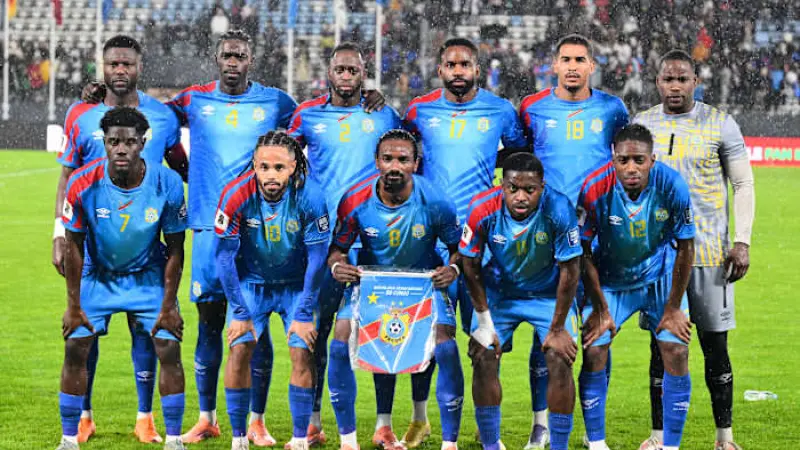
Just weeks before the biggest moment in Congolese football in more than half a century, the Leopards’ carefully laid World Cup preparations have been thrown into disarray. The mayor of the southern Spanish city of La Línea de la Concepción has denied authorization for next Tuesday’s scheduled friendly against Chile, citing health concerns tied to the ongoing Ebola outbreak in Central Africa.
The decision, announced by local government authorities on Wednesday, has forced the Congolese Football Federation (FECOFA) into scramble mode, with officials now locked in urgent discussions with the Spanish federation and international football bodies to find a last-minute replacement venue or opponent.
An Unexpected Roadblock
“We are actively working with all relevant parties to ensure our team can still get the competitive minutes they need before heading to the United States,” a FECOFA spokesperson told reporters. The federation stressed that the squad has followed every health protocol and that no player or staff member has shown symptoms related to the Ebola virus.
The friendly against Chile was seen as a crucial tune-up for a team that has not appeared on the World Cup stage since 1974, when the nation was known as Zaire. Now, with the clock ticking toward their opening Group K match against Portugal on June 17 in Houston, the Leopards are dealing with yet another logistical headache.
A Deeper Health Crisis
The cancellation is the latest ripple effect from an outbreak of a rare strain of Ebola virus that has plagued the eastern regions of both Congo and neighboring Uganda. The World Health Organization has declared the situation a Public Health Emergency of International Concern, triggering travel advisories and heightened screening at border points worldwide.
Even before the Spanish city’s decision, Congo had already been forced to cancel a three-day World Cup preparation training camp in the capital Kinshasa and a planned farewell ceremony for fans. The outbreak, which has overwhelmed local health systems in the affected areas, made large gatherings—even for a beloved national team—too risky to hold.
It’s a cruel twist of fate for a squad that has spent the past two years defying the odds just to qualify. The Leopards’ players, almost all of whom ply their trade abroad—the majority in France—are accustomed to operating outside the chaos that has often defined their homeland. But the virus has now reached across borders, touching the very fabric of their World Cup dreams.
FIFA Keeps a Watchful Eye
Soccer’s world governing body has not remained silent. In a statement issued late last week, FIFA acknowledged it was “aware of and monitoring the situation regarding the Ebola outbreak” and confirmed it was “in close communication with Congolese soccer officials to ensure the team is made aware of all medical and security guidance.”
This level of vigilance is not unprecedented. During the 2014-2016 West Africa Ebola epidemic, several matches were relocated or postponed, including Africa Cup of Nations qualifiers. But a World Cup warmup cancellation over health fears is rarer, and it underscores the heightened global sensitivity to infectious disease in the post-pandemic era.
Navigating the New Reality
The Leopards were in the middle of a European training camp when the news broke. On Wednesday, they played a friendly against Denmark in Liège, Belgium—a match that went ahead without incident. But the Chile game was to be their final test before crossing the Atlantic.
With Spain now off the table, FECOFA is exploring options in Portugal, France, or even the United States itself once the team arrives. “We are in talks with several federations,” a source close to the team said. “The priority is to find a safe, compliant venue that respects all health screenings while giving our coach Sébastien Desabre a chance to fine-tune his tactics.”
Desabre, the French-born tactician who has revitalized Congolese football, has kept his players focused on what they can control. “We are professionals. We adapt,” he said in a brief Instagram post. The coach’s calm demeanor has been a stabilizing force for a squad that has learned to tune out external noise.
A Historic Return to the World Stage
To understand the weight of this moment, one must go back nearly five decades. Congo’s only previous World Cup appearance came in 1974 under the name Zaire, when the team became the first sub-Saharan African nation to qualify. That tournament in West Germany was marred by political interference and crushing defeats—including a 9-0 loss to Yugoslavia—but it planted a seed of pride that never fully died.
Fast forward to 2026, and the Leopards have clawed their way back. Qualification sparked scenes of jubilation across a nation battered by decades of conflict and instability. For a brief moment, football united a fractured country. Now, that same unity is being tested by an invisible foe.
Group K: A Daunting Path
Congo’s route through the tournament is anything but forgiving. The Leopards have been placed in Group K, where they will face:
- Portugal – led by the ageless Cristiano Ronaldo, still seeking World Cup glory in what will likely be his final tournament.
- Colombia – a South American powerhouse with a history of deep runs, featuring stars like Luis Díaz and James Rodríguez.
- Uzbekistan – a rising Asian side eager to make a mark on the global stage, with a disciplined defensive structure.
The opening clash with Portugal on June 17 in Houston will be the Leopards’ biggest test. Then they travel to Guadalajara to face Colombia on June 23, before wrapping up group play against Uzbekistan in Atlanta on June 27. Every match is a battle, and every missed warmup opportunity could prove costly.
What This Means for Fans and the Industry
For the Congolese diaspora—particularly the large communities in Brussels, Paris, and London—the World Cup was supposed to be a unifying celebration. Match screenings, fan festivals, and themed events were already being planned. Now, uncertainty looms.
From a football industry perspective, the situation highlights the vulnerability of international tournaments to public health emergencies. FIFA’s protocols for disease outbreaks were updated after COVID-19, but the speed at which local governments can act—sometimes unilaterally—creates a patchwork of rules that teams must navigate.
Broadcasters and sponsors who have invested heavily in World Cup coverage are also watching closely. Any disruption to Congo’s matches could affect viewing figures and marketing campaigns tied to the team’s Cinderella story. The Leopards are one of the most compelling narratives of this World Cup; their journey from the ashes of war to the sport’s biggest stage is the stuff of Hollywood scripts.
The Road Ahead
As of this writing, FECOFA has not confirmed a replacement for the Chile friendly. But sources indicate that a match against a European or African opponent in Portugal is the most likely outcome. The team is expected to depart for the United States by June 10, giving them just one week to settle into their base camp.
The players—most of whom have not set foot in Congo in months due to the outbreak—are carrying the hopes of millions. Defender Chancel Mbemba, the team’s captain and emotional leader, recently told French outlet L’Équipe: “We have been through worse. This is just another obstacle. We will rise.”
That resilience may well define Congo’s campaign. The Ebola crisis has already stolen training days, fan celebrations, and now a vital friendly. But if the Leopards can channel that adversity into on-field chemistry, they might just pull off the first upset of the tournament. For a nation that has waited 52 years to return to this stage, the only way forward is through.
Disclaimer - All celebrity-related content, information, and images on this website are based on publicly available online sources and AI-generated insights/data. Information such as biography, age, career, personal details, and images may change without notice over time. While we strive for accuracy, we do not guarantee the accuracy, completeness, reliability, or timeliness of any information or imagery displayed on this website. This content is provided for general informational purposes only.
Top Trending News of Music Events
 👁️ 217 views
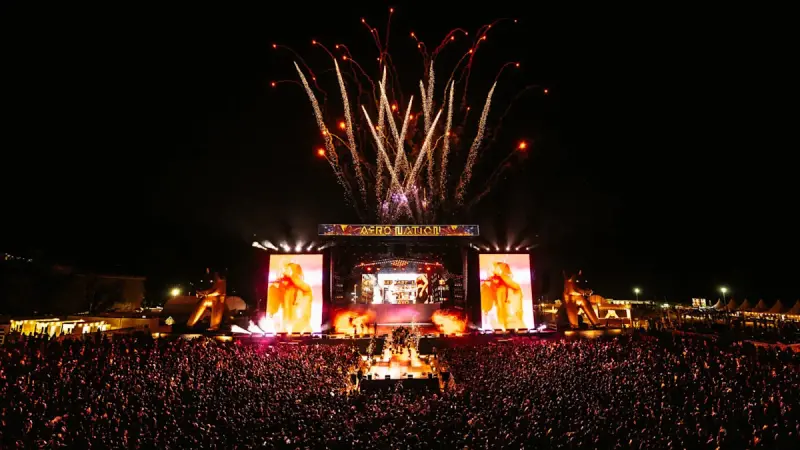
🔥 Afro Nation Portugal 2026: The Essential First-Timer’s Guide to the World’s Biggest Afrobeats Festival
Get the ultimate first-timer's guide to Afro Nation Portugal 2026 – the world's largest Afrobeats festival. Dates, tickets, travel tips, and what to expect in Portimão this July.
 👁️ 186 views
🔥 Golden Disc Awards 2026: Rookie Revolution as CORTIS, ALLDAY PROJECT, and Hearts2Hearts Redefine K-Pop's New Wave
Golden Disc Awards 2026 saw an unprecedented rookie sweep as CORTIS, ALLDAY PROJECT, Hearts2Hearts, izna, and KiiiKiii dominated major categories. Read our in-depth analysis of K-pop's new generation takeover and what it means for the industry.










Details
Send Us an Enquiry
We'll get back to you as soon as possible.
Thank You!
Your enquiry has been submitted. We'll be in touch shortly.