
Glastonbury Parents Decry ‘Lack of Transparency’ as School District Faces Backlash Over Racist Threats from Hacked Discord Account
 Previous

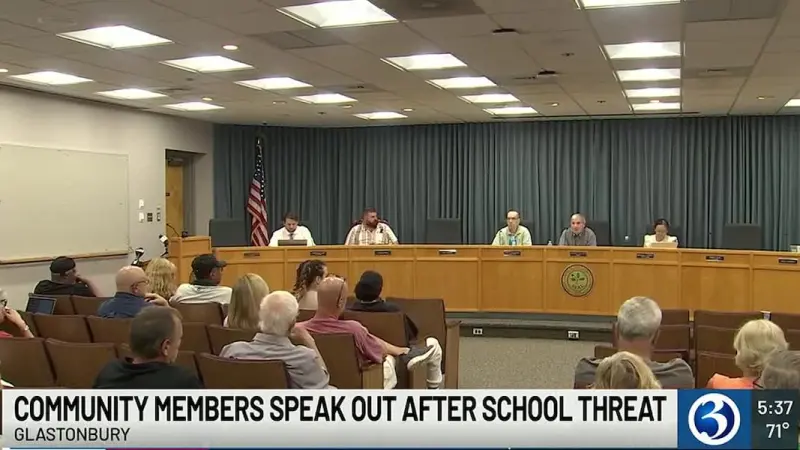
The quiet suburban veneer of Glastonbury, Connecticut, was shattered this week as parents descended upon a Town Council meeting, demanding accountability—and a reckoning with racism—following a disturbing cyberattack that targeted Black students at Glastonbury High School. The incident, which involved a minor hacking into another student’s Discord account to issue bomb threats and explicit death threats, has ignited a firestorm over how school officials and law enforcement address racial violence in the digital age.
A Digital Attack with Real-World Consequences
According to reports from WFSB, the incident unfolded last week when a teen gained unauthorized access to another student’s Discord account. Using the compromised profile, the suspect posted a bomb threat directed at the school and sent menacing death threats specifically aimed at Black students. The threats were severe enough to prompt a swift response from both school administration and local police.
School officials confirmed that the student accused of the attack is “no longer enrolled” and has been banned from all school events—a temporary measure that parents argue falls far short of the systemic action needed. The district declined to release the student’s identity, citing Connecticut’s Juvenile Reform Act of 2007, which shields minors aged 16 and 17 from public disclosure in most cases. However, that legal protection has only deepened the community’s frustration.
‘Racism Was Not Addressed’: Parental Outrage Takes Center Stage
During Tuesday night’s Town Council meeting, parents did not mince words. “Coupled with the lack of transparency at the beginning of this investigation, the racism was not addressed or called out in any of the statements,” said one parent, capturing the sentiment of many in attendance. The sentiment was echoed by Jenn Jennings, a Glastonbury mother, who openly questioned the intent of the Juvenile Reform Act: “I don’t think the intent of the Juvenile Reform Act in 2007 was intended to protect the identity of 16 and 17-year-old students from this embarrassment.”
The parents’ argument is twofold: First, they contend that the district’s initial silence—followed by sanitized statements that avoided explicit mention of racism—allowed the incident to be treated as a generic threat rather than a hate-motivated crime. Second, they believe that shielding the accused teen’s identity denies the community the chance to understand the context and, critically, to model accountability for other students.
Legal Ramifications: Charges Filed, But Questions Linger
Authorities have charged the teen with multiple offenses, including first-degree threatening, computer crimes, and criminal impersonation. Yet for many parents, the legal outcome—while necessary—does not address the root cause: a school environment where racial animus can ferment into actionable violence.
School threat incidents are on the rise nationwide, with the K-12 School Shooting Database reporting over 7,000 threats in the 2023-24 academic year alone. Glastonbury’s case adds a disturbing twist: the weaponization of hacked accounts, a form of digital identity theft that blurs the lines between cyberbullying and domestic terrorism. Experts in cyberpsychology warn that such attacks can have a “contagion effect,” inspiring copycat behavior among disaffected teens.
The Broader Industry Context: School Safety, Juvenile Justice, and Racial Equity
Glastonbury is no stranger to grappling with racial equity. In 2020, the district launched a diversity, equity, and inclusion initiative following nationwide protests over police brutality. Yet this incident suggests that policies on paper have not translated into systemic protection for Black students. The parents’ demand for vocal, explicit condemnation of racism is not just a request—it is a bellwether for how school districts across the country must evolve their crisis communication protocols.
From a juvenile justice perspective, the case highlights a tension between rehabilitation and public accountability. The Juvenile Reform Act was designed to prevent minors from bearing lifelong stigma for adolescent mistakes. But when the mistake involves death threats rooted in racial hatred, parents argue that transparency serves a higher purpose: it deters future offenders and reassures vulnerable student populations that their safety is paramount.
What Comes Next: A Community at a Crossroads
The Glastonbury Town Council formally condemned the threats, but words alone have left many unsatisfied. Moving forward, parents have called for:
- A transparent, independent review of the district’s response timeline.
- Mandatory racial sensitivity training for all students and staff.
- Clearer disciplinary guidelines specifically addressing hate-motivated cyber crimes.
- Amendments to the Juvenile Reform Act to allow for limited identity disclosure in cases involving threats to public safety.
Meanwhile, the accused teen’s legal proceedings will unfold behind closed doors. But for the Black students who received those messages, the trauma endures—and the sound of silence from school officials will not be easily forgotten. As Glastonbury parents made clear under the fluorescent lights of the Town Council chamber, the fight against racism cannot be a footnote in a press release. It must be the headline.
Disclaimer - All celebrity-related content, information, and images on this website are based on publicly available online sources and AI-generated insights/data. Information such as biography, age, career, personal details, and images may change without notice over time. While we strive for accuracy, we do not guarantee the accuracy, completeness, reliability, or timeliness of any information or imagery displayed on this website. This content is provided for general informational purposes only.
Top Trending News of Music Events
 👁️ 217 views
🔥 Afro Nation Portugal 2026: The Essential First-Timer’s Guide to the World’s Biggest Afrobeats Festival
Get the ultimate first-timer's guide to Afro Nation Portugal 2026 – the world's largest Afrobeats festival. Dates, tickets, travel tips, and what to expect in Portimão this July.
 👁️ 189 views
🔥 Golden Disc Awards 2026: Rookie Revolution as CORTIS, ALLDAY PROJECT, and Hearts2Hearts Redefine K-Pop's New Wave
Golden Disc Awards 2026 saw an unprecedented rookie sweep as CORTIS, ALLDAY PROJECT, Hearts2Hearts, izna, and KiiiKiii dominated major categories. Read our in-depth analysis of K-pop's new generation takeover and what it means for the industry.










Details
Send Us an Enquiry
We'll get back to you as soon as possible.
Thank You!
Your enquiry has been submitted. We'll be in touch shortly.