
‘Half Man’ Star Richard Gadd on the Ambiguous Series Finale, Niall’s Death, and Why He Rejects Neat Endings
 Previous

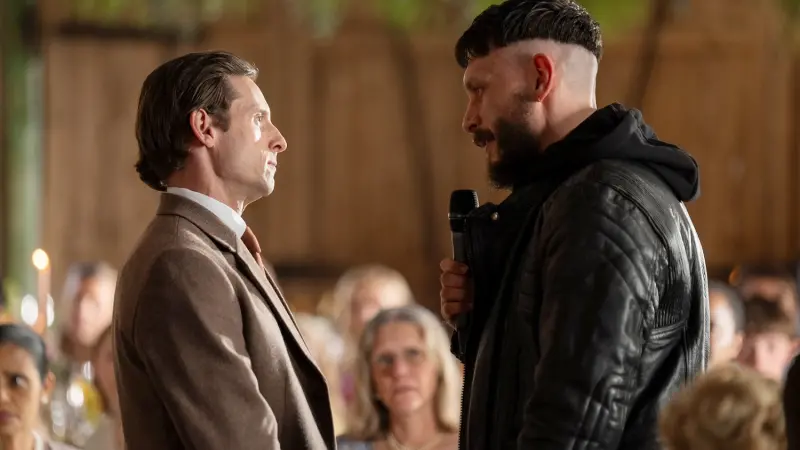
Warning: This article contains major spoilers for the series finale of HBO/BBC’s ‘Half Man,’ now streaming on HBO Max.
For six tension-filled weeks, Richard Gadd’s sophomore drama ‘Half Man’ kept audiences on edge, waiting to uncover the devastating truth behind what happened between his character Ruben and Jamie Bell’s Niall in that locked barn on Niall’s wedding day. The finale finally delivered the explosive secret—Niall had slept with Ruben’s wife, fathering Ruben’s son—and Ruben’s near-predictable, violent reaction. But while the episode offers a conclusion, it purposefully withholds closure, leaving viewers questioning what comes next.
Gadd—who conceived, wrote, executive produced, and starred in the series—sat down with Variety to unpack the controversial sixth episode, the brutal barn fight, and why he believes happy endings do a disservice to storytelling. “I would say the ending is the most talked about part of the show,” Gadd admits, noting it’s the first topic anyone who has seen a preview wants to discuss. Yet he remains guarded about over-explaining the meaning. “Sometimes it can take the magic away. I like that the ending is a little ambiguous. It’s almost my duty as an artist not to over-explain intention. Whatever people take out of the scene is more important to me.”
The Barn Fight: A Grueling, Intimate Spectacle
Gadd and Bell’s fight scene in the remote Scottish barn is the emotional and physical climax of the series. Shot over three days, the sequence required intense choreography and raw, unscripted energy. “I loved working with Jamie,” Gadd says. “We knew each other for like a week, and then before you know it we were throwing ourselves around, snot pouring out my nose onto his face. We really went for it.”
The choreography was meticulously planned from the first draft. “I knew exactly the way I wanted it shot—the way Ruben would kill him with a severe pressing down on his face,” Gadd explains. For safety, he couldn’t actually apply force to Bell’s face, so he put all his weight into his wrists. “By the end, God, my wrists were so sore!” The physical toll mirrored the emotional weight of the scene: Ruben, emasculated by the one person he trusted most, reclaims dominance in the most primal way—with his bare hands.
Gadd notes that Ruben’s signature move throughout the series is stamping on people’s heads, but here he chooses a “gentler” method. “It’s calculated, not reactive. He kills Niall in a different way because the violence is thought through.” The choice to kill Niall on his wedding day amplifies the symbolism: “Weddings symbolize happily ever after. Ruben couldn’t let Niall have that after everything he had taken from him.”
The Final Shot: Ambiguity as Artistic Choice
The series ends with a jarring cut to black—less than half a second after the audience expects the final frame. The camera lingers on Niall’s body, and Ruben’s face appears to roll his eyes before the screen goes dark. “I always wanted to end it that way,” Gadd reveals. The grunt coupled with the look is almost comedic, suggesting either resignation (“Great, now I have to dispose of this body”) or dread (“I’m going back to prison”). But Gadd refuses to pin down a single interpretation.
“In a show written so you have to fill in the gaps between episodes, it felt natural to have an ending where you fill in some gaps yourself,” he says. “An ending that was neat and tied up wouldn’t work for an innately fractured serial story like this.” He draws a parallel to his earlier hit ‘Baby Reindeer,’ which also ended with ambiguity: Donnie looking up at the barman, leaving multiple meanings open.
Gadd admits he dislikes the prevalence of happy endings in television. “TV shows and films always have a happy ending. Rom-coms: two people meet, admit their love, credits roll, and life makes sense. That’s not true to life. Happy endings—or even conclusive endings—aren’t true to life. I think lack of conclusion mirrors life in a way. The fact that people keep debating what happened to Ruben means the struggle and questions continue after the credits roll.”
Why Ruben’s Death (or Not) Is Left Unseen
In Episode 4, the show shocks viewers by suggesting Ruben dies—yet never shows the death explicitly. Some viewers wondered if it was a dream sequence. Gadd explains the choice: “I needed something at the end of Episode 4 to shake up the wedding bookends. The second I thought of it, I knew it was right.” He didn’t shoot an explicit death scene for the editing room. “I feel some of the mistakes television makes is neat endings. For a show playing with structure and unseen events, it felt honorable to mirror the story we’ve already seen.”
Gadd’s commitment to unresolved ambiguity is rooted in his belief that art should provoke discussion. “People have to keep debating what happened to Ruben. That means the struggle of the story—the questions about life and relationships and humanity—continue after the show ends.”
Industry Context: Gadd’s Rise and the Power of Ambiguous Storytelling
Richard Gadd burst onto the global stage with Netflix’s ‘Baby Reindeer,’ a raw, semi-autobiographical thriller that similarly left its protagonist in a state of emotional limbo. That series became a cultural phenomenon, earning critical acclaim for its unflinching look at obsession and trauma. With ‘Half Man,’ Gadd deepens his exploration of masculinity, betrayal, and the impossibility of neat resolution. The show follows Ruben, a man whose violent past catches up with him during a wedding weekend, forcing him to confront the friend who destroyed his family.
Gadd’s refusal to provide tidy answers sets him apart in an era of binge-friendly streaming. In an industry increasingly obsessed with cliffhangers designed to fuel season renewals, ‘Half Man’ stands as a self-contained, deliberately fractured story. “I don’t think happy endings are really true to life,” Gadd reiterates. “And I’m not sure why television seems to have them all the time. It brainwashes people into thinking there’s a point in life where everything will be fine. That’s not real.”
The finale has already sparked heated debate among fans and critics, with some praising the bold choice and others craving resolution. Gadd welcomes both reactions. “As long as people are talking, I’ve done my job.”
Behind the Scenes: A Cast and Crew Fully Committed
Jamie Bell, known for his roles in ‘Billy Elliot’ and ‘The Adventures of Tintin,’ threw himself into the physically demanding role of Niall. “He’s such an established actor—you worry if he’ll be happy rolling around in the mud,” Gadd says. “Boy, was he happy to roll around in the mud. It was grueling.”
The production shot the barn scenes in a remote Scottish location, adding to the claustrophobic, raw feel of the confrontation. Gadd’s dual role as writer and star allowed him to control every aspect of the storytelling, from the choreography to the final cut. “Everything was carefully planned from the first pass,” he says.
What’s Next for Richard Gadd?
While Gadd remains tight-lipped about future projects, his track record suggests he will continue pushing boundaries. With ‘Baby Reindeer’ and ‘Half Man,’ he’s established a signature style: emotionally brutal, structurally playful, and defiantly ambiguous. For fans left wondering about Ruben’s fate, Gadd offers a simple invitation: keep questioning. “The struggle of the story continues after the credits roll. That’s the point.”
Disclaimer - All celebrity-related content, information, and images on this website are based on publicly available online sources and AI-generated insights/data. Information such as biography, age, career, personal details, and images may change without notice over time. While we strive for accuracy, we do not guarantee the accuracy, completeness, reliability, or timeliness of any information or imagery displayed on this website. This content is provided for general informational purposes only.
Top Trending News of Netflix
 👁️ 585 views
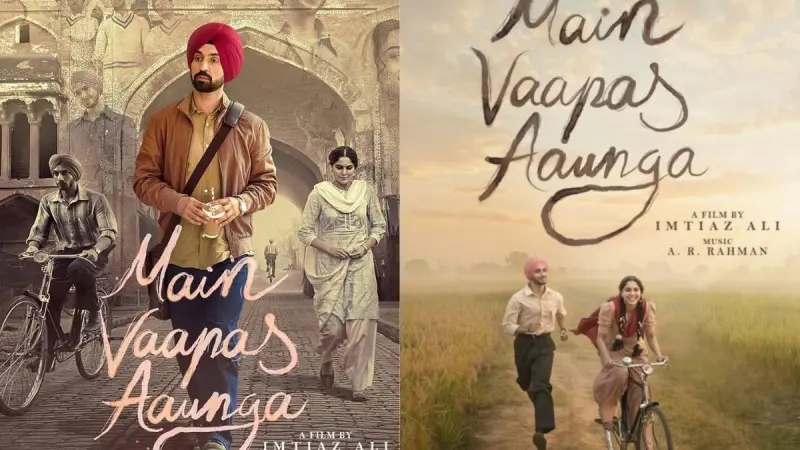
🔥 ‘Main Vaapas Aaunga’ OTT Home Revealed: Diljit Dosanjh, Vedang Raina & Sharvari’s Partition Love Story Heads to Netflix After Theatrical Run
Imtiaz Ali's Main Vaapas Aaunga starring Diljit Dosanjh, Vedang Raina, and Sharvari heads to Netflix after June 12 theatrical release. Get OTT details, Ektaa Kapoor's review, and why this Partition love story is Bollywood's most anticipated film of 2026.
 👁️ 489 views
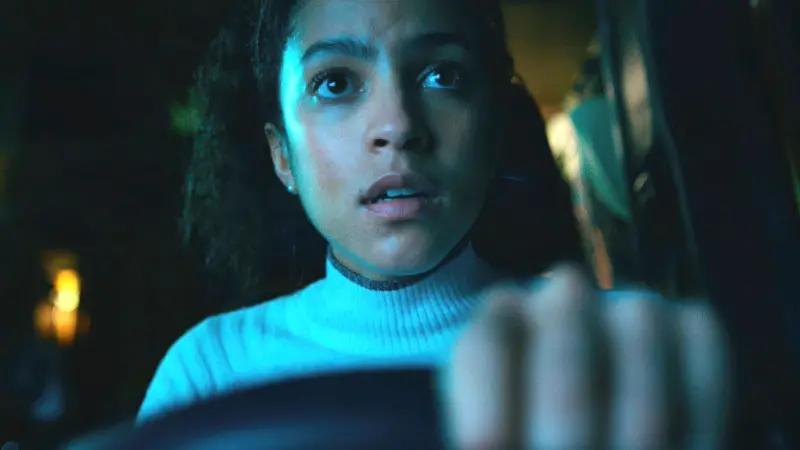
🔥 ‘Passenger’ (2026) Horror Movie: Streaming Release Date, Theatrical Run, and Where to Watch the Supernatural Thriller
Is the 2026 horror movie 'Passenger' streaming on Netflix or Amazon Prime? Directed by André Øvredal, this supernatural thriller stars Jacob Scipio and Lou Llobell. Find out where to watch, digital release date, and Paramount+ streaming plans.



Details
Send Us an Enquiry
We'll get back to you as soon as possible.
Thank You!
Your enquiry has been submitted. We'll be in touch shortly.