
Stephen King Calls Netflix's '3 Body Problem' 'Extraordinary' — Here's Why the Sci-Fi Sensation Demands Your Attention
 Previous

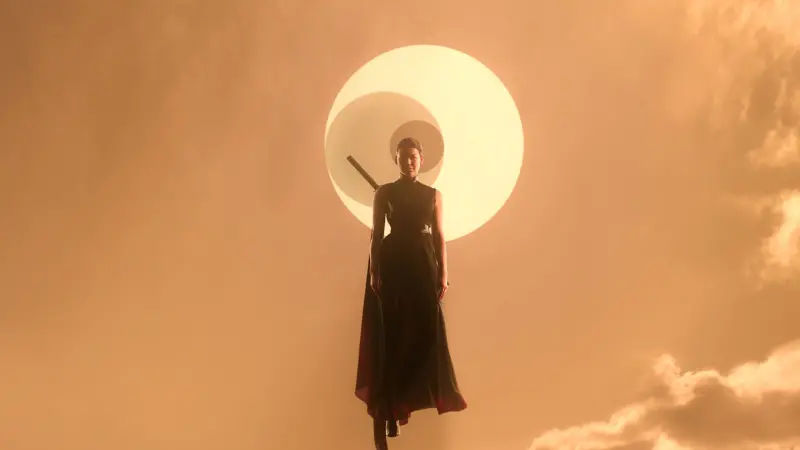
Stephen King doesn't hand out compliments lightly. The horror maestro, whose own works have fueled decades of pop culture nightmares, recently took to X (formerly Twitter) to anoint Netflix's 3 Body Problem with a rare and effusive endorsement. Calling the eight-episode adaptation “extraordinary, sprawling, thought-provoking,” and “immersive,” King singled out specific scenes as “chilling and awe-inspiring.” For a storyteller who has shaped the DNA of modern suspense, that kind of praise isn't just a pat on the back — it's a cultural signal.
3 Body Problem isn't merely another sci-fi entry in a crowded streaming landscape. It's an ambitious, globe-spanning epic that reimagines first contact through the lens of quantum physics, historical trauma, and existential dread. And with King's endorsement now in its corner, the series is poised to become a defining piece of television in 2025.
The King's Seal of Approval
King has never been shy about using his social media platform to champion the shows he loves. In recent years, he has praised M. Night Shyamalan's twisty psychological thriller Servant and Netflix's own Baby Reindeer. But his enthusiasm for 3 Body Problem felt different — more emphatic, more urgent. “I found some scenes to be chilling and awe-inspiring,” he wrote, hinting at the show's ability to slip horror into its hard-science framework.
That horror element is no accident. While 3 Body Problem isn't a traditional fright-fest, it weaponizes existential dread with surgical precision. The fate of the Judgment Day ship's inhabitants, for example, unfolds with a grisly realism that rivals anything from King's own Carrie or The Shining. It's a reminder that the line between sci-fi and horror is often thinner than a proton's diameter.
A Sci-Fi Renaissance on Streaming
We are living through a golden age of television science fiction. Since Netflix's Altered Carbon raised the bar for worldbuilding in 2018, every major streamer has invested heavily in complex, visually stunning genre fare. Prime Video delivered the post-apocalyptic video game adaptation Fallout; Hulu offered the mind-bending Devs and the upcoming Alien: Earth; Apple TV+ has built an embarrassment of riches with Silo, For All Mankind, and Foundation. Even HBO, traditionally fantasy-heavy with Game of Thrones spinoffs and the Harry Potter series, entered the fray with Dune: Prophecy.
Yet 3 Body Problem stands apart. It is the first major television project from David Benioff and D.B. Weiss following their Game of Thrones tenure, and it represents a creative leap that the duo had been aching to take. Based on Liu Cixin's celebrated Remembrance of Earth's Past trilogy, the series tackles nothing less than the collapse of scientific certainty, the fragility of human civilization, and the terrifying implications of a universe that may not want us to survive.
From Page to Screen: The Ambitious Adaptation
Adapting Liu Cixin's novel was never going to be easy. The book jumps between timelines, continents, and realities, weaving together a mystery that begins with the Cultural Revolution and ends with an alien fleet heading toward Earth. The Netflix series condenses this sprawling narrative into eight tight episodes, following a group of scientists known as “The Oxford Five” as they uncover a conspiracy that threatens all of humanity.
Central to the story is Dr. Ye Wenjie, an astrophysicist whose personal tragedy and intellectual curiosity set off a chain reaction that spans decades. Her arc intersects with the Oxford Five in ways that feel both inevitable and shocking. The show's willingness to juggle multiple perspectives — from government officials in Beijing to researchers in the UK — gives it an epic scope that rewards patient viewers.
The Horror Lurking Beneath the Science
King's praise may be rooted in the series' subtle but persistent horror undercurrents. 3 Body Problem doesn't rely on jump scares or monsters. Instead, it builds unease through ideas: the notion that physical laws can be altered, that the cosmos is a dark forest teeming with hostile intelligence, and that humanity's greatest discoveries may be death sentences. One scene, in which a character experiences the unsettling reality of a “sophont” — a microscopic supercomputer that interferes with particle physics — is pure existential dread.
For fans of King's work, this is familiar territory. King has always understood that the most terrifying stories are the ones that feel plausible. 3 Body Problem operates in the same register, grounding its vast ideas in the very real anxieties of a world grappling with climate change, political instability, and technological acceleration.
What This Means for Season 2 and Beyond
The series has already been renewed for a second season, and with King's endorsement amplifying its cultural footprint, expectations are sky-high. The remaining books in Liu Cixin's trilogy — The Dark Forest and Death's End — introduce even grander concepts: interstellar warfare, dimension folding, and the ultimate fate of the universe. Benioff and Weiss have their work cut out for them, but if Season 1 is any indication, they are more than capable of pulling it off.
In a streaming environment where even acclaimed shows can get lost in the algorithm, a nod from Stephen King is worth its weight in gold. It signals to viewers that 3 Body Problem isn't just another sci-fi series — it's a thought experiment, a emotional journey, and a chilling exploration of what happens when humanity looks up and realizes it's not alone.
As we wait for Season 2, one thing is clear: the conversation around ambitious sci-fi storytelling has found its new epicenter. And if the Master of Horror himself is telling you to watch, you'd be wise to listen.
Disclaimer - All celebrity-related content, information, and images on this website are based on publicly available online sources and AI-generated insights/data. Information such as biography, age, career, personal details, and images may change without notice over time. While we strive for accuracy, we do not guarantee the accuracy, completeness, reliability, or timeliness of any information or imagery displayed on this website. This content is provided for general informational purposes only.
Top Trending News of Netflix
 👁️ 555 views
🔥 ‘Main Vaapas Aaunga’ OTT Home Revealed: Diljit Dosanjh, Vedang Raina & Sharvari’s Partition Love Story Heads to Netflix After Theatrical Run
Imtiaz Ali's Main Vaapas Aaunga starring Diljit Dosanjh, Vedang Raina, and Sharvari heads to Netflix after June 12 theatrical release. Get OTT details, Ektaa Kapoor's review, and why this Partition love story is Bollywood's most anticipated film of 2026.
 👁️ 370 views
🔥 ‘Passenger’ (2026) Horror Movie: Streaming Release Date, Theatrical Run, and Where to Watch the Supernatural Thriller
Is the 2026 horror movie 'Passenger' streaming on Netflix or Amazon Prime? Directed by André Øvredal, this supernatural thriller stars Jacob Scipio and Lou Llobell. Find out where to watch, digital release date, and Paramount+ streaming plans.








Details
Send Us an Enquiry
We'll get back to you as soon as possible.
Thank You!
Your enquiry has been submitted. We'll be in touch shortly.