
Andy Serkis on the Challenges of The Hunt for Gollum
 Previous

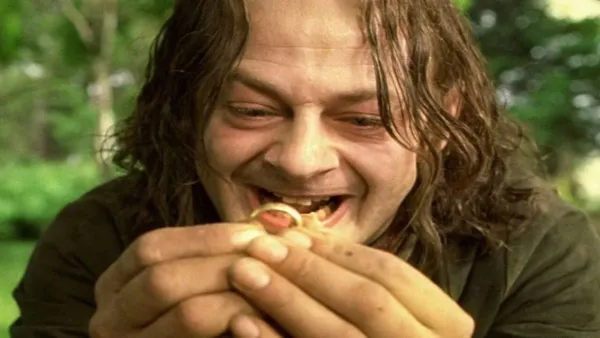
When Peter Jackson’s The Lord of the Rings: The Fellowship of the Ring hit theaters over two decades ago, it didn't just change cinema; it redefined the boundaries of performance. At the center of that revolution was Andy Serkis, a man whose soul-baring portrayal of Sméagol/Gollum proved that digital characters could possess profound humanity. Now, the Ring has come full circle. With the announcement of The Lord of the Rings: The Hunt for Gollum, Serkis is stepping back into the loincloth, but this time, he’s also taking the director's chair.
In recent interviews and industry panels, Serkis has been candid about the "impossible task" ahead. It isn't just about recreating a beloved character; it’s about honoring a legacy while navigating a cinematic landscape that has changed drastically since he last stepped foot in the Misty Mountains.
The Weight of the Ring: Why Now?
The first question on every fan’s mind is "why?" After the definitive ending of the original trilogy and the expansive (if polarizing) journey of The Hobbit, many felt the story of Gollum was complete. However, Serkis views this project not as a retread, but as a deep dive into an unexplored psychological corner of J.R.R. Tolkien’s legendarium.
The Hunt for Gollum is set during the timeline of The Fellowship of the Ring, specifically focusing on the period when Gandalf and Aragorn are desperately trying to track down the creature before Sauron’s forces do. According to Serkis, the "impossibility" begins with the narrative tension. We know where Gollum ends up, but we don't truly know the psychological toll of his isolation during those missing years.
"Gollum’s story is the ultimate tragedy," Serkis noted. "To inhabit that headspace again, after all these years, is daunting. But to do it while also being the person responsible for the entire vision of the film? That’s where the real mountain lies."
The Dual Role: Directing Yourself as a Digital Icon
Directing a film of this scale is a Herculean feat. Directing yourself in a leading role is even harder. But directing yourself via performance capture, where your "costume" is a gray spandex suit with reflective dots and your "set" is often a sterile volume, adds a layer of complexity that few directors have ever faced.
Serkis is no stranger to the director’s chair, having helmed Mowgli: Legend of the Jungle and Venom: Let There Be Carnage. However, The Hunt for Gollum requires him to maintain the visceral, manic energy of Sméagol while simultaneously managing the technical precision of a high-budget Middle-earth production.
He has described the process as a "schizophrenic exercise." On one hand, he must be the actor—finding the raw, desperate emotion of a creature obsessed with "Precious." On the other, he must be the objective leader, ensuring the cinematography, the pacing, and the performances of his co-stars align with the aesthetic established by Peter Jackson, who returns as a producer.
Technical Evolution and the "Uncanny Valley"
In 2001, Gollum was a miracle of CGI. In 2026, the bar is significantly higher. Audiences are no longer impressed by the mere existence of a digital character; they demand total immersion. Serkis has pointed out that the technical "impossible task" involves updating Gollum’s look without losing the essence of the original performance.
The technology at Weta FX has evolved exponentially. We now have sophisticated muscle simulation, subsurface scattering for skin, and eye-tracking technology that was science fiction in the early 2000s. The challenge for Serkis is to use these new tools to make Gollum feel more real than ever, without making him feel "different." It’s a delicate balancing act of nostalgia and innovation.
"We aren't just putting on an old glove," Serkis explained. "The glove has been redesigned, it’s more sensitive, it picks up every micro-expression. The 'impossibility' is ensuring that the soul of the character—the Sméagol we love and pity—isn't lost in the high-fidelity pixels."
The Shadow of Peter Jackson
One cannot talk about Middle-earth without mentioning Peter Jackson. For Serkis, taking the reins of a franchise so inextricably linked to Jackson’s DNA is perhaps the most intimidating part of the job. While Jackson is producing and providing guidance, the creative execution falls on Serkis’s shoulders.
The fan base for The Lord of the Rings is notoriously protective. Any deviation from the tone or visual language of the original films is met with intense scrutiny. Serkis has acknowledged that the "impossible task" includes meeting these astronomical expectations. He isn't just making a movie; he’s contributing to a modern mythology.
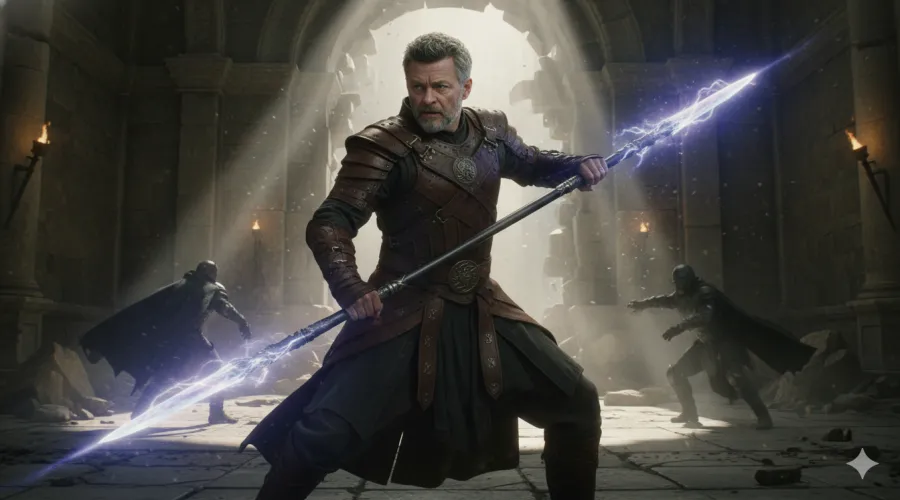
Serkis intends to lean into the "darker, more visceral" elements of the story. The hunt for Gollum is, by nature, a chase through dangerous territories, involving Orcs, Ringwraiths, and the looming shadow of Mordor. Serkis wants the film to feel like a psychological thriller set within the fantasy world, a tonal shift that he hopes will justify the return to this specific era of Middle-earth.
The Physical Toll
At 60 years old, Serkis is also facing the physical reality of playing Gollum. The character is famously crouched, twitchy, and athletic. During the original trilogy, Serkis’s physical commitment was legendary—clambering over rocks and screaming until his throat was raw (aided by "Gollum Juice," a mixture of honey, lemon, and ginger).
Returning to that level of physicality is a challenge he doesn't take lightly. "Gollum doesn't age the way we do, but I certainly have," he joked in a recent press junket. Maintaining the stamina to perform those grueling sequences while also spending 14 hours a day behind the monitor is a feat of endurance that few in Hollywood would attempt.
Bridging the Gap: New Characters and Old Friends
While the film focuses on Gollum, the title suggests a broader scope. The "Hunt" involves iconic characters like Gandalf and Aragorn. This presents the "impossible" casting challenge: do you bring back original actors with the help of de-aging technology, or do you recast?
While Serkis has remained tight-lipped on specific casting, he has emphasized that the film must feel cohesive with the existing films. The logistical nightmare of coordinating legacy cameos with a new narrative is a puzzle that Serkis and the writing team (including Fran Walsh and Philippa Boyens) are currently piecing together.
Why It Matters
Despite the "impossible" nature of the project, Serkis remains driven by a singular passion for the character. He believes Gollum remains the most relevant character in Tolkien’s world—a mirror of our own addictions, our internal conflicts, and our capacity for both great evil and heartbreaking frailty.
The task may be impossible, but if anyone can find the path through the Dead Marshes, it’s the man who has lived inside Gollum’s skin for over twenty years. The Hunt for Gollum isn't just a movie for Andy Serkis; it’s a final, definitive chance to explore the character that defined his career.
Source - https://gizmodo.com/andy-serkis-hunt-for-gollum-lord-of-the-rings-2000708167
Disclaimer - All celebrity-related content, information, and images on this website are based on publicly available online sources and AI-generated insights/data. Information such as biography, age, career, personal details, and images may change without notice over time. While we strive for accuracy, we do not guarantee the accuracy, completeness, reliability, or timeliness of any information or imagery displayed on this website. This content is provided for general informational purposes only.
Iconic Photos of Andy Serkis

Top Trending News of Andy Serkis
👁️ 86 views
🔥 Andy Serkis on the Challenges of The Hunt for Gollum
Andy Serkis discusses returning to Middle-earth to direct and star in The Hunt for Gollum, tackling technical hurdles and narrative expectations.
 👁️ 78 views
🔥 Andy Serkis on the End of Wild Animals in Entertainment
Performance capture icon Andy Serkis discusses why using live wild animals in film is "absurd and cruel" and how technology offers a humane path forward.



Details
Send Us an Enquiry
We'll get back to you as soon as possible.
Thank You!
Your enquiry has been submitted. We'll be in touch shortly.