
Andy Serkis on the End of Wild Animals in Entertainment
 Previous

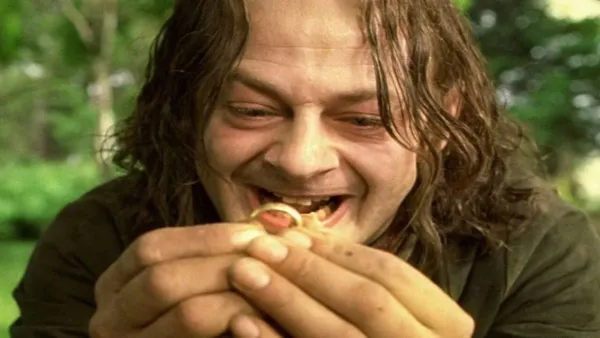
For decades, Hollywood relied on a specific kind of "actor" that could never read a script, sign a contract, or voice its own discomfort: the live wild animal. From the tethered lions of early cinema to the "trained" chimpanzees of 20th-century sitcoms, the use of exotic creatures was a logistical staple of the entertainment industry. But as technology has advanced, so has our collective conscience. Standing at the forefront of this revolution is Andy Serkis, the man whose transformative performances as Gollum in The Lord of the Rings and Caesar in The Planet of the Apes have proven that the most "human" emotions on screen don't require a human face—or a live animal.
In a series of impassioned discussions and collaborations with animal advocacy groups like PETA, Serkis has made his stance clear: the era of using live wild animals for our amusement is, and should be, over.
The Myth of the "Happy" Animal Actor
The central argument Serkis champions is rooted in the inherent cruelty of the training process. While audiences see a "smiling" chimpanzee or a "majestic" tiger on screen, the reality behind the scenes is often one of deprivation and fear. Wild animals are frequently separated from their mothers at birth, subjected to physical discipline to ensure "performance," and discarded when they become too large or dangerous to handle.
Serkis, who spent years meticulously studying the movements and social structures of great apes to bring Caesar to life, developed a deep empathy for the species he portrayed. This connection led him to conclude that forcing these intelligent, sensitive beings into the high-stress environment of a movie set is fundamentally inhumane.
"The thought of shooting an Apes movie now with real apes is absurd," Serkis noted in a recent interview. "We’ve matured as an industry and realized that that would be intolerable and cruel."
Performance Capture: The Ethical Alternative
The revolution Serkis led isn't just moral; it’s technological. Through performance capture (often abbreviated as mo-cap), an actor's physical movements and facial expressions are recorded and mapped onto a digital character. This allows for a level of nuance and "soul" that a live animal—driven by instinct and training cues—could never provide.
By using technology, filmmakers can:
-
Achieve Total Emotional Control: An animator and actor can collaborate to create a "performance" that perfectly fits the narrative arc.
-
Ensure Set Safety: There is no risk of a wild animal reacting unpredictably to lights, noise, or crowds.
-
Eliminate Captivity: No animals are forced to live in trailers or small cages between takes.
Serkis’s portrayal of Caesar is the ultimate proof of concept. In War for the Planet of the Apes, the audience isn't just watching a digital monkey; they are watching a war-weary leader grappling with loss, vengeance, and mercy. This emotional depth is authored by a human actor and realized through digital artistry, removing the need for a live primate to be "coaxed" into performing.
From Middle-earth to the Farm
Serkis’s commitment to animal-centric storytelling without animal exploitation continues with his latest project, a reimagining of George Orwell’s Animal Farm. Released to critical acclaim, the film uses cutting-edge animation and performance capture to give voices to the pigs, horses, and sheep of Manor Farm.
In promoting the film, Serkis has highlighted the irony of using real animals to tell a story about animal liberation and the corrupting nature of power. By choosing animation, he was able to push the "acting" of the animals into the realm of the surreal and the deeply personal, further cementing the idea that "realism" in cinema doesn't require "reality" on set.
A Growing Industry Shift
Serkis is not alone in this fight. Major productions have increasingly leaned into digital animals to avoid the ethical pitfalls of live performers.
-
The Revenant: Used a digital bear for its harrowing attack sequence.
-
The Jungle Book (2016): Featured a completely digital menagerie of animals.
-
The Lion King (2019): Utilized photorealistic "virtual production" to bring the Savannah to life.
While some purists argue that there is a "majesty" to a real animal that can't be replicated, Serkis argues that this "majesty" is a hollow shell if it comes at the cost of the creature's well-being. He urges both filmmakers and audiences to "err on the side of animals" and support productions that prioritize humane technology over outdated traditions.
The Legacy of a Digital Pioneer
As Andy Serkis moves further into directing and producing, his influence continues to shape the future of Hollywood. He has proven that digital characters are not "lesser" than live-action ones; in fact, they can be more honest because they are not the product of coercion.
Through his work as Caesar and Gollum, and his advocacy for animal rights, Serkis has provided a blueprint for a more compassionate film industry. He has shown us that to truly honor the wild, we must leave it where it belongs—in nature, not on a soundstage.
Source - https://www.peta.org/features/actor-andy-serkis-animals-entertainment/
Disclaimer - All celebrity-related content, information, and images on this website are based on publicly available online sources and AI-generated insights/data. Information such as biography, age, career, personal details, and images may change without notice over time. While we strive for accuracy, we do not guarantee the accuracy, completeness, reliability, or timeliness of any information or imagery displayed on this website. This content is provided for general informational purposes only.
Iconic Photos of Andy Serkis


Top Trending News of Andy Serkis
 👁️ 85 views
🔥 Andy Serkis on the Challenges of The Hunt for Gollum
Andy Serkis discusses returning to Middle-earth to direct and star in The Hunt for Gollum, tackling technical hurdles and narrative expectations.
👁️ 78 views
🔥 Andy Serkis on the End of Wild Animals in Entertainment
Performance capture icon Andy Serkis discusses why using live wild animals in film is "absurd and cruel" and how technology offers a humane path forward.







Details
Send Us an Enquiry
We'll get back to you as soon as possible.
Thank You!
Your enquiry has been submitted. We'll be in touch shortly.