
Inside the Battle to Save Elizabeth Taylor and Richard Burton’s 'Dirty Movie' From Hollywood Censors
 Previous

The Making of a Scorching Classic
In October 1962, a depressed Mike Nichols went to see the play everyone was talking about on Broadway: Edward Albee's Who's Afraid of Virginia Woolf? He was blown away, and felt 'enormously jealous' as he watched it – partly because a play starring him had just capsized spectacularly.
A Matter of Position, a bitter comedy written by his creative partner, Elaine May, had fallen apart during try-outs in Philadelphia and was cancelled before reaching Broadway, just as the May-Nichols relationship was also crumbling. It was a chicken-and-egg question whether their break-up caused the creative flop or vice versa.
In the long bouts of combat between Albee's married academics George and Martha, and the wicked games they play to score points with a rapt audience, Nichols couldn't help but be reminded of his history of improvisation with May: their love of clever wordplay, but also their gift for slicing behavioral satire.
From Stage to Screen: A Director’s Impossible Debut
Still, he had no notion that he would enter the frame, with no film-making experience, to direct the scorching 1966 screen adaptation. Still less could he have guessed that it would star the hottest celebrity couple of the day, Elizabeth Taylor and Richard Burton, in their finest collaboration.
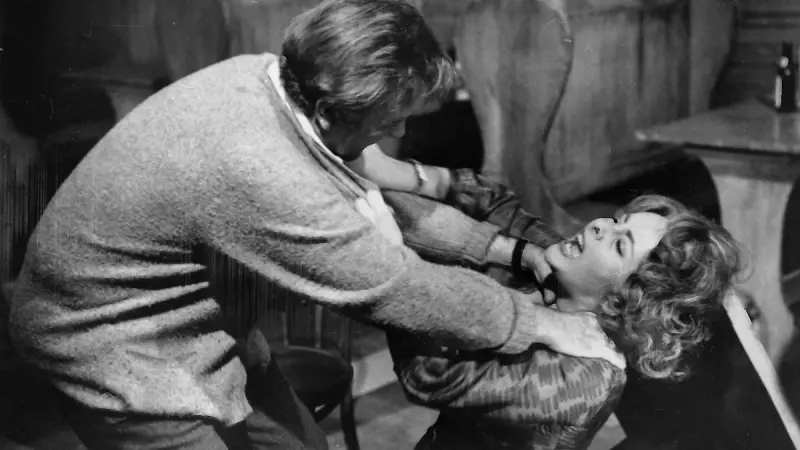
This 60-year-old film has never gone away. Many reviews of The Invite, Olivia Wilde's acridly funny new four-hander, have drawn comparisons with Albee's masterwork, which has surely endured far longer in the culture because of this top-flight adaptation than might otherwise have been the case. As documented in Screenshot (550).png, Nichols battled to keep Albee's torrents of foul language on screen; had to oversee indoor fireworks between his stars without the whole thing going up in flames; and would even be sacked before the film was complete. On every level, it was quite the debut.
The Black-and-White War
After thrusting himself into the fray and winning the approval of both Burton and Taylor to take it on, Nichols's first big fight was to insist on the film being in black and white. This started as a practical measure. Taylor was only 33 at the time and would have to age up by two decades to play Martha – a fact that made everyone nervous about whether she could pull it off. The Cleopatra star would have to turn, in Nichols's words, 'the world's most beautiful eyes [into] those of a tired woman who drinks a great deal, whose makeup smears and mascara runs'.
Nichols, privately, had his doubts. When studio chief Jack Warner bought the film rights in 1964 and hired the legendary Ernest Lehman (North by Northwest, Sweet Smell of Success, West Side Story) to write and produce it, the original plan was to cast Bette Davis and James Mason.
As rehearsals neared, Nichols lost faith in Taylor and wished they had stuck with Davis. 'It's like asking a chocolate milkshake to do the work of a double martini,' he griped by Lehman's pool. Warner, after the Taylor-Burton casting was set, had agreed to pay her $1 million and him $750,000 – mammoth sums for the time – and to construct what was essentially an entire home on the studio lot as their dressing-room complex: two suites, each equipped with a kitchen and piano, stocked with cases of champagne, Scotch whisky, cognac, white roses and lilies of the valley. A memo was sent to all WB personnel, 'How to treat the Burtons', instructing them to speak to neither actor unless spoken to first. 'I've never seen people treated like that,' their co-star George Segal recalled in awe.
So it was simply too late. Nichols would have to help Taylor get there, by hook or by crook. One thing was for sure: the make-up required to give her crow's feet wouldn't look convincing in color. Nichols seized the chance to embrace a less literal aesthetic – something more poetic and metaphorical, to which black and white can lend itself. But Warner wasn't having it. Especially with such expensive stars, he wanted it to look up-to-date, a film that could be marketed like a Rock Hudson and Doris Day picture, which it plainly wasn't.
The cinematographer Warner had foisted on Nichols, Harry Stradling, was an Oscar-winning expert in both formats and proposed a solution to the impasse: they would shoot the film in color, then convert it to black and white in post-production. Nichols smelt a rat. It would be all too easy for them to renege and wrest it from his hands. 'Oh, Harry,' he said: 'I'm so sorry. I have to fire you.'
As a bargaining tactic, Nichols then threatened to walk off the film altogether. 'I like it at home. I'll just go home.' It worked. Warner reluctantly caved and told him he could hire Haskell Wexler instead, who would win the last Oscar ever awarded specifically for black-and-white cinematography.
Foul Language and the 7 Million Dollar 'Dirty Movie'
Albee's play had shocked Broadway with the range and ingenuity of its foul language. In 1966, with Hollywood still answering to the Production Code that had been in force since 1934, there was absolutely no doubt that some of the rudest words would have to go – even the ones that now strike us as fairly tame. 'They wouldn't let us say "Screw you" in 1966,' Nichols recalled. (That line was redubbed to have Martha say 'Goddamn you', but it doesn't take a lip-reader to know what Taylor originally recorded.)
'My God, we've got a $7 million dirty movie on our hands,' one WB executive was said to have exclaimed when a rough cut was screened. Nichols had worn himself out stopping Lehman from defanging the script and refused to shoot alternate takes with milder swearing, because he knew these would be a hostage to fortune. Albee, in characteristic fashion, fumed about Lehman being given a writing credit at all. 'It's my play, f---ing word for word!'
The Jackie Kennedy Secret Weapon
'There was great fear of the Catholic Legion of Decency,' Nichols admitted. 'I had a plan for that!' He knew that a seal of approval, of some kind, from the infamous review board would carry the greatest weight with Jack Warner and improve his confidence in the film. Nichols's scheme was to rope in his newfound friend Jackie Kennedy, the most famous widow in the world. He persuaded her to attend the same screening at which dozens of the Legion's members were passing judgment. The idea was that she would sit directly behind the top brass and sigh with appreciation at the end, declaring the film beautiful and saying that John F. Kennedy would have loved it.
She agreed, and the shameless ruse worked. Warner had been dreading a C ('condemned') rating, but the Legion instead awarded it A-IV, meaning 'morally unobjectionable for adults, with reservations'.
Who's Afraid of Virginia Woolf? would still be the first film to carry an 'adults only' stipulation, a concession Warner pre-emptively applied to appease other religious groups. But it got the film across the line, and then some. It became the third-highest-grossing release of 1966, received 13 Oscar nominations and won five, including a second Best Actress award for Taylor and Best Supporting Actress for Sandy Dennis. It propelled Nichols to the top rank of American film-makers in a single bound. They had been afraid to release it, but no one was afraid to applaud it.
Disclaimer - All celebrity-related content, information, and images on this website are based on publicly available online sources and AI-generated insights/data. Information such as biography, age, career, personal details, and images may change without notice over time. While we strive for accuracy, we do not guarantee the accuracy, completeness, reliability, or timeliness of any information or imagery displayed on this website. This content is provided for general informational purposes only.
Iconic Photos of Richard Burton
Top Trending News of Richard Burton
 👁️ 132 views
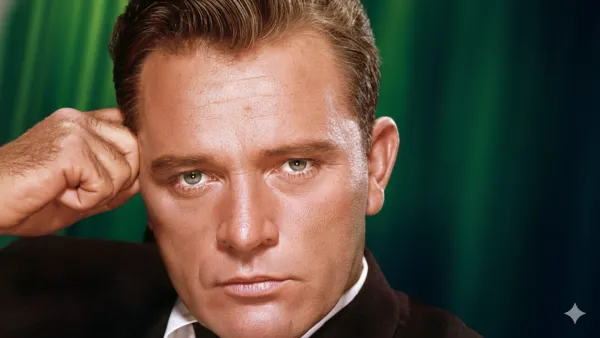
🔥 Richard Burton Wild Genius Review by Yvette Huddleston
Critic Yvette Huddleston reviews the BBC documentary Richard Burton: Wild Genius for the Yorkshire Post, celebrating the 100-year legacy of the Welsh icon.
 👁️ 118 views
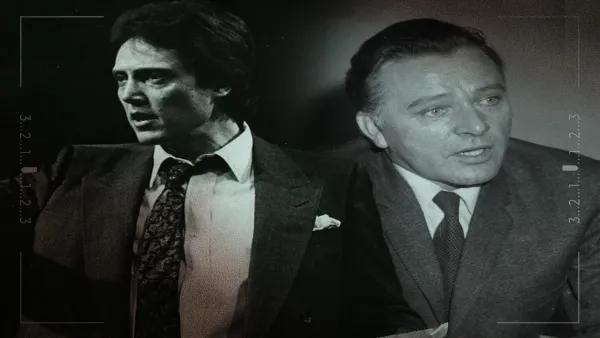
🔥 The Richard Burton Role Christopher Walken Lost
Christopher Walken reflects on being rejected for the lead role in the 1977 film Equus, which went to Richard Burton. "That’s the way it goes," says the star.

Details
Send Us an Enquiry
We'll get back to you as soon as possible.
Thank You!
Your enquiry has been submitted. We'll be in touch shortly.