
Steve McQueen
 Previous

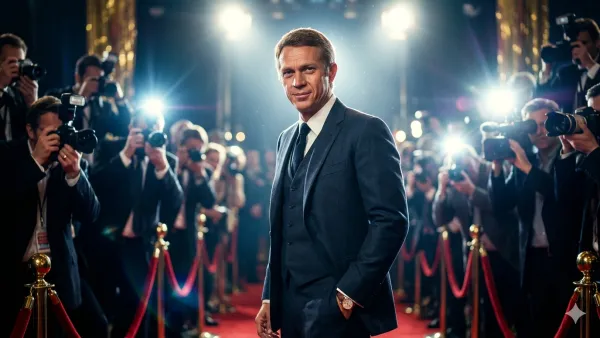
Steve McQueen did not just act in movies; he lived them. To understand the phenomenon of McQueen is to understand a man who was constantly at odds with authority while simultaneously seeking perfection in every craft he touched. His "King of Cool" moniker was not a marketing gimmick but a reflection of his authentic, detached, and stoic persona that resonated with the counterculture of the 1960s.
The Early Struggle and the Marine Corps
McQueen's childhood was turbulent. His father, a stunt pilot, left shortly after his birth, and his mother struggled with alcoholism. This instability led him to the streets of Indianapolis and later California, where he fell in with gangs. The turning point came when he was sent to the Boys Republic. It was here that he began to find the discipline that would later define his professional life. His time in the Marines further refined this; although he spent time in the brig for unauthorized absences, he eventually excelled, becoming part of the honor guard for President Harry S. Truman’s yacht.
Breakout and Hollywood Dominance
McQueen's big break came in 1958 with the sci-fi cult classic The Blob, but his role as Josh Randall in the TV Western Wanted: Dead or Alive made him a household name. He brought a unique physicality to his roles. Unlike the theatrical actors of the time, McQueen used silence and movement to communicate. In The Magnificent Seven (1960), he famously stole scenes from more established stars simply through his subtle background actions.
By the mid-60s, he was an international superstar. The Great Escape made him a global icon, and The Sand Pebbles (1966) earned him an Academy Award nomination. In 1968, Bullitt redefined the action genre. The film featured a ten-minute car chase through the streets of San Francisco that remains the gold standard for automotive action. McQueen, an expert driver himself, was heavily involved in the choreography and execution of these scenes.
Passion for Speed
Outside of acting, McQueen was a professional-grade racer. He competed in the 12 Hours of Sebring and often raced motorcycles under the pseudonym "Harvey Mushman" to avoid the scrutiny of film studios who feared for their star's safety. His 1971 film Le Mans was a passion project intended to be the ultimate racing movie. While it was a difficult production that strained his marriage and professional relationships, it stands today as a masterpiece of automotive cinematography.
Legacy and Final Years
In his final years, McQueen sought spiritual peace, eventually becoming a born-again Christian. When he was diagnosed with pleural mesothelioma in 1979—likely caused by exposure to asbestos during his time in the Marines—he sought alternative treatments in Mexico. He passed away on November 7, 1980, but his influence remains. From his iconic fashion sense (Persol sunglasses and Baracuta jackets) to his influence on modern action stars, Steve McQueen’s shadow looms large over Hollywood.
Disclaimer: All celebrity-related content, information, and images on this website are based on publicly available online sources and AI-generated insights/data. Information such as biography, age, career, personal details, and images may change without notice over time. While we strive for accuracy, we do not guarantee the accuracy, completeness, reliability, or timeliness of any information or imagery displayed on this website. This content is provided for general informational purposes only.
 👁️ 117 views




Details
Send Us an Enquiry
We'll get back to you as soon as possible.
Thank You!
Your enquiry has been submitted. We'll be in touch shortly.