
THE THOMAS CROWN AFFAIR 1968: COMPLETE FILM GUIDE, PLOT & WHERE TO WATCH
 Previous

THE HEIST THAT REFUSES TO AGE
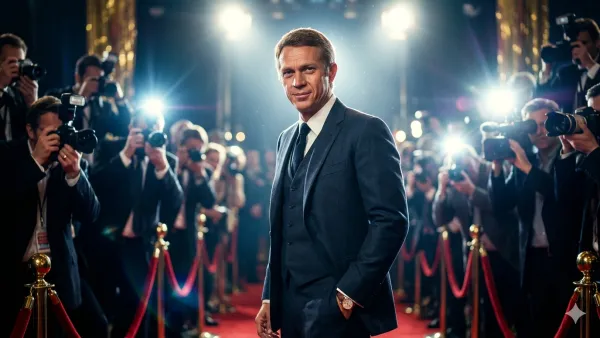
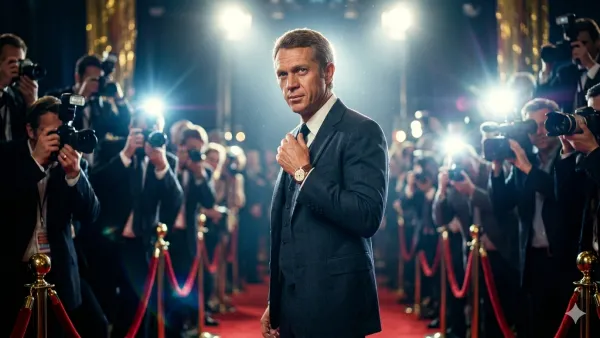
There's a peculiar magic that surrounds certain films—a gravitational pull that keeps audiences returning decades after their initial release, each generation discovering something new in the shadows and light. The Thomas Crown Affair, released in 1968, is precisely this kind of cinema: a velvet-gloved heist thriller that plays like a sophisticated chess match between desire and deception, ambition and consequence. Directed by Norman Jewison and anchored by a charismatic Steve Reeves, the film has aged with the kind of grace typically reserved for fine wine and modernist architecture.
In an era when streaming buzz around prestige cinema continues to reshape how audiences discover classic films, The Thomas Crown Affair has experienced a quiet renaissance. The film appears with increasing frequency on "peak cinema" listicles, curated collections, and film school syllabi. It's not difficult to understand why: this is a movie that anticipates the slick, style-over-substance thriller that would dominate contemporary entertainment news cycles, yet it possesses an intellectual rigor and emotional authenticity that many modern heist narratives frankly lack. The film doesn't just show you a brilliant theft; it immerses you in the psychology of someone compelled to steal not from necessity, but from the sheer intoxication of risk.
What makes The Thomas Crown Affair particularly resonant today is its understanding of a certain masculine ennui—a condition that feels remarkably contemporary. Crown is a man who has everything except a reason to feel alive. He's the patron saint of the ultra-wealthy professional class struggling with existential hollowness, a prototype that contemporary television and film continue to mine (think Succession, The Gentlemen, even elements of House of Gucci). As we navigate an entertainment landscape saturated with antiheroes and morally compromised protagonists, Crown's calculated audacity reads as almost refreshingly straightforward in its temptation.
The film also arrives at a fascinating cultural moment in cinema history. Shot in 1968—a year of unprecedented social upheaval—The Thomas Crown Affair presents a world of gleaming penthouses, museum heists, and yacht-bound romance, seemingly indifferent to the turmoil surrounding it. Yet this detachment is precisely the point. The film is about escape, about the fantasy of self-determination in a world increasingly constrained by systems and structures. For modern viewers consuming this film via streaming platforms, the contrast between the utopian visual aesthetic and the dystopian reality it ignores creates an unexpected poignancy.
A MASTERCLASS IN ELEGANT TRANSGRESSION
Thomas Crown (Steve Reeves) is a Boston-based financier and millionaire living in a world of understated opulence. By day, he navigates corporate boardrooms with the ease of someone born to power; by night, he indulges in a secret life as an art thief. But this isn't a man driven by greed or desperation. Crown steals because the act itself—the planning, the execution, the razor's edge between success and capture—makes him feel genuinely alive. His thefts are exercises in pure aesthetics and risk management, each one a perfect crime orchestrated with the precision of a conductor leading a symphony.
Crown's carefully balanced double life is disrupted when insurance investigator Vicki Anderson (Faye Dunaway, in a career-defining role) arrives on the scene. Anderson is Crown's professional and intellectual equal—a woman of sharp intelligence, unwavering resolve, and a capacity for manipulation that rivals his own. The central tension of the narrative doesn't merely spring from the classic cat-and-mouse dynamic; rather, it emerges from the electric recognition between two people who understand each other's games and are simultaneously both playing and genuinely attracted to one another.
The film's most celebrated sequence remains the theft of a Rembrandt from Boston's Museum of Fine Arts. Orchestrated with balletic precision, the heist unfolds across a split screen—a technical innovation in 1968 that now feels both dated and oddly contemporary in our age of multitasking and fractured attention spans. Multiple teams execute their assigned tasks in perfect synchronization: lookouts, couriers, mechanics, each playing their role in a choreography of crime. What distinguishes this sequence from subsequent heist film set pieces is its refusal to treat the theft as pure spectacle. Yes, it's visually gorgeous (shot by cinematographer Haskell Wexler, the sequence glows with honeyed 1960s color grading), but it's also oddly quiet, introspective. The music—Mitch Leigh's Oscar-nominated score, anchored by the haunting "The Windmills of Your Mind"—accompanies the theft not as triumphant fanfare but as a kind of mournful reflection.
As Vicki closes in on Crown, the investigation becomes increasingly personal. She finds herself drawn to him even as she pursues him. The film never quite resolves whether her attraction compromises her investigation or whether her investigation itself is a kind of extended seduction. This ambiguity—this refusal to settle the moral and emotional stakes—is what elevates The Thomas Crown Affair beyond the standard thriller template. By the final act, both characters are playing a game that neither can quite articulate. The film's ending, which we won't spoil here, suggests that sometimes the greatest heist is the one you pull off on yourself.
The plot, in essence, is a Trojan horse for something far more interesting than the mechanics of theft: it's a meditation on loneliness, the performative nature of identity, and the seductive danger of finding someone who sees through your carefully constructed masks.
THE ARCHITECTURE OF STYLE VISUAL LANGUAGE AND DESIGN
One cannot discuss The Thomas Crown Affair without lingering on its visual vocabulary. Norman Jewison's direction is restrained but unmistakably deliberate. Every frame seems to have been composed with an architect's precision. The film is saturated in primary colors—reds, blacks, whites—that pop against modernist interiors and the angular geometry of 1968 Boston. Crown's townhouse, designed by production designer Richard Day, is a temple to minimalist luxury: vast empty spaces, clean lines, carefully placed art. It's a space that looks lived-in only by someone for whom living is a performance.
The costuming, handled by Edith Head (a Hollywood legend responsible for dressing Grace Kelly and Audrey Hepburn), is equally exquisite. Crown's wardrobe—tailored suits, polo shirts, cashmere—presents a masculine ideal that feels both utterly of its moment and somehow timeless. Faye Dunaway's costumes, meanwhile, chart her character's progression from professional investigator to a woman increasingly disarmed by attraction. A particularly brilliant detail involves her hair and makeup, which subtly shifts from severe to softer as her professional objectivity crumbles.
The film's approach to location shooting is also worth noting. Boston itself becomes a character—its historic brick buildings, its yacht clubs, its museums. There's a particular sensuality to how Jewison photographs the city. The yachting sequences, filmed aboard an actual vessel, have a dreamlike quality. One particular scene involves Crown and Vicki dancing on deck, and it's shot with such languid grace that it feels less like a dramatic moment than a fever dream inserted into the narrative.
What's particularly striking, for contemporary viewers encountering this film via new release curiosity or curated streaming recommendations, is how the film's visual approach prefigures the aesthetic language of prestige television. The careful color grading, the negative space, the way the camera lingers on objects and architectural details—these are techniques that feel native to the visual vocabulary of shows like Mad Men or Mindhunter. In many ways, The Thomas Crown Affair is the godparent of the prestige TV thriller aesthetic.
THE PERFORMANCE PARADOX STEVE REEVES AND FAYE DUNAWAY
Steve Reeves, best known to contemporary audiences for his bodybuilding career and the Hercules films of the 1950s, gives a remarkably controlled performance as Thomas Crown. This is not the bombastic, physical performance one might expect from an actor with his background. Instead, Reeves presents a Crown who communicates through restraint—a raised eyebrow, a subtle smile, the way he holds a cigarette. His performance is almost Shakespearean in its reliance on subtext. When Crown's carefully constructed world begins to unravel, Reeves conveys the fracturing through minimal physical means. A tremor in his voice, a moment where his composed mask slips—these are the emotional peaks of his performance.
Faye Dunaway's role as Vicki Anderson was a genuine revelation in 1968 and remains so today. Fresh off her iconic turn in Bonnie and Clyde (1967), Dunaway brought a new kind of femme fatale to the screen—one who was intelligent, capable, and ultimately as flawed and compromised as her male counterpart. Vicki is not a prize to be won or a romantic interest to be romanticized; she's a professional with her own agenda, her own wounded history. Dunaway's performance walks an exceptionally fine line between desire and detection, warmth and calculation.
The chemistry between Reeves and Dunaway is the film's beating heart. Their scenes together crackle with an intellectual intensity that feels almost more intimate than the romantic moments. There's a chess game sequence—an actual chess game—where the tension between them is almost unbearable. They're not just playing chess; they're playing each other, testing boundaries, circling around admission and vulnerability.
What's particularly fascinating, from a contemporary entertainment perspective, is how this film presents a relationship between two equals. There's no rescue narrative here, no moment where the male protagonist saves the female character or vice versa. Instead, both are ultimately trapped by their own natures and their inability to fully trust another person. In an era when viral series and social media dissection of character dynamics dominate the conversation around television and film, The Thomas Crown Affair feels remarkably progressive in its refusal to resolve the gender dynamics of its central relationship along conventional lines.
CULTURAL IMPACT AND LEGACY A FILM THAT SHAPED THE HEIST GENRE
The influence of The Thomas Crown Affair on subsequent heist narratives cannot be overstated. Released in 1968, it arrived at a moment when the heist film was just beginning to establish itself as a distinct subgenre. Prior heist narratives tended toward either the comic (It's a Mad, Mad, Mad, Mad World) or the gritty and realistic (Rififi). Jewison's film occupied a new territory: the heist as an expression of character, as a window into psychology rather than merely a plot mechanism.
The film directly influenced directors like Steven Soderbergh, whose Ocean's Eleven (1960, remade in 2001) owes a clear debt to The Thomas Crown Affair's aesthetic approach and its understanding of the heist as performance. The split-screen theft sequence became a touchstone for how subsequent films would approach complex, multi-team operations. You can see its fingerprints on everything from The Italian Job (1969) to contemporary heist television like Money Heist and Lupin.
But perhaps more importantly, the film established a template for the intelligent, psychologically complex heist narrative—one where the theft is less important than what the theft reveals about the thief. This understanding has proven remarkably durable. When you watch a contemporary streaming buzz darling like Beef or Severance, the DNA of The Thomas Crown Affair—that understanding of crime or transgression as a reflection of internal damage—is clearly present.
The film's critical reception at the time was genuinely enthusiastic. It was nominated for four Academy Awards, including Best Original Score (which won), and it was a modest box-office success. More importantly, it earned the respect of serious film critics and industry figures. Over the subsequent decades, its reputation has only grown. It regularly appears on lists of the greatest films of the 1960s and the greatest heist films ever made. Film schools teach it not just as an entertainment artifact but as a masterclass in visual storytelling and narrative construction.
In the contemporary moment, when classic films are increasingly being discovered through streaming platforms and social media curation, The Thomas Crown Affair has experienced a kind of second life. A new generation of viewers, many of whom approach 1960s cinema through the lens of contemporary visual and narrative sensibilities, find the film remarkably fresh. The psychological sophistication of the central relationship, the refusal to moralize, the commitment to visual beauty as a form of meaning-making—these elements feel genuinely contemporary.
WHERE TO WATCH STREAMING AND ACCESSIBILITY IN 2026
As of 2026, The Thomas Crown Affair is available on multiple streaming platforms, though availability varies by region and subscription tier. The film is currently streaming on The Criterion Collection, which offers the most meticulously restored version with supplementary materials and director commentary. For those with access to a robust library, it's also available on TCM (Turner Classic Movies) and Max (formerly HBO Max), depending on your region.
The physical media release remains the gold standard for viewing. The Criterion Blu-ray edition includes a pristine transfer that showcases Haskell Wexler's cinematography in stunning detail. The color palette—those signature reds and blacks—absolutely sing in high definition. The accompanying booklet includes essays from film critics and historians that provide valuable context.
For rental or purchase at a lower price point, the film is available on Apple TV, Amazon Prime Video, and Google Play. Standard definition versions can be found on these platforms for $3.99-4.99 rental or $9.99-14.99 purchase, while 4K options are available at premium pricing.
One note of caution: if viewing via standard streaming options, ensure you're selecting the 1968 Norman Jewison version, not the 1999 remake starring Pierce Brosnan. While the remake has its own merits, it's a fundamentally different film with a different sensibility.
The film is not, as of 2026, available on Netflix or Disney+, though this could change as licensing agreements shift. Check your preferred streaming service's catalog directly, as availability is in constant flux depending on regional licensing and contractual arrangements.
WHY THE THOMAS CROWN AFFAIR ENDURES
What explains the remarkable staying power of The Thomas Crown Affair? Why does a heist film from 1968 continue to captivate audiences more than fifty years later, particularly in an entertainment landscape increasingly dominated by viral series, algorithm-driven recommendations, and the perpetual churn of new content?
Perhaps the answer lies in the film's fundamental refusal to be consumed. It doesn't announce itself, doesn't demand that you love it. The split-screen sequence is technically innovative, but it's not wielded as innovation-for-its-own-sake; it serves narrative and thematic purposes. The romance is compelling, but it's not the saccharine, easily digestible variety. The heist is exquisitely crafted, but the film's real interest lies not in the theft but in what the theft means for the people executing it.
In an era of content saturation and streaming abundance, The Thomas Crown Affair feels almost antithetical to contemporary entertainment trends. It's deliberately paced, confidently assuming that audiences will remain engaged through periods of quiet introspection. It's visually maximalist in its commitment to beauty and composition, yet emotionally minimalist in its restrained performances. It presents moral ambiguity without apology.
There's also something almost poignant about revisiting this film in the contemporary moment. Crown's world—the yachts, the penthouse apartments, the casual million-dollar transactions—exists in a kind of bubble, seemingly untouched by the social upheaval of 1968. Today, when wealth inequality and systemic injustice have only intensified, there's a certain cruel irony in watching a film that treats the ultra-wealthy with such aesthetic reverence while remaining utterly indifferent to the systems that produce such inequality. Yet perhaps this indifference is itself instructive. The film presents not a moral universe but a human one, where characters are driven by desire, fear, and the hunger to matter, regardless of their material circumstances.
For anyone seeking a masterwork of 1960s cinema—a film that demonstrates how intelligent direction, sophisticated cinematography, compelling performances, and meticulous production design can create something that transcends its era—The Thomas Crown Affair remains essential viewing. It's a film that respects its audience's intelligence, that trusts in the power of visual language and emotional restraint, and that understands that the greatest heist is often the one we pull off on ourselves.
Seek it out. Let it teach you something about style, about narrative, about the seductive danger of seeing someone—really seeing them—across a crowded room. In a streaming ecosystem increasingly driven by algorithm and data, The Thomas Crown Affair is the kind of discovery that still feels like stumbling onto buried treasure.
FAQ: THE THOMAS CROWN AFFAIR (1968)
1. Q: Who stars in The Thomas Crown Affair (1968)? A: Steve Reeves plays the titular Thomas Crown, with Faye Dunaway as insurance investigator Vicki Anderson. The supporting cast includes Paul Burke and Yaakov Yadin.
2. Q: Who directed The Thomas Crown Affair? A: Norman Jewison directed the film. He's also known for In the Heat of the Night (1967), Moonstruck (1987), and Fiddler on the Roof (1971).
3. Q: What is the famous split-screen heist scene? A: The iconic museum theft sequence employs split-screen cinematography to show multiple teams executing different parts of the heist simultaneously. It's a technical marvel that became influential in subsequent heist films.
4. Q: Did The Thomas Crown Affair win any awards? A: Yes. The film won the Academy Award for Best Original Score (Mitch Leigh's composition), and it received nominations for Best Cinematography, Best Original Song ("The Windmills of Your Mind"), and Best Original Art Direction.
5. Q: What is the central conflict of the film? A: Thomas Crown is a wealthy financier who secretly commits art thefts for the thrill rather than financial need. Insurance investigator Vicki Anderson pursues him, but the investigation becomes complicated by mutual attraction and understanding.
6. Q: Is there a 1999 remake? A: Yes. Pierce Brosnan starred in a 1999 remake directed by John McTiernan, with Rene Russo as Vicki Anderson. The remake is entirely different in tone and narrative approach.
7. Q: Where was The Thomas Crown Affair filmed? A: The film was shot primarily in Boston, Massachusetts, including scenes at the Museum of Fine Arts. Scenes were also filmed on actual yachts and locations throughout New England.
8. Q: What is the runtime? A: Approximately 102 minutes (1 hour 42 minutes).
9. Q: Is this a heist film or a romance? A: It's both, but neither exclusively. The film blends heist thriller elements with psychological drama and romance, prioritizing character development and the dynamics between the two leads.
10. Q: What rating did The Thomas Crown Affair receive? A: It received an "R" rating (Restricted - ages 17 and under require parental guidance), primarily for some language and sexual situations.
11. Q: How does the film end? A: Without spoiling specifics, the ending is deliberately ambiguous. Both characters have achieved what they set out to accomplish, but not necessarily in the way they anticipated, and the resolution leaves interpretation open to the viewer.
12. Q: Why is The Windmills of Your Mind significant? A: This Oscar-winning song by Mitch Leigh and Alan Bergman has become an iconic piece of cinema music. It's been covered numerous times and perfectly encapsulates the film's melancholic, introspective tone.
13. Q: Is the film relevant to modern audiences? A: Absolutely. The psychological complexity of the central relationship, the aesthetic sophistication, and the themes of identity and performance feel remarkably contemporary. It's regularly rediscovered by new generations of viewers.
14. Q: How does the cinematography enhance the narrative? A: Haskell Wexler's cinematography uses color, composition, and lighting to create a visually lush world that reflects both the elegance and the emotional emptiness of the characters' lives. The visual language communicates as much as the dialogue.
15. Q: What was Steve Reeves' background before this role? A: Reeves was a professional bodybuilder and actor best known for playing Hercules in a series of 1950s films. The Thomas Crown Affair represented a significant departure, showcasing his range as a dramatic actor.
16. Q: Why is this film taught in film schools? A: The film is a masterclass in visual storytelling, narrative economy, character development, and the integration of form and content. It demonstrates how intelligent direction can elevate genre material into art.
17. Q: Is there any social commentary in the film? A: While the film doesn't overtly engage with the social upheaval of 1968, there's an implicit critique of wealth and the psychological damage that can accompany it. The film presents Crown's criminality not as moral transgression but as symptomatic of spiritual emptiness.
Disclaimer - All celebrity-related content, information, and images on this website are based on publicly available online sources and AI-generated insights/data. Information such as biography, age, career, personal details, and images may change without notice over time. While we strive for accuracy, we do not guarantee the accuracy, completeness, reliability, or timeliness of any information or imagery displayed on this website. This content is provided for general informational purposes only.




Details
Send Us an Enquiry
We'll get back to you as soon as possible.
Thank You!
Your enquiry has been submitted. We'll be in touch shortly.