
Celebrity Band Breakups Explained: When Did 1D Break Up & Stevie & Lindsey's Story

 Previous

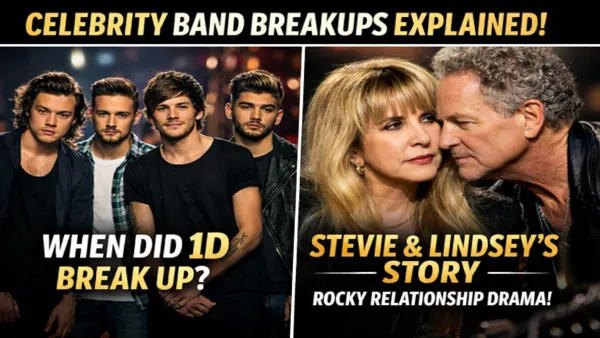
There is a very specific, suffocating kind of grief that washes over you when your favorite band splinters apart, a feeling that is notoriously difficult to explain to anyone who hasn’t pinned their own emotional stability to the harmony of strangers. It is a mourning that smells like stale arena air and faded concert tees, a sudden, sharp awareness that a door has quietly clicked shut on a shared era of your life. If you have spent any time scrolling through the digital ether recently, you have likely noticed that this very specific flavor of heartbreak is having a massive cultural moment. It seems like every week, the entertainment news cycle is dominated by a fresh wave of retrospective grief or sudden, shocking ruptures. This isn't just random nostalgia; it is a defining trend driven by a collective, desperate craving for authenticity in an increasingly synthetic pop landscape. The catalyst for this modern obsession can be traced back to the massive streaming buzz surrounding Daisy Jones & The Six, the hit viral series that perfectly distilled the chaotic, cocaine-dusted, deeply intimate tragedy of a fictional band’s dissolution. But while that show was a brilliantly executed piece of historical fiction, it left millions of viewers rabidly Googling the real-life equivalents, plunging them down a rabbit hole that inevitably spits them out at two vastly different, yet strangely parallel, monuments of musical destruction: the bewildering, corporate dismantling of One Direction, and the scorched-earth, deeply personal implosion of Stevie Nicks and Lindsey Buckingham within Fleetwood Mac. On the surface, comparing a manufactured boy band born on a reality television stage to a legendary rock group forged in the gritty crucible of the 1970s seems absurd. Yet, when you peel back the glossy album covers and examine the raw, bleeding mechanics of how these entities fell apart, you discover the exact same fundamental human fractures. By looking at exactly when and why 1D broke up, and holding that up to the glaring light of Stevie and Lindsey’s decades-long romantic warfare, we can understand not just the anatomy of a band breakup, but why we, the audience, remain so helplessly addicted to the wreckage.
To understand the sheer, baffling scale of the One Direction breakup, you have to remember the suffocating, inescapable velocity of their peak. When people ask, "When did 1D break up?", the official, sterile answer is January 2016, when the band released a statement announcing an indefinite hiatus. But anyone who was there knows the actual rupture happened in slow motion, beginning in March 2015, when Zayn Malik walked away from a world tour, leaving a gaping, asymmetrical hole in the band’s meticulously choreographed dynamic. The remaining four members—Harry, Niall, Liam, and Louis—were immediately thrust back onto the treadmill, forced to promote their fifth album, Made in the A.M., with the grim, unspoken reality that the end was nigh. I remember watching their final performance on The X Factor, the very stage that had birthed them just five years prior. The sensory details were agonizingly telling: the usually bouncy, teasing energy was replaced by a stiff, hollow professionalism. You could see it in the way Harry Styles stood slightly apart from the group, his eyes already drifting toward an undefined horizon; you could hear it in the slight vocal cracks that weren't due to technical errors, but to the sheer physical weight of suppressing exhaustion and grief. The tragedy of 1D’s breakup wasn’t that they hated each other—it was that they were fundamentally broken by the machine that built them. They were five teenagers who were systematically stripped of their anonymity, packaged into a highly profitable, homogeneous product, and worked to the point of absolute bone-deep depletion. The recent, heartbreaking death of Liam Payne has cast a devastatingly stark, sobering light on the immense psychological toll of that era, forcing the public to reckon with the dark underbelly of the fame they so gleefully consumed. Unlike the dramatic, venomous splits of rock lore, 1D didn't burn out in a blaze of passionate infidelity; they simply ran out of oxygen. Their breakup was the inevitable result of five young men realizing that to survive, they had to let the collective identity die so the individuals could breathe. It was a quiet, devastating collapse, a house of cards succumbing to the heavy winds of an industry that treats human beings as renewable resources, leaving a generation of fans grasping at the phantom concept of a "hiatus" because the finality of a breakup was simply too painful to bear.
If One Direction’s dissolution was a quiet asphyxiation by corporate machinery, the breakup of Stevie Nicks and Lindsey Buckingham was a spectacular, mutually assured destruction, a beautiful, violent car crash happening in slow motion on a global stage. To understand their split is to understand the creation of Rumours, an album that essentially served as the autopsy report of their relationship. Long before they were the bewitching, velvet-and-lace frontwoman and the brooding, virtuoso guitarist of one of the biggest bands in the world, they were just two broke kids in San Francisco, deeply and toxically entangled. When they joined Fleetwood Mac in 1975, they brought their deteriorating romance into a band that was already fracturing at the seams. By the time they rented a sprawling, drafty house in the hills of Bel Air and set up camp at the Record Plant in Sausalito to record Rumours, the air between them was thick with a hostility so dense you could practically choke on it. The contrast to 1D’s stoic professionalism is breathtaking. Where One Direction protected each other with polite silence, Nicks and Buckingham used their instruments as psychological weapons. Lindsey’s infidelity with a band employee shattered the fragile trust between them, and rather than dealing with it in private therapy, they dragged their bleeding hearts into the recording booth. Stevie wrote "Dreams" on a scratchy, rented piano in a haze of hurt, delivering a calm, ethereal kiss-off; Lindsey responded with "Go Your Own Way," a frantic, snarling, bitter track where he literally screamed his frustrations into the microphone, shaking with a rage that bordered on terrifying. Their relationship was a gorgeous, dilapidated Victorian house they kept setting on fire just to stay warm. They spent twelve hours a day in a dark, wood-paneled room, inhaling massive amounts of cocaine, forcing themselves to harmonize with the person who had just eviscerated their soul. The most striking metaphor for their dynamic isn't found in a song, but in a physical space: during the recording, they famously erected a sheer, black silk curtain down the middle of the studio. Lindsey would stand on one side, bathed in shadows, meticulously layering guitar tracks, while Stevie stood on the other, wrapped in shawls, spinning her poetry into gold. They were close enough to hear each other breathe, yet completely separated by a flimsy barrier of their own making—a perfect, tragic visual representation of two people who were musically inseparable but emotionally incompatible, choosing to immortalize their pain rather than walk away from the canvas.
So, why are we, in our current cultural epoch, so utterly mesmerized by these two entirely different models of destruction? The answer lies in how we consume media today, a shift perfectly encapsulated by the massive streaming buzz generated by every new Netflix release that dares to mine the archives of musical history. We are living in an era that is deeply skeptical of the polished, PR-approved narrative. When a celebrity couple releases a statement citing "irreconcilable differences," it feels like a sterile corporate memo; it tells us nothing about the human condition. But when we watch a viral series like Daisy Jones, or when we read the raw, unfiltered accounts of what really happened behind the closed doors of the Rumours sessions, we are accessing something that feels illicit and real. This trend of dissecting band breakups isn't just about gossip; it is a collective search for emotional truth in a landscape that feels increasingly artificial. We look at One Direction and see the dark cost of the algorithm—the way young, vibrant energy can be commodified and crushed by the weight of expectations, a cautionary tale that feels increasingly relevant in our own hustle-culture economy. Simultaneously, we look at Stevie and Lindsey and see the glorious, terrifying magnitude of human emotion—the way love and hate can exist in the exact same breath, the way art can be forged in the hottest fires of interpersonal dysfunction. The entertainment news cycle has figured out that we don't just want to hear the music; we want to see the bloodstains on the sheet music. We want to know that the people creating the soundtracks to our lives were just as messed up, lost, and heartbroken as we are. It bridges the gap between the untouchable gods on the stadium stage and the ordinary people crying in the cheap seats.
The aftermath of these breakups reveals perhaps the most fascinating aspect of modern fandom: our absolute refusal to accept finality. When 1D announced their hiatus, the fanbase essentially entered a state of mass, delusional bargaining. For years, the internet was flooded with conspiracy theories about secret meetings, hidden meanings in Instagram captions, and the absolute certainty that the band was just waiting for the right moment to reunite. This behavior isn't unique to Directioners, but the sheer volume of it highlighted a new trend in audience behavior where fans feel a sense of ownership over the timeline of a celebrity's life. The idea of a permanent breakup was treated not as a fact, but as an obstacle to be overcome by sheer willpower and trending hashtags. Conversely, the aftermath of Stevie and Lindsey’s breakup offered a much darker, more cynical view of closure. They couldn't just walk away and lead separate lives because their art was permanently tethered to their trauma. Every time Fleetwood Mac reunited, it felt like reopening a wound just to check if it was still bleeding. The tragic irony reached its peak in 2018 when Lindsey Buckingham, the man who had pushed the band to artistic greatness through sheer force of will, was unceremoniously fired from the very band he had helped save. There were no heartfelt reunions, no shared stages bathed in golden light—just a brutal, legal severance that proved that sometimes, the chain linking two people together doesn't just rust; it eventually decapitates someone. Whether it's the fans of 1D desperately trying to resuscitate a ghost, or Stevie and Lindsey engaging in decades of emotional warfare, the lesson is the same: a band breakup is never a clean break. It is a splintering that leaves shrapnel embedded in the fans, the culture, and the creators themselves, forever altering the DNA of the music.
Ultimately, dissecting the shattered remains of One Direction and the fractured fairytale of Stevie Nicks and Lindsey Buckingham teaches us far more about ourselves than it does about the celebrities involved. We mourn these breakups because they represent the death of an ideal. A band, at its best, is a miraculous illusion—a group of distinct individuals who manage to subvert their own egos to create a singular, unified voice that is greater than the sum of its parts. When that illusion shatters, whether it is crushed under the weight of a predatory pop industry or exploded by the volatile chemistry of two passionate artists, we are forced to confront the messy, unavoidable reality that nothing lasts forever. We cling to the "hiatus" of 1D because it allows us to pretend that youth and innocence can be paused rather than lost. We revere the tragedy of Stevie and Lindsey because it validates our own complicated, contradictory feelings about love and sacrifice. The music they left behind—the shimmering pop anthems of five boys who lost their innocence in the spotlight, the raw, bleeding rock tracks of two lovers who turned their agony into immortality—remains long after the arguments have faded and the stadium lights have been turned off. In the end, a band breakup is the ultimate, most poignant proof of the transient nature of fame, reminding us that the most beautiful things are often the most fragile, and that sometimes, the only way to truly preserve a masterpiece is to walk away while it's still breathing.
FAQ Section
1. When did One Direction officially break up? One Direction officially announced an indefinite hiatus in January 2016, though the actual fracturing of the band began much earlier, notably with Zayn Malik's departure in March 2015.
2. Why did One Direction really break up? The primary cause was profound physical and mental exhaustion. The band was subjected to a relentless, grueling schedule by their management that left them burned out, stripping away their individual identities and causing them to need a break to survive.
3. What is the significance of the Daisy Jones & The Six viral series? The Amazon series massively popularized the aesthetic and drama of 1970s band breakups, sparking a cultural trend where audiences became deeply invested in the chaotic, real-life inspirations behind fictional musical groups like Fleetwood Mac.
4. How did Stevie Nicks and Lindsey Buckingham’s breakup differ from 1D’s? While 1D’s split was caused by corporate exhaustion and a quiet realization they needed to escape the machine, Nicks and Buckingham’s split was a deeply personal, volatile implosion driven by infidelity, creative control, and intense emotional warfare.
5. Did Stevie Nicks and Lindsey Buckingham write songs about their breakup? Yes, their entire 1977 masterpiece, Rumours, is essentially a documented conversation of their breakup. Stevie wrote "Dreams" about Lindsey, and Lindsey wrote "Go Your Own Way" as a bitter response to her.
6. What was the "black silk curtain" metaphor in Fleetwood Mac's studio? During the recording of Rumours, Stevie and Lindsey put up a black silk partition in the studio, symbolizing how they were musically close enough to harmonize but emotionally separated by a fragile, painful barrier.
7. Why do fans refuse to accept that 1D is permanently broken up? The concept of a "hiatus" gave fans a psychological coping mechanism. Accepting a permanent breakup meant accepting the death of their youth and the end of an era, leading to years of conspiracy theories about a secret reunion.
8. What happened between Lindsey Buckingham and Fleetwood Mac in 2018? In a stunning reversal of their history, Lindsey Buckingham was fired from Fleetwood Mac due to creative disputes over their upcoming tour, resulting in a bitter lawsuit that proved their relationship had devolved into pure corporate hostility.
9. How did the entertainment news cycle contribute to the obsession with band breakups? Entertainment news shifted from just reporting album releases to deeply analyzing the "lore" behind the music, capitalizing on the streaming buzz of fans who want to dissect the interpersonal drama behind the songs.
10. Was infidelity the main reason for Stevie and Lindsey's split? Yes, Lindsey Buckingham’s infidelity with a band employee was the primary catalyst that shattered the trust in their relationship, though deeper issues of Lindsey's need for creative control over Stevie also played a massive role.
11. How did Zayn Malik’s departure affect the remaining One Direction members? Zayn's exit broke the unspoken illusion of their "brotherhood" and shattered the band's structural symmetry, leaving the remaining members feeling vulnerable, cynical, and acutely aware that the end was approaching.
12. Why is there a recent trend of analyzing boy band breakups more critically? Recent conversations, heavily influenced by tragic events like the death of Liam Payne, have forced the public to critically examine the predatory nature of the pop industry and the severe mental health toll placed on young, manufactured stars.
13. Are there any new Netflix releases about these band breakups? While there are constant rumors and a steady pipeline of music documentaries on streaming platforms, the recent trend is driven by both older archival docs and fictionalized series that capitalize on the public's insatiable appetite for this specific brand of musical trauma.
14. What does "vicarious misery" mean in the context of music fandoms? It describes the phenomenon where audiences actively seek out and consume media about the painful, messy breakups of their favorite artists because it makes the listeners feel less alone in their own real-life heartbreaks and struggles.
15. Did One Direction ever have a chance to reunite? Despite constant fan hopes and occasional vague public statements, a true, full reunion became increasingly unlikely as the members established deeply entrenched, wildly different solo careers and personal lives.
16. How did the making of Rumours compare to a normal album recording? Instead of a collaborative process, the Rumours sessions were characterized by silence, tension, and passive-aggression, with band members rarely speaking to each other outside of playing their instruments, communicating entirely through the raw emotion of the tracks.
17. What is the ultimate lesson we can learn from these celebrity band breakups? These breakups teach us that the music we love is often born from profound suffering and sacrifice, serving as a reminder that the flawless idols we see on stage are deeply flawed, fragile humans navigating the same painful realities as the rest of us.
Disclaimer - All celebrity-related content, information, and images on this website are based on publicly available online sources and AI-generated insights/data. Information such as biography, age, career, personal details, and images may change without notice over time. While we strive for accuracy, we do not guarantee the accuracy, completeness, reliability, or timeliness of any information or imagery displayed on this website. This content is provided for general informational purposes only.
Top Trending News of Zayn Malik
👁️ 124 views
🔥 Celebrity Band Breakups Explained: When Did 1D Break Up & Stevie & Lindsey's Story
From the quiet dismantling of One Direction to the fiery split of Stevie Nicks and Lindsey Buckingham, explore the cultural trend of obsessing over legendary band breakups.
 👁️ 100 views
🔥 When Did One Direction Break Up 1D Hiatus Timeline Complete Story
A complete look at when One Direction went on hiatus, covering the timeline, key events, and reasons behind the group’s break, along with what each member did afterward.







Details
Send Us an Enquiry
We'll get back to you as soon as possible.
Thank You!
Your enquiry has been submitted. We'll be in touch shortly.