
When Did One Direction Break Up 1D Hiatus Timeline Complete Story

 Previous

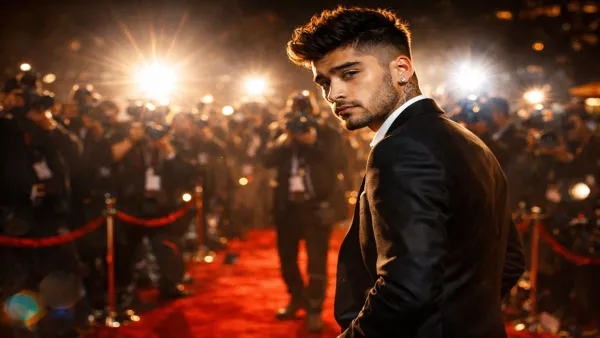
If you close your eyes and listen closely, you can still hear it: the deafening, high-pitched shriek of a hundred thousand teenagers echoing off the concrete walls of a stadium. It sounds like a jet engine revving, a sensory assault that defined the early 2010s. For half a decade, One Direction wasn't just a band; they were a weather system. They were the ubiquitous soundtrack playing in malls, saturating the entertainment news cycle, and plastered across bedroom walls in a kaleidoscope of neon posters. But weather systems, by their very nature, eventually dissipate.
When exactly did the storm stop? Asking when One Direction broke up is a trick question, wrapped in semantics, denial, and the clever machinations of the music industry. The official narrative has always been that they never broke up at all—they simply went on a hiatus. But as the years have stretched into a decade, the distinction between a temporary pause and a permanent dissolution has blurred into nothingness. To understand when One Direction truly ended, we have to look past the press releases and examine the grueling timeline of five boys who grew up in a beautiful, gilded centrifuge, only to realize they needed to step out before the machine consumed them entirely.
The Golden Cage of Peak Direction
To comprehend the fracture, you first have to understand the pressure. Formed on The X Factor in 2010, Niall Horan, Zayn Malik, Liam Payne, Harry Styles, and Louis Tomlinson were thrust into a level of fame that hasn't been seen since the height of Beatlemania. Imagine, for a moment, being nineteen years old. You are navigating the awkwardness of your twenties—your first real relationships, your changing physique, your evolving identity—but you are doing it under the microscope of a hundred million strangers. Every pimple is scrutinized, every whispered conversation at a coffee shop is recorded and sold to the highest bidder.
Between 2011 and 2015, One Direction released five studio albums and embarked on four massive world tours. It was a relentless, industrialized conveyor belt of pop perfection. They were marketed as the lovable, slightly chaotic boys-next-door, but behind the scenes, the gears were grinding them down. The schedule was punishing: write an album, record it in three weeks, promote it across ten countries in five days, go on a stadium tour for eight months, take a two-week break, and do it all over again. It was an unsustainable pace, akin to running consecutive marathons in flip-flops. They were cash cows for Simon Cowell’s Syco imprint, and the mandate was always more, more, more. By the time they released their fourth album, Four, in late 2014, the cracks in the facade were beginning to show, not in their music—which was surprisingly maturing—but in their exhausted eyes and increasingly sporadic public appearances.
The First Fracture: Zayn Malik’s Departure
The timeline of One Direction’s end doesn’t begin with a group decision; it begins with a singular, shocking act of self-preservation. On March 25, 2015, the band was in the middle of their "On the Road Again" tour. Zayn Malik, often dubbed the quiet, mysterious one, simply walked away. The official statement cited stress and a desire to live like a "normal 22-year-old."
The reaction was seismic. For a band that had been marketed as an unbreakable brotherhood, the departure of a member felt like a sudden death. It felt like a viral series cliffhanger that no one saw coming. Behind closed doors, Zayn had been struggling with the intense scrutiny of fame and the restrictive parameters of the band’s squeaky-clean image. He later admitted he felt like he was "signing [his] life away" and that the music they were making didn't align with his personal artistic tastes.
Zayn’s exit was the unmistakable death knell for the classic 1D era. The remaining four members carried on, finishing the tour as a quartet. They put on a brave face, insisting they were moving forward, but the dynamic was irrevocably altered. The visual symmetry was gone. The vocal harmonies had to be completely restructured. More importantly, the psychological safety net of the group—the idea that they were all in this absurd circus together—had been severed. If one person could leave and survive, the unspoken question lingered in the air: who would be next?
The Anatomy of a "Hiatus"
The word "hiatus" is a masterpiece of public relations spin. It suggests a coffee break, a gentle pause to catch one's breath before returning to work. When One Direction announced their hiatus in August 2015, it was framed as a necessary rest after five years of non-stop work. In a Facebook post that broke the internet, the band stated they would be taking a break beginning in March 2016, promising fans they were "not splitting up."
But the semantics were carefully chosen. A breakup implies finality, a dramatic slamming of doors that leaves room for lucrative reunion tours down the line. A hiatus, however, allows the narrative to gently fade away. It manages expectations. It prevents the grieving process that usually accompanies a band's demise, keeping the lucrative fanbase tethered to the hope of a return.
In the months leading up to that March 2016 deadline, the boys were already physically and emotionally checked out. Their fifth album, Made in the A.M., released in November 2015, was marketed heavily with the underlying anxiety that it might be their last. And indeed, it was. They performed their final televised performance together on The X Factor in December 2015. The performance was heavy with unspoken weight. When they walked off that stage, the hiatus had effectively already begun. The official date of March 2016 was merely a formality, a white flag waved at a machine that had finally run out of fuel.
The Solo Renaissance and the Shifting Narrative
Once the hiatus began, the silence was initially deafening, but it didn't last long. The real proof that One Direction had broken up lay in the solo trajectories that followed. If a band goes on hiatus, they usually reconvene within a year or two, maybe allowing one member to dabble in a side project. One Direction didn't dabble; they diverged.
Harry Styles shed his boyband skin with the precision of a snake molting, emerging as a bona fide rock star with a self-titled debut in 2017. He traded stadiums for intimate theaters, donned Gucci suits, and sang about watermelon sugar. Niall Horan retreated to the acoustic warmth of folk-pop, releasing Flicker in 2017, his soothing voice a balm for fans missing the band's harmony. Louis Tomlinson took a quieter, more arduous route, dealing with personal tragedies while crafting deeply personal, indie-tinged rock music. Liam Payne attempted a slick, R&B-infused pop pivot that generated immense streaming buzz, though his journey was markedly more turbulent.
Every time a member dropped a new release, the question of a reunion was invariably asked in interviews. And every time, the answer became slightly more dismissive, slightly more focused on the individual. It became clear that the hiatus wasn't a pause; it was an emancipation. They had spent their formative years as cogs in a pop phenomenon. Their solo eras were the necessary, sometimes messy, process of figuring out who they were as individual men and artists. The timeline of their breakup wasn't a single day in 2016; it was the slow, methodical untangling of five lives that had been inextricably, and sometimes uncomfortably, woven together.
The Enduring Mythos and the TikTok Resurgence
You would think that a band that hasn't released a song together in nearly a decade would fade into nostalgia, relegated to "Where Are They Now?" listicles. But One Direction defies the traditional lifecycle of pop culture. They are a permanent trend. In the years following the hiatus, a strange phenomenon occurred: a new generation discovered them.
Driven by platforms like TikTok, 1D’s back catalog experienced a massive resurgence. Teenagers who were in diapers when "What Makes You Beautiful" dropped suddenly became obsessed with the band's lore. The band's inside jokes, their iconic interview moments, and their extensive discography were dissected with the fervor of historical scholars. This digital resurrection kept One Direction culturally relevant long after they stopped existing as a working unit. The streaming numbers for songs like "Night Changes" and "If I Could Fly" skyrocketed, driven by viral audio trends and collective internet yearning.
This resurgence created a bizarre paradox. The demand for the band was arguably higher in 2022 than it was in 2015, yet the supply was absolute zero. The fandom's refusal to let go only highlighted the reality of the situation: the band existed purely as a memory and a myth, a perfectly preserved time capsule of 2010s pop culture that could never be recreated because the five people involved had fundamentally changed.
A Tragic Coda and the Finality of Time
For years, the fandom clung to the hiatus narrative because it offered a safety net. "Hiatus" meant there was always tomorrow. It meant that one day, the five of them would walk back onto a stage, older, wiser, and ready to harmonize again. The illusion of infinite time is a comforting lie we tell ourselves about the things we love.
That illusion was shattered in October 2024 with the devastating, tragic death of Liam Payne at the age of 31. The news sent shockwaves through the global music community, but it hit the One Direction fandom with the force of a freight train. It wasn't just the grief of losing a person; it was the grief of losing the future. Liam's passing violently and permanently closed the door on the hiatus narrative.
In the wake of the tragedy, as the remaining members released heartbreakingly raw statements, the perspective on the 1D timeline shifted. The interviews from 2015, where a young Liam spoke about the crushing pressure of the band, took on a haunting new context. The anger some fans felt over the lack of a reunion melted into a profound, aching sadness for the human toll of their fame. The complete story of One Direction is no longer just a pop music trajectory; it is a deeply sobering examination of what happens when you commodify youth on a global scale.
The Immortality of the Music
So, when did One Direction break up? The legal and structural dissolution happened in that quiet, unceremonious fade-out of early 2016, following Zayn’s departure and the grueling Made in the A.M. cycle. But emotionally and culturally, the breakup has been a slow, decade-long unravelling that only truly reached its final, irreversible conclusion with the loss of Liam.
They are not getting back together. The phrase "One Direction" is now permanently relegated to the past tense, a historical artifact of a specific, frenzied era in pop music. Yet, to say they are gone feels inaccurate, too. The five boys who boarded the X Factor stage may have been swallowed by the industry, but the music they left behind remains astonishingly resilient. Turn on "Night Changes" in a crowded room, and watch the immediate, involuntary singalong it provokes. The voices of Niall, Zayn, Liam, Harry, and Louis are frozen in time, forever young, forever harmonizing on a track, untouched by the tragic realities of the years that followed. They broke up a long time ago, but in the strange, eternal ecosystem of pop culture, One Direction will never truly stop.
FAQ Section
1. Did One Direction officially break up, or are they still on a hiatus? While they initially announced an 18-month "hiatus" in 2015, that break became permanent. Following the tragic death of Liam Payne in 2024, the possibility of a reunion is permanently closed, confirming the band has definitively broken up.
2. What was the exact date One Direction went on hiatus? The band announced in August 2015 that the hiatus would begin in March 2016, following the conclusion of their "On the Road Again" tour and promotional duties for their fifth album, Made in the A.M.
3. Why did Zayn Malik leave the band before the hiatus? Zayn left in March 2015, citing the immense stress of fame and his desire to live a "normal" life. He also expressed that the music One Direction was making did not align with his personal artistic vision, later pursuing an R&B solo career.
4. Who was the first member of One Direction to release solo music? Zayn Malik was the first to release solo music, dropping his debut single "Pillowtalk" in January 2016, just before the official start of the band's hiatus.
5. What was One Direction's last performance together? Their final live televised performance as a five-piece band was on The X Factor in December 2015, where they performed "Infinity" and "History."
6. What is One Direction's best-selling album? Their second studio album, Take Me Home (2012), is their best-selling album globally, driven by the massive success of the lead single "Live While We're Young" and "Little Things."
7. Did Simon Cowell want One Direction to break up? No, Simon Cowell and Syco Records heavily resisted the hiatus. The band was a massive financial asset, but the members were physically and mentally exhausted and collectively pushed for the break.
8. How long were One Direction together before the hiatus? The band was together for exactly five years. They formed in July 2010 on The X Factor and entered their hiatus in March 2016.
9. Did any of the One Direction members write their own songs? Yes, particularly in their later albums. All members have writing credits on Midnight Memories, Four, and Made in the A.M., with Harry Styles and Louis Tomlinson notably co-writing the song "Night Changes."
10. Why is One Direction so popular on TikTok right now? Gen Z audiences discovered the band's extensive catalog of b-sides, deep cuts, and iconic interview moments. The algorithm pushed 1D content, turning their discography into a permanent viral trend and introducing them to a new generation.
11. What happened to the fifth member spot after Zayn left? The band did not replace Zayn. They continued as a four-piece for the remainder of the "On the Road Again" tour and the promotion of Made in the A.M. before entering the hiatus.
12. Did One Direction ever win a Grammy? Despite massive commercial success, One Direction never won a Grammy Award, though they did receive nominations during their peak years.
13. Which One Direction member had the most successful solo career? Commercially and critically, Harry Styles is widely considered the most successful solo member, winning multiple Grammy Awards and selling out massive global stadium tours for his solo albums.
14. What was the significance of the song "History"? Released on Made in the A.M., "History" was widely interpreted by fans as the band's farewell song, featuring lyrics that seemed to acknowledge the end of an era while asking fans to keep the memory alive.
15. How did the fans react to the 2015 hiatus announcement? The initial reaction was a mix of devastation, denial, and intense campaigning on social media (with trends like #1DIsNotOver). Because it was called a "hiatus," many fans genuinely believed they would return within a year or two.
16. What was One Direction's last music video? Their last music video filmed as a complete group was for the song "History," released in November 2015, which featured a mix of old tour footage and the four remaining members in a studio.
17. Are the remaining One Direction members still friends? While they have pursued entirely separate lives and careers, the remaining members (Harry, Niall, Louis, and Zayn) have occasionally spoken fondly of each other in interviews, though they are not known to be in constant, daily contact.
Disclaimer - All celebrity-related content, information, and images on this website are based on publicly available online sources and AI-generated insights/data. Information such as biography, age, career, personal details, and images may change without notice over time. While we strive for accuracy, we do not guarantee the accuracy, completeness, reliability, or timeliness of any information or imagery displayed on this website. This content is provided for general informational purposes only.
Top Trending News of Zayn Malik
 👁️ 122 views
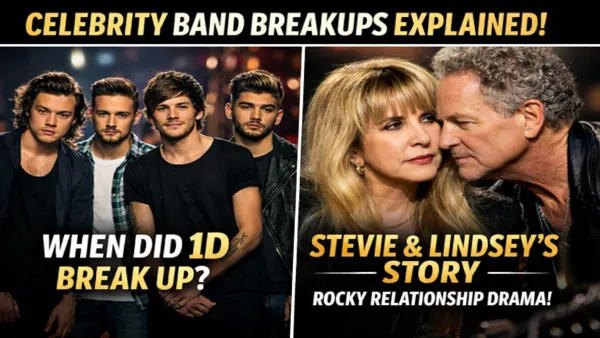
🔥 Celebrity Band Breakups Explained: When Did 1D Break Up & Stevie & Lindsey's Story
From the quiet dismantling of One Direction to the fiery split of Stevie Nicks and Lindsey Buckingham, explore the cultural trend of obsessing over legendary band breakups.
👁️ 100 views
🔥 When Did One Direction Break Up 1D Hiatus Timeline Complete Story
A complete look at when One Direction went on hiatus, covering the timeline, key events, and reasons behind the group’s break, along with what each member did afterward.








Details
Send Us an Enquiry
We'll get back to you as soon as possible.
Thank You!
Your enquiry has been submitted. We'll be in touch shortly.