
Research Events
Explore 186 premium experiences in all locations
Promoted
List Your Next Big Event
Reach millions of attendees by showcasing your conferences, workshops, or exhibitions on the world's most trusted event platform.
Create Your Event Now
FEATURED
Jul 29, 2026
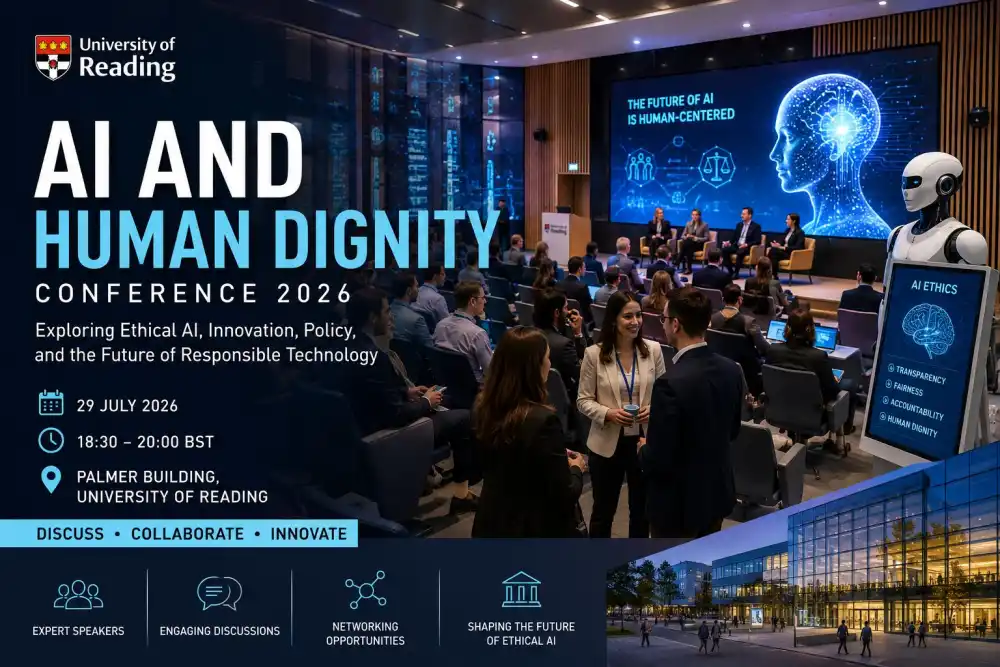
AI and Human Dignity
Artificial Intelligence continues to transform industries, research, education, healthcare, finance, and everyday life. As AI becomes increasingly embedded within society, discussions surrounding ethics, fairness, transparency, accountability, and human values have become more important than ever before. The AI and Human Dignity Conference hosted by the University of Reading offers an outstanding opportunity for academics, students, researchers, technology professionals, policymakers, and members of the public to explore these critical issues together.
Taking place on 29 July 2026, this thought-provoking conference brings together experts from multiple disciplines to discuss how artificial intelligence should be designed and governed to serve humanity responsibly. The event encourages open dialogue on the opportunities and challenges presented by modern AI technologies while emphasizing the importance of maintaining human dignity in an increasingly digital world.
Why Attend This Conference?
Artificial intelligence is advancing rapidly, influencing nearly every sector across the global economy. Understanding both its capabilities and ethical implications is essential for professionals and researchers alike.
Attendees will gain valuable insights into:
Responsible AI development
Ethical decision-making in AI systems
Human-centered technology
Emerging AI governance
Future societal challenges
The conference offers practical perspectives alongside academic discussion, making it suitable for attendees from diverse backgrounds.
Learn from Leading Experts
The University of Reading is internationally recognized for research excellence and interdisciplinary collaboration. During this event, participants will hear from respected academics and specialists who will examine AI through technological, philosophical, legal, and societal perspectives.
Expert presentations will explore:
AI ethics
Responsible innovation
Human rights in digital environments
Public trust in AI
Global AI policy developments
These sessions provide attendees with both theoretical knowledge and practical understanding.
Networking Opportunities
One of the greatest benefits of attending this conference is the opportunity to connect with professionals from different sectors.
Participants can engage with:
University researchers
Technology innovators
Policy advisors
Industry experts
Students pursuing AI-related careers
Meaningful discussions often lead to future collaborations, research partnerships, and professional opportunities.
Explore Responsible Artificial Intelligence
Responsible AI has become one of the fastest-growing areas within technology research.
Conference sessions examine topics such as:
Algorithmic transparency
Bias reduction
Privacy protection
Ethical machine learning
Trustworthy AI systems
These discussions help participants understand how technological innovation can align with societal values.
Academic Excellence
The University of Reading has built an outstanding reputation for research, innovation, and teaching. Its commitment to interdisciplinary learning creates the ideal environment for discussing complex issues that combine computer science, ethics, philosophy, law, and public policy.
The conference reflects the university's mission to encourage evidence-based dialogue and collaborative problem-solving.
Current Trends in AI
Artificial intelligence is reshaping numerous industries including:
Healthcare
AI supports medical diagnosis, predictive analytics, drug discovery, and personalized treatment planning.
Education
Intelligent tutoring systems, adaptive learning platforms, and automated assessment tools continue to transform education.
Business
Organizations increasingly rely on AI for automation, customer engagement, forecasting, and decision support.
Finance
Banks use AI for fraud detection, credit assessment, algorithmic trading, and customer service.
Public Services
Governments are exploring AI applications in transportation, environmental monitoring, and digital public administration.
Understanding these developments helps attendees prepare for future technological change.
Key Discussion Themes
The conference is expected to examine several important themes including:
Ethics and Human Values
Experts will discuss how AI should respect individual rights, fairness, equality, and dignity.
Governance
Sessions explore regulatory frameworks, legal responsibilities, and international cooperation.
Transparency
Participants will learn why explainable AI has become increasingly important across industries.
Innovation
The conference encourages responsible innovation that balances technological advancement with public benefit.
Education
Universities play a critical role in preparing future AI professionals through ethical education and interdisciplinary research.
Professional Development
Attending this conference provides valuable professional development for individuals working across academia, government, technology companies, and nonprofit organizations.
Participants can:
Expand their professional knowledge
Discover emerging research
Learn best practices
Develop new collaborations
Strengthen career opportunities
Student Benefits
Students interested in artificial intelligence, computer science, philosophy, law, social sciences, or public policy will find the event particularly valuable.
Benefits include:
Learning from leading experts
Understanding research opportunities
Building academic networks
Exploring postgraduate study options
Developing broader perspectives on AI
Innovation and Society
Artificial intelligence presents tremendous opportunities while also introducing significant ethical questions.
The conference explores how society can benefit from innovation while protecting:
Human dignity
Equality
Privacy
Security
Democratic values
Such discussions are increasingly important as AI systems become more capable and widely adopted.
International Perspective
Artificial intelligence is a global technology requiring international cooperation.
Conference discussions highlight:
Global policy approaches
International ethical standards
Cross-border research collaboration
Cultural perspectives on AI governance
These international viewpoints enrich the overall learning experience.
Why the University of Reading?
The University of Reading has established itself as one of the UK's leading research universities. Its commitment to innovation, interdisciplinary collaboration, and public engagement makes it an ideal venue for discussions surrounding responsible artificial intelligence.
Visitors will benefit from:
Modern conference facilities
Distinguished academic speakers
Collaborative learning environment
Accessible campus
Strong research community
Final Thoughts
The AI and Human Dignity Conference represents an excellent opportunity to explore one of the most important issues shaping the future of technology. Whether you are an academic researcher, AI professional, policymaker, student, or technology enthusiast, the conference provides valuable knowledge, expert insights, and meaningful networking opportunities.
As artificial intelligence continues to evolve, responsible innovation will remain essential. Events such as this help ensure technological progress supports humanity while protecting fundamental values of fairness, dignity, transparency, and inclusion. Hosted by the University of Reading, this conference promises to inspire thoughtful discussion and encourage collaboration among those working to shape the future of ethical AI.
Palmer Building, University of Reading,
Reading
12
0
FEATURED

Feb 03 - 04, 2027
Cyber Intelligence Europe 2027
Cyber Intelligence Europe 2027 is an international security conference organised by Intelligence-Sec Limited, bringing together cybersecurity professionals, government agencies, intelligence communities, and technology specialists to explore the evolving cyber threat landscape. The event is designed as a platform for strategic discussions, knowledge exchange, and professional networking among experts working in cybersecurity and national security fields.
The rapid growth of digital technologies has transformed how governments, businesses, and organisations operate. At the same time, cyber threats have become more advanced, requiring stronger intelligence capabilities, improved collaboration, and innovative security approaches. Cyber Intelligence Europe 2027 focuses on these challenges by creating an environment where specialists can discuss current risks and future solutions.
The conference will provide attendees with valuable insights into cyber intelligence operations, threat detection methods, incident response strategies, and approaches to strengthening digital resilience. Participants will have opportunities to learn from experienced professionals and understand how organisations are adapting to increasingly complex cyber environments.
Importance of Cyber Intelligence in Modern Security
Cyber intelligence has become a critical part of modern security planning. Organisations worldwide face challenges including ransomware attacks, data breaches, cyber espionage, identity theft, and attacks targeting critical infrastructure.
Cyber Intelligence Europe 2027 aims to address these challenges by bringing together experts who can share practical experiences and strategic approaches. Discussions will focus on how intelligence-driven security measures can help organisations detect threats earlier and respond more effectively.
Government agencies and private organisations increasingly depend on cyber intelligence to understand attacker behaviour, identify vulnerabilities, and protect essential services. Conferences like this provide a valuable opportunity for professionals to exchange ideas and develop stronger security frameworks.
Key Topics Expected at the Conference
The conference will explore several important areas within cybersecurity and intelligence, including:
Cyber Threat Intelligence
Experts will discuss how organisations collect, analyse, and use threat intelligence to identify potential cyber risks. Understanding attacker methods and motivations helps security teams prepare proactive defence strategies.
Cybercrime Trends
Cybercriminal activities continue to evolve with new techniques and technologies. Sessions will examine emerging cybercrime patterns and methods used by criminals to target organisations.
Digital Infrastructure Protection
Protecting government systems, business networks, and critical infrastructure is a major priority. Discussions will focus on improving resilience against cyber attacks that could disrupt essential operations.
Artificial Intelligence in Cybersecurity
Artificial intelligence is changing both cyber defence and cyber attacks. The conference will explore how AI-powered tools can improve security monitoring while also examining risks associated with malicious AI use.
International Cyber Cooperation
Cyber threats often cross national borders. Collaboration between governments, security agencies, and private organisations is essential for improving global cyber defence capabilities.
Networking Opportunities
A major benefit of Cyber Intelligence Europe 2027 is the opportunity for attendees to connect with professionals from different sectors. Networking sessions allow participants to exchange experiences, develop partnerships, and build relationships within the international cybersecurity community.
The event provides a valuable environment for security professionals looking to expand their industry connections and learn from specialists working in different regions.
Who Should Attend
Cyber Intelligence Europe 2027 is suitable for professionals involved in cybersecurity, intelligence, technology, and government security.
The event is particularly relevant for:
Cybersecurity managers responsible for protecting organisational systems.
Government representatives involved in national security planning.
Intelligence professionals analysing cyber threats.
Law enforcement specialists investigating cybercrime.
Technology executives developing security solutions.
Benefits for Attendees
Attending this conference can help professionals gain:
Updated knowledge about current cyber threats.
Practical understanding of intelligence-based security approaches.
Opportunities to meet international security experts.
Insights into future cybersecurity developments.
Connections with professionals across government and industry sectors.
Intelligence-Sec Limited
Intelligence-Sec Limited is a security events organisation specialising in international conferences and exhibitions focused on defence, intelligence, and cybersecurity topics. The company develops specialised events designed to connect industry experts, government representatives, and security professionals from around the world.
Through its conferences, Intelligence-Sec provides platforms for discussion on important security challenges, helping professionals understand changing threats and develop stronger approaches to protection and resilience.
Bucharest, Romania,
Milton Keynes
18
0
Nov 30 - Dec 03, 2026
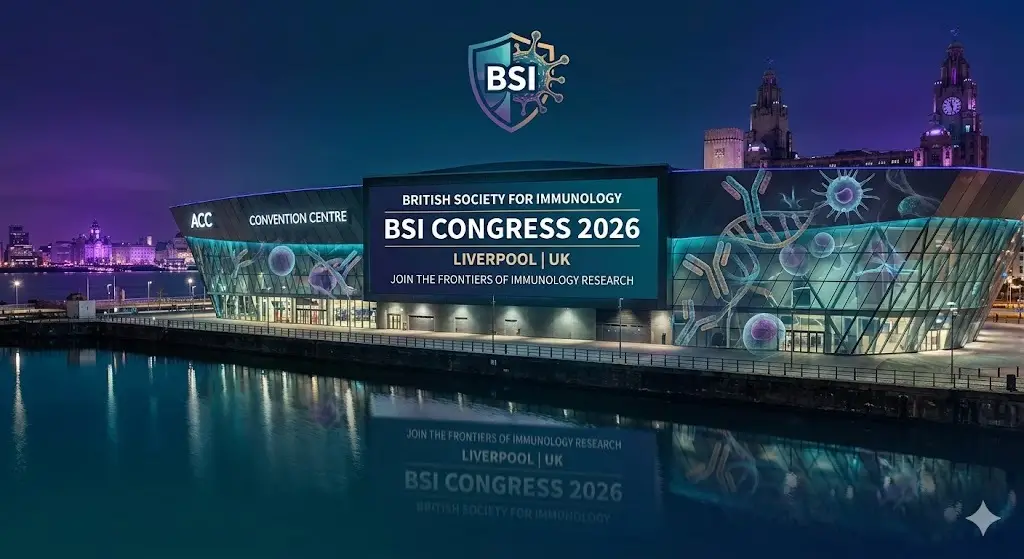
British Society for Immunology Congress 2026
The British Society for Immunology (BSI) Congress 2026 stands as the UK's premier immunology event, attracting over 1,500 attendees from across the globe to the vibrant city of Liverpool. This four-day flagship conference is designed to facilitate the exchange of cutting-edge scientific knowledge, foster international collaborations, and showcase the latest breakthroughs in immune system research.
The 2026 program features an extensive array of plenary sessions, parallel symposia, and interactive workshops led by world-renowned experts. Key themes include the latest developments in immunotherapy, the role of the microbiome in immune health, advancements in vaccine technology, and the cellular mechanisms of inflammatory diseases. Beyond the rigorous scientific agenda, the Congress provides a critical platform for early-career researchers to present their work through extensive poster sessions and oral presentations, competing for prestigious society awards.
Attendees can expect a bustling exhibition hall featuring the latest laboratory technologies and reagents from leading industry partners. Networking is a core pillar of the BSI experience, with dedicated "meet the speaker" sessions and the legendary Congress social event held at one of Liverpool’s iconic waterfront venues. The conference also emphasizes professional development, offering sessions on science communication, grant writing, and career pathways in both academia and industry. By integrating clinical insights with basic science, the BSI Congress 2026 remains an essential fixture for anyone dedicated to understanding and treating immune-mediated conditions.
ACC Liverpool,
London
152
0
The OR Society Careers Open Day
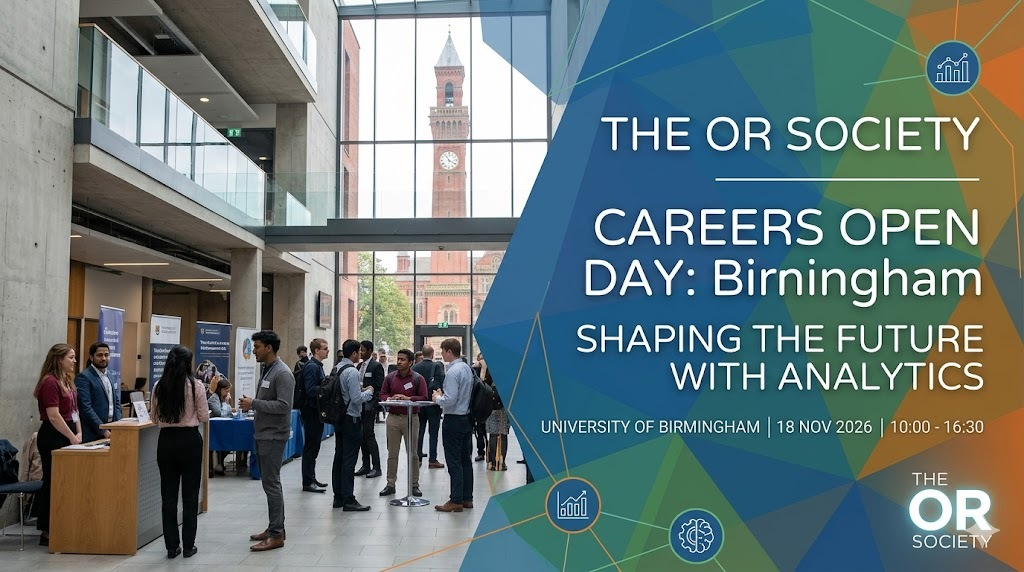
The OR Society (Operational Research Society) is proud to present its flagship Careers Open Day 2026 in the heart of Birmingham. Operational Research (OR) is the "science of better"—a discipline that uses advanced analytical methods to help make better decisions and solve complex problems in every sector imaginable, from healthcare and climate change to finance and global logistics.
This upcoming one-day event is meticulously designed to bridge the gap between academia and industry. Whether you are a student curious about how your mathematical skills translate to the real world, or a professional looking to pivot into the high-demand field of data science and analytics, this event offers unparalleled access to the UK’s leading OR practitioners.
Attendees will experience a dynamic program featuring keynote speeches from industry titans, interactive workshops on optimization modeling, and a bustling careers fair. You will have the opportunity to meet representatives from top-tier organizations such as British Airways, the Civil Service, and major consulting firms, all looking for the next generation of analytical talent. The day concludes with a dedicated networking session, allowing for one-on-one conversations with mentors and peers. Join us in Birmingham to discover how you can use mathematics and logic to impact the world.
University of Birmingham, Bramall Music Building,
London
135
0
Jul 06 - 10, 2026
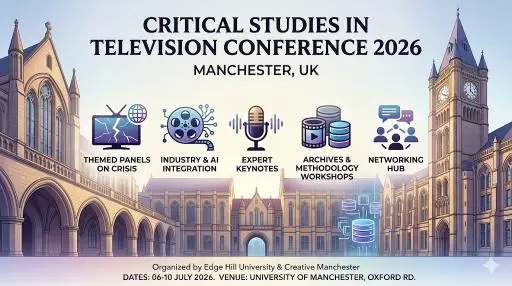
Critical Studies in Television Conference 2026
The Critical Studies in Television Conference 2026 arrives at a pivotal moment for the global media landscape. Hosted in the vibrant cultural hub of Manchester, this premier international gathering brings together scholars, practitioners, and industry critics to dissect the "feeling of crisis" currently enveloping the medium of television. From the shift from Public Service Broadcasting (PSB) to Public Service Media (PSM) to the radical restructuring of funding and delivery models via online streaming, the conference provides a rigorous academic platform to explore how television functions during periods of social and institutional upheaval.
This year’s theme specifically interrogates television’s dual role: as a witness to crisis—historically and in real-time—and as an industry facing its own existential transformations. Attendees will engage with deep-dive sessions on the representation of economic and climate-related crises, the ethics of researching precarious media workers, and the cultural significance of television in shaping a national "structure of feeling." The event serves as the physical manifestation of the renowned Critical Studies in Television journal published by Sage, moving beyond the printed page to foster live debate on the aesthetics, politics, and future of the small screen.
Beyond the theoretical, the conference emphasizes the practical realities of production downturns and the loss of mass audiences. It offers a unique intersection for North West England's thriving media sector—including nearby MediaCityUK—and global academic discourse. Participants can expect a series of high-level keynote addresses, lightning talks on the impact of AI in screen production, and workshops focused on television archives and pedagogical innovation. Whether you are analyzing the latest streaming trends or the historical impact of television blackouts, this conference provides the critical tools to understand television not just as a box in the corner, but as a central nervous system of modern society.
University of Manchester (Digital Futures Hub & Roscoe Building),
London
138
0
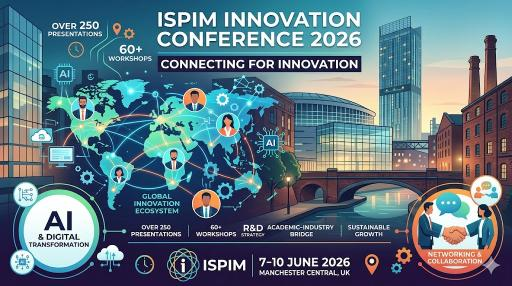
Jun 07 - 10, 2026
ISPIM Innovation Conference 2026
The ISPIM Innovation Conference 2026 is the premier global gathering for innovation management professionals, researchers, and thought leaders. Organized by the International Society for Professional Innovation Management (ISPIM)—the oldest and largest innovation network in Europe, proudly headquartered in Manchester, UK—this event serves as a bridge between high-level academic research and real-world industrial application.
The 2026 conference theme, "Connecting for Innovation," emphasizes the necessity of collaborative ecosystems in solving global challenges. Attendees will converge to explore how organizations can better organize the creation and distribution of new products, services, and processes. The program is world-class, featuring over 250 curated presentations that offer deep dives into the latest scientific knowledge and practical case studies.
Beyond traditional lectures, the conference is famous for its high-energy interactive environment. Participants can expect over 60 workshops designed to foster peer-to-peer learning and problem-solving. A significant portion of the 2026 agenda is dedicated to AI and Digital Transformation, addressing how businesses can navigate the disruption caused by emerging technologies while maintaining sustainable growth.
Networking is a cornerstone of the ISPIM experience. The event includes a comprehensive social program, featuring a "Welcome Meet & Greet," local cultural evenings, and the signature "ISPIM Party Night." These sessions are strategically designed to help members of the innovation community build lasting professional relationships across 50+ countries. Whether you are an academic looking to share groundbreaking research or a manager seeking to implement cutting-edge innovation strategies, this conference provides the tools and the network to make a tangible impact on the world.
Manchester Central Convention Complex (Primary Regional Hub),
London
147
0
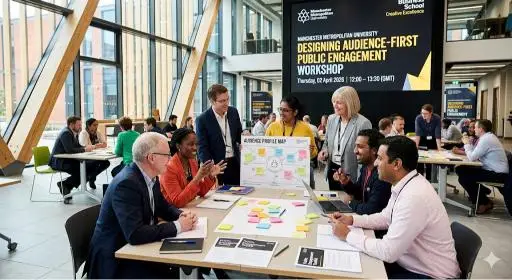
Designing Audience First Public Engagement
The "Designing Audience-First Public Engagement" workshop at Manchester Metropolitan University is a premier professional development session meticulously designed for researchers, academic staff, and students who aim to bridge the gap between complex academic concepts and the general public. In an era where the impact of research is measured not just by citations but by societal resonance, this event provides the essential tools to create meaningful dialogue with community stakeholders. The session begins by challenging traditional "top-down" communication models, instead advocating for a strategy that begins with the audience’s specific needs, barriers, and cultural contexts. Participants will engage in hands-on activities to profile their target demographics, identifying potential "hard-to-reach" groups and tailoring their messaging to ensure inclusivity and clarity.
A significant portion of the workshop is dedicated to the creation of a Public Engagement Intention Statement. This document serves as a strategic roadmap for future projects, clarifying the ultimate "why" behind an engagement activity. By the end of the session, attendees will have a robust framework for selecting the right engagement platforms—whether digital, physical, or hybrid—and for measuring the qualitative impact of their work. The final 30 minutes are reserved for an optional networking session, providing a rare opportunity for cross-disciplinary collaboration within the Manchester Met community. This workshop is part of a broader commitment by the University to foster "Creative Excellence" and "Economic Growth" through transparent, accessible research that serves the wider Manchester region and beyond.
Manchester Metropolitan University Business School (S Atrium),
London
129
0
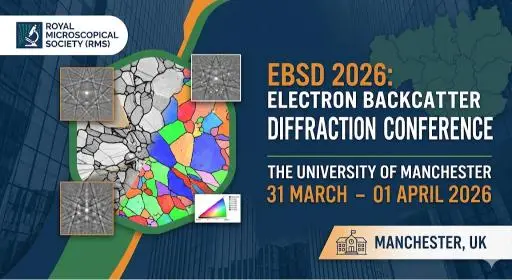
Mar 31 - Apr 01, 2026
EBSD 2026: Electron Backscatter Diffraction Conference
The Royal Microscopical Society (RMS) is proud to present EBSD 2026, a premier scientific meeting dedicated to the technique of Electron Backscatter Diffraction (EBSD) and its applications across materials science, geology, and engineering. Held at the University of Manchester—a hub of pioneering research—this conference serves as the essential gathering point for the EBSD community in the UK and internationally.
EBSD has become a cornerstone of microstructural characterization, providing critical data on crystallographic orientation, phase identification, and strain. This upcoming event will explore the latest innovations in the field, including high-resolution EBSD, 3D characterization, and the integration of EBSD with other analytical techniques like EDS and TKD (Transmission Kikuchi Diffraction).
The program is meticulously curated to balance academic rigor with industrial relevance. Attendees can expect a series of invited talks from world-renowned experts, contributed oral presentations, and a vibrant poster session. For early-career researchers and students, EBSD 2026 offers an unparalleled opportunity to showcase their work, receive feedback from veterans in the field, and build a professional network.
Beyond the lecture theater, the event features a dedicated technical exhibition. Leading manufacturers and service providers will showcase the latest hardware and software developments, allowing delegates to experience hands-on demonstrations of the newest detectors and data processing suites. The conference also emphasizes the importance of data analysis and "big data" management, addressing the challenges of processing the vast amounts of information generated by modern high-speed detectors.
Join the RMS in Manchester to discuss the future of diffraction, solve complex microstructural problems, and collaborate on the next generation of microscopy research.
The University of Manchester,
London
188
0
Share This Page
My Page
Scan QR to open
Barcode