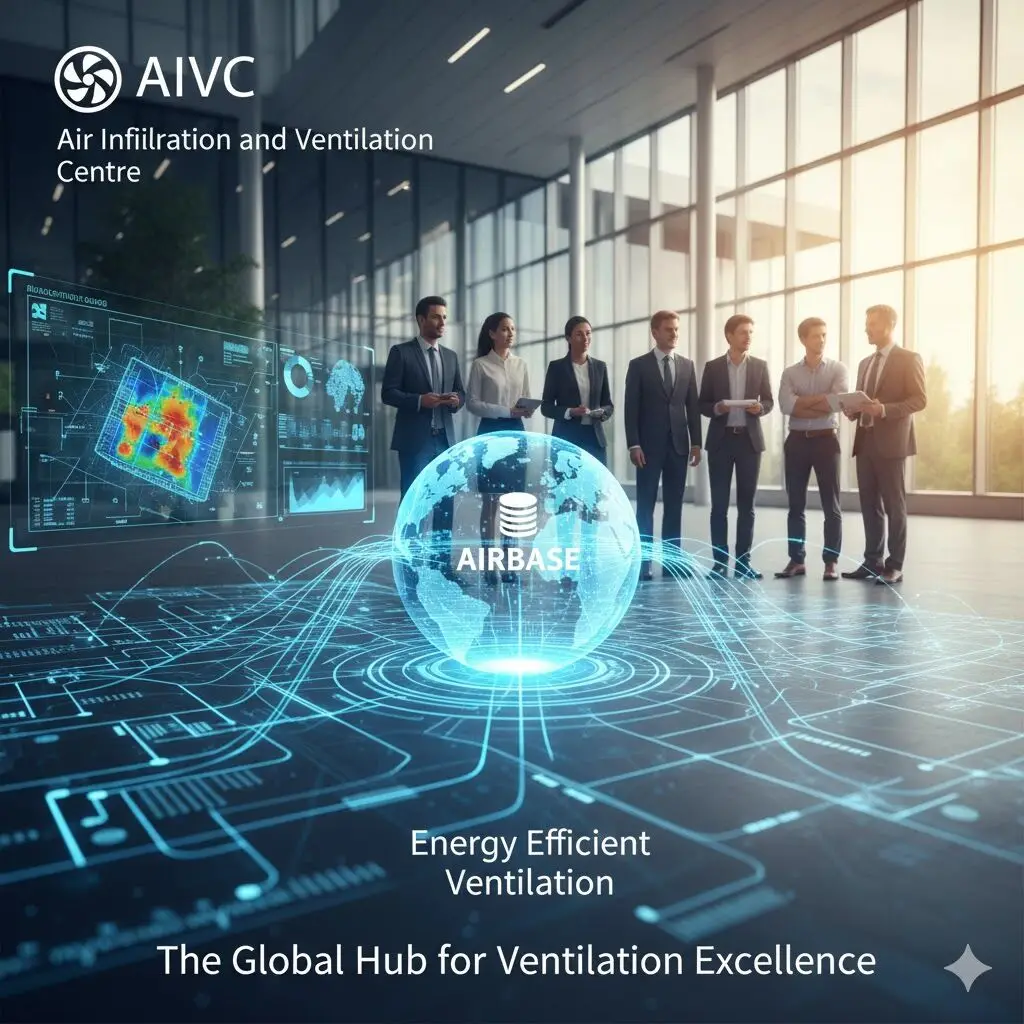
In the wake of a global shift toward sustainable living and carbon neutrality, the way we design and breathe inside our buildings has moved from a secondary concern to a primary architectural mandate. At the heart of this transformation sits the Air Infiltration and Ventilation Centre (AIVC).
Established in 1979 by the International Energy Agency (IEA), the AIVC has spent over four decades serving as the premier international information exchange for energy-efficient ventilation. Headquartered in Coventry, United Kingdom, this organization acts as a scientific bridge, connecting high-level research with the practicalities of national building codes and global engineering standards.
History and Evolution: From the Oil Crisis to the Climate Crisis
The AIVC was born out of necessity. In 1979, the world was reeling from energy shortages, and the "Air Infiltration Centre" (as it was originally known) was tasked with a singular mission: minimizing energy losses through air leakage.
By 1986, the organization recognized that making a building airtight was only half the battle. To ensure human health, "Ventilation" was officially added to its name. Today, the AIVC operates as part of the IEA’s Energy in Buildings and Communities (EBC) programme, managed by INIVE EEIG. It has evolved into a multi-disciplinary powerhouse addressing Indoor Air Quality (IAQ), smart ventilation, and resilient cooling in the face of a warming planet.
Core Specializations: The Pillars of AIVC Expertise
The AIVC’s influence is felt through five primary technical pillars:
A. Energy Efficient Ventilation
How do we refresh indoor air without losing the heat we’ve paid for? The AIVC explores technologies like Mechanical Ventilation with Heat Recovery (MVHR) and Demand-Controlled Ventilation (DCV). By analyzing the global energy impact of buildings, the AIVC helps engineers reduce carbon footprints without sacrificing occupant comfort.
B. Building Airtightness
A leaky building is an inefficient building. The AIVC provides the technical foundation for measuring and improving building envelopes. This involves rigorous testing protocols and the dissemination of standards that define how "tight" a modern sustainable building should be.
C. Indoor Air Quality (IAQ)
With humans spending 90% of their time indoors, the air we breathe is a critical health factor. The AIVC conducts extensive research into IAQ metrics, tracking pollutants, CO2 levels, and moisture to prevent issues like Sick Building Syndrome (SBS) and mold growth.
D. Ventilative Cooling
As global temperatures rise, air conditioning is becoming a major energy drain. The AIVC champions "ventilative cooling"—using natural or mechanical airflow to remove heat from buildings, significantly reducing the reliance on traditional refrigerant-based cooling.
E. Smart Ventilation Systems
The future is automated. Smart ventilation uses sensors and AI to adjust airflow based on real-time occupancy and pollutant levels. The AIVC leads international projects (Annexes) that define the performance criteria for these next-generation systems.
AIRBASE: The World’s Ventilation Library
One of the AIVC’s most significant contributions to science is AIRBASE. This bibliographic database is the most comprehensive repository of ventilation literature in existence.
-
Scale: Over 22,000 abstracts and thousands of full-text documents.
-
Scope: Covers everything from 19th-century chimney physics to modern AI-driven HVAC controls.
-
Accessibility: For researchers and professionals, AIRBASE is an indispensable tool for verifying data and exploring historical precedents in building science.
Global Impact and the UK Operating Hub
While the AIVC’s reach is global, its UK Operating Hub in Coventry, West Midlands, serves as a vital node for British professionals. Situated near the University of Warwick Science Park, the centre provides direct technical support to UK architects, environmental engineers, and policy-makers.
The AIVC’s work directly influences Building Regulations (Part F and Part L in the UK), ensuring that as we move toward "Net Zero" homes, we don't inadvertently create airtight boxes that are unhealthy to live in.
Events and Dissemination: The Annual AIVC Conference
Every year, the AIVC hosts an international conference that serves as the "World Cup" of ventilation science. These events—often held in collaboration with TightVent and venticool—bring together the brightest minds from organizations like ASHRAE, REHVA, and ISIAQ.
Whether it is a workshop in Madrid or a webinar on "Smart Ventilation," the AIVC ensures that high-quality information is not just locked in academic journals but is shared with the people who actually design and build our world.
The Value Proposition for Professionals
For a modern engineering firm or research body, the AIVC offers:
-
Direct Technical Support: Access to expert guidance on complex ventilation challenges.
-
Regulatory Influence: A chance to understand the science before it becomes a mandatory building code.
-
Peer-Reviewed Certainty: In an era of misinformation, AIVC publications provide a "Gold Standard" of verified data.
Breathing Life into the Future
The Air Infiltration and Ventilation Centre is more than just a research hub; it is the architect of our future indoor environments. As we continue to battle climate change and emerging health threats, the science of how we move air will remain at the forefront of human innovation. Through its database, its experts, and its unwavering mission, the AIVC ensures that the buildings of tomorrow will be efficient, sustainable, and, above all, healthy.
Frequently Asked Questions
1. What does AIVC stand for?
AIVC stands for the Air Infiltration and Ventilation Centre.
2. When was the AIVC founded?
It was established on October 1, 1979, by the International Energy Agency (IEA).
3. What is AIRBASE?
AIRBASE is a comprehensive bibliographic database managed by the AIVC, containing over 22,000 abstracts related to building ventilation and energy efficiency.
4. Where is the AIVC headquartered?
The AIVC’s UK Operating Hub is located in Coventry, West Midlands, specifically at the University of Warwick Science Park.
5. Is the AIVC a commercial company?
No, it is an international information exchange and technical support centre operated by INIVE EEIG on behalf of the IEA EBC.
6. How does the AIVC contribute to healthy homes?
By researching Indoor Air Quality (IAQ) metrics and building airtightness, the AIVC helps create standards that ensure fresh air circulation while maintaining energy efficiency.
7. Can I attend AIVC events?
Yes, the AIVC hosts annual conferences, technical workshops, and webinars that are open to researchers, engineers, and building professionals.
8. What payment methods are accepted for AIVC registrations?
Commonly accepted methods include Bank Transfer (BACS), Corporate Invoicing, and secure online payments.
9. Does the AIVC provide technical guides?
Yes, the AIVC publishes technical notes, ventilation guides, and newsletters that are used globally to inform building design.
10. How can I contact the AIVC?
You can reach them via email at [email protected] or by calling their helpdesk at +44 24 7669 2050.
Top Categories
Top Viewed Articles
-
 Nottingham Trent University: Reimagining Higher Education
Apr 06 122
Nottingham Trent University: Reimagining Higher Education
Apr 06 122 -
Event Partners Ltd: Global B2B Exhibition Experts
Apr 08 114
-
Top Rated and Most Reliable Parking in London
Jul 09 114
-
Top Rated and Most Reliable Dentists in London
Jul 20 109
-
Top Rated and Most Reliable Doctors in London
Jul 20 102

Spread the Word
Know someone who would love this? Share it with them!