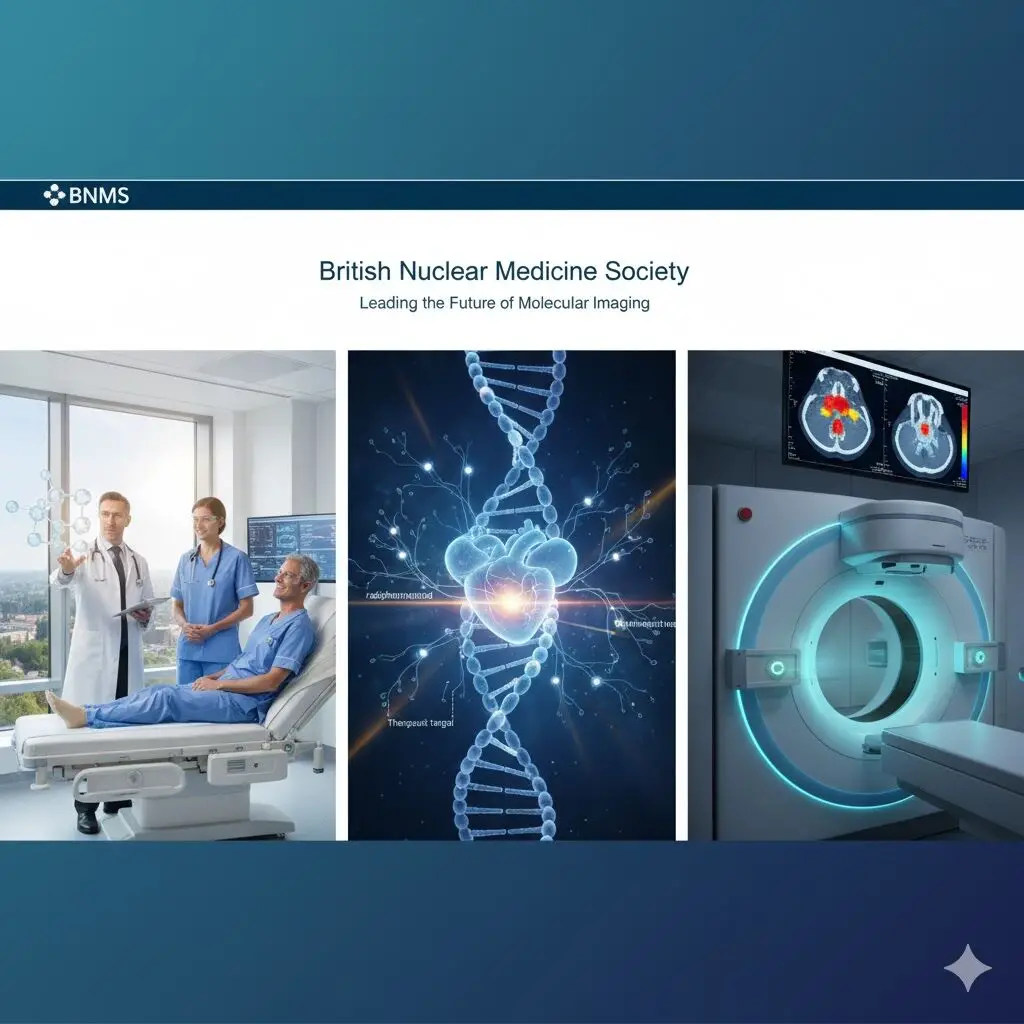
The British Nuclear Medicine Society (BNMS) stands as the preeminent independent forum in the United Kingdom dedicated to the advancement of nuclear medicine. Established in 1966, the Society has evolved from a small gathering of visionaries into a vital multidisciplinary organization. Today, it serves as the backbone for clinicians, clinical scientists, radiopharmacists, technologists, and nurses who utilize unsealed radioactive substances for diagnosis and therapy.
In an era where molecular imaging and personalized medicine are transforming healthcare, the BNMS provides the professional framework, educational resources, and clinical standards necessary to ensure that these advanced technologies are delivered safely and effectively to patients nationwide.
The History and Foundation of BNMS
The story of the BNMS began on 19 July 1966. Originally founded as the "Nuclear Medicine Society," it was the brainchild of four pioneering clinicians: Steve Garnett, David Keeling, Ralph McCready, and Edward Williams. Their goal was simple yet profound: to create a dedicated space where the emerging field of nuclear medicine could be nurtured outside the traditional boundaries of general radiology and physics.
In 1969, reflecting its national importance, the organization was renamed the British Nuclear Medicine Society. Over the decades, it has transitioned into a Registered UK Charity (No: 1150234) and a Company Limited by Guarantee, headquartered in the innovative hub of Nottingham, specifically within the Sir Colin Campbell Building near the University of Nottingham Jubilee Campus.
Mission and Core Value Proposition
The BNMS operates with a dual mission: to act as a learned society promoting scientific excellence and as a professional representative body advocating for the specialty.
1. Promoting Clinical Excellence
The Society is the primary source of clinical guidelines and audit tools for nuclear medicine departments in the UK. These resources ensure that whether a patient is undergoing a routine bone scan or complex molecular radiotherapy, the care they receive meets rigorous national standards.
2. Education and Networking
Through its Annual Scientific Meetings (such as the prestigious BNMS Spring Meeting) and regional forums, the Society facilitates the exchange of groundbreaking ideas. It bridges the gap between scientific innovation in the lab and practical care at the bedside.
3. National Advocacy
The BNMS actively influences health policy by representing the specialty on official regulatory bodies and responding to consultations from the Department of Health and Social Care (DHSC) and NHS England.
A Multidisciplinary Community
One of the unique strengths of the BNMS is its multidisciplinary nature. The specialty of nuclear medicine requires a harmonious collaboration between various professional groups:
-
Clinicians: Specialist physicians who interpret scans and manage radionuclide therapies.
-
Clinical Scientists: Experts in medical physics who ensure the accuracy of equipment and radiation safety.
-
Radiopharmacists: Specialists responsible for the preparation and quality control of radiopharmaceuticals.
-
Technologists & Radiographers: The frontline professionals who perform the imaging procedures.
-
Nurses: Crucial for patient care, particularly in the growing field of therapeutic nuclear medicine.
Key Services and Products
Official Journal: Nuclear Medicine Communications
The BNMS publishes Nuclear Medicine Communications, a world-renowned monthly journal. It provides a platform for the latest peer-reviewed research in radionuclide imaging, radiochemistry, and medical physics. For members, this journal is a primary source of Continuing Professional Development (CPD).
Professional Membership
The Society offers several tiers of membership, providing access to:
-
Member-only Research Portals: Exclusive data and presentation archives.
-
Technical Query Support: A lifeline for professionals seeking expert advice on complex clinical cases.
-
National Networking: Forums that connect specialists across the four nations of the UK.
-
Online Job Board: A specialized career portal for the nuclear medicine sector.
Clinical Guidelines & Standards
The BNMS Clinical Procedure Guidelines are indexed by the National Institute for Health and Care Excellence (NICE). These include protocols for:
-
PET/CT and SPECT/CT imaging.
-
Glomerular Filtration Rate (GFR) measurements.
-
Diagnostic and therapeutic procedures for oncology, cardiology, and neurology.
Specializations: The Cutting Edge of Healthcare
The BNMS is at the forefront of several critical medical specializations:
1. Molecular Radiotherapy (MRT)
Unlike external beam radiation, MRT involves injecting radioactive substances that target specific cancer cells. BNMS provides the training and safety frameworks for therapies like Lutetium-177 for prostate cancer and neuroendocrine tumors.
2. Hybrid Imaging (PET/CT and SPECT/CT)
By combining functional imaging (nuclear medicine) with structural imaging (CT), hybrid systems allow for unprecedented diagnostic accuracy. BNMS ensures that the workforce is trained to interpret these complex, multi-modal scans.
3. Radiopharmaceutical Science
The Society works closely with the UK Radiopharmacy Group (UKRG) to ensure the stable supply and safe preparation of medical isotopes, a task made more complex by recent global supply chain challenges and regulatory changes.
Global Impact and Associations
While its administrative focus is in Nottinghamshire, the BNMS has a global footprint. It is a prominent member of:
-
The European Association of Nuclear Medicine (EANM)
-
The World Federation of Nuclear Medicine and Biology (WFNMB)
Through these affiliations, the BNMS ensures that UK practice remains aligned with international benchmarks while sharing British innovations with the global scientific community.
Why Nuclear Medicine Matters Today
Nuclear medicine is no longer a "niche" specialty. It is central to the NHS's Long Term Plan, particularly in early cancer diagnosis and the development of theranostics—a combination of diagnostic imaging and targeted therapy. The BNMS is the engine room driving these advancements, ensuring that the UK remains a global leader in medical science.
Frequently Asked Questions
1. What exactly is nuclear medicine?
Nuclear medicine is a medical specialty that uses small amounts of radioactive materials (radiopharmaceuticals) to diagnose and treat diseases. Unlike traditional X-rays which show structure, nuclear medicine shows how the body's organs are actually functioning.
2. How do I become a member of the BNMS?
Membership is open to all professionals working in or interested in nuclear medicine. You can apply via the BNMS Online Membership Portal at www.bnms.org.uk. Tiers are available for full professionals, students, and retired specialists.
3. Is nuclear medicine imaging safe?
Yes. The amount of radiation used in diagnostic nuclear medicine is typically very low—often similar to or less than that of a standard CT scan. The BNMS sets strict clinical standards to ensure the "As Low As Reasonably Achievable" (ALARA) principle is followed.
4. What is the "Blue Pages" in nuclear medicine?
The "Blue Pages" traditionally refers to the directory of nuclear medicine resources and facilities. The BNMS provides a comprehensive departmental database that acts as a modern version of this resource for the UK.
5. How can I contact the BNMS for technical advice?
The BNMS provides technical query support for its members. For general administrative inquiries, you can reach the helpdesk at +44 (0) 115 671 5703 or email [email protected].
6. Does the BNMS provide training for nurses and technologists?
Absolutely. The BNMS has dedicated groups for Technologists, Radiographers, and Nurses. They offer accredited training courses, webinars, and specialized sessions at the Annual Spring Meeting.
7. Can the public access BNMS clinical guidelines?
While many resources are technical and aimed at professionals, the BNMS provides Patient Information Leaflets that explain various procedures in plain English, helping patients understand what to expect during their visit.
8. Where is the BNMS located?
The headquarters are in the Sir Colin Campbell Building, Triumph Road, Nottingham, NG7 2TU, United Kingdom, near the University of Nottingham Jubilee Campus.
9. What is Nuclear Medicine Communications?
It is the official peer-reviewed journal of the BNMS, published monthly. It contains the latest scientific research, clinical trials, and review articles relevant to the field.
10. How does BNMS influence UK health policy?
The Society acts as the official voice of the specialty. It works with NICE, the Administration of Radioactive Substances Advisory Committee (ARSAC), and the Department of Health to ensure that legislation and funding reflect the needs of patients and professionals.
A Legacy of Innovation
As we look toward the future, the British Nuclear Medicine Society remains committed to its founding principles: excellence, multidisciplinary collaboration, and the pursuit of better patient outcomes. Whether through the development of new tracers or the advocacy for better radiotherapy access, the BNMS is the definitive home for nuclear medicine in the United Kingdom.
Contact Information:
-
Phone: +44 (0) 115 671 5703
-
Email: [email protected]
-
Website: https://www.bnms.org.uk
-
Office Hours: Mon–Fri, 9 AM – 5 PM
Top Categories
Top Viewed Articles
-
 Nottingham Trent University: Reimagining Higher Education
Apr 06 122
Nottingham Trent University: Reimagining Higher Education
Apr 06 122 -
Event Partners Ltd: Global B2B Exhibition Experts
Apr 08 114
-
Top Rated and Most Reliable Parking in London
Jul 09 114
-
Top Rated and Most Reliable Dentists in London
Jul 20 109
-
Top Rated and Most Reliable Doctors in London
Jul 20 102




Spread the Word
Know someone who would love this? Share it with them!