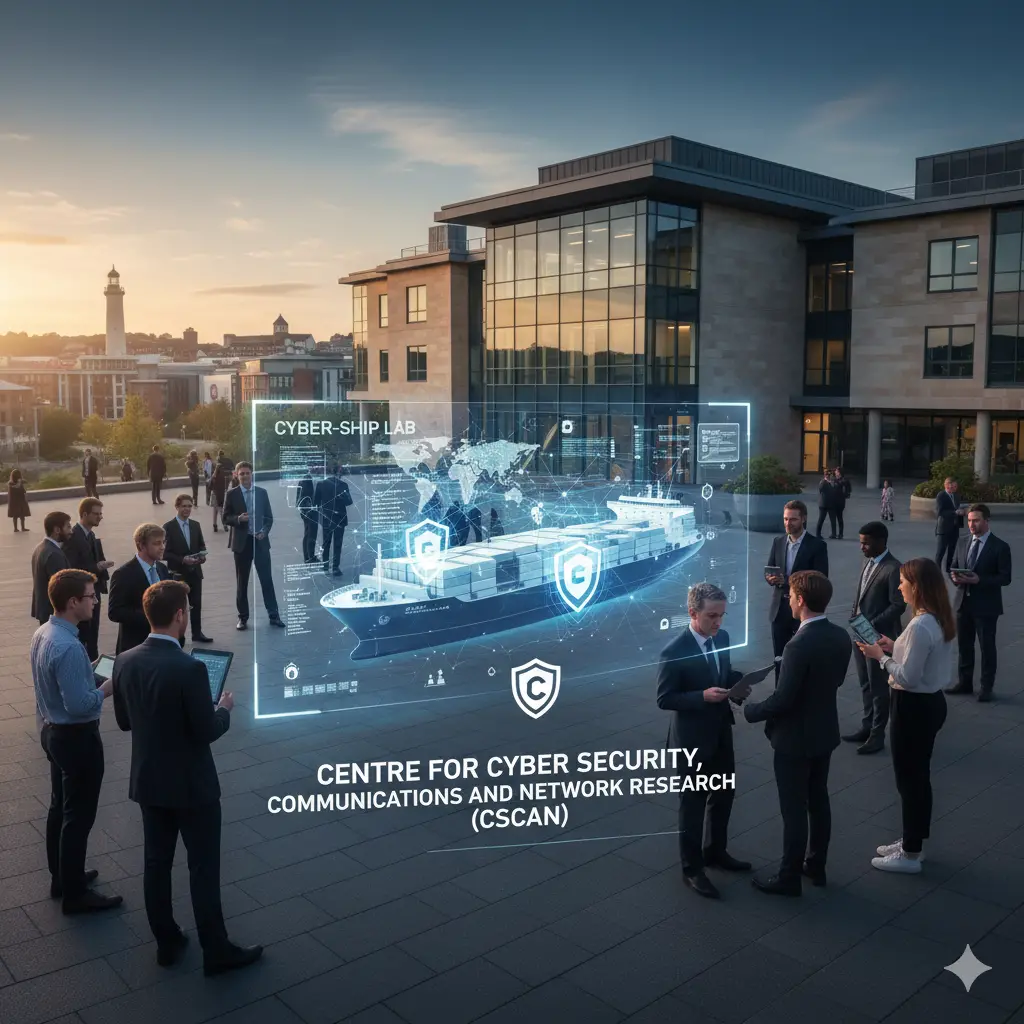
In an era where the digital landscape evolves at a breakneck pace, the threats facing our global infrastructure have shifted from simple data breaches to systemic risks targeting critical national assets. At the heart of this battle for digital resilience stands the Centre for Cyber Security, Communications and Network Research (CSCAN). Based in Plymouth, United Kingdom, CSCAN is not just a research group; it is a globally recognized Centre of Excellence dedicated to the triad of information security, digital forensics, and network communications.
The Genesis of Excellence: A Legacy of Innovation
Founded originally as a research group in 1984 and formally established as a Centre in 2003 within the University of Plymouth, CSCAN has spent decades bridging the gap between theoretical academic rigor and real-world industrial application. Under the visionary leadership of Professor Nathan Clarke and Professor Kevin Jones, the centre has grown into a powerhouse of over 50 expert researchers and PhD candidates.
For businesses and government bodies in the UK and internationally, CSCAN represents the "Blue Pages" of cyber security—a definitive resource for high-impact research and specialized consultancy.
World-Class Facilities: The Babbage Building and Beyond
Located in the state-of-the-art Babbage Building near the Drake Circus Shopping Centre, CSCAN operates specialized facilities that are unique in the academic world.
The Digital Forensics Laboratory
CSCAN’s 42-seat dedicated security and digital forensics laboratory is a cornerstone of its technical training and research. This facility allows for the simulation of complex network topologies, enabling researchers to analyze malware behavior, practice incident response, and develop new forensic tools in a controlled, high-stakes environment.
The Cyber-SHIP Lab: Securing the Global Supply Chain
Perhaps the most distinctive jewel in CSCAN’s crown is the Cyber-SHIP Lab. With 90% of global trade moving by sea, the maritime sector is a prime target for cyber-adversaries. The Cyber-SHIP Lab is a hardware-based research platform that creates "physical twins" of ship bridges. By using actual maritime equipment—rather than just simulations—CSCAN can identify vulnerabilities in GPS, AIS, and propulsion systems that could otherwise lead to catastrophic environmental or economic disasters.
Specialized Research Domains
CSCAN’s expertise is categorized into five critical pillars of modern cyber security:
Digital Forensics & Investigation
As an EC-Council Accredited Training Partner, CSCAN leads the way in identifying how digital evidence can be extracted from heterogeneous sources. Their research helps law enforcement and corporate investigators stay ahead of anti-forensic techniques.
Human Aspects of Security
Technology is only as strong as the people using it. CSCAN pioneered research into "Human-Centric Security," studying user behavior, psychological factors in phishing, and how to design systems that are secure by default without hindering user productivity.
Maritime Cyber Security
Through the MaCRA (Maritime Cyber Risk Assessment) framework, CSCAN provides the shipping industry with a standardized method to quantify and mitigate risks. This work has been recognized by the NCSC and is used by global maritime leaders to secure autonomous and crewed vessels alike.
Network Performance & Security Monitoring
In the age of 5G and IoT, network speed must not come at the cost of security. CSCAN develops AI-driven monitoring systems that can detect anomalies in network traffic at millisecond speeds, preventing DDoS attacks and data exfiltration before they escalate.
AI in Cyber Defence
Artificial Intelligence is a double-edged sword. CSCAN researchers are developing next-generation AI algorithms to automate threat hunting while simultaneously researching ways to protect AI models from "adversarial machine learning" attacks.
Academic Consultancy and Industrial Impact
Beyond pure research, CSCAN serves as a strategic partner for the UK business community. Their consultancy services include:
-
ISO 27001 Support: Helping organizations implement and maintain the gold standard for information security management.
-
Penetration Testing & Vulnerability Assessment: Utilizing the same tools as modern hackers (Webgoat, Metasploit, Nmap) to find and fix holes in corporate defenses.
-
Bespoke Research Partnerships: Collaborative R&D projects that solve specific technical challenges for industry leaders.
Training the Next Generation: MSc and PhD Programs
CSCAN is the engine behind the University of Plymouth’s MSc in Cyber Security, which is fully certified by the National Cyber Security Centre (NCSC). Students don’t just learn from textbooks; they work toward industry-recognized certifications including:
-
CEH (Certified Ethical Hacker)
-
CHFI (Computer Hacking Forensic Investigator)
-
ACE (AccessData Certified Examiner)
This integration of academic credit and professional recognition ensures that CSCAN graduates are among the most marketable security professionals in the global workforce.
Global Collaboration: The CSCAN Network
Cyber security is a borderless challenge. To address this, CSCAN has established international academic nodes in Germany (Darmstadt, Frankfurt, and Furtwangen), facilitating a global exchange of intelligence and research methodology. This network ensures that the intelligence provided to UK businesses is informed by global trends and emerging threat vectors.
Business Amenities and Accessibility
For visiting researchers and corporate partners, CSCAN provides a professional and hospitable environment. The Babbage Building features:
-
High-Speed Free Wi-Fi for all collaborators.
-
Secure CCTV and Power Backup for uninterrupted research.
-
A Waiting Lounge and Research Library for deep study.
-
On-site Parking and proximity to Plymouth’s central landmarks.
Securing a Trustworthy Future
The Centre for Cyber Security, Communications and Network Research (CSCAN) is more than an academic department; it is a vital organ of the UK's digital infrastructure. By merging the technical robustness of their specialized labs with a deep understanding of human behavior, CSCAN ensures that our technological future is not just faster, but safer.
Whether you are a prospective PhD candidate, a business seeking to harden your defenses, or a maritime operator looking to secure your fleet, CSCAN provides the intelligence and the innovation needed to turn digital vulnerabilities into resilient systems.
Frequently Asked Questions
1. What is the primary focus of CSCAN?
CSCAN focuses on three main pillars: Information Security, Digital Forensics, and Network Communications. They are particularly famous for their work in maritime cybersecurity and human-centric security design.
2. Where is CSCAN located?
CSCAN is headquartered in the Babbage Building at the University of Plymouth, Drake Circus, Plymouth, PL4 8AA, UK. It is located near the Drake Circus Shopping Centre.
3. Who leads the research centre?
The centre is directed by Professor Nathan Clarke and supported by Professor Kevin Jones (Deputy Vice-Chancellor for Research and Innovation).
4. What is the Cyber-SHIP Lab?
The Cyber-SHIP Lab is a unique, £3-million hardware-based facility at CSCAN that uses real ship equipment to test and secure maritime systems against cyber-attacks.
5. Does CSCAN offer consultancy for small businesses?
Yes, CSCAN provides expert consultancy, including ISO 27001 support, digital forensics analysis, and vulnerability assessments for UK businesses and international partners.
6. Is the Cyber Security MSc at Plymouth accredited?
Yes, the MSc in Cyber Security linked to CSCAN is fully certified by the National Cyber Security Centre (NCSC) and accredited by the BCS (The Chartered Institute for IT).
7. Can I obtain professional certifications at CSCAN?
Students and professionals training at CSCAN have the opportunity to earn industry certifications such as Certified Ethical Hacker (CEH) and Computer Hacking Forensic Investigator (CHFI).
8. How many people work at CSCAN?
The centre consists of over 50 members, including senior academic staff, industrial researchers, and a large cohort of PhD students.
9. What payment methods does CSCAN accept for consultancy?
Accepted methods include Bank Transfers, Corporate Invoicing, Research Grants, and Credit/Debit Cards.
10. How can I contact the CSCAN helpdesk?
You can reach the helpdesk at 01752 584584 or via email at [email protected].
Business Quick Reference
-
Founded: 1984 (Origins) / 2003 (Formal)
-
Working Hours: Mon–Fri, 9:00 AM – 5:00 PM
-
Languages: English
-
Service Area: International Research & UK Consultancy
-
Associations: NCSC Academic Community, South West Cyber Cluster, EC-Council Partner.

Top Categories
Top Viewed Articles
-
 Nottingham Trent University: Reimagining Higher Education
Apr 06 122
Nottingham Trent University: Reimagining Higher Education
Apr 06 122 -
Event Partners Ltd: Global B2B Exhibition Experts
Apr 08 114
-
Top Rated and Most Reliable Parking in London
Jul 09 114
-
Top Rated and Most Reliable Dentists in London
Jul 20 109
-
Top Rated and Most Reliable Doctors in London
Jul 20 102



Spread the Word
Know someone who would love this? Share it with them!