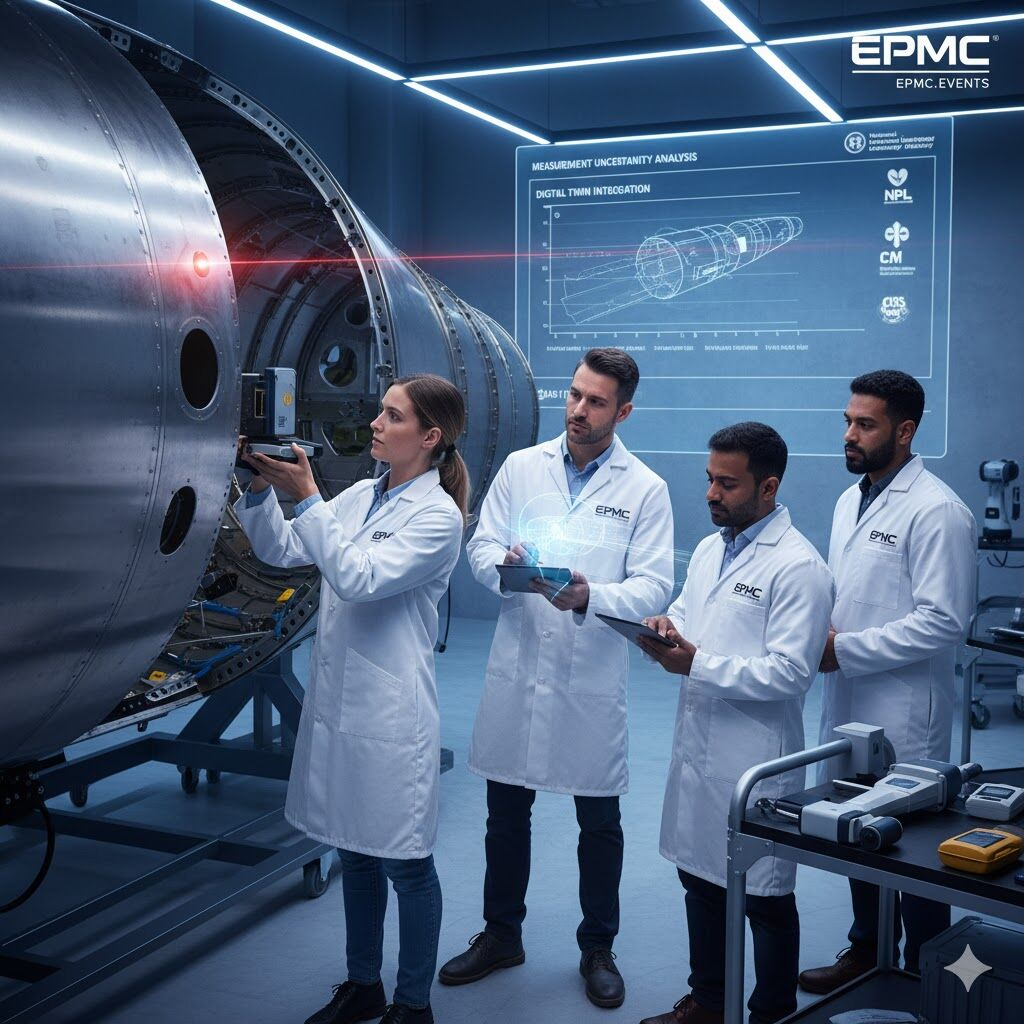
In the high-stakes world of modern manufacturing, where a fraction of a millimeter can determine the success of an aerospace component or the safety of a nuclear reactor, the science of measurement is no longer a back-room activity—it is a front-line strategic asset. The European Portable Metrology Conference (EPMC) stands as the continent’s premier technical event dedicated to this evolution, focusing specifically on the application of portable 3D measurement technology in industrial environments.
Since its inception in 2004, EPMC has served as a neutral, vendor-independent beacon for researchers, manufacturers, and end-users. By bridging the gap between theoretical measurement science and the "shop-floor" reality, the conference ensures that European industry remains at the absolute cutting edge of global manufacturing excellence.
The Core Mission: Neutrality and Knowledge Exchange
Unlike typical trade shows driven by sales quotas, EPMC is built on a foundation of technical integrity. Supported by the National Physical Laboratory (NPL) and the Coordinate Metrology Society (CMS), the conference provides a platform where the focus is on "how it works" and "how accurate it is" rather than just "how much it costs."
This neutrality is critical in fields like Large Volume Metrology (LVM). When dealing with structures the size of an aircraft wing or a wind turbine blade, practitioners must navigate complex variables including thermal expansion, refractive index changes in the air, and mechanical deflection. EPMC facilitates a deep-dive into these challenges, offering peer-reviewed papers that challenge existing methodologies and propose new standards for accuracy.
Targeted Industries: Where Scale Meets Precision
The value proposition of EPMC is most felt in sectors where traditional Coordinate Measuring Machines (CMMs) simply cannot go. Portable metrology brings the lab to the part, rather than the part to the lab.
1. Aerospace and Aviation
In aerospace, the integration of airframe components requires sub-millimeter precision across spans of 30 meters or more. EPMC highlights the latest in Laser Tracker technology and automated photogrammetry to ensure that "first-time fit" is a reality, reducing rework and accelerating production cycles.
2. Automotive Manufacturing
As the automotive industry shifts toward Electric Vehicles (EVs) and high-strength lightweight materials, the geometry of the chassis becomes more complex. EPMC sessions on articulating arms and high-speed 3D scanning provide automotive engineers with the tools to validate complex assemblies in real-time.
3. Marine and Shipbuilding
Measuring a ship's hull or aligning massive propulsion shafts requires specialized LVM techniques. The conference addresses the unique environmental challenges of shipyards, where vibration and humidity can wreak havoc on sensitive optical instruments.
4. Nuclear and Renewable Energy
From the alignment of turbine bearings to the decommissioning of nuclear facilities, metrology is the invisible hand ensuring safety and efficiency. EPMC provides the specialized knowledge required for Uncertainty Analysis in these high-consequence environments.
Technical Specializations: The EPMC Edge
Attendees at EPMC don't just see tools; they master concepts. The conference is renowned for its focus on:
-
Measurement Uncertainty: Understanding that no measurement is "perfect." EPMC teaches how to quantify what you don't know, which is the hallmark of a true metrology professional.
-
Digital Twin Integration: How to feed 3D scan data back into a living digital model of the factory floor, enabling predictive maintenance and virtual assembly.
-
GD&T (Geometric Dimensioning and Tolerancing): Moving beyond simple linear measurements to understand the functional relationships between parts.
-
Coordinate Metrology: The mathematical backbone of 3D space, ensuring that data from different sensors (e.g., a laser tracker and a handheld scanner) can be unified into a single, accurate coordinate system.
The Exhibition: Hands-On Innovation
The EPMC technical exhibition is a "who’s who" of the metrology world. Participants have the opportunity to engage with the latest hardware, including:
-
Laser Trackers: The gold standard for large-scale precision.
-
Articulating Measuring Arms: For tactile and scanning inspections in tight spaces.
-
Optical CMMs and Photogrammetry: For high-speed, non-contact data capture of thousands of points simultaneously.
-
Metrology Software: The "brains" that convert raw point clouds into actionable engineering reports.
Educational Impact and Certification
EPMC isn't just a conference; it’s a career-enhancing experience. Many sessions are CPD (Continuing Professional Development) accredited, allowing engineers and technicians to maintain their professional standing while learning from the world’s leading experts. The collaboration with NPL ensures that the training provided is aligned with national and international standards, providing a clear path for metrology certification support.
Driving Manufacturing Excellence
As we move further into the era of Industry 4.0, the role of portable metrology will only grow. The European Portable Metrology Conference remains the vital heart of this community in Europe. By fostering collaboration between the brightest minds at the National Physical Laboratory and the pragmatic problem-solvers on the factory floor, EPMC doesn't just predict the future of measurement—it builds it.
Frequently Asked Questions
1. What makes EPMC different from other engineering exhibitions?
EPMC is a technical, vendor-independent conference. While there is an exhibition, the core focus is on peer-reviewed technical presentations and hands-on learning rather than purely commercial sales.
2. Who should attend EPMC?
It is designed for metrology technicians, quality managers, manufacturing engineers, researchers, and anyone involved in large-scale precision measurement across industries like aerospace and energy.
3. Is EPMC an annual event?
EPMC is typically a biennial (every two years) event, allowing for significant technological leaps to occur between sessions, ensuring high-value content for attendees.
4. Can I present a technical paper at EPMC?
Yes, EPMC encourages submissions of technical papers. All submissions undergo a peer-review process by the EPMC Committee to ensure technical rigor and relevance.
5. What is "Large Volume Metrology" (LVM)?
LVM refers to the measurement of large objects (from several meters to hundreds of meters) with high precision using portable tools like laser trackers or GPS-based systems.
6. Does the conference provide any certification?
Many sessions are CPD accredited. Additionally, the event provides networking and knowledge that support the requirements for various metrology certifications.
7. Where is EPMC headquartered?
The conference is organized in the United Kingdom, specifically in Telford, Shropshire, and is supported by the Southwater Event Group.
8. Is there support for digital twin technology at the event?
Absolutely. Digital twin integration and "Smart Factory" concepts are major themes, focusing on how 3D measurement data populates digital models.
9. What payment methods are accepted for registration?
EPMC accepts Credit/Debit cards, Bank Transfers, and Corporate Invoicing for group bookings.
10. How can I stay updated on future EPMC dates?
You can visit the official website at https://www.epmc.events or follow their LinkedIn page for the latest announcements on upcoming conferences.
Top Categories
Top Viewed Articles
-
 Nottingham Trent University: Reimagining Higher Education
Apr 06 122
Nottingham Trent University: Reimagining Higher Education
Apr 06 122 -
Event Partners Ltd: Global B2B Exhibition Experts
Apr 08 114
-
Top Rated and Most Reliable Parking in London
Jul 09 114
-
Top Rated and Most Reliable Dentists in London
Jul 20 109
-
Top Rated and Most Reliable Doctors in London
Jul 20 102



Spread the Word
Know someone who would love this? Share it with them!