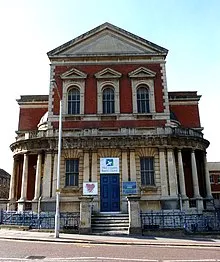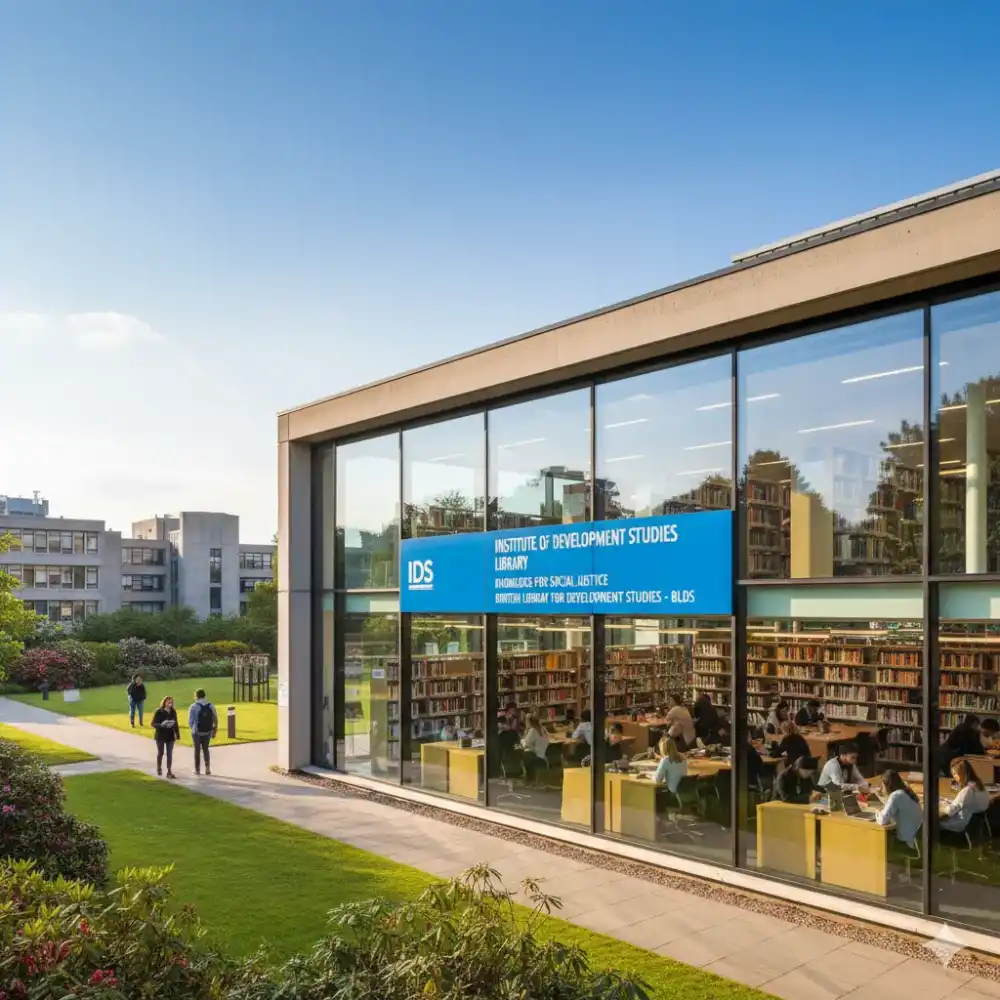
In the heart of the University of Sussex campus in Brighton, United Kingdom, lies a treasure trove of global wisdom: the Institute of Development Studies Library (IDS Library). Established in 1966, this institution is far more than a simple repository of books; it is one of the world’s most significant collections dedicated to the study and practice of international development.
A Legacy of Knowledge for Social Justice
The IDS Library was founded alongside the Institute itself, during a pivotal era of global decolonization and the birth of modern development theory. For over five decades, its mission has remained steadfast: to provide high-quality information resources and services that support world-class research, learning, and teaching.
At the core of its identity is the value proposition of "Knowledge for Social Justice." In a world grappling with the complexities of climate change, extreme poverty, and systemic inequality, the library serves as a critical bridge between evidence and action.
The British Library for Development Studies (BLDS) Collection
One of the crown jewels of the IDS Library is the management of the British Library for Development Studies (BLDS) collection. This is a uniquely rich resource, particularly famous for its extensive archives of:
-
Official Government Publications: Primary documents from across the Global South.
-
Grey Literature: Research reports, working papers, and policy briefs that are often difficult to find in mainstream academic channels.
-
Diverse Perspectives: A commitment to preserving voices from the countries most impacted by development policies.
With over 750,000 items, the collection provides an unparalleled historical and contemporary view of how societies evolve and how global challenges are addressed.
Specialized Services for the Global Scholar
The IDS Library isn't just about the past; it’s a modern engine for academic excellence. It offers a suite of specialized products and services tailored for the needs of 21st-century researchers:
-
Academic Research Support: Personalized guidance for scholars tackling complex global issues.
-
Information Literacy Training: Empowering students and researchers to navigate the vast digital landscape effectively.
-
Scholarly Communication Advice: Assisting authors in navigating open access publishing and impact metrics.
-
Inter-Library Loans: Bridging the gap between global institutions to ensure no research is left unfinished.
-
Digital Archive Access: Making rare documents accessible to a global community through sophisticated digital platforms.
World-Class Facilities and Amenities
Recognizing that deep research requires the right environment, the library provides a variety of spaces designed for different modes of study:
-
Quiet and Silent Study Areas: For focused, deep-concentration work.
-
Group Discussion Rooms: Facilitating the collaborative spirit essential to development studies.
-
Specialized PhD Study Facilities: Dedicated zones for long-term doctoral research.
-
High-Speed Free Wi-Fi and Computer Lab Access: Ensuring seamless connectivity to global databases.
A National and International Hub
While physically located in Brighton, the IDS Library operates with a national research hub status. It attracts scholars from around the world, acting as a beacon for those specializing in:
-
Poverty & Inequality
-
Gender & Sexuality
-
Climate Change Policy
-
Global Governance Research
As an affiliate of RLUK (Research Libraries UK) and the SCONUL network, the library is integrated into the highest tiers of the British academic infrastructure.
Practical Information for Visitors
-
Physical Address: Institute of Development Studies, Library Building, University of Sussex, Brighton, BN1 9RE, UK.
-
Working Hours: Monday–Friday, 09:00 – 19:00 (during term time).
-
Contact: 01273915663 | [email protected]
-
Access: Primary access is via institutional membership or visitor pass. Minor fees for printing are managed via student accounts or debit cards.
Frequently Asked Questions
1. Who can access the IDS Library?
The library is primarily open to IDS and University of Sussex members. However, external researchers, scholars, and visitors can access the collections via a visitor pass or through specific institutional agreements.
2. What is the BLDS collection?
The British Library for Development Studies (BLDS) is a comprehensive collection of development-related materials, particularly rich in government publications and grey literature from Africa, Asia, and Latin America.
3. Does the library offer digital access to its resources?
Yes, the IDS Library manages extensive digital archives and specialized subject guides that can be accessed online by authorized users.
4. Can I get help with my research strategy?
Absolutely. The library offers expert research support and information literacy training to help users locate, evaluate, and use development-related data.
5. Are there facilities for group work?
Yes, the library features dedicated Group Discussion Rooms that can be booked for collaborative study and project work.
6. Does the library have Wi-Fi?
High-speed free Wi-Fi is available throughout the library building for all registered users and visitors.
7. Is the IDS Library part of the University of Sussex?
The IDS Library is an independent library located on the University of Sussex campus and works in close partnership with the University of Sussex Library network.
8. What are the specializations of the IDS Library?
The library specializes in international development, focusing on poverty, gender, climate policy, and global governance.
9. How do I contact the library helpdesk?
You can reach the helpdesk at 01273915663 or by emailing [email protected].
10. What are the library's opening hours?
During term time, the library is open Monday through Friday, from 09:00 to 19:00.
The Institute of Development Studies Library stands as a testament to the power of shared knowledge. By preserving the history of global development and providing the tools for future innovation, it continues to empower a global community of change-makers dedicated to building a more equitable and sustainable world.
Top Categories
Top Viewed Articles
-
 Nottingham Trent University: Reimagining Higher Education
Apr 06 122
Nottingham Trent University: Reimagining Higher Education
Apr 06 122 -
Event Partners Ltd: Global B2B Exhibition Experts
Apr 08 114
-
Top Rated and Most Reliable Parking in London
Jul 09 114
-
Top Rated and Most Reliable Dentists in London
Jul 20 109
-
Top Rated and Most Reliable Doctors in London
Jul 20 102

Spread the Word
Know someone who would love this? Share it with them!