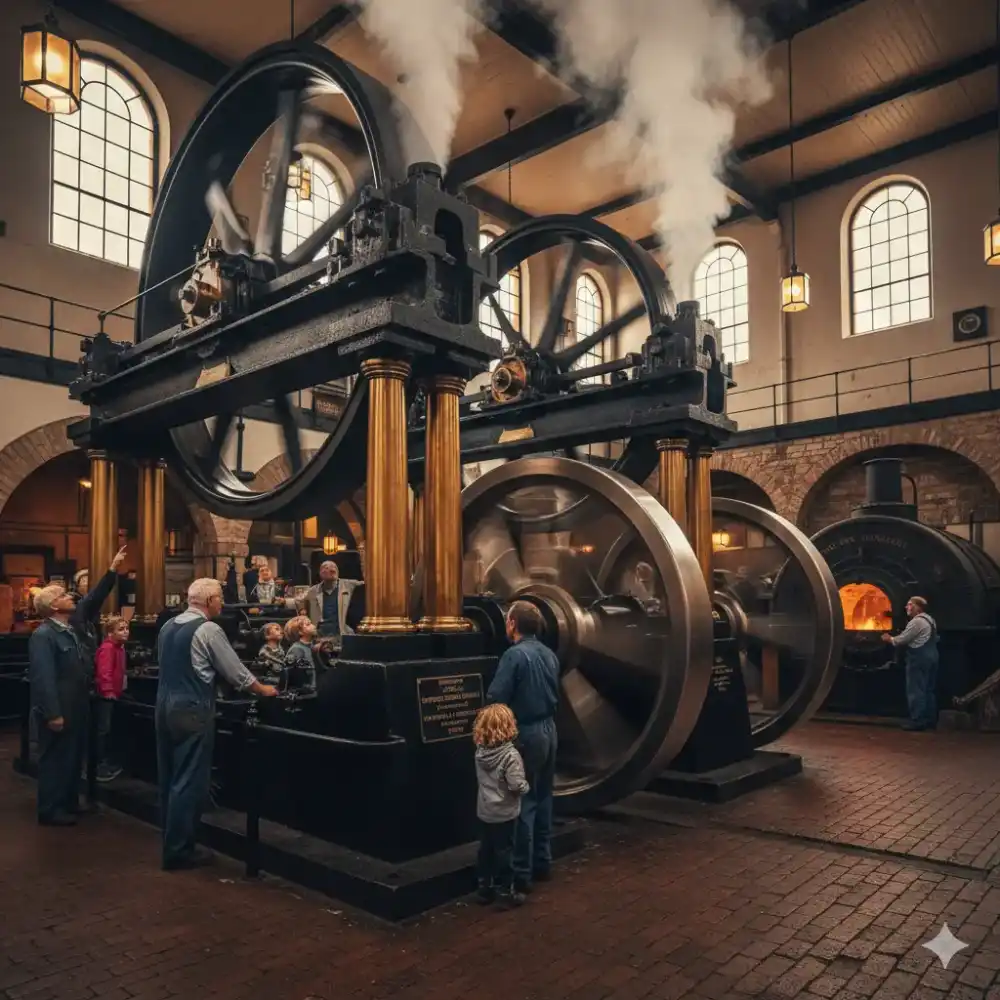
Standing as a towering testament to the ingenuity of the 19th century, the Ryhope Engines Museum in Sunderland is more than just a collection of machines; it is a breathing "cathedral of pistons and brass." Located at the historic Ryhope Pumping Station in Tyne and Wear, this premier industrial heritage destination offers a visceral connection to a time when steam was the lifeblood of the British Empire.
A Legacy of Clean Water and Engineering Excellence
The story of the Ryhope Pumping Station begins in 1868. Designed by the legendary civil engineer Thomas Hawksley, the station was built to address the desperate need for clean water in the rapidly growing Sunderland area. During an era plagued by cholera outbreaks, the provision of safe, filtered water was a revolutionary public health milestone.
Today, as a Grade II listed building* and a Scheduled Ancient Monument, the site is preserved by the dedicated volunteers of the Ryhope Engines Trust. Their mission is simple yet profound: to keep the "beating heart" of the Victorian Industrial Revolution alive for future generations.
The Beating Heart: The Twin Beam Engines
The centerpiece of any visit to the museum is undoubtedly the two 100-horsepower double-acting compound rotative beam engines. Built by the Newcastle firm R & W Hawthorn, these mechanical giants are marvels of precision engineering.
Technical Specifications of the Behemoths:
-
Weight of Each Beam: 22 tons
-
Flywheel Diameter: 24 feet
-
Depth of the Main Well: Over 250 feet
-
Operating Speed: Approximately 10 strokes per minute
When these engines are "in steam" during special steam demonstrations, the experience is overwhelming. The rhythmic thud of the pump buckets, the hiss of high-pressure steam, and the sheer scale of the 18-ton flywheels spinning effortlessly create a sensory experience that static exhibits simply cannot match.
More Than Just Engines: Exploring the Site
While the beam engines are the stars of the show, the Ryhope Engines Museum offers a diverse array of exhibits that paint a complete picture of Victorian industrial life:
-
Lancashire Boilers: See the three massive boilers from 1908 that provided the power to move the engines. Two of these are still in regular service today.
-
The Blacksmith’s Forge: Experience the heat and hammer-blows of a working forge, where tools were once crafted and repaired on-site.
-
The Waterwheel: A smaller but equally fascinating example of early power generation.
-
The Plumber’s Shop: A replica of a traditional workshop, filled with authentic tools of the trade.
-
The Well Viewing Panel: Look down into the dark depths of the 250-foot well through a modern viewing window—a dizzying reminder of the scale of this operation.
Educational Impact and Heritage Recognition
The museum isn't just for enthusiasts; it is a vital educational resource. Having received the Sandford Award for Heritage Education, Ryhope Engines Museum welcomes schools and universities to explore topics ranging from thermodynamics and mechanical engineering to Victorian social history.
For students, seeing these abstract concepts transformed into a physical, moving reality is transformative. It turns a history lesson into an inspiring future for industrial heritage in the UK.
Planning Your Visit
Located near Hopewood Park Hospital, the museum is easily accessible with free parking on-site.
-
Static Viewing: Most Sundays (2:00 PM – 5:00 PM), the museum is open for visitors to explore the machinery at a slower pace.
-
Steam Days: These occur on select weekends and bank holidays. This is when the boilers are fired, and the engines roar to life (11:00 AM – 4:00 PM).
-
Amenities: After your tour, visit the Tea Room for home-baked treats or relax in the picnic area. The site is pet-friendly (dogs on leads), making it a perfect family outing.
Why Ryhope Matters
In a world of digital screens and silent electronics, the Ryhope Engines Museum reminds us of the power of physical labor and mechanical genius. It stands as a monument to the Ryhope Engines Trust volunteers who spend thousands of hours ensuring that these 150-year-old machines never truly stop working. Whether you are a history buff, an engineering student, or a family looking for a unique weekend activity, Ryhope offers an unforgettable glimpse into the "Great Age of Steam."
Frequently Asked Questions
1. When are the next steam days at Ryhope Engines Museum?
Steam days typically occur during Bank Holiday weekends and special event periods like "Blackberry Week" in October. It is best to check the official Ryhope Engines website for the current year's schedule.
2. Is there an admission fee for the museum? Admission to the museum is generally free, though donations are gratefully accepted to help the Trust maintain the Grade II* listed building and machinery.
3. Is the museum accessible for wheelchair users?
The ground floor, including the engine hall and tea room, is accessible. However, due to the Victorian architecture, higher levels of the engine house are only accessible via steep industrial stairs.
4. Can I bring my dog to the museum?
Yes! The museum is pet-friendly, provided that dogs are kept on a short lead at all times.
5. How long does a typical visit take?
Most visitors spend between 1.5 to 3 hours exploring the engines, the boilers, the forge, and enjoying the tea room.
6. Who built the engines at Ryhope?
The two main beam engines were built by the local firm R & W Hawthorn of Newcastle in 1868.
7. Can I host a private event at the museum?
Yes, the museum offers heritage event hosting. You should contact the museum directly via email at [email protected] for booking inquiries.
8. Is there parking available?
The museum provides free parking for visitors directly on the site.
9. What payment methods are accepted in the tea room?
The tea room and donation points accept both cash and major credit/debit cards.
10. How do I volunteer at the museum?
The Ryhope Engines Trust is always looking for volunteers, whether you have engineering skills or simply wish to help in the tea room or as a tour guide. You can visit on a working Sunday to speak with the team or contact them through their website.

Top Categories
Top Viewed Articles
-
 Nottingham Trent University: Reimagining Higher Education
Apr 06 122
Nottingham Trent University: Reimagining Higher Education
Apr 06 122 -
Event Partners Ltd: Global B2B Exhibition Experts
Apr 08 114
-
Top Rated and Most Reliable Parking in London
Jul 09 114
-
Top Rated and Most Reliable Dentists in London
Jul 20 109
-
Top Rated and Most Reliable Doctors in London
Jul 20 102


Spread the Word
Know someone who would love this? Share it with them!