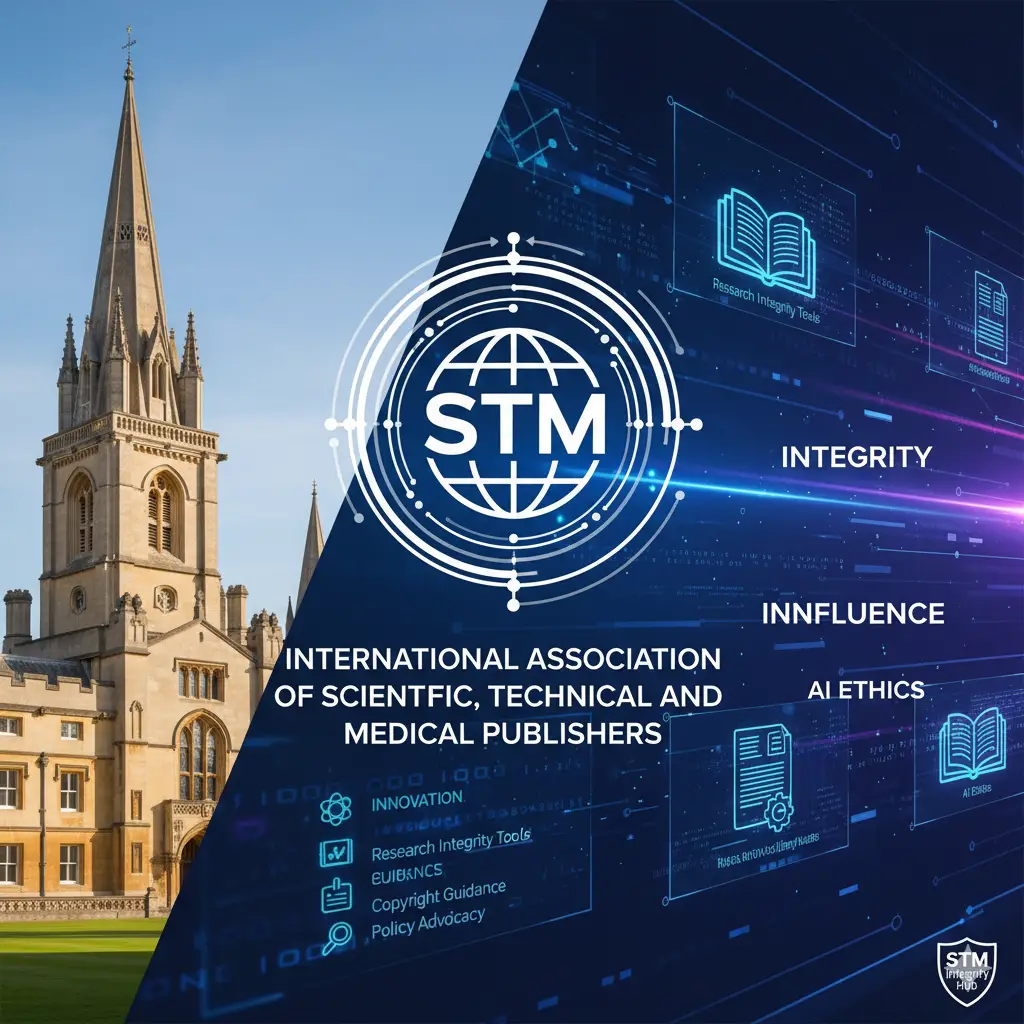
In the rapidly evolving world of academic research, the need for a unified, ethical, and technologically advanced framework has never been greater. The International Association of Scientific, Technical and Medical Publishers, commonly known as STM, stands at the forefront of this mission. Established on October 1, 1968, by the International Publishers Association (IPA), STM has grown into the leading global trade association for academic and professional publishers.
Headquartered in the academic heart of Oxford, United Kingdom, STM represents over 140 member organizations—ranging from massive commercial publishers to prestigious university presses and learned societies. Together, these members are responsible for over 60% of the world’s annual journal literature, making STM the most influential voice in the scholarly ecosystem.
The STM Mission: Integrity, Innovation, and Influence
The core value proposition of STM is built on three pillars: Integrity, Innovation, and Influence. In an era where "fake science," paper mills, and predatory publishing threaten the credibility of research, STM provides the collaborative infrastructure needed to protect the scientific record.
1. Advancing Research Integrity
Research integrity is the bedrock of scientific progress. STM’s commitment to this is embodied in STM Solutions, the association's operational arm. One of its most significant achievements is the STM Integrity Hub. This initiative provides a cloud-based environment where publishers can collaborate to detect:
-
Image Manipulation: Using AI-driven tools to spot falsified data.
-
Paper Mills: Identifying illegitimate commercial entities that sell fabricated manuscripts.
-
Duplicate Submissions: Ensuring research is original and hasn't been simultaneously submitted elsewhere.
2. Navigating the AI Frontier
As Generative AI reshapes how content is created and consumed, STM leads the industry in establishing Generative AI Ethics. The association provides crucial policy guidance, ensuring that AI is used responsibly in scholarly communications while protecting the intellectual property of authors and publishers.
3. Policy Advocacy and Copyright Guidance
STM acts as a powerful lobbyist for the publishing industry. From its offices in Oxford and The Hague, it monitors global intellectual property laws. By advocating for effective copyright frameworks, STM ensures a sustainable ecosystem where high-quality, peer-reviewed research can thrive.
Exclusive Member Benefits and Services
Joining STM is not just about representation; it’s about access to a world-class suite of tools and communities.
-
STM Solutions & Integrity Hub: Access to shared technical infrastructure that smaller publishers could not develop independently.
-
Policy Briefings: Exclusive, early-access reports on changing regulations in Open Access and Open Science.
-
Early Career Publisher Community: A dedicated space for the next generation of publishing professionals to network and learn.
-
Global Networking Forums: Annual conferences and webinars that bring together the brightest minds in scholarly communication.
-
UN SDG Publishers Compact: As a signatory, STM helps its members align their operations with the United Nations Sustainable Development Goals.
Business Information & Contact Details
For organizations looking to engage with the pinnacle of scholarly publishing services, STM offers a transparent and professional gateway.
-
Physical Address: Prama House, 267 Banbury Road, Summertown, Oxford, Oxfordshire, OX2 7HT, United Kingdom.
-
Landmark: Near Diamond Place / Summertown Library.
-
Phone Number: 01865339300
-
Email: info@stm-assoc.org
-
Website: https://www.stm-assoc.org
-
Working Hours: Monday–Friday, 09:00 – 17:30.
-
Accepted Payment Methods: Bank Transfer (BACS/Swift), Credit/Debit Cards, and Annual Membership Invoicing.
Specializations and Industry Leadership
STM is recognized for its deep expertise in:
-
Scholarly Communications: Enhancing the flow of information between researchers and the public.
-
Open Access Policy: Developing sustainable models for free access to research.
-
IP & Copyright Law: Defending the rights of creators in a digital world.
-
Cross-Industry Collaboration: Partnering with organizations like Crossref, ORCID, and COPE to standardize metadata and ethical practices.
Frequently Asked Questions
1. What does STM stand for?
STM stands for the International Association of Scientific, Technical and Medical Publishers.
2. Who can join the STM Association?
Membership is open to academic and professional publishers, including commercial companies, university presses, and learned societies. Associate memberships are also available for related service providers.
3. What is the STM Integrity Hub?
The STM Integrity Hub is a collaborative platform that provides tools to detect research misconduct, such as paper mills and image manipulation, before a paper is published.
4. How does STM support Open Science?
STM advocates for sustainable Open Access models and provides the "Open Access Dashboard" to help publishers track and implement open research policies.
5. Does STM offer training for new publishers?
Yes, the STM Early Career Publisher Community and various webinars provide professional development and mentoring for those new to the industry.
6. Where is STM headquartered?
The main headquarters is located in Oxford, United Kingdom, with additional operations in the Netherlands.
7. How many employees work at STM?
The association is powered by a dedicated team of approximately 25 professionals.
8. Is STM involved in AI ethics?
Absolutely. STM is a leader in providing policy guidance and best practices for the ethical use of Generative AI in scholarly publishing.
9. How do I pay for an STM membership?
STM accepts Bank Transfers (BACS/Swift), Credit/Debit Cards, and offers annual membership invoicing.
10. What is the relationship between STM and the IPA?
STM was founded in 1968 by the International Publishers Association (IPA) to serve the specific needs of scientific and technical publishers.

Top Categories
- Business Services 137
- Educational Services 93
- Event Organiser 45
- Health and Wellbeing 17
- Advertising Agencies 16
- Home and Garden 13
- Automotive 13
- Manufacturing Services 8
- Engineering 8
- Entertainment Services 5
- Legal Services 4
- Financial Services 4
- Gardening Services 4
- Accountants 2
- Cleaning Services 2
Top Viewed Articles
-
 Top Rated and Most Reliable Dentists in London
Jul 20 59
Top Rated and Most Reliable Dentists in London
Jul 20 59 -
Top Rated and Most Reliable Parking in London
Jul 09 52
-
Top Rated and Most Reliable Doctors in London
Jul 20 40
-
Top Rated and Most Reliable Junkyards in London
Jul 20 32
-
Applied Market Information Ltd : Global Leaders in Plastics Intelligence
Apr 03 28




Spread the Word
Know someone who would love this? Share it with them!