The whispers of the past find their voice in the modern era through the meticulous craftsmanship and unwavering dedication of The Early Music Shop. Standing as the world’s largest specialist in historical musical instruments, this "treasured national institution" has spent over half a century bridging the gap between musicology and performance. From its headquarters in the UNESCO World Heritage site of Saltaire to the windswept beauty of Snape Maltings, The Early Music Shop is more than a retail outlet; it is a global sanctuary for the early music revival.
A Legacy of Authenticity: From 1968 to the Present
The story of The Early Music Shop is inextricably linked to the cultural shift of the late 1960s. Founded in 1968 by Richard Wood, the shop emerged during a period of intense curiosity regarding "authentic" performance practice. Wood, a visionary descendant of the J Wood & Sons Ltd piano dynasty (established 1850), recognized that musicians were increasingly seeking instruments that could replicate the specific timbres of the Medieval, Renaissance, and Baroque periods.
Working closely with pioneers like David Munrow, Richard Wood helped define an industry. The shop didn't just sell instruments; it provided the physical tools for a revolution in sound. Today, trading as Early Music Shop Limited, the business continues this legacy under a specialized team of experts who serve a global community of professionals, students, and enthusiasts.
An Unparalleled Inventory: The Sound of Centuries
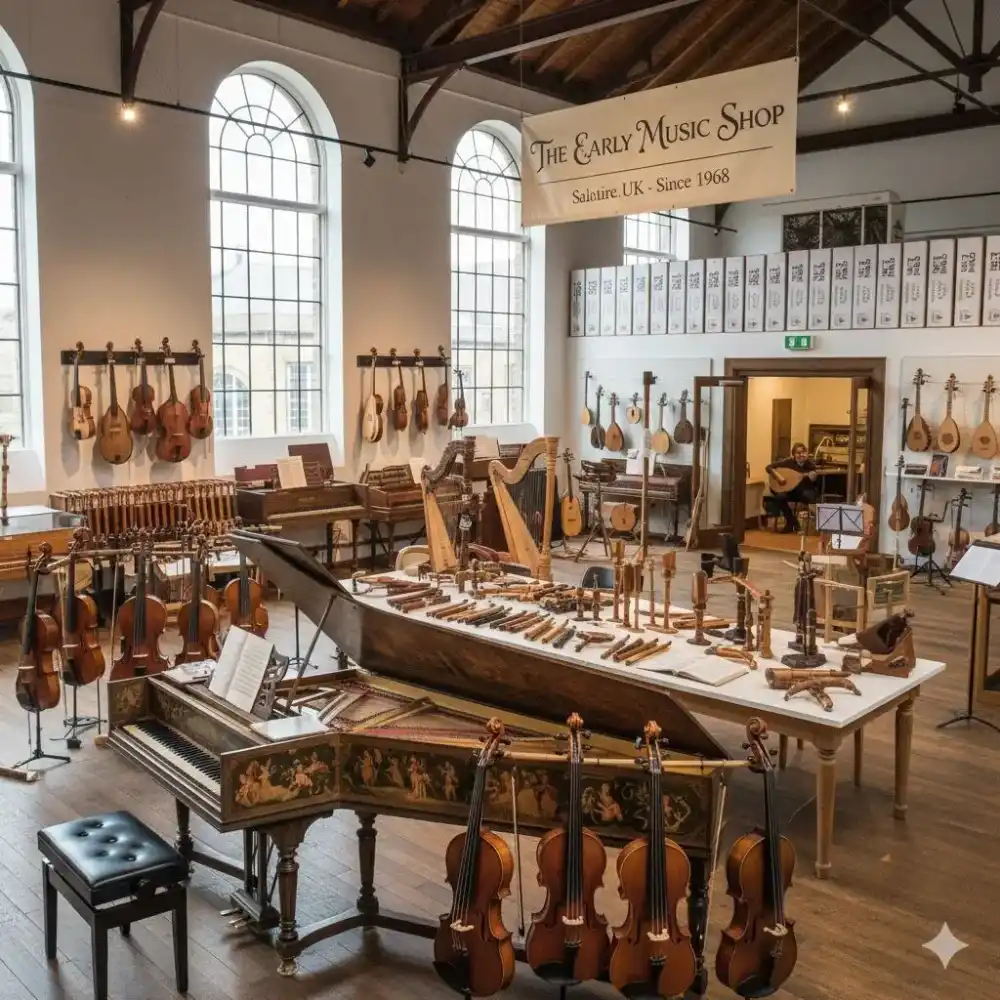
The primary draw for any visitor to the Saltaire or Snape showrooms is the staggering breadth of the inventory. The Early Music Shop specializes in reproduction historical instruments, ensuring that modern players can access the same tactile and auditory experiences as musicians from centuries past.
1. Woodwind & Recorders
As an official UK distributor for world-renowned makers like Moeck, Küng, and Mollenhauer, the shop houses the largest collection of recorders in the United Kingdom. Whether you are seeking a plastic student model or a professional-grade sub-bass recorder in exquisite boxwood or rosewood, the selection is unmatched. Beyond recorders, the woodwind department features:
-
Crumhorns and Cornamusen: Essential for Renaissance consort music.
-
Baroque Oboes and Flutes: Crafted to the exact specifications of 18th-century originals.
-
Chalumeaux and Shawms: Capturing the raw, vibrant tones of earlier eras.
2. The Lute and Plucked String Family
The lute was once the most popular instrument in Europe, and The Early Music Shop has been instrumental in its modern return. They offer everything from 6-course Renaissance lutes to massive 14-course theorbos. For those entering the world of early strings, their "Heritage" range provides an accessible entry point without sacrificing historical accuracy.
3. Early Keyboards
A harpsichord is a centerpiece of any Baroque ensemble. The shop is a dedicated agent for Bizzi Clavicembali, Italy’s premier maker of harpsichords and spinets. From portable virginals to double-manual concert harpsichords, these instruments are prized for their responsive action and crystalline tone.
4. Viols and Bowed Strings
The Viola da Gamba (or viol) requires a different approach than the modern violin family. The shop provides viols in all sizes—treble, tenor, and bass—supporting the rich tradition of English consort music.
Beyond Retail: The Holistic Musical Ecosystem
What truly distinguishes The Early Music Shop from a standard music retailer is its commitment to the lifecycle of the instrument and the development of the player.
The Specialist Repair Workshop
Instruments made of natural materials like wood and gut are sensitive to climate and wear. The shop’s dedicated workshop, led by master technicians like Barry Holder, provides world-class servicing. From re-voicing recorders to re-stringing harpsichords and repairing delicate viol bridges, the technical expertise available ensures that these valuable investments remain in peak playing condition.
The "Approval Service": Try Before You Buy
Purchasing a high-end period instrument is a deeply personal decision. Recognizing this, the shop offers a unique Approval Service. This allows customers to have instruments shipped to their homes for a trial period. This "try-before-you-buy" philosophy ensures that the instrument's tone and ergonomics perfectly suit the player’s individual style and environment.
Second-Hand Agency and Hire
For students or those looking for a specific vintage character, the shop operates a specialist second-hand agency. They curate a revolving stock of previously owned instruments, each vetted for quality. Additionally, their instrument hire program makes expensive items like harpsichords or baroque cellos accessible for short-term projects or educational trials.
Showrooms in Iconic Locations
The physical presence of The Early Music Shop is as historic as its stock.
-
Saltaire (West Yorkshire): Located inside the massive Salts Mill, a Victorian masterpiece within a UNESCO World Heritage site. The soaring ceilings and stone walls provide an acoustic environment that perfectly complements early instruments.
-
Snape Maltings (Suffolk): Situated at the home of the Aldeburgh Festival, this showroom serves the vibrant musical community of East Anglia and London-based professionals seeking a coastal retreat for instrument testing.
Education and Community
The shop serves as a hub for Early Music Education. With on-site tuition rooms, they host regular lessons from professional tutors. They are also the primary organizers of the London International Festival of Early Music (LIFEM), an annual event that draws exhibitors and performers from across the globe, reinforcing the shop’s role as the heartbeat of the international early music scene.
Preserving Musical Heritage
In a world of mass-produced, digital sound, The Early Music Shop offers something tangible and timeless. By providing the instruments, the knowledge, and the technical support required for period performance, they ensure that the music of the Medieval, Renaissance, and Baroque eras is not just a museum piece, but a living, breathing art form. Whether you are a professional lutenist or a child picking up their first recorder, the Early Music Shop welcomes you into a community defined by a shared passion for history and harmony.
Frequently Asked Questions
1. Where is The Early Music Shop located?
The main headquarters and showroom are in Salts Mill, Saltaire, West Yorkshire. There is also a second showroom at Snape Maltings, Suffolk.
2. Can I try an instrument before I buy it?
Yes. The shop offers a specialized Approval Service where you can test instruments at home for a set period before committing to the purchase.
3. Do you ship internationally?
Absolutely. The Early Music Shop provides global shipping with expert packaging to ensure delicate historical instruments arrive safely anywhere in the world.
4. What brands of recorders do you stock?
They are official distributors for major brands including Moeck, Mollenhauer, Küng, and Paetzold, alongside their own exclusive Triebert range.
5. Do you sell second-hand instruments?
Yes, there is a dedicated second-hand agency that sells pre-owned harps, recorders, viols, and keyboards on behalf of clients.
6. Can I get my instrument repaired at the shop?
Yes. They have an on-site repair workshop specializing in woodwind, strings, and keyboard servicing and restoration.
7. Is there a way to finance an expensive instrument?
The shop offers various payment options, including specialist musical instrument finance and schemes like "Take it Away" to help make instruments more affordable.
8. Do you sell instrument kits?
Yes, they are famous for their EMS Kits, which allow enthusiasts to build their own harps, lutes, and small percussion instruments.
9. Who founded The Early Music Shop?
The shop was founded in 1968 by Richard Wood, a key figure in the UK’s early music revival.
10. Do you provide music lessons?
Yes, they offer on-site tuition in Saltaire for various instruments, including the recorder, viol, and lute, taught by professional musicians.
Top Categories
- Business Services 137
- Educational Services 93
- Event Organiser 45
- Health and Wellbeing 17
- Advertising Agencies 16
- Home and Garden 13
- Automotive 13
- Manufacturing Services 8
- Engineering 8
- Entertainment Services 5
- Legal Services 4
- Financial Services 4
- Gardening Services 4
- Accountants 2
- Cleaning Services 2
Top Viewed Articles

Spread the Word
Know someone who would love this? Share it with them!