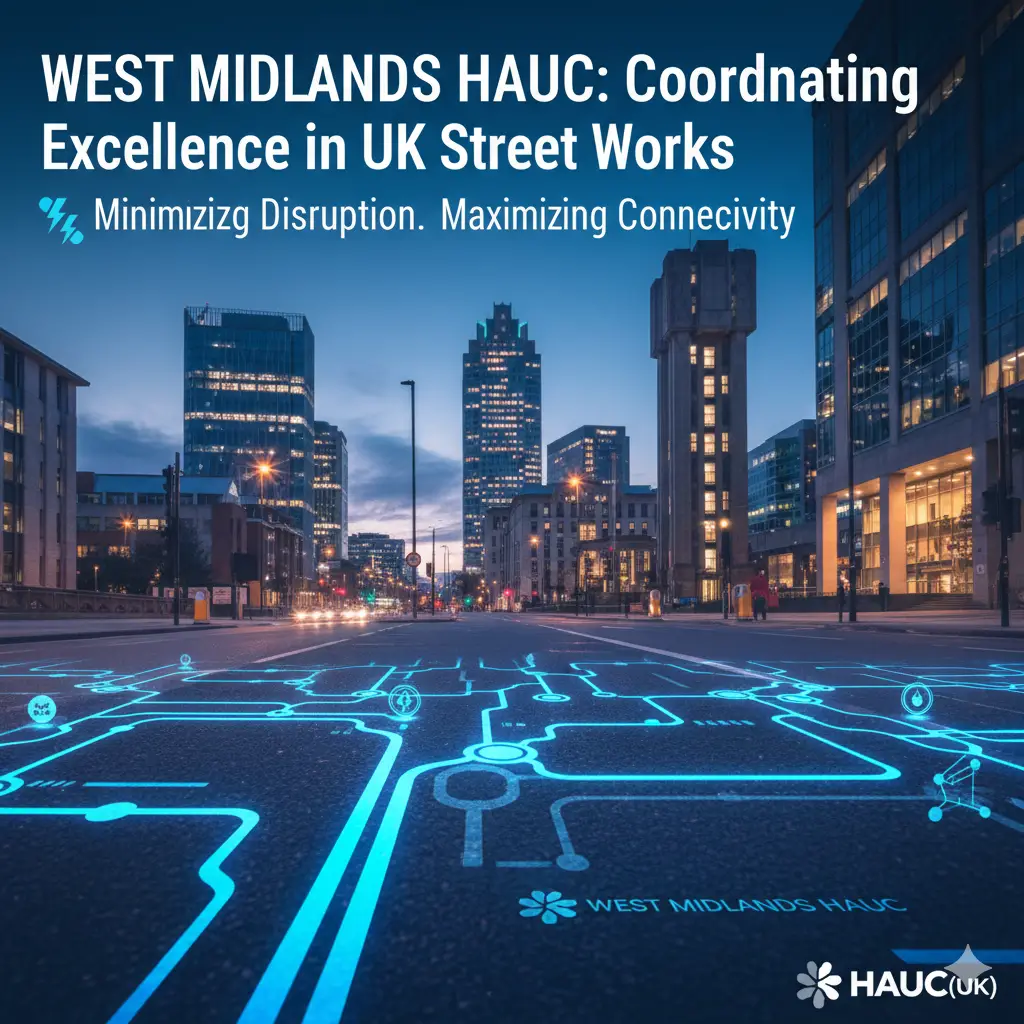
In the bustling heart of the United Kingdom, the West Midlands serves as a critical junction for the nation’s transport and utility networks. Beneath the surface of Birmingham’s iconic streets and across the sprawling regional highway network lies a complex web of water pipes, gas mains, electricity cables, and high-speed fiber optics. Managing the maintenance of this essential infrastructure while keeping the region mobile is a monumental task. At the center of this logistical challenge is West Midlands HAUC (Highway Authorities and Utilities Committee).
Established as a vital regional body under the national HAUC(UK) framework, West Midlands HAUC is the primary platform for cooperation between those who maintain the roads and those who dig them up. Since its inception in 1991, following the landmark New Roads and Street Works Act (NRSWA), the committee has turned logistical conflict into coordinated success.
The Mission: Minimizing Disruption, Maximizing Connectivity
The core mission of West Midlands HAUC is simple yet profound: to facilitate effective communication between highway authorities and utility companies. In a region as economically significant as the West Midlands, a single poorly timed street work project can cause a ripple effect of congestion, impacting thousands of commuters, local businesses, and emergency services.
By providing a structured environment for strategic planning, West Midlands HAUC ensures that essential infrastructure repairs—from routine maintenance to emergency leak fixes—are conducted safely and efficiently. The goal is to minimize the "dig once" philosophy, encouraging different utility providers to share trenches and coordinate schedules, thereby protecting the structural integrity of the public highway.
A Legacy of Legislation: NRSWA and the Birth of Coordination
The year 1991 marked a turning point for UK infrastructure with the implementation of the New Roads and Street Works Act (NRSWA). Before this, the relationship between local councils (Highway Authorities) and utility providers (Statutory Undertakers) was often fragmented. NRSWA provided the first robust legislative framework to manage these interactions.
West Midlands HAUC was established as part of the National HAUC(UK) initiative to translate this national legislation into regional action. For over three decades, the committee has evolved alongside the law, incorporating updates from the Traffic Management Act 2004 and modern permit schemes that allow authorities to have greater control over when and where works take place.
The Pillars of West Midlands HAUC Operations
Our value proposition is built on four distinct pillars: Technical Expertise, Legislative Compliance, Strategic Planning, and Dispute Resolution.
1. Technical Expertise and Reinstatement Standards
The longevity of a road depends heavily on how it is repaired after an excavation. West Midlands HAUC champions the Specification for the Reinstatement of Openings in Highways (SROH). By ensuring that all members adhere to high technical standards, the committee prevents premature road failure, reducing the long-term cost to the taxpayer and preventing the recurring "pothole cycle" often caused by substandard utility patches.
2. Legislative Guidance and NRSWA Compliance
Navigating UK highway law is complex. West Midlands HAUC provides a central hub for legislative guidance, ensuring that all regional stakeholders understand their duties under the law. This includes the management of "Noticing" and "Permitting," where utilities must provide advance warning of works, allowing the authority to assess the impact on traffic flow.
3. Strategic Regional Planning
Operating out of Birmingham, the committee oversees a diverse geography, from the dense urban center of the city to the surrounding boroughs. Strategic planning involves looking at the "big picture"—ensuring that major projects like HS2 integration, local council road improvements, and utility upgrades do not clash. This authority-led data approach allows for a "birds-eye view" of the regional network.
4. Technical Dispute Resolution
With so many stakeholders involved, disagreements are inevitable. Whether it is a dispute over the quality of a reinstatement or a conflict regarding a permit refusal, West Midlands HAUC provides a neutral ground for resolution. By avoiding costly legal battles through technical mediation, the committee saves time and resources for both the public and private sectors.
Stakeholder Synergy: Local Councils and Major Utilities
West Midlands HAUC brings together a prestigious list of stakeholders. This includes local authorities such as Birmingham City Council, Dudley, Sandwell, Solihull, Walsall, and Wolverhampton, alongside major utility giants in the water, gas, electricity, and telecommunications sectors.
Through regular meetings and seminars, these diverse groups share best practices. For example, during the rollout of 5G and gigabit broadband, the committee played a crucial role in coordinating the massive influx of telecommunications street works, ensuring that the digital future of the Midlands did not come at the cost of its physical mobility.
Sustainability and Innovation in Traffic Management
As the UK moves toward Net Zero, West Midlands HAUC is increasingly focused on Infrastructure Sustainability. This involves promoting "low-dig" or "no-dig" technologies, such as robotic pipe repairs and directional drilling, which significantly reduce the carbon footprint of street works and minimize surface disruption.
Furthermore, the committee leverages modern Traffic Management Systems. By utilizing real-time data and authority-led insights, we help implement smarter diversions and better signage, ensuring that pedestrians and cyclists—not just motorists—are protected during works.
Business Amenities and Professionalism
Based at 1 Lancaster Circus in Birmingham, near Aston University, the West Midlands HAUC headquarters is equipped to facilitate high-level coordination. Our facilities include:
-
Advanced Video Conferencing: Enabling remote coordination with national HAUC(UK) and JAG(UK) bodies.
-
Technical Seminars: Hosting industry-leading events on legislative changes and new materials.
-
Safe Environment: With 24/7 CCTV and secure parking, we provide a professional hub for regional infrastructure leaders.
Securing a More Mobile Future
West Midlands HAUC is more than just a committee; it is a vital safeguard for the region’s economic and social vitality. By turning logistical challenges into coordinated successes, we ensure that the lights stay on, the water keeps flowing, and the roads remain open. As we look toward the future, we remain dedicated to the principles of cooperation, compliance, and excellence, securing a connected landscape for the United Kingdom.
Frequently Asked Questions
1. What exactly does West Midlands HAUC do?
We coordinate street works between highway authorities (councils) and utility companies (gas, water, electric, telecoms) to minimize road disruption and ensure work is done safely and legally.
2. How does HAUC benefit the average road user in Birmingham?
By ensuring works are coordinated, we prevent the same road from being dug up multiple times in a short period and help manage traffic flow to reduce congestion caused by roadworks.
3. What is NRSWA?
The New Roads and Street Works Act 1991 is the primary legislation that governs how utilities carry out work on public roads. It sets the standards for safety, noticing, and road repair.
4. How can a utility company join or contact West Midlands HAUC?
Utility companies and highway authorities can reach out to our secretary at [email protected] or call our helpdesk at +44 (0)121 303 6644.
5. Where is the West Midlands HAUC headquarters located?
We are located at 1 Lancaster Circus, Queensway, Birmingham, B4 7DJ, United Kingdom, near the Birmingham City Council offices and Aston University.
6. Does West Midlands HAUC handle emergency road repairs?
While we don't carry out the repairs ourselves, we provide the legislative framework and communication channels that allow utilities to respond to emergencies (like burst water mains) while informing the highway authority immediately.
7. What are the working hours for the HAUC helpdesk?
Our professional helpdesk and administrative offices operate Monday through Friday, from 9:00 AM to 5:00 PM.
8. Is West Midlands HAUC a government agency?
We are a regional committee operating as part of the national HAUC(UK) framework, representing a partnership between local government (Highway Authorities) and private/public utilities.
9. What payment methods are accepted for seminars or services?
We typically accept Bank Transfers and Corporate Invoicing for any professional seminars or technical dispute resolution services offered.
10. How do you ensure road repairs (reinstatements) are of good quality?
We follow the SROH (Specification for the Reinstatement of Openings in Highways), which provides strict technical standards for materials and methods used to fix the road after digging.
Top Categories
Top Viewed Articles
-
 Nottingham Trent University: Reimagining Higher Education
Apr 06 122
Nottingham Trent University: Reimagining Higher Education
Apr 06 122 -
Event Partners Ltd: Global B2B Exhibition Experts
Apr 08 114
-
Top Rated and Most Reliable Parking in London
Jul 09 114
-
Top Rated and Most Reliable Dentists in London
Jul 20 109
-
Top Rated and Most Reliable Doctors in London
Jul 20 102



Spread the Word
Know someone who would love this? Share it with them!