
Benefits of Video Tutorials for Electrical Service Customers
- 👤 Alex
- 👁️ 186 Views
- Last Updated: April 23, 2026
- 🏷️ Electricians
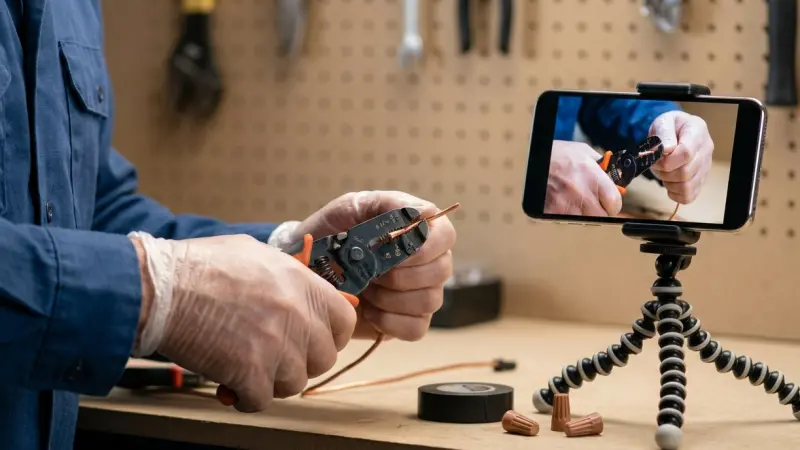
In an era where homeowners are increasingly looking for ways to manage their properties more efficiently, the medium of video has emerged as a cornerstone of communication. For the electrical services sector, providing high-quality visual guidance is no longer just a marketing "extra"—it is a critical tool for building trust, ensuring safety, and enhancing the overall customer journey.
The primary Benefits of Video Tutorials for Electrical Service Customers lie in their ability to demystify complex technical concepts, provide immediate value during minor household issues, and establish a professional electrician as a helpful authority before a tool is ever lifted.
What are Electrical Service Video Tutorials?
Electrical service video tutorials are short, professionally produced or authentic "on-the-job" videos designed to educate homeowners and commercial clients. These videos typically cover "low-risk" tasks—such as resetting a tripped RCD (Residual Current Device), identifying a faulty lightbulb, or understanding how a smart thermostat interface works.
Unlike generic DIY videos, these tutorials are often branded by local electrical firms to guide their specific client base through common queries. They serve as a bridge between a customer’s problem and a professional’s solution, focusing on clarity, safety, and the "what to do next" steps.
Why Video Tutorials Matter in the UK Electrical Market
The UK home improvement market was valued at approximately £30 billion in 2024. Despite this massive spend, a significant "confidence gap" exists. Research from YouGov suggests that while 85% of UK adults feel capable of painting a room, only about 25% would feel comfortable attempting minor electrical work.
Video tutorials matter because they address this hesitation directly. They provide a "safety-first" framework that informs the customer when a task is a simple fix and, more importantly, when it is time to call a Part P certified professional. In the UK, strict building regulations mean that most electrical work must be certified; video content helps educate the public on these legal requirements, protecting them from accidental law-breaking or insurance invalidation.
Key Benefits of Video Tutorials for Electrical Service Customers
1. Enhanced Visual Learning and Retention
Statistics show that 72% of people prefer video over text when learning a new task. In the electrical world, where wiring diagrams and fuse box layouts can be intimidating, the ability to see a real-life demonstration is invaluable. Viewers retain approximately 95% of a message when they watch it in a video, compared to just 10% when reading it in a manual.
2. Immediate Problem Solving and "Triaging"
When a customer’s power goes out at 9 PM on a Tuesday, their first instinct is panic. A tutorial titled "How to Check Your Consumer Unit After a Power Cut" provides immediate relief. By helping the customer identify if the issue is a local trip or a wider grid failure, the electrical firm provides a service before the contract even begins.
3. Establishing "Expert-Level" Trust
Trust is the currency of the trade industry. Video allows a customer to "meet" the electrician virtually. Seeing a professional’s face, hearing their tone, and observing their organized approach to a task humanizes the business. This transparency reduces the "rogue trader" anxiety that many UK homeowners feel when hiring a new contractor.
4. Safety First: Defining the "DIY Limit"
Perhaps the most significant benefit is the promotion of safety. Professional videos can explicitly state: "You can safely change this faceplate, but you MUST NOT attempt to rewire this circuit yourself." This guidance saves lives and prevents the 1,000+ electrical accidents reported annually in UK workplaces and homes.
5. Transparency in Pricing and Process
Many customers fear the "hidden costs" of electrical work. Video tutorials that explain why an EICR (Electrical Installation Condition Report) takes four hours and what the electrician is actually looking for help justify the professional fees. When a customer understands the process, they are more likely to accept a quote without friction.
Step-by-Step Guide: Creating High-Impact Video Content
If you are an electrical business looking to implement this strategy, follow this UK-centric framework:
-
Identify "Low-Risk" Pain Points: Start with tasks that are legal for homeowners to perform under Part P (e.g., changing a plug fuse or resetting a breaker).
-
Focus on the "Why": Explain not just how to flip a switch, but why it tripped in the first place (e.g., overloading a circuit with a kettle and a toaster).
-
Use "UK Standard" Visuals: Ensure the consumer units and wiring colours shown match current UK standards (Brown/Blue/Green-Yellow), not outdated or international systems.
-
The "Call to Action" (CTA): Every video should end with a clear instruction on when the DIY ends and the professional service begins.
Best Strategies and Tips for Success
-
Mobile-First Design: Most customers will be watching your video on a smartphone while standing in a dark hallway near their fuse box. Ensure the lighting in your video is bright and the audio is crystal clear.
-
Utilize QR Codes: A brilliant strategy for UK electricians is to stick a small QR code on the side of a newly installed consumer unit. When the customer has a trip, they scan the code and are taken directly to your "How to Reset" video.
-
Localize Your Content: Mention specific areas you serve (e.g., "Helping homeowners in Manchester stay safe"). This boosts local SEO and makes the content feel more relevant.
-
Safety Disclaimers: Always include a scrolling text disclaimer or an opening slide stating that electricity is dangerous and the video is for informational purposes only.
Common Mistakes to Avoid
-
Encouraging Illegal DIY: Never show a tutorial for work that requires a Building Regulations compliance certificate unless you are speaking to other professionals.
-
Over-Complicating the Script: Avoid "trade-speak." Instead of saying "Low Voltage Directive compliance," say "keeping your home up to modern safety standards."
-
Ignoring the "Search Intent": If someone searches for "why is my light flickering," they want an answer, not a 5-minute sales pitch about your company's history. Give the value first, then the pitch.
-
Poor Audio Quality: In a technical tutorial, if the customer can't hear your explanation
over the sound of background traffic or drilling, they will click away.
Future Trends: The Evolution of Video in Electrical Services
As we move toward 2030, the electrical industry is undergoing a digital transformation. We expect to see three major shifts:
-
Augmented Reality (AR) Tutorials: Customers will soon use their phones to "overlay" digital instructions onto their physical fuse boxes, guided by pre-recorded professional video prompts.
-
AI-Personalized Video: AI tools will allow firms to generate personalized "video quotes" where an electrician explains a specific fault found during an inspection using video snippets.
-
Smart Home Integration: As the UK shifts toward EV charging and heat pumps, video tutorials will focus heavily on managing "Energy Dashboards" and IoT (Internet of Things) electrical devices.
-
Sustainability Focus: Video content will increasingly focus on "Retrofitting" rather than replacing—showing customers how to make older UK homes energy-efficient.
Supporting Local Business Visibility Beyond Core Marketing Efforts
While high-quality video content drives engagement, a holistic digital strategy requires a foundation of discoverability. For UK electricians, business discoverability is enhanced when your digital footprint extends beyond your own website. Using a supporting visibility layer ensures that when a customer finishes a video tutorial and decides they need a pro, they can find your contact details instantly.
One of the most effective ways to build this local presence consistency is through reputable platforms. You should add business to directory uk to ensure your NAP (Name, Address, Phone number) data is synchronized across the web. This acts as a major credibility signal for search engines. When you explore a business directories uk list, you are essentially creating more "gateways" for customers to find your video content and services.
Furthermore, a business listing submission uk helps in trust reinforcement across platforms. Customers often look for a business directory with reviews uk to verify the quality of an electrician before booking. Being part of a top uk business directories network ensures that your business appears in "near me" searches, which are high-intent and high-conversion. Finally, joining a business network directory uk can help in building B2B relationships with contractors and property managers who require ongoing electrical maintenance.
UK electrical industry
Video tutorials are a transformative tool for the UK electrical industry. They empower the customer, reduce unnecessary call-outs for minor issues, and—most importantly—build a bridge of trust that leads to long-term commercial loyalty.
By combining educational value with a strong local presence, electrical firms can secure their place in the future of the trade.
Ready to grow your local presence? Start by ensuring your business is found where customers are looking. Submit business listing uk today to enhance your visibility.
FAQs Section
Q1: Is it legal to provide electrical DIY tutorials in the UK?
A1: Yes, as long as the tutorials do not encourage the viewer to perform "notifiable work" as defined by Part P of the Building Regulations without proper certification.
Q2: How long should a typical electrical service video be?
A2: For maximum engagement, aim for 90 seconds to 3 minutes. Focus on one specific problem and one specific solution per video.
Q3: Does video content really help with SEO for electricians?
A3: Absolutely. Google prioritizes pages with video content, and YouTube (the world’s second-largest search engine) provides a massive platform for local discovery.
Q4: What equipment do I need to start making tutorials?
A4: A modern smartphone with a good camera, a clip-on microphone (Lavalier), and a simple tripod are enough to produce professional-looking "on-site" content.
Q5: Should I show the "ugly" side of the job in my videos?
A5: Yes! Showing "behind-the-scenes" challenges and how you solve them (e.g., finding a burnt-out wire behind a socket) reinforces your expertise and authenticity.
Q6: How can I measure the ROI of my video tutorials?
A6: Track the number of "warm leads" who mention seeing your videos, monitor the reduction in "non-billable" phone queries, and check your website's "average time on page" metrics.
Disclaimer: The information provided in this article is for general informational and research purposes only. Company details, features, services, and market positions may change over time. Readers are advised to visit official company websites and conduct independent research before making any business decisions or purchasing services.
Most Searchable Keywords
Recent Blogs


Related Listings



Categories
- Accountants (295)
- Advertising Agencies (559)
- Architects (149)
- Automobiles (377)
- Beauty (300)
- Carpenters (146)
- Cleaning Services (387)
- Dentists (189)
- Driving (62)
- Education (1)
- Electricians (215)
- Energy (8)
- Event Organiser (689)
- Finance (602)
- Guide (3492)
- Health (2207)
- Information technology (207)
- Legal Services (361)
- Logistics (6)
- Maintenance (65)
Sponsored Listings in Electricians
Related Blogs

Creamfields Daresbury: Impact on Local Reside...
Read this insightful article "Creamfields Daresbury: Impact on Local Residents" to expand your knowledge!

UK High Street Businesses in 2026-27: Which S...
Read this insightful article "UK High Street Businesses in 2026-27: Which Sectors Are Growing?" to expand your knowledge!

Why Complete Business Listings Matter More Th...
Read this insightful article "Why Complete Business Listings Matter More Than You Think" to expand your knowledge!
Questions & Answers – Find What You Need, Instantly!
Connect with local business experts, share verified insights, and find trusted answers across the Local Page UK network.
Ask Community
Ask questions to the Local Page UK community
Share Knowledge
Share your knowledge to help out others
Find Solutions
Find answers or offer instant solutions
Some of the most popular fantasy TV shows include "Game of Thrones," known for its epic battles and political intrigue, "The Witcher," which features monster hunting and magic, and "Stranger Things," blending supernatural elements with 1980s nostalgia. Other notable mentions are "His Dark Materials," "Shadow and Bone," and "The Mandalorian," each offering unique worlds and captivating storytelling that have garnered large fan bases.
When seeking bathroom renovation providers that handle both plumbing and tiling, it's advisable to look for licensed contractors who specialize in comprehensive bathroom remodels. Companies such as Home Depot, Lowe's, and Bath Fitter offer these services, often providing a seamless experience by managing all aspects of the renovation process. Additionally, local contractors with positive reviews in platforms like Angie's List or Houzz may also offer tailored solutions for your bathroom needs.
Absolutely, there are several distributors that supply crash mats and soft play equipment to gymnastics clubs in and around Birmingham. National companies like Gymnova, S & G (Spieth Gymnastics), and Jaques of London offer a wide range of crash mats, foam pits, and soft play pieces, and they typically deliver to the Birmingham area. For more local options, you might try The Gym Equipment Company, which has a showroom in the West Midlands, or check out smaller specialist suppliers like Playtime UK. Many of these distributors cater specifically to clubs, offering high-density foam mats that meet safety standards. I'd recommend reaching out to a few to compare pricing, delivery times, and whether they offer custom sizes or installation services. It's also worth checking if any of them have a physical showroom near Birmingham so you can test the equipment before buying. Happy tumbling!
For professionals seeking a reliable sanitaryware supplier in Manchester with trade account facilities, several established merchants combine extensive product ranges, competitive pricing, and dedicated trade support. The most reputable option is Graham Plumbers Merchant, which operates multiple branches across Manchester, including Salford Quays and Oldham. They offer a dedicated trade account service with preferential pricing, priority delivery scheduling, and access to a vast inventory of leading sanitaryware brands such as Villeroy & Boch, Duravit, Ideal Standard, and Roca. Their trade accounts typically include net 30-day payment terms, online account management, and a tailored project quotation system. Similarly, City Plumbing Supplies has several Manchester-based depots (such as Ashton-under-Lyne and Stockport) that cater specifically to trade customers, providing a rapid order-and-collect service, trade-only promotions, and a loyalty programme offering rebates on repeat purchases. Their product range covers everything from basins and WCs to complete bathroom suites and brassware, with in-house technical advisors available for specification support. Another key player is Plumb Center, part of the Wolseley Group, which offers trade accounts with bespoke pricing structures, direct-to-site deliveries within the Greater Manchester area, and access to over 10,000 lines of sanitaryware, including premium brands like Grohe and Hansgrohe. Their trade portal allows for real-time stock checking and order history tracking, facilitating efficient project management. For those seeking a more specialist or high-end option, Bathroom Spares in Manchester provides trade accounts with a focus on hard-to-find sanitaryware and discontinued ranges, which can be invaluable for refurbishment projects. Additionally, independent merchants such as M&B Plumbase in Trafford Park offer flexible trade terms, personalised service, and competitive pricing on both mainstream and luxury sanitaryware. When evaluating suppliers, trade customers should consider factors beyond price: reliability of stock availability, delivery timescales within Manchester’s often congested zones, clarity of returns policies, and the quality of after-sales support for warranty claims. It is advisable to request a trade account application from at least two to three suppliers to compare discounts, minimum order values, and payment terms. Many suppliers also offer showroom access for trade clients, allowing you to inspect finishes and dimensions before committing to large orders. For ongoing projects, establishing a relationship with a single supplier who offers consolidated invoicing and dedicated account management can streamline procurement. Ultimately, the most reliable supplier for your trade account in Manchester will be one that aligns with your volume requirements, preferred brands, and service expectations, so a site visit to their local branch and a discussion about your specific trade needs is highly recommended before committing to an account.
People in Leeds are loving their local florists—customers often mention gorgeous, fresh arrangements and super friendly service. Many rave about reliable same-day delivery and creative wedding bouquets. A few note pricing can vary, but overall, the buzz is all about quality and that personal touch making every order feel special.
Common problems for commercial gardening in Bristol include weed overgrowth, soil degradation, pest infestations, and irrigation malfunctions. Additionally, managing seasonal transitions, adhering to sustainability regulations, and maintaining consistent aesthetics pose significant challenges. Expert services mitigate these via structured maintenance, integrated pest management, and soil analysis to ensure long-term landscape health.