
Creamfields Daresbury: Impact on Local Residents
- 👤 Ryan Reynolds
- 👁️ 15 Views
- Last Updated: August 26, 2026
- 🏷️ Event Organiser
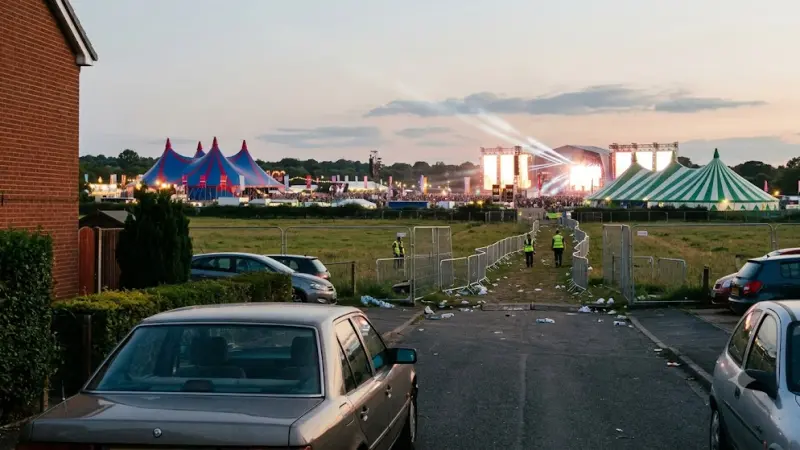
When assessing the commercial ecosystem of UK mega-events, one of the most complex case studies is Creamfields Daresbury: Impact on Local Residents. As one of the premier electronic dance music festivals globally, drawing upwards of 80,000 attendees to the rural Cheshire countryside each August Bank Holiday, the logistical undertaking is staggering. For B2B suppliers, agencies, and local authorities, this event is not just a cultural phenomenon; it is a multi-million-pound theatre of operations demanding elite procurement and execution. This comprehensive commercial guide unpacks the vendor requirements, infrastructure demands, and supply chain strategies required to balance a world-class entertainment product with the stringent requirements of local community preservation.
The transformation of Daresbury and surrounding parishes like Hatton, Moore, and Walton from tranquil villages into a temporary high-density metropolis creates profound friction points. Consequently, mitigating the Creamfields Daresbury: Impact on Local Residents has become a highly lucrative sector for specialized UK B2B service providers. From advanced acoustic engineering to perimeter security and hyper-local traffic routing, the commercial opportunities for businesses that can solve these community impact challenges are immense.
Understanding Creamfields Daresbury: Impact on Local Residents in 2026
To understand the B2B procurement landscape, one must first quantify the disruption. The introduction of tens of thousands of vehicles, HGVs, and pedestrians into a rural road network designed for agricultural and local traffic creates a bottleneck that threatens local business continuity and resident mobility. Furthermore, the sonic footprint of multiple high-decibel outdoor stages operating late into the night requires robust, technologically advanced management.
For commercial directors and public sector planners, analyzing this impact is less about the music and entirely about risk management, local authority compliance, and supply chain resilience. The festival organisers (Live Nation/Cream) must inject massive capital into local mitigation, creating a diverse matrix of commercial procurement opportunities for UK-based contractors.
The Scale of the B2B Operation
The mitigation strategy is not handled in-house; it is entirely outsourced. The event relies on a vast network of tier-one and tier-two contractors. If you are a UK business operating in event logistics, civil engineering, private security, or environmental services, understanding the KPIs demanded by festivals of this scale is crucial for market positioning. The primary goal of these contracts is simple: ensure the event remains legally compliant and socially tolerable for the local electorate.
Critical Sector 1: Traffic Management Planning and Highway Logistics
Perhaps the most visible and heavily scrutinised aspect of the festival is its impact on the local road network, specifically the A56, M56 (Junction 11), and the myriad of narrow country lanes bordering the site.
The B2B Traffic Management Supply Chain
The requirement for traffic management planning goes far beyond placing a few traffic cones. It involves months of CAD-designed routing, consultation with Cheshire Constabulary, and the deployment of extensive physical infrastructure.
Procurement Opportunities in Traffic Mitigation:
-
Temporary Traffic Regulation Orders (TTROs) Consultancy: Agencies specialising in drafting and securing the legal permissions to close local roads to non-residents.
-
Variable Message Signage (VMS) Suppliers: The rental and programming of mobile LED signage on the M56 and M62 corridors to route festival traffic away from residential bottlenecks.
-
ANPR (Automatic Number Plate Recognition) Integration: To enforce resident-only access zones, B2B technology providers supply temporary ANPR cameras linked to local authority databases to ensure only approved vehicles can enter specific villages like Hatton and Moore during the egress phase.
-
Physical Barrier and HVM (Hostile Vehicle Mitigation) Providers: Supplying temporary concrete barriers and automated access gates to physically prevent festival traffic from rat-running through rural lanes.
Evaluating Traffic Management Providers
When event organizers tender contracts for traffic mitigation, they evaluate suppliers based on rapid deployment capabilities and real-time adaptability. A traffic plan that looks good on paper often fails when 10,000 cars arrive simultaneously. Providers must offer dynamic control rooms capable of overriding traffic light sequencing on the A56 in conjunction with National Highways.
Critical Sector 2: Advanced Noise Mitigation Strategies
Electronic dance music is defined by low-frequency bass, which travels significantly further than mid-to-high frequencies and penetrates residential structures with ease. Consequently, noise mitigation strategies are a critical compliance requirement dictated by Halton Borough Council’s environmental health department.
The Technology of Sound Containment
The B2B sound engineering sector has evolved rapidly to meet these challenges. It is no longer acceptable to simply turn the volume down; organizers must deploy targeted acoustic solutions.
-
Directional Audio Arrays: Audio-visual suppliers are contracted to provide highly specialized line-array PA systems. These systems use complex phase-cancellation algorithms to "steer" sound directly into the crowd and drastically reduce the audio spill bleeding over the perimeter fence toward Daresbury village.
-
Real-Time Decibel Monitoring: B2B environmental software firms provide autonomous, solar-powered noise monitoring terminals placed in key residential gardens (with permission). These terminals stream live LAeq and low-frequency data back to the festival's event control. If a specific stage breaches the pre-agreed council limits, the software automatically alerts the sound engineers to pull the frequencies back.
-
Acoustic Fencing and Baffling: Suppliers of temporary mass-loaded vinyl barriers and shipping container walls are frequently contracted to build physical sound shadows around the most aggressive stages, protecting nearby properties.
Critical Sector 3: B2B Security Solutions and Perimeter Integrity
A major concern regarding the Creamfields Daresbury: Impact on Local Residents is the potential for trespass, anti-social behaviour, and
low-level crime spilling out of the festival footprint into the surrounding agricultural land and residential gardens.
Deploying a Multi-Tiered Security Apparatus
To combat this, the event procures thousands of hours of private security. This is not a homogeneous workforce; it is highly segmented, requiring different specialized B2B providers.
| Security Tier | B2B Provider Profile | Primary Role in Mitigating Resident Impact |
|
Tier 1: Close Protection & Response |
Highly trained, SIA-licensed tactical units. Often ex-military/police. |
Rapid deployment to perimeter breaches; liaising with Cheshire Police on organized crime/drugs; securing the outer cordon near residential zones. |
|
Tier 2: Asset & Perimeter Protection |
Canine (K9) units and mobile drone surveillance operators. |
Patrolling the miles of temporary fencing; using thermal imaging drones to spot trespassers cutting through local farmers' fields at night. |
|
Tier 3: Stewarding & Customer Service |
High-volume staffing agencies providing NVQ-trained event stewards. |
Managing the taxi ranks and shuttle bus queues to ensure rapid egress, preventing attendees from loitering in local villages. |
The Demand for Temporary Infrastructure Suppliers
Security personnel are ineffective without robust physical infrastructure. The procurement of temporary infrastructure suppliers is a multi-million-pound logistical feat.
To protect local land, B2B fencing contractors deploy miles of "Super Fortress" fencing (often 3 meters high, reinforced with anti-climb mesh and dug into the ground). Furthermore, lighting contractors must supply hundreds of super-silent, hybrid-generator tower lights to illuminate footpaths to the transport hubs, ensuring crowds do not wander into unlit residential areas. The use of hybrid or battery-powered generators is crucial to prevent the noise of the infrastructure itself from becoming a nuisance.
Critical Sector 4: Waste Management Contractors and Environmental Remediation
When 80,000 people camp in a field for four days, the resulting waste profile is akin to a small city. If this waste escapes the site—via windblown litter or illegal dumping—the impact on local residents and local agriculture is severe.
The Scope of Environmental Contracts
Event organizers tender massive contracts to commercial waste management contractors. These contracts are judged heavily on their ability to prevent off-site contamination and their commitment to event sustainability practices.
-
Off-Site Cleansing Teams: Contracts specifically mandate rapid-response litter picking teams dedicated exclusively to the surrounding villages and approach roads. These teams operate continuously, ensuring that residents do not wake up to streets littered with festival debris.
-
Liquid Waste and Sanitation: B2B sanitation providers are tasked with managing millions of litres of greywater and sewage. Procurement managers seek suppliers utilizing vacuum technology (similar to aircraft toilets) rather than traditional chemical toilets, as they vastly reduce odour pollution for nearby residents and limit the number of HGV tanker movements required on local roads.
-
Hazardous and Abandoned Waste: The post-event cleanup involves specialized contractors dealing with abandoned tents, sleeping bags, and potentially hazardous materials (like discarded nitrous oxide canisters). Innovative B2B firms that can triage this waste, diverting it from landfill to recycling or charity, win the most lucrative long-term contracts.
Critical Sector 5: Community Stakeholder Engagement and PR
Managing the narrative and maintaining open lines of communication with the local populace is a vital commercial function. Festivals hire specialized B2B public relations and community liaison agencies to handle community stakeholder engagement.
The Architecture of Local Liaison
These agencies operate on the front lines of the Creamfields Daresbury: Impact on Local Residents. Their services include:
-
The Resident Hotline: Establishing and staffing a 24/7 dedicated call centre during the event build, operational days, and breakdown. This requires B2B telecom providers to set up robust, recorded VoIP systems.
-
Pre-Event Town Halls: Organizing and moderating consultation meetings between the festival directors, local parish councils (Daresbury, Moore, Hatton), and the police.
-
Resident Ticketing and Compensation Management: Managing the distribution of complimentary tickets or compensation funds allocated to immediate neighbours to offset the disruption, requiring secure B2B digital ticketing software.
By outsourcing this function, the festival ensures that residents have a professional, accountable point of contact, which is often a strict condition of the premises licence granted by the local authority.
The Economic Equation: Local Economic Footprint vs. Disruption
While the physical impact on residents is heavily mitigated through the strategies outlined above, it is essential to analyze the local economic footprint. The narrative often pits the festival against the residents, but the commercial reality is more nuanced. The event injects tens of millions of pounds into the North West economy.
Opportunities for Regional B2B Suppliers
The sheer scale of large-scale event logistics means that bringing all suppliers from London or Birmingham is commercially unviable due to haulage costs and carbon reporting requirements. Consequently, the festival relies heavily on the regional supply chain.
-
Wholesale Food and Beverage: Regional breweries, local bakeries, and North West agricultural suppliers see a massive surge in B2B orders to supply the hundreds of catering units on-site.
-
Plant and Machinery Hire: Local firms supplying telehandlers, all-terrain forklifts, trackway (temporary metal roading), and golf buggies secure lucrative multi-week hire contracts during the build and break phases.
-
Local Accommodation and Hospitality: While residents may face traffic, local hotels, B&Bs, and corporate rental properties in Warrington, Runcorn, and Chester operate at 100% occupancy at premium rates, driven by the influx of thousands of B2B production staff, artists, and site crews.
The Role of Local Authority Compliance in Shaping B2B Demand
The entire B2B ecosystem surrounding Creamfields is dictated by the licensing conditions imposed by Halton Borough Council and the safety advisory group (SAG), which includes Cheshire Police, Fire and Rescue, and the NHS.
Navigating the Licensing Act 2003
Under the Licensing Act, local residents have the right to object to the event based on four key objectives: the prevention of crime and disorder, public safety, the prevention of public nuisance, and the protection of children from harm.
To ensure the licence is granted and retained year after year, event organizers must prove they have procured the best possible commercial solutions to address these objectives. If residents complain of unacceptable noise (public nuisance) or trespass (crime and disorder), the council can revoke the licence. Therefore, the B2B suppliers chosen for traffic, noise, and security are not just operational vendors; they are the shield that protects the festival's legal right to exist. This dynamic allows top-tier B2B suppliers to command premium pricing, as their failure directly jeopardizes a multi-million-pound enterprise.
Advanced Crowd Management Services and Egress Dynamics
One of the most critical periods for minimizing the Creamfields Daresbury: Impact on Local Residents is the egress phase—specifically Monday morning when up to 60,000 campers attempt to leave the site simultaneously.
Engineering the Exodus
Poorly managed egress results in thousands of pedestrians wandering rural roads and massive gridlock.
B2B crowd management services utilize advanced behavioral psychology and logistical engineering to control this flow.
-
Staggered Departure Systems: B2B software providers integrate with ticketing platforms to offer incentivized, pre-booked exit slots for vehicles, smoothing out the traffic curve over 12 hours rather than a 3-hour bottleneck.
-
Transport Hub Architecture: Temporary infrastructure suppliers construct massive, self-contained transport hubs on the festival periphery. These feature dedicated lanes for Hackney carriages, private hire vehicles, and national coach networks (like Big Green Coach). By keeping the transport infrastructure highly organized and contained within the site footprint, the spillover into Daresbury village is aggressively minimized.
-
Wayfinding and Illumination: Supplying high-visibility, temporary signage and PA systems to direct crowds efficiently away from residential boundaries and directly into the transport hubs.
The Future of Event Mitigation: Technology and Data
Looking toward the late 2020s, the B2B procurement landscape for mitigating local impact is becoming increasingly data-driven.
Predictive Analytics and AI in Event Management
We are seeing the integration of predictive analytics into large-scale event logistics. B2B software firms are developing AI models that ingest historical traffic data, weather forecasts, and real-time crowd density metrics (gathered via mobile phone MAC address sniffing or thermal cameras) to predict bottlenecks before they occur.
If an AI system predicts that the M56 junction is about to lock up, it can automatically trigger the VMS signs on the motorway to re-route incoming traffic, simultaneously alerting the on-the-ground traffic management teams to deploy manual overrides on local traffic lights. This proactive, data-led approach is the future of maintaining harmony between mega-events and local communities.
Evaluating B2B Partnerships for Large-Scale Events
For businesses looking to enter the supply chain for events like Creamfields, understanding the procurement criteria is vital. Contracts are rarely awarded based on price alone. The risk of failure is too high.
Key Procurement Criteria for Festival Suppliers
-
Proven Track Record in High-Stress Environments: Suppliers must demonstrate previous experience handling events with 50,000+ capacities. A traffic management company that excels at local 10k runs may lack the infrastructure for a four-day mega-festival.
-
Scalability and Redundancy: Equipment fails. Staff call in sick. B2B suppliers must prove they have massive redundancy. If a primary generator powering the security lighting on a resident perimeter fails, the supplier must have a backup running within minutes.
-
Commitment to Event Sustainability Practices: As local authorities push for Net Zero, B2B suppliers must provide carbon reporting. Waste contractors who guarantee zero-to-landfill, or lighting suppliers utilizing HVO (Hydrotreated Vegetable Oil) rather than diesel, have a significant competitive advantage in the tender process.
-
Integration Capabilities: Suppliers cannot operate in silos. The security contractor must integrate seamlessly with the traffic management contractor and the local police. B2B firms that utilize open-API software and demonstrate strong multi-agency communication skills are highly prized.
By deeply integrating specialized B2B services, the organizers of large-scale events can transform the narrative. What begins as a massive logistical intrusion can be managed, contained, and mitigated, ensuring that the cultural and economic benefits of the festival can coexist with the daily lives of the local residents. The commercial ecosystem built around this mitigation is a testament to the innovation and capability of the UK's event supply chain.
Frequently Asked Questions
1. How do B2B traffic management companies prevent festival attendees from parking in local residential areas like Daresbury and Moore?
B2B traffic management firms implement a multi-layered approach. They secure Temporary Traffic Regulation Orders (TTROs) to legally close residential roads to non-residents. They enforce these closures using physical barriers, manned security checkpoints, and increasingly, temporary ANPR (Automatic Number Plate Recognition) camera systems that cross-reference vehicle plates with a pre-approved resident database, ensuring strict compliance.
2. What technology do sound engineering firms use to minimize the noise impact on Daresbury residents?
Modern noise mitigation relies on advanced B2B technology. Audio suppliers use directional line-array speaker systems that focus sound tightly into the crowd area and use phase cancellation to prevent low-frequency bass from bleeding outward. Furthermore, environmental software companies deploy remote decibel monitoring stations in residential areas, which stream live data to the festival's control room, allowing engineers to dynamically adjust frequencies if council limits are approached.
3. What commercial opportunities exist for local B2B suppliers during the Creamfields festival?
While national tier-one contractors handle major infrastructure, the local economic footprint is massive for regional B2B suppliers. Opportunities include wholesale food and beverage supply, local plant and machinery hire (forklifts, trackway), specialized local waste management, aggregate and hardcore suppliers for temporary roads, and localized transport and logistics services.
4. How do event organizers ensure that waste management contractors actually clean up the surrounding villages?
Event organizers utilize highly specific, KPI-driven procurement contracts. Waste management contractors are contractually obligated to provide dedicated, off-site cleansing teams that operate independently of the on-site cleanup crew. These teams patrol the local parishes, approach roads, and hedgerows daily. Failure to meet these cleanliness standards can result in severe financial penalties for the B2B supplier and threatens the festival's licence with the local authority.
5. Why is 'community stakeholder engagement' usually outsourced to B2B PR agencies rather than handled in-house by the festival?
Outsourcing to specialized B2B PR and liaison agencies provides a dedicated, professional, and often independent point of contact for local residents. These agencies have the infrastructure to run 24/7 resident hotlines, organize structured town hall meetings, and manage complex ticket or compensation distributions. This ensures residents feel heard and managed efficiently, which is a critical component of maintaining local authority compliance and securing future event licences.
Disclaimer: The information provided in this article is for general informational and research purposes only. Company details, features, services, and market positions may change over time. Readers are advised to visit official company websites and conduct independent research before making any business decisions or purchasing services.
Most Searchable Keywords
Recent Blogs


Related Listings



Categories
- Accountants (295)
- Advertising Agencies (559)
- Architects (149)
- Automobiles (377)
- Beauty (300)
- Carpenters (146)
- Cleaning Services (387)
- Dentists (189)
- Driving (62)
- Education (1)
- Electricians (215)
- Energy (8)
- Event Organiser (689)
- Finance (602)
- Guide (3492)
- Health (2207)
- Information technology (207)
- Legal Services (361)
- Logistics (6)
- Maintenance (65)
Sponsored Listings in Event Organiser
Related Blogs
Creamfields Daresbury: Impact on Local Reside...
Read this insightful article "Creamfields Daresbury: Impact on Local Residents" to expand your knowledge!
UK High Street Businesses in 2026-27: Which S...
Read this insightful article "UK High Street Businesses in 2026-27: Which Sectors Are Growing?" to expand your knowledge!

Why Complete Business Listings Matter More Th...
Read this insightful article "Why Complete Business Listings Matter More Than You Think" to expand your knowledge!
Questions & Answers – Find What You Need, Instantly!
Connect with local business experts, share verified insights, and find trusted answers across the Local Page UK network.
Ask Community
Ask questions to the Local Page UK community
Share Knowledge
Share your knowledge to help out others
Find Solutions
Find answers or offer instant solutions
Some of the most popular fantasy TV shows include "Game of Thrones," known for its epic battles and political intrigue, "The Witcher," which features monster hunting and magic, and "Stranger Things," blending supernatural elements with 1980s nostalgia. Other notable mentions are "His Dark Materials," "Shadow and Bone," and "The Mandalorian," each offering unique worlds and captivating storytelling that have garnered large fan bases.
When seeking bathroom renovation providers that handle both plumbing and tiling, it's advisable to look for licensed contractors who specialize in comprehensive bathroom remodels. Companies such as Home Depot, Lowe's, and Bath Fitter offer these services, often providing a seamless experience by managing all aspects of the renovation process. Additionally, local contractors with positive reviews in platforms like Angie's List or Houzz may also offer tailored solutions for your bathroom needs.
Absolutely, there are several distributors that supply crash mats and soft play equipment to gymnastics clubs in and around Birmingham. National companies like Gymnova, S & G (Spieth Gymnastics), and Jaques of London offer a wide range of crash mats, foam pits, and soft play pieces, and they typically deliver to the Birmingham area. For more local options, you might try The Gym Equipment Company, which has a showroom in the West Midlands, or check out smaller specialist suppliers like Playtime UK. Many of these distributors cater specifically to clubs, offering high-density foam mats that meet safety standards. I'd recommend reaching out to a few to compare pricing, delivery times, and whether they offer custom sizes or installation services. It's also worth checking if any of them have a physical showroom near Birmingham so you can test the equipment before buying. Happy tumbling!
For professionals seeking a reliable sanitaryware supplier in Manchester with trade account facilities, several established merchants combine extensive product ranges, competitive pricing, and dedicated trade support. The most reputable option is Graham Plumbers Merchant, which operates multiple branches across Manchester, including Salford Quays and Oldham. They offer a dedicated trade account service with preferential pricing, priority delivery scheduling, and access to a vast inventory of leading sanitaryware brands such as Villeroy & Boch, Duravit, Ideal Standard, and Roca. Their trade accounts typically include net 30-day payment terms, online account management, and a tailored project quotation system. Similarly, City Plumbing Supplies has several Manchester-based depots (such as Ashton-under-Lyne and Stockport) that cater specifically to trade customers, providing a rapid order-and-collect service, trade-only promotions, and a loyalty programme offering rebates on repeat purchases. Their product range covers everything from basins and WCs to complete bathroom suites and brassware, with in-house technical advisors available for specification support. Another key player is Plumb Center, part of the Wolseley Group, which offers trade accounts with bespoke pricing structures, direct-to-site deliveries within the Greater Manchester area, and access to over 10,000 lines of sanitaryware, including premium brands like Grohe and Hansgrohe. Their trade portal allows for real-time stock checking and order history tracking, facilitating efficient project management. For those seeking a more specialist or high-end option, Bathroom Spares in Manchester provides trade accounts with a focus on hard-to-find sanitaryware and discontinued ranges, which can be invaluable for refurbishment projects. Additionally, independent merchants such as M&B Plumbase in Trafford Park offer flexible trade terms, personalised service, and competitive pricing on both mainstream and luxury sanitaryware. When evaluating suppliers, trade customers should consider factors beyond price: reliability of stock availability, delivery timescales within Manchester’s often congested zones, clarity of returns policies, and the quality of after-sales support for warranty claims. It is advisable to request a trade account application from at least two to three suppliers to compare discounts, minimum order values, and payment terms. Many suppliers also offer showroom access for trade clients, allowing you to inspect finishes and dimensions before committing to large orders. For ongoing projects, establishing a relationship with a single supplier who offers consolidated invoicing and dedicated account management can streamline procurement. Ultimately, the most reliable supplier for your trade account in Manchester will be one that aligns with your volume requirements, preferred brands, and service expectations, so a site visit to their local branch and a discussion about your specific trade needs is highly recommended before committing to an account.
People in Leeds are loving their local florists—customers often mention gorgeous, fresh arrangements and super friendly service. Many rave about reliable same-day delivery and creative wedding bouquets. A few note pricing can vary, but overall, the buzz is all about quality and that personal touch making every order feel special.
Common problems for commercial gardening in Bristol include weed overgrowth, soil degradation, pest infestations, and irrigation malfunctions. Additionally, managing seasonal transitions, adhering to sustainability regulations, and maintaining consistent aesthetics pose significant challenges. Expert services mitigate these via structured maintenance, integrated pest management, and soil analysis to ensure long-term landscape health.