
Store Water and Tinned Food to Prepare for Emergencies
- 👤 Accountsway
- 👁️ 17 Views
- Last Updated: August 26, 2026
- 🏷️ Guide
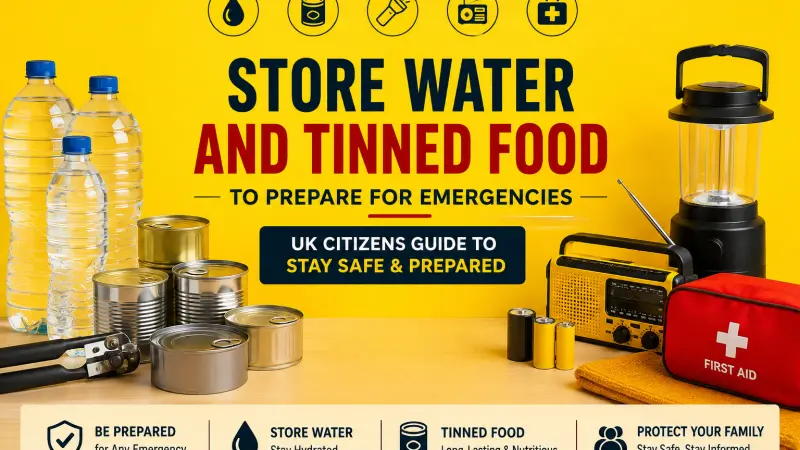
Store Water and Tinned Food to Prepare for Emergencies: UK Household & Local Business Guide
The UK Government is encouraging households to take practical steps to prepare for emergencies and temporary disruption. Severe weather, flooding, power cuts, water outages, transport disruption and infrastructure problems can affect homes and businesses with little warning.
Preparing does not mean panic buying or filling your home with unnecessary supplies. A sensible approach is to keep essential items such as drinking water, tinned food, non-perishable food, torches, batteries and basic emergency equipment available.
It is also important to know where to find reliable local help. During a serious leak, blocked drain, electrical fault, storm-damaged roof or flood cleanup, residents may need a local plumber, electrician, drainage company, roofer, builder, locksmith or cleaning service quickly.
This guide explains how UK households can prepare for emergencies while also showing why local businesses are an important part of community resilience.
Why Should UK Households Prepare for Emergencies?
An emergency can affect several everyday services at the same time.
A major storm could cause flooding, power failures, damaged roofs and blocked roads. A burst water main could affect the water supply while creating demand for plumbers and drainage specialists. A prolonged power cut could affect heating, refrigeration, cooking, communications and local businesses.
A basic UK emergency preparedness plan should therefore consider:
-
Drinking water
-
Tinned and non-perishable food
-
Lighting
-
Communication
-
Essential medication
-
Heating
-
Household repairs
-
Flooding
-
Plumbing emergencies
-
Electrical problems
-
Cleaning and sanitation
-
Children
-
Pets
-
Vulnerable family members
-
Emergency contacts
-
Local businesses that may be required
The goal is simple: prepare before you need help.
How Much Water Should You Store for an Emergency?
Water should be one of the first items considered when preparing an emergency supply.
A practical planning figure is approximately 3 litres of drinking water per person per day.
| Household | 1 Day | 3 Days | 7 Days |
|---|---|---|---|
| 1 person | 3 litres | 9 litres | 21 litres |
| 2 people | 6 litres | 18 litres | 42 litres |
| 3 people | 9 litres | 27 litres | 63 litres |
| 4 people | 12 litres | 36 litres | 84 litres |
| 5 people | 15 litres | 45 litres | 105 litres |
These figures are for drinking-water planning and do not cover all water needed for cooking, cleaning, washing and sanitation.
Households with babies, pets or particular requirements may need additional supplies.
Keep bottled water in a clean, dry and accessible location. Do not store drinking water beside chemicals, fuels or cleaning products.
If your home relies on a private well, borehole or another private supply, understanding water purification in rural areas can be particularly useful when preparing for contamination or supply problems.
Why Keep Tinned Food at Home?
Tinned food is useful during emergencies because many products are shelf-stable and can be stored for long periods when kept appropriately.
A household could gradually build an emergency food supply containing:
-
Baked beans
-
Tinned vegetables
-
Tinned fruit
-
Tinned fish
-
Tinned meat
-
Tinned soup
-
Tinned tomatoes
-
Ready-to-eat meals
-
Long-life milk
-
Oats
-
Cereal
-
Crackers
-
Rice
-
Pasta
-
Dried fruit
-
Nuts
-
Cereal bars
Choose foods your household normally eats rather than buying products that will eventually be thrown away.
The best emergency cupboard combines long-life food with items that are easy to prepare and, ideally, some products that can be eaten without cooking.
Choose Food That Does Not Need Cooking
This becomes particularly important during a power cut.
If your household uses an electric oven, microwave or induction hob, cooking may become difficult when electricity is unavailable.
Keep some ready-to-eat emergency food such as tinned fish, tinned meat, beans, fruit, vegetables, crackers, cereal bars, nuts and suitable ready-made meals.
Always keep a manual tin opener with your emergency supplies.
A cupboard full of tinned food is not particularly useful if you cannot open the cans.
How Much Emergency Food Should a Household Keep?
There is no universal food quantity that works for every household.
Consider how many people need feeding and create enough non-perishable emergency food for several days.
Think about normal meals:
-
Breakfast
-
Lunch
-
Dinner
-
Snacks
-
Drinks
-
Children's food
-
Dietary requirements
For example, a family might keep oats and long-life milk for breakfast, beans and vegetables for lunch, tinned fish or meat for another meal, and fruit, cereal bars or dried fruit for snacks.
The purpose is not to create a survivalist stockpile. It is to make sure the household can continue eating if shops become temporarily inaccessible.
Rotate Your Emergency Food Supplies
Do not put emergency food in a cupboard and forget about it.
Every few months, check:
-
Best-before dates
-
Damaged packaging
-
Swollen cans
-
Leaking cans
-
Special dietary requirements
-
Baby food
-
Pet food
-
Storage conditions
Use suitable older products as part of normal meals and replace them with newer supplies.
This simple stock-rotation system can reduce waste and ensure that your emergency food remains usable.
Never consume cans that are bulging, leaking, badly damaged or otherwise showing signs of spoilage.
What Should You Store for a Power Cut?
A power cut can affect lighting, heating, cooking, communications and refrigeration.
A practical UK power-cut emergency kit can include:
-
Bottled drinking water
-
Tinned food
-
Manual tin opener
-
Torch
-
Spare batteries
-
Battery or wind-up radio
-
Charged power bank
-
Phone charging cable
-
First-aid supplies
-
Essential medication
-
Hand sanitiser
-
Wet wipes
-
Baby supplies
-
Pet food
If an electrical fault affects your property, do not attempt dangerous repairs yourself. A qualified local emergency electrician may be appropriate for electrical faults, damaged wiring and other professional electrical work.
For immediate danger involving electricity, follow the relevant emergency and utility-provider instructions first.
Keep a Charged Power Bank
Mobile phones can become an important source of information during an emergency.
However, a phone is only useful if its battery has power.
Keep a charged power bank and the correct charging cables with your emergency supplies.
It is also sensible to keep important telephone numbers written down rather than relying entirely on your phone.
For a broader reference, the LocalPage.uk UK emergency phone numbers and helplines resource covers emergency services, NHS support, power-cut information and other important UK contacts.
For immediate danger, call 999.
What Should You Do During a Water Emergency?
A water outage can quickly become a serious household problem.
Water is required for:
-
Drinking
-
Cooking
-
Hygiene
-
Cleaning
-
Toilets
-
Baby care
-
Pet care
If your water company issues an official warning or instruction, follow it.
Do not assume water is safe simply because it looks clear.
If a household experiences a major leak or burst pipe, a local emergency plumber may be needed to identify the source, isolate the problem and carry out appropriate repairs.
For private water supplies or situations involving water-quality concerns, information about water purification during emergencies can provide useful background on treatment and safe-water considerations.
What About Homes Using Private Water Supplies?
Homes using wells, boreholes and other private water sources have different considerations from properties connected to public mains supplies.
Heavy rainfall, agricultural runoff, groundwater contamination and infrastructure problems can affect private water sources.
Households considering treatment equipment can learn about water purification systems for UK homes, including technologies such as activated carbon, reverse osmosis, ultrafiltration and ultraviolet treatment.
The appropriate system depends on the water source and the contaminants that need to be addressed.
When Should You Contact a Local Plumber?
Not every water problem should be treated as a DIY project.
A local plumber may be needed for:
-
Burst pipes
-
Major water leaks
-
Blocked toilets
-
Serious plumbing faults
-
Water-pressure problems
-
Damaged water tanks
-
Boiler-related plumbing issues
-
Flooded bathrooms
-
Emergency plumbing repairs
If a leak is causing significant property damage, act quickly to reduce further damage while following appropriate safety procedures.
LocalPage.uk helps people discover local plumbing and home-service businesses across the UK.
Drainage Businesses During Flooding
Flooding can create serious drainage problems.
A local drainage company may be required for:
-
Blocked drains
-
Drain backups
-
Flooded external areas
-
Blocked gullies
-
Surface-water problems
-
Drain cleaning
-
Drain inspections
-
Drain repairs
A minor household blockage may sometimes be handled with basic equipment, but serious backups, sewage problems and extensive flooding may require professional assistance.
When searching for a service, consumers can use a local business directory to compare relevant businesses serving their area.
Emergency Cleaning After Flooding
Flooding can leave behind mud, contaminated materials, damaged furniture and unpleasant odours.
After the immediate danger has passed, a local emergency cleaning company may be useful for deep cleaning, sanitisation, carpet cleaning, upholstery cleaning, waste removal and property cleanup.
LocalPage.uk also provides information about emergency cleanup after a disaster.
Do not enter a flooded or structurally unsafe property simply to begin cleaning. Follow emergency-service and utility-provider instructions first.
Roofers and Builders After Severe Weather
Severe storms can damage roofs, walls, windows, gutters and other parts of a property.
A local roofer or building contractor may be needed for:
-
Emergency roof repairs
-
Roof inspections
-
Temporary weatherproofing
-
Broken-tile replacement
-
Gutter repairs
-
Window repairs
-
Building repairs
-
Storm-damage assessment
Do not climb onto a damaged roof or enter a structurally unsafe building.
Where there is a serious structural concern, contact the relevant emergency or local authority service before arranging repairs.
Locksmiths Can Help Secure Damaged Properties
Storm damage, broken doors, lost keys and property damage can create urgent security problems.
A local emergency locksmith may help with:
-
Damaged locks
-
Broken doors
-
Lost keys
-
Emergency access
-
Securing damaged properties
-
Replacing locks
-
Temporary property security
Keeping the contact details of a trusted local locksmith or security business can save time when immediate access or security assistance is required.
Local Businesses Are Part of Emergency Resilience
Emergency preparation is not only a household responsibility.
Communities rely on local businesses when problems occur.
These can include:
-
Plumbers
-
Electricians
-
Drainage companies
-
Roofers
-
Builders
-
Locksmiths
-
Cleaning companies
-
Heating engineers
-
Water-treatment specialists
-
Pest-control businesses
-
Waste-removal companies
-
Hardware shops
-
Pharmacies
-
Food retailers
-
Security businesses
When something goes wrong, consumers often need someone nearby who can respond quickly.
That makes local search particularly important during emergencies.
Why Local Business Listings Matter During Emergencies
When a pipe bursts, a drain backs up or a storm damages a roof, people often search for services using phrases such as:
-
Emergency plumber near me
-
Emergency electrician near me
-
Drainage company near me
-
Flood cleanup near me
-
Emergency roofer near me
-
Locksmith near me
-
Water purification company near me
-
Local builder near me
-
Emergency cleaning service near me
These searches demonstrate strong local intent.
A well-maintained UK local business directory can help consumers discover businesses based on their service and location.
For businesses, being visible when someone searches for an urgent service can generate valuable local enquiries.
Why Local Businesses Should Keep Their Listings Updated
During an emergency, inaccurate information can cause delays.
A local business profile should contain:
-
Correct business name
-
Correct telephone number
-
Service area
-
Opening hours
-
Emergency availability
-
Website
-
Business category
-
Services provided
-
Photos
-
Address where appropriate
-
Accurate description
A plumber, for example, should explain whether the business handles burst pipes, emergency leaks, blocked drains, boiler services or other relevant work.
An electrician should clearly identify the electrical services offered.
A cleaning company should explain whether it provides flood cleanup, deep cleaning or commercial cleaning.
Accurate information helps customers determine whether the business is appropriate before making contact.
Local SEO Can Capture Emergency Search Intent
Emergency searches can have strong commercial intent.
Someone searching for "emergency plumber Birmingham" may need a service immediately.
Someone searching for "how does a water pressure system work?" is more likely looking for information.
Both searches are useful, but they represent different stages of the customer journey.
Local businesses can create useful content around:
-
Emergency services
-
Service areas
-
Common repair problems
-
Maintenance
-
Flood preparation
-
Water emergencies
-
Power-cut preparation
-
Seasonal property maintenance
-
Emergency pricing information
-
Local weather risks
LocalPage.uk's resources also discuss organic keywords and local search visibility for businesses looking to improve their online reach.
Local Businesses Should Prepare Before Demand Increases
An emergency can create a sudden increase in enquiries.
A plumbing company may receive a large number of calls after a burst water main.
Drainage businesses can become extremely busy after flooding.
Roofers may receive emergency repair requests following severe storms.
Cleaners may receive water-damage enquiries.
Electricians may be required following property damage or electrical faults.
Businesses should therefore prepare their own operations before demand arrives.
Consider maintaining:
-
Emergency phone numbers
-
Backup communication methods
-
Customer records
-
Supplier contacts
-
Staff contact lists
-
Vehicle fuel
-
Essential equipment
-
Protective equipment
-
Backup power
-
Insurance information
-
Defined service areas
-
Emergency response procedures
Businesses Also Need Emergency Supplies
Emergency preparation applies to offices, shops, restaurants, warehouses, care businesses and professional services.
An office may need drinking water, long-life snacks, torches, batteries, power banks and emergency contact information.
A restaurant may require a detailed food-safety and refrigeration contingency plan.
A construction business may need vehicle planning, backup communications and emergency equipment.
A care provider may require additional procedures for vulnerable customers.
The correct plan depends on the type of business.
Restaurants and Food Businesses
Restaurants, cafés, takeaways and catering businesses can be particularly affected by power and water disruption.
A business may suddenly be unable to:
-
Cook food
-
Refrigerate ingredients
-
Wash equipment
-
Operate payment systems
-
Access water
-
Open normally
Food businesses should have appropriate procedures for dealing with refrigeration failure, water disruption and other emergencies while following applicable food-safety requirements.
Local food businesses can also benefit from maintaining accurate online information so customers can discover whether they are open and what services they offer.
Shops and Essential Local Retailers
Local shops can become important during emergencies because residents may suddenly need:
-
Bottled water
-
Tinned food
-
Batteries
-
Torches
-
Baby products
-
Pet food
-
Cleaning products
-
Household essentials
Businesses should therefore keep their local business listing accurate, including opening hours, telephone number, address and services.
Consumers benefit when they can quickly identify which nearby businesses are relevant.
Pharmacies and Healthcare Businesses
Emergency planning should also consider essential healthcare services.
Residents may need access to:
-
Pharmacies
-
Dentists
-
Care services
-
Medical suppliers
-
Opticians
-
Home-care providers
-
Other healthcare businesses
Anyone dependent on regular medication should plan ahead rather than waiting until supplies are nearly exhausted.
During an emergency, always follow official NHS and emergency-service instructions.
How Households Can Create a Local Emergency Contact List
Alongside stored food and water, households can create a list of useful local businesses.
Depending on the property and location, consider recording:
-
Local plumber
-
Local electrician
-
Local drainage company
-
Local roofer
-
Local builder
-
Local locksmith
-
Local cleaning company
-
Local heating engineer
-
Local water-treatment specialist
-
Local pest-control company
-
Local waste-removal business
-
Local pharmacy
-
Local food retailer
-
Local security company
The purpose is not to call businesses unnecessarily.
It is simply to know where professional help can be found if a genuine emergency occurs.
How to Find Reliable Emergency Information
During an emergency, information can change rapidly.
Use trusted sources such as:
-
GOV.UK
-
Local councils
-
Emergency services
-
Water companies
-
Electricity network operators
-
Met Office
-
Official flood-warning services
-
NHS
-
Trusted local news organisations
Do not rely exclusively on social-media posts or forwarded messages.
For general emergency numbers and helpline information, households can keep the UK Master Helpline List available alongside their other emergency information.
What Are UK Emergency Alerts?
The UK Emergency Alerts system can warn people about emergencies that pose a risk to life in their area.
If an official emergency alert arrives, read the instructions carefully and follow them.
Keep your mobile phone charged so that you can receive important communications.
However, receiving no alert does not automatically mean there is no local problem. Continue monitoring relevant official information from local authorities, emergency services and utility companies.
Be Careful With Emergency Information on Social Media
During a major incident, information can spread extremely quickly.
Before sharing claims about:
-
Food shortages
-
Water contamination
-
Evacuations
-
Road closures
-
Power failures
-
Emergency shelters
-
Government instructions
check whether the information comes from a trustworthy official source.
A screenshot or forwarded WhatsApp message should not automatically be treated as an official announcement.
Create a Household Emergency Plan
A written plan can be useful when people are under pressure.
Include:
-
Emergency telephone numbers
-
Family contact details
-
School or childcare contacts
-
Relevant medical information
-
Utility-provider details
-
Pet-care arrangements
-
Meeting points
-
Evacuation arrangements
-
Important addresses
-
Location of emergency supplies
-
Important local business contacts
Make sure more than one household member knows where supplies and important information are stored.
Consider Neighbours Who May Need Extra Help
Emergency preparedness also has a community dimension.
An older neighbour, disabled person, someone living alone or a person dependent on medical equipment may need additional assistance during a prolonged disruption.
A simple conversation before an emergency can help communities respond more effectively.
Local businesses can also play an important role by continuing to provide essential services where it is safe and practical to do so.
Build Your Emergency Supplies Gradually
You do not need to purchase everything at once.
A practical approach is:
First: Store drinking water.
Next: Add several days of non-perishable food.
Then: Add a manual tin opener, torch, batteries, radio and power bank.
After that: Review medication, baby supplies, pet food and household-specific requirements.
Finally: Create an emergency plan and identify useful local service businesses.
This gradual approach can spread the cost and avoid unnecessary panic buying.
Three-Day Emergency Preparation Starting Point
For households starting from nothing, consider preparing:
Water: Approximately 9 litres of drinking water per person.
Food: Several days of tinned and non-perishable food.
Cooking: Some food that does not require cooking.
Opening tins: Manual tin opener.
Lighting: Torch and spare batteries.
Information: Battery or wind-up radio.
Power: Charged power bank.
Health: Essential medication and first-aid supplies.
Hygiene: Hand sanitiser and wet wipes.
Family: Baby supplies and specialist requirements.
Pets: Suitable pet food and water.
Local services: Contact information for essential tradespeople.
Final Thoughts: Prepare Without Panic
Emergency preparedness is not simply about putting bottled water and tinned food in a cupboard.
It is about creating a practical network of resources that can help a household or business continue functioning when normal services are disrupted.
For households, that starts with:
Water + food + lighting + communication + essential supplies.
For businesses, it expands to:
Continuity planning + staff communication + suppliers + local contractors + customer communication + emergency services.
For the wider community, it includes the local businesses that provide essential services when people need them most.
A burst pipe may require a local plumber.
A blocked or flooded drain may require a local drainage specialist.
Storm damage may require a local roofer or builder.
Electrical damage may require a qualified local electrician.
Water damage may require a professional local cleaning service.
A damaged door may require a local emergency locksmith.
Private-water problems may require a water-treatment specialist.
This is why local business visibility matters during emergencies as well as during normal day-to-day searches.
LocalPage.uk provides a UK local business directory where consumers can discover businesses by service and location.
For businesses, maintaining an accurate listing can help potential customers understand what services are available, where the business operates and how to make contact.
The best emergency plan is therefore not based on panic. It is based on preparation, accurate information and knowing where reliable local help can be found.
Store water. Keep tinned food. Prepare your emergency kit. Know your local services. Keep important contacts available. Follow official warnings. And make sure local businesses are easy for customers to find when help is needed.
Quick Emergency & Local Business Reference
For households, prioritise:
-
Drinking water
-
Tinned food
-
Non-perishable food
-
Manual tin opener
-
Torch
-
Spare batteries
-
Radio
-
Power bank
-
Essential medication
-
Baby supplies
-
Pet supplies
-
Emergency contacts
For local emergency services, consider keeping details for:
-
Emergency plumbers
-
Electricians
-
Drainage companies
-
Roofers
-
Builders
-
Locksmiths
-
Cleaning companies
-
Heating engineers
-
Water-treatment specialists
-
Pest-control companies
-
Waste-removal businesses
-
Security companies
-
Local shops
-
Pharmacies
-
Healthcare providers
Disclaimer: The information provided in this article is for general informational and research purposes only. Company details, features, services, and market positions may change over time. Readers are advised to visit official company websites and conduct independent research before making any business decisions or purchasing services.
Most Searchable Keywords
Recent Blogs


Related Listings



Categories
- Accountants (295)
- Advertising Agencies (559)
- Architects (149)
- Automobiles (377)
- Beauty (300)
- Carpenters (146)
- Cleaning Services (387)
- Dentists (189)
- Driving (62)
- Education (1)
- Electricians (215)
- Energy (8)
- Event Organiser (688)
- Finance (602)
- Guide (3490)
- Health (2207)
- Information technology (207)
- Legal Services (361)
- Logistics (6)
- Maintenance (65)
Sponsored Listings in Dentists

Related Blogs
Store Water and Tinned Food to Prepare for Em...
Read this insightful article "Store Water and Tinned Food to Prepare for Emergencies" to expand your knowledge!

The UK's Most Popular News Channels — And the...
Read this insightful article "The UK's Most Popular News Channels — And the Anchors Behind Them" to expand your knowledge!

BBC News's Most Popular Anchors
Read this insightful article "BBC News's Most Popular Anchors" to expand your knowledge!
Questions & Answers – Find What You Need, Instantly!
Connect with local business experts, share verified insights, and find trusted answers across the Local Page UK network.
Ask Community
Ask questions to the Local Page UK community
Share Knowledge
Share your knowledge to help out others
Find Solutions
Find answers or offer instant solutions
Some of the most popular fantasy TV shows include "Game of Thrones," known for its epic battles and political intrigue, "The Witcher," which features monster hunting and magic, and "Stranger Things," blending supernatural elements with 1980s nostalgia. Other notable mentions are "His Dark Materials," "Shadow and Bone," and "The Mandalorian," each offering unique worlds and captivating storytelling that have garnered large fan bases.
When seeking bathroom renovation providers that handle both plumbing and tiling, it's advisable to look for licensed contractors who specialize in comprehensive bathroom remodels. Companies such as Home Depot, Lowe's, and Bath Fitter offer these services, often providing a seamless experience by managing all aspects of the renovation process. Additionally, local contractors with positive reviews in platforms like Angie's List or Houzz may also offer tailored solutions for your bathroom needs.
Absolutely, there are several distributors that supply crash mats and soft play equipment to gymnastics clubs in and around Birmingham. National companies like Gymnova, S & G (Spieth Gymnastics), and Jaques of London offer a wide range of crash mats, foam pits, and soft play pieces, and they typically deliver to the Birmingham area. For more local options, you might try The Gym Equipment Company, which has a showroom in the West Midlands, or check out smaller specialist suppliers like Playtime UK. Many of these distributors cater specifically to clubs, offering high-density foam mats that meet safety standards. I'd recommend reaching out to a few to compare pricing, delivery times, and whether they offer custom sizes or installation services. It's also worth checking if any of them have a physical showroom near Birmingham so you can test the equipment before buying. Happy tumbling!
For professionals seeking a reliable sanitaryware supplier in Manchester with trade account facilities, several established merchants combine extensive product ranges, competitive pricing, and dedicated trade support. The most reputable option is Graham Plumbers Merchant, which operates multiple branches across Manchester, including Salford Quays and Oldham. They offer a dedicated trade account service with preferential pricing, priority delivery scheduling, and access to a vast inventory of leading sanitaryware brands such as Villeroy & Boch, Duravit, Ideal Standard, and Roca. Their trade accounts typically include net 30-day payment terms, online account management, and a tailored project quotation system. Similarly, City Plumbing Supplies has several Manchester-based depots (such as Ashton-under-Lyne and Stockport) that cater specifically to trade customers, providing a rapid order-and-collect service, trade-only promotions, and a loyalty programme offering rebates on repeat purchases. Their product range covers everything from basins and WCs to complete bathroom suites and brassware, with in-house technical advisors available for specification support. Another key player is Plumb Center, part of the Wolseley Group, which offers trade accounts with bespoke pricing structures, direct-to-site deliveries within the Greater Manchester area, and access to over 10,000 lines of sanitaryware, including premium brands like Grohe and Hansgrohe. Their trade portal allows for real-time stock checking and order history tracking, facilitating efficient project management. For those seeking a more specialist or high-end option, Bathroom Spares in Manchester provides trade accounts with a focus on hard-to-find sanitaryware and discontinued ranges, which can be invaluable for refurbishment projects. Additionally, independent merchants such as M&B Plumbase in Trafford Park offer flexible trade terms, personalised service, and competitive pricing on both mainstream and luxury sanitaryware. When evaluating suppliers, trade customers should consider factors beyond price: reliability of stock availability, delivery timescales within Manchester’s often congested zones, clarity of returns policies, and the quality of after-sales support for warranty claims. It is advisable to request a trade account application from at least two to three suppliers to compare discounts, minimum order values, and payment terms. Many suppliers also offer showroom access for trade clients, allowing you to inspect finishes and dimensions before committing to large orders. For ongoing projects, establishing a relationship with a single supplier who offers consolidated invoicing and dedicated account management can streamline procurement. Ultimately, the most reliable supplier for your trade account in Manchester will be one that aligns with your volume requirements, preferred brands, and service expectations, so a site visit to their local branch and a discussion about your specific trade needs is highly recommended before committing to an account.
People in Leeds are loving their local florists—customers often mention gorgeous, fresh arrangements and super friendly service. Many rave about reliable same-day delivery and creative wedding bouquets. A few note pricing can vary, but overall, the buzz is all about quality and that personal touch making every order feel special.
Common problems for commercial gardening in Bristol include weed overgrowth, soil degradation, pest infestations, and irrigation malfunctions. Additionally, managing seasonal transitions, adhering to sustainability regulations, and maintaining consistent aesthetics pose significant challenges. Expert services mitigate these via structured maintenance, integrated pest management, and soil analysis to ensure long-term landscape health.