
Cable & Wire Equipment Manufacturing: Standards, Safety & Quality
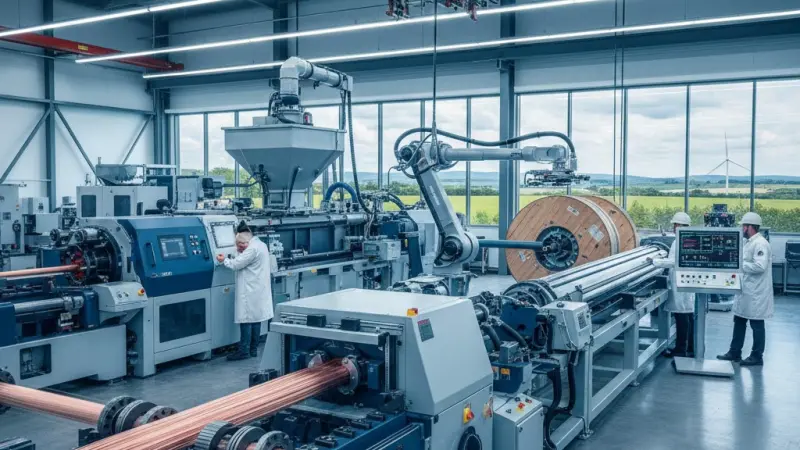
The British manufacturing landscape is a tapestry of intricate engineering, and at its very heart lies the cable and wire equipment manufacturing sector. While often operating behind the scenes, this industry is the silent enabler of modern life, providing the machinery and technology required to produce the literal veins and nerves of our global infrastructure. From the high-voltage subsea cables that facilitate international power sharing to the microscopic copper threads within medical devices, the precision of the equipment used to manufacture these components is paramount.
In the United Kingdom, the sector has transitioned from a purely industrial heavy-lifting role into a high-tech engineering powerhouse. This evolution has been driven by the UK’s commitment to net-zero targets and the rapid expansion of digital connectivity. For professionals and service providers, finding their place in the market often begins with appearing in a uk local business directory, ensuring they are visible to the vast network of contractors and engineers who rely on British-made machinery.
Economically, the sector contributes billions to the UK GDP through direct exports and domestic supply chain support. The ripple effect is immense; a single manufacturer of extrusion lines or wire-drawing machines supports dozens of ancillary services, from precision machining to software development. As we navigate an era defined by electrification, the demand for high-quality, safe, and standardised cabling equipment has never been higher. This guide explores the depths of this industry, providing a roadmap for stakeholders and professionals to understand the benchmarks of excellence that define British manufacturing.
The Landscape of Cable & Wire Equipment Mnfrs in the UK
The current market for cable and wire equipment manufacturers in the UK is characterised by a robust resilience that has flourished post-pandemic. Historically rooted in the industrial heartlands of the Midlands and the North of England, the sector has seen a geographic broadening as specialised technology hubs emerge in the South and East. Today, the UK remains a global leader in niche manufacturing, particularly in the production of high-specification equipment for the aerospace, telecommunications, and renewable energy sectors.
The post-pandemic era has forced a dramatic shift in operational philosophy. Manufacturers have moved away from "just-in-time" supply chains toward "just-in-case" resilience, leading to an increase in domestic sourcing. This shift has revitalised local engineering firms, many of whom are now listed in a uk business directory website to capitalise on the "Made in Britain" resurgence. The market size, currently valued in the hundreds of millions for the equipment sub-sector alone, is projected to grow as the UK government invests heavily in broadband rollouts and electric vehicle (EV) charging infrastructure.
Innovation is the primary currency in this landscape. Modern UK manufacturers are no longer just selling "hardware"; they are selling intelligent systems equipped with IoT (Internet of Things) sensors and AI-driven predictive maintenance. This technological leap ensures that British equipment remains competitive against lower-cost overseas alternatives. For those looking to source these advanced systems, the ability to find local businesses uk that specialise in high-precision engineering is the first step toward a successful partnership.
Comprehensive Services Breakdown
The services and products offered by cable and wire equipment manufacturers are as diverse as the applications they serve. To understand the sector, one must look at the specific stages of production where British equipment excels:
Wire Drawing Machinery: This is the foundation of the industry. Equipment designed to pull metal rods through increasingly smaller dies requires extreme precision to ensure uniform diameter and tensile strength. UK manufacturers lead in multi-wire drawing lines that reduce energy consumption.
Extrusion Lines: Essential for applying insulation and sheathing to conductors. Modern British extrusion technology focuses on high-speed application of sustainable materials, such as Low Smoke Zero Halogen (LSZH) compounds.
Stranding and Bunching: Machines that twist multiple wires together to form a single conductor. Precision here is vital for the flexibility and electrical performance of the final cable.
Testing and Quality Control Equipment: Perhaps the most critical service. Manufacturers provide sophisticated spark testers, diameter
gauges, and tensile strength testers to ensure every millimetre of cable meets international standards.
Refurbishment and Retrofitting: A significant portion of the UK market involves upgrading legacy machinery with modern control systems. This sustainable approach is often highlighted by firms offering a business listing uk to reach cost-conscious engineering departments.
Each of these services requires a deep understanding of metallurgy, physics, and electrical engineering. The integration of digital interfaces allows operators to monitor production in real-time, reducing waste and ensuring that the equipment maintains its business listing uk status for those providers who want to demonstrate their accessibility to the wider engineering community.
How to Choose the Right Service Provider
Selecting a manufacturer for cable and wire equipment is a high-stakes decision. The machinery represents a significant capital investment and will likely remain in service for decades. Therefore, the selection process must be rigorous.
Firstly, look for ISO certifications, specifically ISO 9001 for quality management and ISO 14001 for environmental standards. In the UK, adherence to the CE and UKCA marking is non-negotiable for safety. Beyond certifications, a provider's reputation is best gauged through uk verified business listings, where one can verify the legitimacy and standing of a firm within the professional community.
Secondly, assess the level of after-sales support. Cable manufacturing is a continuous process; any downtime is incredibly expensive. Choosing a provider from the uk top rated local businesses ensures that you are partnering with a company that values its local reputation and is likely to offer rapid on-site support and spare parts availability. Insurance and liability coverage are also essential, protecting your business against potential equipment failure or installation accidents.
Industry Challenges & Future Outlook
The path forward is not without its hurdles. The primary challenge facing UK manufacturers is the rising cost of raw materials and energy. Furthermore, the global "Race to Net Zero" has placed immense pressure on manufacturers to reduce the carbon footprint of the machinery itself. This has led to the development of "Green Manufacturing" initiatives, where equipment is designed to be more energy-efficient and easier to recycle at the end of its life cycle.
Technological shifts, such as the move toward 5G and the increasing complexity of subsea power cables for offshore wind farms, require equipment that can handle higher tensions and more complex material compositions. Manufacturers are responding by integrating advanced robotics into their assembly lines. For professionals navigating these changes, staying connected via a business listing uk allows for better collaboration and knowledge sharing across the industry.
Regulatory changes post-Brexit also continue to evolve. Navigating the divergence between UK and EU standards requires constant vigilance. However, the future remains bright; the demand for cabling is inherently linked to the future of energy and data. As long as the world needs power and internet, the UK’s cable equipment manufacturers will remain indispensable. Highlighting these innovations through business listing uk platforms ensures that even the smallest specialist firms can find their niche in the global market.
Business Tips for Cable & Wire Equipment Mnfrs Professionals
In a niche B2B sector, digital visibility is often overlooked, yet it is a critical differentiator. Many engineering firms rely on word-of-mouth, but in the modern era, a procurement officer’s first port of call is usually a search engine. To remain competitive, British manufacturers must treat their digital presence with the same precision they apply to their engineering.
The importance of being found on local business listings uk cannot be overstated. It provides local SEO benefits, making your firm visible when contractors search for "specialist engineering near me." Furthermore, maintaining a
profile in a uk professional services listings directory builds trust. Professionals should also focus on content marketing—sharing case studies of successful installations or white papers on safety standards.
Digital visibility isn't just about sales; it's about recruitment. The industry faces a skills gap, and the next generation of engineers is looking for modern, tech-forward companies. A strong presence in a uk local business search results page signals that your company is active, modern, and open for business.
Wrapping Up & Local Page Integration
The Cable & Wire Equipment Manufacturing sector is a cornerstone of the UK’s industrial strategy. It combines traditional craftsmanship with cutting-edge digital technology to solve the infrastructure challenges of the 21st century. As we have seen, success in this field depends on a commitment to quality, a proactive approach to safety, and a willingness to adapt to a rapidly changing global landscape.
For businesses looking to thrive in this competitive environment, the ability to connect with clients and partners is essential. This is where Local Page serves as a vital tool. By providing a comprehensive uk b2b business directory, Local Page allows UK manufacturers to showcase their expertise and reach the right audience. Whether you are a large-scale equipment manufacturer or a specialist service provider, your journey toward greater visibility and industry authority begins with a verified presence on a trusted platform.
Boost Your Visibility with Local Page UK
In the specialised world of cable and wire equipment, your reputation is your most valuable asset. Don't let your expertise go unnoticed. By joining Local Page UK, you position your business in front of the UK’s most active professional community. Claim your business listing uk today and ensure that when the industry looks for excellence, they find you first.
Frequently Asked Questions
1. What are the primary safety standards for UK cable manufacturing equipment?
Manufacturers in the UK must adhere to several rigorous safety standards to ensure the protection of operators and the quality of the output. The most critical is the Provision and Use of Work Equipment Regulations (PUWER) 1998, which ensures that equipment is suitable for its intended use and maintained safely. Additionally, machinery must comply with the UKCA (UK Conformity Assessed) marking requirements, which replaced the CE marking post-Brexit. Electrical safety is governed by BS 7671 (The IET Wiring Regulations). Following these standards is essential for any firm wishing to maintain a high-quality reputation in the industry.
2. How has the shift to renewable energy impacted equipment manufacturing?
The transition to renewable energy, particularly offshore wind and solar power, has created a massive demand for high-voltage direct current (HVDC) and subsea cables. This requires manufacturing equipment that can handle much larger cable diameters and much heavier weights than traditional telecommunications wiring. Equipment manufacturers are now developing specialised massive-scale stranding machines and extrusion lines capable of applying thicker, more durable insulation layers. This shift represents one of the largest growth opportunities for the sector in the last fifty decades.
3. What is the role of IoT in modern wire-drawing machines?
The Internet of Things (IoT) has revolutionised the wire-drawing process by enabling "Smart Factories." Modern machines are equipped with sensors that monitor temperature, vibration, and motor load in real-time. This data is fed into AI algorithms to provide predictive maintenance alerts, allowing manufacturers to fix potential issues before they lead to costly breakdowns. This level of digital integration significantly increases the Overall Equipment Effectiveness (OEE) and reduces material waste, making the manufacturing process more sustainable and profitable.
4. Why is local reputation so important for UK equipment service providers?
In the cable and wire industry, downtime can cost thousands of pounds per hour. Therefore, manufacturers and cable producers prefer working with equipment providers who have a strong local reputation and can offer rapid response times.
A local provider is more likely to have spare parts in stock and can send engineers to the site within hours rather than days. This reliability is often the deciding factor in procurement, which is why appearing in local professional directories is so beneficial for business growth.
5. How can small engineering firms compete with global manufacturing giants?
Small UK firms often compete by specialising in highly complex, bespoke machinery that larger companies find unprofitable to produce. By focusing on niche applications—such as medical-grade wiring or aerospace-specific cabling—small manufacturers can offer a level of customisation and personal service that giants cannot match. Furthermore, using platforms like Localpage allows these smaller specialists to gain the same level of digital visibility as their larger counterparts, ensuring they are found by global procurement teams looking for specific British expertise.
6. What materials are most commonly used in UK cable equipment?
While copper and aluminium remain the primary conductors, the equipment must also be able to process a wide variety of insulation materials. This includes Polyvinyl Chloride (PVC), Polyethylene (PE), and increasingly, Cross-linked Polyethylene (XLPE) for high-voltage applications. Modern equipment must also be compatible with eco-friendly alternatives like thermoplastic elastomers (TPE) and LSZH compounds. The ability of a machine to switch between these materials with minimal downtime is a key selling point for modern British manufacturers.
7. What is the environmental impact of cable machinery production?
Manufacturing heavy machinery is an energy-intensive process. However, UK manufacturers are increasingly adopting "Circular Economy" principles. This involves designing machines that are easier to disassemble and recycle, as well as offering refurbishment services that extend the life of existing equipment by 20 years or more. By focusing on energy-efficient motors and reducing hydraulic fluid usage, the industry is significantly lowering its carbon footprint, aligning with the UK's broader environmental goals and sustainability mandates.
8. How do I verify the insurance of a manufacturing service provider?
Before signing a contract, you should request a "Broker of Record" letter or a certificate of insurance from the provider. This should show their Public Liability, Product Liability, and Professional Indemnity coverage. In the UK, it is standard for reputable manufacturers to carry at least £5 million to £10 million in liability cover, given the high value of the machinery and the potential risks involved in installation and operation. Checking these details ensures your business is protected against unforeseen engineering failures.
9. What are the key trends in cable insulation technology?
The biggest trend is the move toward "Smart Insulation." This involves incorporating microscopic sensors or tracer elements directly into the cable insulation during the extrusion process. These elements allow for the cable's health to be monitored throughout its lifespan. Consequently, equipment manufacturers are developing new extrusion heads capable of injecting these smart materials without compromising the structural integrity of the insulation. This innovation is particularly popular in the oil, gas, and rail industries where safety is critical.
10. Can old cable manufacturing equipment be upgraded for modern standards?
Yes, retrofitting is a major sub-sector of the UK industry. Older mechanical machines are often structurally sound but lack modern control systems. Engineers can install new PLC (Programmable Logic Controller) systems, modern AC drives, and HMI (Human Machine Interface) touchscreens to bring 30-year-old machines up to modern safety and efficiency standards. This is often a more cost-effective and sustainable solution than buying entirely new equipment, and many specialist firms offer this service.
11. What is the difference between stranding and bunching equipment?
While both processes involve twisting wires together, bunching is generally used for smaller, more flexible cables where the wires are twisted in a random configuration. Stranding is a more precise process used for larger power cables where each wire is placed in a specific geometric position to ensure maximum conductivity and structural strength. Manufacturers produce different machines for each: "High-Speed Bunchers" for data and flexible cords, and "Rigid Stranners" or "Planetary Stranders" for heavy-duty power cables.
12. How does post-Brexit regulation affect exports of UK machinery?
Since the UK left the EU, manufacturers must ensure their equipment meets the specific regulatory requirements of the destination country. While UKCA is required for the UK market, the CE mark is still needed for exports to the European Economic Area. This has led to a "Dual Marking" approach where many UK manufacturers certify their equipment for both standards simultaneously. While this adds a layer of administrative cost, it ensures that British engineering remains accessible to the global market.
13. What should be included in a maintenance contract for cabling equipment?
A comprehensive maintenance contract should include scheduled bi-annual inspections, emergency breakdown cover, and software updates for control systems. It should also specify the availability of "critical spares"—parts that are prone to wear and tear, such as dies, pulleys, and belts. Many UK providers now offer "Remote Diagnostics" as part of their contracts, allowing their engineers to log into the machine's computer system from a different location to troubleshoot issues instantly.
14. How are trade tensions affecting the supply of raw materials?
Global trade tensions and geopolitical instability have led to fluctuations in the price of steel, copper, and specialized polymers. UK equipment manufacturers are mitigating these risks by diversifying their supplier base and investing in "Scrap Recovery" systems.
These systems allow them to recycle metal offcuts from the manufacturing process back into production, reducing their reliance on volatile global commodity markets and improving their overall material efficiency.
15. Where is the best place to find a list of UK cable equipment manufacturers?
For those seeking reliable, verified, and high-quality British manufacturers, a specialized online directory is the most effective resource. These platforms provide detailed profiles, contact information, and service descriptions, allowing procurement teams to compare providers easily. Using a reputable Local page ensures that the businesses you find are legitimate, active, and part of the vibrant UK manufacturing ecosystem, helping you build long-term, professional partnerships.
Disclaimer: The information provided in this article is for general informational and research purposes only. Company details, features, services, and market positions may change over time. Readers are advised to visit official company websites and conduct independent research before making any business decisions or purchasing services.
Most Searchable Keywords
Recent Blogs


Related Listings

Categories
- Accountants (295)
- Advertising Agencies (559)
- Architects (149)
- Automobiles (377)
- Beauty (300)
- Carpenters (146)
- Cleaning Services (387)
- Dentists (189)
- Driving (62)
- Electricians (215)
- Energy (8)
- Event Organiser (686)
- Finance (602)
- Guide (3373)
- Health (2207)
- Information technology (206)
- Legal Services (353)
- Logistics (6)
- Maintenance (65)
- Manufacturing (35)
Sponsored Listings in Travel Agencies


Related Blogs

Explore Dog Friendly Walks in the Cotswolds f...
Read this insightful article "Explore Dog Friendly Walks in the Cotswolds for 2026" to expand your knowledge!

How Much Do UK Actors Really Earn Full Indust...
Read this insightful article "How Much Do UK Actors Really Earn Full Industry Breakdown" to expand your knowledge!

Blue Light Card UK 2026 Check Eligibility and...
Read this insightful article "Blue Light Card UK 2026 Check Eligibility and Claim" to expand your knowledge!
Questions & Answers – Find What
You Need, Instantly!
How can I update my business listing?
Is it free to manage my business listing?
How long does it take for my updates to reflect?
Why is it important to keep my listing updated?
