
How to Choose Reliable Cable & Wire Suppliers for Your Projects
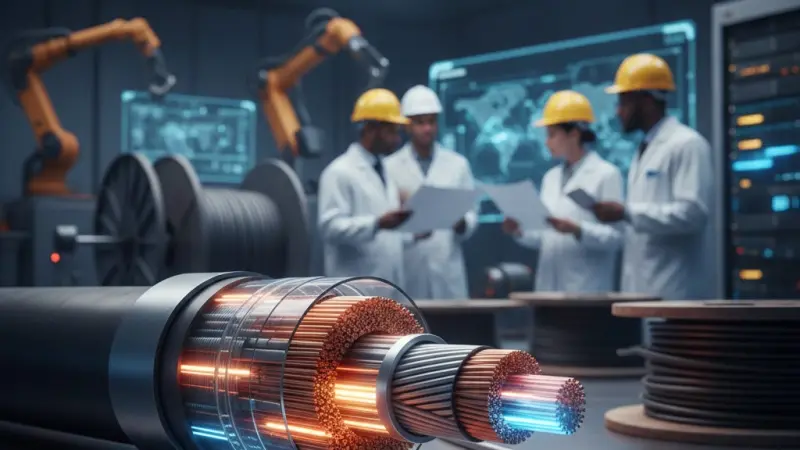
The cable and wire sector serves as the literal nervous system of the United Kingdom’s infrastructure. From the high-voltage subsea links connecting offshore wind farms in the North Sea to the intricate data filaments powering London’s financial district, this industry is a silent titan of the British economy. In 2024, the UK wire and cable market reached a valuation of approximately $6.9 billion, a figure projected to rise as the nation accelerates its transition toward a net-zero future.
For project managers, electrical contractors, and industrial developers, the stakes of supplier selection have never been higher. A single substandard reel of cable can lead to catastrophic fire risks, costly project delays, or systemic failures in critical utility networks. Consequently, businesses are increasingly turning to a trusted uk online business directory to vet potential partners before entering the procurement phase. As we move deeper into the 2020s, the focus has shifted from mere price-point competition to a holistic evaluation of technical compliance, supply chain resilience, and environmental stewardship. This guide provides an authoritative roadmap for identifying suppliers who offer more than just copper and plastic—they offer reliability.
The Landscape of Cable & Wire Suppliers in the UK
The UK cable industry has undergone a profound transformation post-pandemic. Historically, the sector was defined by large-scale domestic manufacturing hubs in the Midlands and Northern England. Today, while those traditional roots remain, the landscape is a sophisticated mix of specialist domestic manufacturers and high-capacity international distributors. The pandemic exposed the vulnerabilities of "just-in-time" global supply chains, leading to a marked "near-shoring" trend. Many firms now prioritise suppliers listed in a uk small business directory who maintain significant local stockholdings to mitigate global shipping volatility.
Regional activity remains concentrated in industrial heartlands like South Yorkshire and the West Midlands, but a new "Green Belt" of cable expertise is emerging along the coastlines. This is driven by the UK’s leadership in offshore wind energy, necessitating massive investments in High Voltage Direct Current (HVDC) cable manufacturing. Evolution in this sector is also reflected in how businesses interact; the traditional "handshake and catalogue" model has been replaced by digital-first procurement. To remain competitive, even the most established manufacturers now ensure they are visible on a local page uk business directory to capture the surge in local B2B search intent.
Comprehensive Services Breakdown
A reliable supplier in 2025 is expected to provide far more than a basic product catalogue. The depth of services offered is often what separates a mere wholesaler from a strategic partner.
1. Power Distribution Solutions
At the core of the industry are power cables, ranging from Low Voltage (LV) building wires used in residential projects to Extra High Voltage (EHV) cables for the national grid. Modern suppliers must offer a business listing uk to showcase their specialisations, such as Steel Wire Armoured (SWA) cables for underground installations or LSZH (Low Smoke Zero Halogen) variants for public buildings where fire safety is paramount.
2. Data and Telecommunications
With the UK’s Gigabit-broadband rollout in full swing, the demand for fibre-optic solutions has skyrocketed. Suppliers now provide end-to-end data cabling services, including Cat6a, Cat7, and bespoke pre-terminated fibre assemblies. These products are essential for the data centres that underpin our digital economy.
3. Specialist and Custom Engineering
Niche industries such as aerospace, maritime, and oil and gas require cables that can withstand extreme temperatures, chemical exposure, or constant mechanical stress. A top-tier provider often offers custom "cut-to-length" services and bespoke cable twinning, allowing contractors to receive precisely what they need, reducing waste and on-site labour costs. Many of these specialists can be found by searching for business listing uk options that highlight technical certifications.
How to Choose the Right Service Provider
Selecting a supplier is a multi-step audit process. You are not just buying a commodity; you are buying into a supplier’s quality control system.
1. Accreditations and Compliance
The "Golden Thread" of cable procurement is certification. Ensure your supplier’s products carry the BASEC (British Approvals Service for Cables) mark or the LPCB (Loss Prevention Certification Board) stamp for fire-resistant lines.
These aren't just badges; they represent independent, rigorous testing of the cable’s chemistry and performance.
2. Insurance and Liability
A reliable partner must carry substantial Product Liability Insurance. In the event of a product failure, you need the assurance that the supplier has the financial backing to handle the repercussions. When browsing local business listings uk, look for companies that explicitly mention their adherence to UKCA (UK Conformity Assessed) marking standards.
3. Local Reputation and Logistics
In construction, time is money. A supplier with a high-rated uk local trades directory profile usually indicates a track record of reliable "last-mile" delivery. Check for reviews regarding their "on-drum" accuracy and their ability to provide technical datasheets on demand.
Industry Challenges & Future Outlook
The path ahead for the UK cable industry is illuminated by "Green" initiatives but shadowed by regulatory hurdles. The shift toward a circular economy is the most significant trend. Suppliers are now being asked to provide Environmental Product Declarations (EPDs), detailing the carbon footprint of their copper sourcing and plastic insulation.
Technological shifts, such as the integration of IoT sensors within cable jackets to monitor heat and load in real-time (Smart Cables), are moving from prototype to reality. However, the industry faces a significant "skills gap." As older engineers retire, the sector needs new talent to handle the complexities of renewable energy integration. To find the next generation of consultants, many firms look through business listing uk results to find innovative startups tackling these challenges. Regulatory changes post-Brexit also continue to evolve, with the UKCA marking becoming the definitive standard for products placed on the market in Great Britain.
Business Tips for Cable & Wire Suppliers Professionals
For those operating within this sector, the competition is fierce. Technical excellence is no longer enough; you must master digital visibility.
1. Leverage Digital Directories
In a B2B environment, your "shop window" is the internet. Ensuring your firm appears in a ukverified business listings database is crucial. It builds immediate trust with procurement officers who are often tasked with finding "vetted" local partners.
2. Content Marketing and Authority
The most successful suppliers provide value before a sale. Publishing guides on "CPR (Construction Products Regulation) Compliance" or "The Benefits of Aluminium vs Copper" establishes your brand as an industry authority.
3. Optimise for Local Search
When a contractor on a site in Manchester needs 500m of SWA cable by tomorrow morning, they search for "Cable suppliers near me." If your business isn't on a uk local business search engine, you are invisible to that high-intent lead.
Wrapping Up & Local Page Integration
The British cable and wire industry is a testament to engineering excellence and economic resilience. Whether you are a supplier looking to expand your
reach or a project manager seeking a reliable partner, the quality of your connections—both physical and digital—will determine your success.
In an increasingly crowded marketplace, finding a needle in a haystack is a challenge. This is where Local Page UK steps in. As the premier uk business directory website, it bridges the gap between high-calibre service providers and the clients who need them. By aggregating verified listings and providing a platform for local excellence, Local Page ensures that the backbone of British industry remains strong, visible, and accessible.
Boost Your Visibility with Local Page UK
In the high-stakes world of industrial supply, being "good" isn't enough—you have to be "found." For businesses in the Cable & Wire Suppliers sector, your digital footprint is your most valuable asset. Every day, thousands of procurement professionals and contractors use our platform to source materials for the UK’s most ambitious projects.
Don't let your competitors take the lead. We encourage all UK-based suppliers and professionals to claim their business listing uk today. Reach more customers, build your local reputation, and ensure that when the next big project starts, your name is at the top of the list.
Frequently Asked Questions (FAQs)
1. What are the most important certifications to look for in a UK cable supplier?
When choosing a supplier, the primary certification to look for is the BASEC (British Approvals Service for Cables) mark. This ensures that the cables have been independently tested for quality and safety. Additionally, look for LPCB (Loss Prevention Certification Board) approval for fire-performance cables and ISO 9001 for general quality management systems. All products must also carry the UKCA or CE mark to be legally sold in the UK.
2. Why is LSZH cable often required in public building projects?
LSZH stands for Low Smoke Zero Halogen. In the event of a fire, standard PVC cables emit dense black smoke and toxic acidic gases, which can hinder evacuation and damage sensitive electronic equipment. LSZH cables are designed to emit very little smoke and no halogen gases, making them the standard choice for airports, hospitals, and high-rise buildings where safety is the absolute priority.
3. How does the current copper price volatility affect project procurement?
Copper is a major cost component of electrical cables. Because its price is determined by global commodity markets, it can fluctuate daily. Many reliable suppliers will offer "copper-base" pricing or "spot prices" that reflect the current market. It is advisable to secure quotes with a clear validity period and consider "fixed-price" contracts for long-term projects to mitigate the risk of sudden price spikes.
4. Can I use aluminium cables as a cheaper alternative to copper?
Yes, aluminium is lighter and generally cheaper than copper, making it popular for high-voltage transmission and large industrial power runs. However, it has lower conductivity, meaning a larger cross-sectional area is required to carry the same current as copper.
Aluminium also requires specific termination techniques to prevent oxidation. Consult with a professional from a uk verified business listings source to ensure compatibility.
5. Is it better to buy from a local distributor or directly from a manufacturer?
Manufacturers are ideal for very large, bespoke, or high-volume orders where lead times are flexible. Distributors, however, offer the advantage of local stockholdings and "cut-to-length" services. For most medium-sized projects, a distributor found on Localpage provides better flexibility, faster delivery, and a broader range of ancillary products like glands and cleats.
6. What is the difference between SWA and AWA cables?
SWA (Steel Wire Armour) is used for multicore cables to provide mechanical protection against impact and rodents. AWA (Aluminium Wire Armour) is used specifically for single-core cables. Because a single-core cable carrying AC current creates a magnetic field, using steel armour would lead to eddy currents and overheating. Aluminium is non-magnetic, making it the safe choice for single-core armoured applications.
7. How do I verify if a supplier’s BASEC certification is authentic?
A reputable supplier should be able to provide a copy of their BASEC certificate or a link to their listing on the BASEC website. You can manually verify any company by visiting the official BASEC "Verified Directory" and searching for the manufacturer’s name or the specific cable license number. Never rely on a logo alone; always check the underlying documentation for the specific product range.
8. What is the impact of the Construction Products Regulation (CPR) on cable choice?
CPR requires all cables permanently installed in buildings to be tested and classified based on their reaction to fire (Euroclasses). Suppliers must provide a Declaration of Performance (DoP) for these products. Choosing a supplier who understands CPR is vital for ensuring your project meets current UK Building Regulations and insurance requirements.
9. Are there eco-friendly or sustainable cable options available?
Sustainability is a growing focus. Look for suppliers who offer cables with recycled copper content or those who have implemented "drum take-back" schemes to reduce waste. Some manufacturers are now producing "Green Cables" with sheathing made from bio-based polymers. Ask your supplier for their Environmental Product Declaration (EPD) to assess their commitment to the net-zero transition.
10. How can I find a specialist supplier for subsea or marine cables?
Marine environments require cables with specific resistance to salt water, oils, and constant movement. These are usually found by searching for specialist providers in a uk b2b business directory. Look for "Marine Grade" or "Offshore" certifications like DNV or Lloyd’s Register, which prove the cable can survive the harsh conditions of a maritime setting.
11. What are "tri-rated" cables and when are they used?
Tri-rated cables meet the standards of three different international bodies: BS (British), UL (Underwriters Laboratories - US), and CSA (Canadian Standards Association). This makes them highly versatile for use in electrical cabinets, switchgear, and power assemblies that might be exported globally, as they comply with multiple regional safety codes.
12. How has the post-pandemic shift affected lead times for specialist wires?
Lead times for standard building wires have largely stabilised, but specialist cables—particularly those requiring high-grade polymers or high-voltage components—can still face delays due to raw material shortages. Reliable suppliers now maintain larger "buffer stocks" and provide more transparent communication regarding delivery windows.
13. What should I check for during a physical inspection of delivered cable?
Check that the markings on the cable sheath (manufacturer name, BS standard, voltage rating) match the delivery note and your order. Inspect the insulation for uniform thickness and ensure the armouring is tight and consistent. If the cable feels unusually brittle or the copper looks dull/discoloured, it may be a sign of poor storage or low-quality materials.
14. Is technical support included when I choose a supplier?
High-quality suppliers will have a technical desk that can assist with cable sizing calculations, voltage drop estimations, and guidance on the best materials for specific environments.
This support is invaluable for ensuring your installation is efficient and compliant with BS 7671 (Wiring Regulations).
15. Why is digital visibility important for a local cable business?
In the modern economy, your reputation is built online. A business that maintains an active and detailed profile on a Local page shows that they are open, transparent, and engaged with their community. It allows customers to leave reviews, which builds the "social proof" necessary to win large-scale contracts in a competitive market.
Disclaimer: The information provided in this article is for general informational and research purposes only. Company details, features, services, and market positions may change over time. Readers are advised to visit official company websites and conduct independent research before making any business decisions or purchasing services.
Most Searchable Keywords
Recent Blogs


Related Listings

Categories
- Accountants (295)
- Advertising Agencies (559)
- Architects (149)
- Automobiles (377)
- Beauty (300)
- Carpenters (146)
- Cleaning Services (387)
- Dentists (189)
- Driving (62)
- Electricians (215)
- Energy (8)
- Event Organiser (686)
- Finance (602)
- Guide (3373)
- Health (2207)
- Information technology (206)
- Legal Services (353)
- Logistics (6)
- Maintenance (65)
- Manufacturing (35)
Sponsored Listings in Travel Agencies


Related Blogs

Explore Dog Friendly Walks in the Cotswolds f...
Read this insightful article "Explore Dog Friendly Walks in the Cotswolds for 2026" to expand your knowledge!

How Much Do UK Actors Really Earn Full Indust...
Read this insightful article "How Much Do UK Actors Really Earn Full Industry Breakdown" to expand your knowledge!

Blue Light Card UK 2026 Check Eligibility and...
Read this insightful article "Blue Light Card UK 2026 Check Eligibility and Claim" to expand your knowledge!
Questions & Answers – Find What
You Need, Instantly!
How can I update my business listing?
Is it free to manage my business listing?
How long does it take for my updates to reflect?
Why is it important to keep my listing updated?
