
CCTV in the Workplace: Legal Requirements and Best Practices
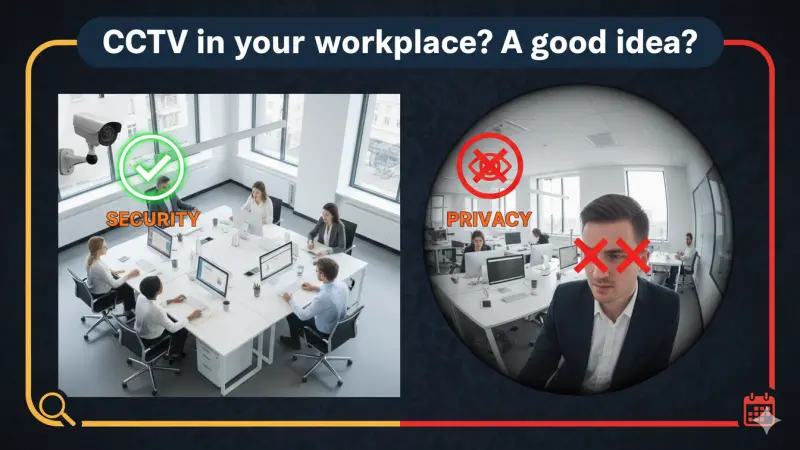
The decision to install CCTV in a workplace is rarely a simple "yes" or "no." In 2026, with stricter data protection laws and a growing focus on employee mental health, the use of surveillance is a delicate balancing act. While it offers undeniable benefits for security and safety, it also carries significant legal obligations and can impact the very culture of your business.
The Pros: Why Businesses Use CCTV
When implemented correctly, CCTV acts as a multi-functional tool that goes beyond simple security:
Crime Prevention and Deterrence: The most common reason for installation is to protect assets. Visible cameras significantly reduce the likelihood of external break-ins and internal "shrinkage" or theft.
Evidence and Dispute Resolution: Footage provides an objective record in the event of an accident, a physical altercation, or a dispute between employees or customers. This can be vital for insurance claims and legal defense.
Health and Safety: In high-risk environments like warehouses or manufacturing plants, CCTV helps monitor
compliance with safety protocols and can identify "near-miss" incidents to prevent future injuries.
Operational Insights: Modern systems can help identify workflow bottlenecks. For example, retail footage might reveal that a checkout area needs more staff during specific hours to improve customer flow.
The Cons: The Potential Downside
Surveillance is not without its costs, both financial and psychological:
Erosion of Trust: Constant monitoring can make employees feel micro-managed and untrusted. This "Big Brother" atmosphere often leads to decreased morale and higher staff turnover.
Increased Stress: Studies show that workers who feel they are being watched continuously report higher levels of
anxiety and burnout, which can paradoxically lead to lower productivity in the long run.
Administrative Burden: Complying with UK GDPR is not a "set and forget" task. It requires ongoing management, data protection impact assessments (DPIAs), and a system for handling data requests.
The Legal Landscape in 2026
In the UK, the Information Commissioner’s Office (ICO) is clear: you cannot monitor employees "just in case." To stay legal, you must adhere to several strict pillars:
1. Lawful Basis and Transparency You must have a "legitimate interest" (such as crime prevention) and you must tell your
staff exactly what is being monitored and why. This is usually done through a written workplace monitoring policy.
2. Mandatory Signage You must display clear, readable signs at all entrances and within monitored areas. These signs must state that CCTV is in operation, the reason for it, and who the "Data Controller" (the company) is. In 2026, many businesses now include QR codes on signs that link directly to their privacy policy.
3. No Monitoring in Private Areas Installing cameras in toilets, changing rooms, or designated break areas is generally prohibited. Doing so is considered a gross invasion of privacy and is a high-risk GDPR violation.
4. Subject Access Requests (SARs) Any person captured on your cameras has the legal right to request a copy of that footage. You must respond within one calendar month and, crucially, you must redact (blur) the faces of any other people in the clip to protect their privacy.
5. Data Retention You should only keep footage for as long as is strictly necessary. For most UK businesses, a retention period of 31 days is the standard.
Keeping data for months without a specific investigation is a breach of the "data minimization" principle.
CCTV is a "good idea" only if it is used proportionately and transparently. It should be a tool for protection, not a tool for punishment. When employees understand that the cameras are there for their safety and the security of the business—and not to "spy" on their coffee breaks—the negative impact on morale is significantly minimized.
Disclaimer: The information provided in this article is for general informational and research purposes only. Company details, features, services, and market positions may change over time. Readers are advised to visit official company websites and conduct independent research before making any business decisions or purchasing services.
Most Searchable Keywords
Recent Blogs


Related Listings

Categories
- Accountants (295)
- Advertising Agencies (559)
- Architects (149)
- Automobiles (377)
- Beauty (300)
- Carpenters (146)
- Cleaning Services (387)
- Dentists (189)
- Driving (62)
- Electricians (215)
- Energy (8)
- Event Organiser (686)
- Finance (602)
- Guide (3377)
- Health (2207)
- Information technology (206)
- Legal Services (356)
- Logistics (6)
- Maintenance (65)
- Manufacturing (35)
Sponsored Listings in Shopping


Related Blogs

Winter Fuel Payment Eligibility and How Much...
Read this insightful article "Winter Fuel Payment Eligibility and How Much You Could Get" to expand your knowledge!

Sexual Harassment Rules Tighten Across UK Fro...
Read this insightful article "Sexual Harassment Rules Tighten Across UK From October 2026" to expand your knowledge!

Employment Tribunal Claim Deadline Extends Fr...
Read this insightful article "Employment Tribunal Claim Deadline Extends From October 2026" to expand your knowledge!
Questions & Answers – Find What
You Need, Instantly!
How can I update my business listing?
Is it free to manage my business listing?
How long does it take for my updates to reflect?
Why is it important to keep my listing updated?
