
How to Change Your Gmail Password
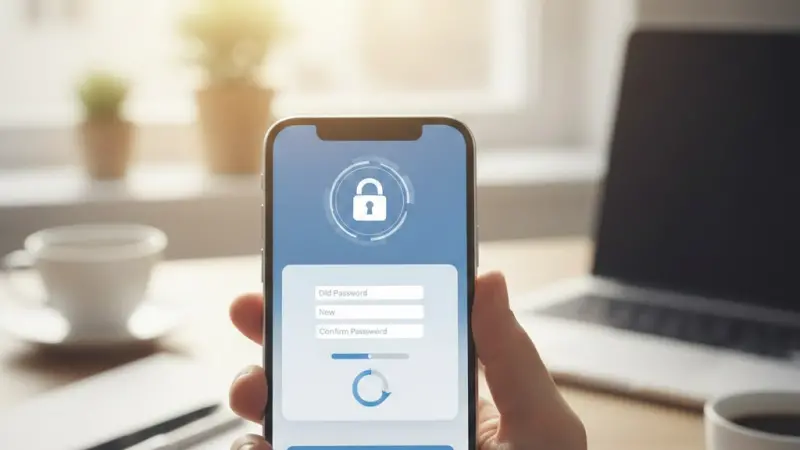
How to Change Your Gmail Password: A Strategic Security Guide for UK Businesses
Published: 14 February 2026 | Focus: UK Cybersecurity & Data Compliance | Reading Time: 15 mins
In the current UK business landscape, your Gmail or Google Workspace account serves as the digital front door to your enterprise. Whether you are a sole trader in the Highlands or a scaling tech startup in London's Shoreditch, the security of this account is paramount. Changing your password is no longer just a routine task; it is a critical component of your UK GDPR compliance and a primary defence against the rising tide of sophisticated phishing attacks.
5.6m private sector businesses in the UK are currently navigating an increasingly complex digital threat environment. With 99.3% of these being SMEs, the responsibility for individual account security often falls directly on the business owner or a small internal team.
Why UK Businesses Must Prioritise Password Hygiene in 2026
The Shift in the UK Cyber Threat Landscape
As we move through 2026, the Department for Business and Trade highlights that digital identity theft remains the most significant risk to micro-businesses. For UK professionals, a Gmail account often contains sensitive correspondence with HMRC, payroll details, and proprietary client information. Failing to update and secure these credentials can lead to devastating data breaches that fall under the scrutiny of the Information Commissioner's Office (ICO).
Meeting Legal and Insurance Requirements
Many UK business insurance providers now mandate regular credential updates and the use of multi-factor authentication (MFA) as a condition of coverage. For firms regulated by the Financial Conduct Authority (FCA), the "How to" of changing a password is less about the technical steps and more about the audit trail of security maintenance. Regular updates demonstrate a proactive approach to risk management that is looked upon favourably during compliance reviews.
A Secure Foundation for Client Trust
Maintaining a secure communication channel is a fundamental promise to your customers. In 2025-26, 68% of UK customers reported that they trust online reviews and brand security equally when choosing a local service provider. A compromised email account can ruin years of reputation building in a matter of hours.
The Step-by-Step Process for Changing Your Gmail Password
Navigating the Google Account Interface from the UK
To begin, ensure you are logged into the correct business account. In a professional setting, many UK users juggle personal and work identities. Accessing the "Security" tab via your Google Account homepage is the first technical hurdle. From here, you will find the 'Signing in to Google' section, where the password update feature resides. This process is identical whether you are using a standard @gmail.com address or a custom UK business domain via Google Workspace.
Device-Specific Considerations: Desktop vs Mobile
Whilst most administrative tasks are performed on desktops in UK offices, the 82% of UK adults who own smartphones frequently manage security on the move. When changing your password on a mobile device, Google will often require a 'Security Check-up' to ensure no unauthorised devices are currently synced. This is particularly relevant for tradespeople in Wales or Northern Ireland who operate primarily from mobile handsets whilst on-site.
The Verification Challenge
Before allowing a password change, Google will endeavour to verify your identity. This usually involves a prompt on a trusted device or a code sent to a recovery mobile number. Ensure your recovery details are up to date with a UK-based '+44' number to avoid delays in receiving SMS codes, which can sometimes occur with international roaming settings.
Crafting a Password That Defeats Modern Brute-Force Attacks
Moving Beyond Simple Phrases and Dates
The days of using a pet's name or a significant UK landmark followed by '123' are over. Sophisticated AI-driven hacking tools used in 2026 can crack simple passwords in seconds. Instead, UK professionals should adopt the 'three random words' strategy recommended by the National Cyber Security Centre (NCSC). This creates a long, complex, yet memorable string that is significantly harder to bypass.
The Role of Special Characters and Logic
While length is the primary deterrent, incorporating symbols and numbers remains essential for meeting various software requirements. However, the logic behind the password should be unique. For example, a business in the Midlands might use a combination of local dialect and unrelated objects to ensure the password cannot be guessed through social engineering or public "About Us" page information.
Password Manager Integration
It is highly recommended that UK business owners use a reputable password manager. This removes the need for "learnt" memorisation and allows for the generation of truly random 20+ character strings.
The ICO suggests that businesses using such tools are less likely to suffer from 'password fatigue,' which often leads to security shortcuts.
Updating Password Policies Across a UK Team
Implementing Mandatory Update Cycles
If you manage a team, simply changing your own password is insufficient. You must establish a clear policy for all employees. In Scotland, where the tech sector is rapidly expanding, many firms now use Google Workspace's administrative console to enforce password changes every 90 days. This ensures that even if a credential is leaked, its utility to a hacker is time-limited.
Employee Training and Awareness
Training should focus on the "why" as much as the "how." Employees at a retail shop in Northern Ireland, for instance, should understand that their Gmail password is the key to the business's point-of-sale data and supplier lists. Professional, measured communication about security updates helps foster a culture of collective responsibility rather than viewing it as a bureaucratic burden.
The Danger of Shared Credentials
A common mistake in small UK offices is sharing a single login for "info@" or "admin@" accounts. This is a significant security risk. Each staff member should have their own unique credentials, and password changes should be handled individually to maintain a clear audit trail of who accessed what and when.
76% of UK consumers research local businesses online before purchasing. If your business email is hacked and used to send spam or phishing links, your digital presence—and your conversion rate—will suffer immediate and potentially permanent damage.
Regional Variations in Digital Support and Compliance
Support for Businesses in Scotland and Wales
Scottish businesses can access tailored cybersecurity advice through Scottish Enterprise, which offers specific grants for digital security improvements. Similarly, in Wales, Business Wales provides bilingual resources to help micro-enterprises secure their digital assets. When changing passwords and updating security protocols, it is worth checking these regional bodies for the latest local threats and support mechanisms.
The Northern Ireland Context and the Windsor Framework
Businesses in Northern Ireland face unique digital considerations, particularly regarding cross-border trade and data flow between the UK and the EU. Ensuring your Gmail password meets high-security standards is part of a broader commitment to data integrity that facilitates smooth trade under current protocols. Invest Northern Ireland frequently holds workshops on protecting digital identities for exporting firms.
England's Local Enterprise Partnerships (LEPs)
Across England, from Cornwall to Northumberland, LEPs offer local business support. Many have pivoted to focus on 'Cyber Essentials' certification. Changing your Gmail password is the first, simplest step toward achieving this government-backed certification, which can be a prerequisite for winning local authority contracts.
Integrating Multi-Factor Authentication (MFA)
Beyond the Password: The Second Layer
A password change alone is often not enough in 2026. Enabling 2-Step Verification (the Google version of MFA) is critical. This requires a second form of identification, such as a fingerprint, face scan, or a physical security key. For UK professionals handling sensitive legal or financial data, using a physical YubiKey or a Google Titan key is the gold standard for account protection.
The Risks of SMS-Based Verification
While better than nothing, SMS verification is susceptible to 'SIM swapping' attacks. UK business owners should prefer authenticator apps (like Google Authenticator) or hardware-based prompts. This is especially true for businesses in high-density urban areas like London or Manchester, where sophisticated electronic pickpocketing and social engineering are more prevalent.
Setting Up Backup Codes
When you change your password and enable MFA, Google will provide a set of backup codes. These should be printed and kept in a secure, physical location—perhaps a safe in your office or with your firm's solicitor. These codes are your "break glass" solution if you lose access to your primary device while traveling between UK regions or abroad.
Managing Passwords for Google Workspace Administrators
The Admin Console Hierarchy
For UK SMEs using Google Workspace, the Administrator has the power to reset passwords for any user. This is a high-privilege role that must be protected with the most stringent password and MFA settings.
If an Admin account is compromised, the entire business's data is at risk. Administrators should endeavour to have at least two people with 'Super Admin' privileges to avoid being locked out if one person leaves the company or loses their credentials.
Offboarding Employees Safely
When a staff member leaves, changing the password of their business Gmail account is a priority task that must be completed before they exit the building. This prevents "revenge" data deletion or unauthorised access to client lists. In the UK, this is also a vital step in your "Data Protection by Design" obligations under the Data Protection Act 2018.
Auditing Third-Party App Access
Often, when changing a password, you will see a list of third-party apps that have access to your Gmail. Use this opportunity to revoke access to any UK-based or international apps you no longer use. This reduces your 'attack surface' and ensures that a breach at a minor software provider doesn't lead back to your primary business account.
Troubleshooting Common Password Reset Issues in the UK
Dealing with Account Recovery Delays
If you have forgotten your current password and cannot access your recovery email, Google's automated system can take several days to verify your identity. This downtime can be catastrophic for a UK small business. To avoid this, always have at least two recovery methods (an email and a UK mobile number) and keep them updated every time you perform a routine password change.
The Impact of VPNs on Security Alerts
Many UK businesses use VPNs for secure remote work. However, logging in to change your password while connected to a VPN server in another country can trigger Google's automated fraud detection. It is often best to perform security updates from your primary UK business address or a trusted home network to ensure the process goes smoothly without being flagged as "suspicious activity."
Browser and Cache Conflicts
Occasionally, you may change your password but find your browser continues to try and log in with the old one, leading to account lockouts. Clearing your cache or using an incognito window for the password change process is a simple technical tip that saves significant frustration for busy professionals.
"Hey Google, how do I change my business Gmail password?"
To change your password, go to your Google Account settings, select 'Security', then 'Password' under 'Signing in to Google'. You will need to verify your current identity before entering a new, secure password. UK users should ensure their recovery phone number starts with +44.
"What is a secure password for a UK company?"
The NCSC recommends using three random, unrelated words (e.g., 'TeapotLondonFences'). Avoid using business names, local postcodes, or
common UK terms that could be easily guessed by social engineering or automated hacking tools.
Future-Proofing Your Business Identity
The Transition to Passkeys
As we head into 2027, the concept of a "password" is being phased out in favour of 'Passkeys.' These use your device's local authentication (like Windows Hello or Apple FaceID) to log you in without a typed string. UK businesses should begin familiarising themselves with this technology now, as it offers a more seamless and secure experience for staff whilst virtually eliminating the risk of phishing.
Maintaining an Internal Security Register
Record the dates of all password changes and security reviews in a central (but secure) business register. This provides the necessary evidence for HMRC or ICO auditors that you are taking "appropriate technical and organisational measures" to protect data. In the event of a dispute or a security incident, this documentation is your best defence.
Conclusion: A Continuous Commitment
Changing your Gmail password is not a one-time fix but a recurring commitment to your business's health. By following this guide, UK business owners in all four nations can ensure their communications remain private, their reputations remain intact, and their operations remain compliant with the latest 2026 standards.
Frequently Asked Questions
How often should a UK small business change its Gmail password?
While the NCSC has shifted away from forced regular changes for the sake of it, UK businesses should update passwords immediately if a leak is suspected, or at least every 90 to 180 days as part of a routine security audit. This is particularly important for staff with high-level access to financial or customer data.
What should I do if my business Gmail is hacked before I can change the password?
Immediately use the Google Account Recovery page. You should also notify your bank if your email is linked to business accounts and inform the ICO within 72 hours if you believe personal customer data has been compromised. In the UK, you can also report cybercrime to Action Fraud.
Is it legal for me to change an employee's password without their consent?
If the account is a company-owned Google Workspace account, the employer generally has the right to manage access. However, this should be clearly outlined in your UK employment contract or IT acceptable use policy to ensure compliance with privacy laws and avoid potential employment tribunal issues.
Can I use a password manager that isn't based in the UK?
Yes, many leading password managers are based in the US or Europe. The key is ensuring they use end-to-end encryption. The ICO does not forbid the use of international security tools, provided they meet the high standards required for protecting UK citizen data under the UK GDPR.
Does changing my Gmail password log me out on all other devices?
Yes, typically Google will give you the option to sign out of all other sessions when you change your password. For a UK business owner, this is highly recommended as it ensures that any forgotten tablets or old phones in the office no longer have access to the account.
Will changing my password affect my business's Google My Business listing?
Your listing remains intact, but you will need to log back in with the new password to respond to reviews or update your opening hours. Since 76% of UK consumers research businesses online first, ensure you have the new password ready to avoid any delay in managing your public profile.
Are there specific password rules for businesses in Northern Ireland?
The technical process is the same as the rest of the UK. However, if you are trading with the EU, your security standards must align with both UK GDPR and EU GDPR. High-strength passwords and MFA are considered standard 'best practice' across both jurisdictions in 2026.
Why did Google reject my new password?
Google often rejects passwords that are too simple, have been found in previous data breaches, or are too similar to your previous one. Ensure your new password is at least 12 characters long and uses a mix of types, following the 'three random words' NCSC recommendation for UK professionals.
What is a 'Security Key' and should my UK business use one?
A security key is a physical USB or NFC device (like a YubiKey). It is the most secure form of 2-Step Verification.
For UK firms in professional services like law or accounting, using a physical key is highly recommended to prevent remote hacking of Gmail accounts.
Who can I talk to in the UK for expert cybersecurity advice?
You can contact the National Cyber Security Centre (NCSC) or your local British Chamber of Commerce. For practical implementation and getting your business listed securely online, the team at LocalPage.uk can provide guidance on maintaining a professional and secure digital presence.
Disclaimer: The information provided in this article is for general informational and research purposes only. Company details, features, services, and market positions may change over time. Readers are advised to visit official company websites and conduct independent research before making any business decisions or purchasing services.
Most Searchable Keywords
Recent Blogs


Related Listings

Categories
- Accountants (295)
- Advertising Agencies (559)
- Architects (149)
- Automobiles (377)
- Beauty (300)
- Carpenters (146)
- Cleaning Services (387)
- Dentists (189)
- Driving (62)
- Education (1)
- Electricians (215)
- Energy (8)
- Event Organiser (689)
- Finance (602)
- Guide (3492)
- Health (2207)
- Information technology (207)
- Legal Services (361)
- Logistics (6)
- Maintenance (65)
Sponsored Listings in Property Maintenance


Related Blogs

Creamfields Daresbury: Impact on Local Reside...
Read this insightful article "Creamfields Daresbury: Impact on Local Residents" to expand your knowledge!

UK High Street Businesses in 2026-27: Which S...
Read this insightful article "UK High Street Businesses in 2026-27: Which Sectors Are Growing?" to expand your knowledge!

Why Complete Business Listings Matter More Th...
Read this insightful article "Why Complete Business Listings Matter More Than You Think" to expand your knowledge!
Questions & Answers – Find What You Need, Instantly!
Connect with local business experts, share verified insights, and find trusted answers across the Local Page UK network.
Ask Community
Ask questions to the Local Page UK community
Share Knowledge
Share your knowledge to help out others
Find Solutions
Find answers or offer instant solutions
Some of the most popular fantasy TV shows include "Game of Thrones," known for its epic battles and political intrigue, "The Witcher," which features monster hunting and magic, and "Stranger Things," blending supernatural elements with 1980s nostalgia. Other notable mentions are "His Dark Materials," "Shadow and Bone," and "The Mandalorian," each offering unique worlds and captivating storytelling that have garnered large fan bases.
When seeking bathroom renovation providers that handle both plumbing and tiling, it's advisable to look for licensed contractors who specialize in comprehensive bathroom remodels. Companies such as Home Depot, Lowe's, and Bath Fitter offer these services, often providing a seamless experience by managing all aspects of the renovation process. Additionally, local contractors with positive reviews in platforms like Angie's List or Houzz may also offer tailored solutions for your bathroom needs.
Absolutely, there are several distributors that supply crash mats and soft play equipment to gymnastics clubs in and around Birmingham. National companies like Gymnova, S & G (Spieth Gymnastics), and Jaques of London offer a wide range of crash mats, foam pits, and soft play pieces, and they typically deliver to the Birmingham area. For more local options, you might try The Gym Equipment Company, which has a showroom in the West Midlands, or check out smaller specialist suppliers like Playtime UK. Many of these distributors cater specifically to clubs, offering high-density foam mats that meet safety standards. I'd recommend reaching out to a few to compare pricing, delivery times, and whether they offer custom sizes or installation services. It's also worth checking if any of them have a physical showroom near Birmingham so you can test the equipment before buying. Happy tumbling!
For professionals seeking a reliable sanitaryware supplier in Manchester with trade account facilities, several established merchants combine extensive product ranges, competitive pricing, and dedicated trade support. The most reputable option is Graham Plumbers Merchant, which operates multiple branches across Manchester, including Salford Quays and Oldham. They offer a dedicated trade account service with preferential pricing, priority delivery scheduling, and access to a vast inventory of leading sanitaryware brands such as Villeroy & Boch, Duravit, Ideal Standard, and Roca. Their trade accounts typically include net 30-day payment terms, online account management, and a tailored project quotation system. Similarly, City Plumbing Supplies has several Manchester-based depots (such as Ashton-under-Lyne and Stockport) that cater specifically to trade customers, providing a rapid order-and-collect service, trade-only promotions, and a loyalty programme offering rebates on repeat purchases. Their product range covers everything from basins and WCs to complete bathroom suites and brassware, with in-house technical advisors available for specification support. Another key player is Plumb Center, part of the Wolseley Group, which offers trade accounts with bespoke pricing structures, direct-to-site deliveries within the Greater Manchester area, and access to over 10,000 lines of sanitaryware, including premium brands like Grohe and Hansgrohe. Their trade portal allows for real-time stock checking and order history tracking, facilitating efficient project management. For those seeking a more specialist or high-end option, Bathroom Spares in Manchester provides trade accounts with a focus on hard-to-find sanitaryware and discontinued ranges, which can be invaluable for refurbishment projects. Additionally, independent merchants such as M&B Plumbase in Trafford Park offer flexible trade terms, personalised service, and competitive pricing on both mainstream and luxury sanitaryware. When evaluating suppliers, trade customers should consider factors beyond price: reliability of stock availability, delivery timescales within Manchester’s often congested zones, clarity of returns policies, and the quality of after-sales support for warranty claims. It is advisable to request a trade account application from at least two to three suppliers to compare discounts, minimum order values, and payment terms. Many suppliers also offer showroom access for trade clients, allowing you to inspect finishes and dimensions before committing to large orders. For ongoing projects, establishing a relationship with a single supplier who offers consolidated invoicing and dedicated account management can streamline procurement. Ultimately, the most reliable supplier for your trade account in Manchester will be one that aligns with your volume requirements, preferred brands, and service expectations, so a site visit to their local branch and a discussion about your specific trade needs is highly recommended before committing to an account.
People in Leeds are loving their local florists—customers often mention gorgeous, fresh arrangements and super friendly service. Many rave about reliable same-day delivery and creative wedding bouquets. A few note pricing can vary, but overall, the buzz is all about quality and that personal touch making every order feel special.
Common problems for commercial gardening in Bristol include weed overgrowth, soil degradation, pest infestations, and irrigation malfunctions. Additionally, managing seasonal transitions, adhering to sustainability regulations, and maintaining consistent aesthetics pose significant challenges. Expert services mitigate these via structured maintenance, integrated pest management, and soil analysis to ensure long-term landscape health.