
Choosing Cleaning Services for Government Buildings
- 👤 Alex
- 👁️ 207 Views
- Last Updated: April 23, 2026
- 🏷️ Cleaning Services
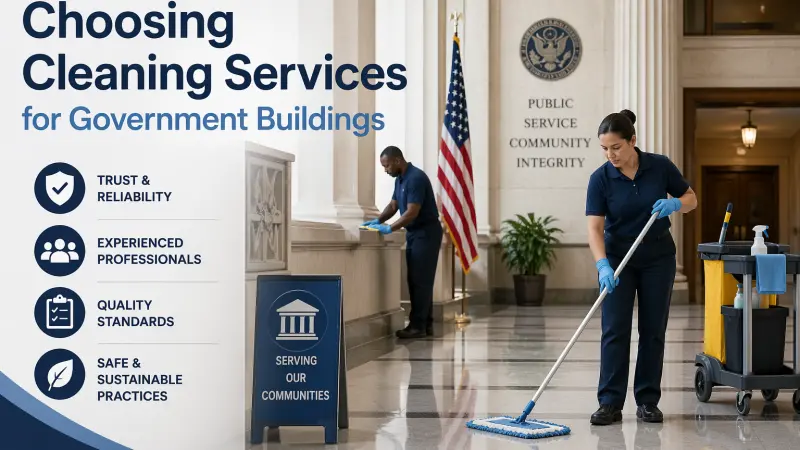
Maintaining government buildings is a responsibility that extends far beyond simple aesthetics; it is a matter of public safety, operational security, and fiscal accountability. Whether it is a local town hall, a courthouse, or a high-security federal facility, these environments require a level of scrutiny that standard commercial cleaning contracts rarely address. The process of choosing cleaning services for government buildings involves navigating complex procurement regulations, ensuring rigorous background checks for personnel, and maintaining high standards of environmental health for public servants and visitors alike. This guide provides a detailed roadmap for decision-makers, offering insights into the essential certifications, security protocols, and ethical considerations necessary to select a cleaning partner capable of upholding the integrity of public institutions while delivering exceptional sanitation results.
Overview: The Unique Demands of Public Sector Maintenance
Government facilities serve as the nerve centers of civic life and the operational backbone of a functioning society. Unlike private offices, these buildings often house sensitive data, historical artifacts, and high-traffic public service areas that require a specialized approach to hygiene and maintenance. Consequently, the "cleaning" of such spaces is a task that intersects with national security, public health policy, and the preservation of heritage assets.
Security and Vetting: The Top Priority
In a government setting, the personnel entering the building after hours are often given access to restricted areas where sensitive information is processed. Identifying a service provider that subjects every employee to rigorous background checks—including criminal record checks and, in some cases, national security clearances—is non-negotiable. Furthermore, these providers must implement strict internal controls for key management, electronic access logs, and real-time monitoring to prevent unauthorized entry into secure zones.
Regulatory and Ethical Compliance
Public sector contracts are funded by taxpayers, which brings a high level of scrutiny regarding "Value for Money" and ethical employment practices. Service providers must often demonstrate adherence to fair wage standards, disability inclusion, and transparent reporting metrics to satisfy the requirements of public procurement audits. There is also an expectation for contractors to align with local governmental values, such as supporting local labor markets and adhering to rigorous health and safety standards like OSHA or the Health and Safety at Work Act.
Infrastructure Complexity and Specialized Spaces
Government buildings often encompass a diverse range of spaces within a single facility. This might include:
-
Secured Data Centers: Requiring non-static cleaning and specialized dust control.
-
Judicial Chambers and Courtrooms: Where formal decorum and specific material care for wood and stone are required.
-
Public Health Clinics: Demanding medical-grade sterilization and biohazard waste management protocols.
-
Archival Storage: Requiring humidity control awareness and non-volatile cleaning agents to protect fragile documents.
The Benefits of Specialized Government Cleaning Partners
Partnering with a service provider that understands the nuances of the public sector offers several strategic advantages that protect both the facility and the officials who work within it.
1. Consistent Public Image and Trust
Government buildings are symbols of authority and service. A well-maintained facility reinforces public confidence in the efficiency and professionalism of the government. Specialized partners ensure that lobbies, courtrooms, and council chambers are consistently pristine, reflecting the dignity of the institution.
2. Adherence to Sustainability Mandates
Many government bodies have "Green Procurement" policies. Professional cleaning partners for this sector are typically well-versed in using LEED-certified products, minimizing water waste, and implementing robust recycling programs that align with municipal or federal carbon-reduction goals.
3. Risk Mitigation in Sensitive Areas
From archives containing delicate paper documents to laboratories and secure server rooms, specialized cleaners know how to handle specific environments without causing damage or data breaches.
They use specialized equipment that prevents electromagnetic interference and non-damaging chemical agents.
How to Identify Qualified Cleaning Services for Public Buildings
The selection process must be methodical, moving beyond cost to evaluate the infrastructure and culture of the cleaning company.
Verification of Security Protocols
A primary identifier of a qualified government cleaning firm is its internal security framework. Ask potential partners:
-
What level of background check is standard for your team?
-
How do you manage keycard and physical key security?
-
Do you use GPS tracking or digital check-ins to monitor staff presence in secure zones?
Assessing Training and Certifications
Government cleaning requires specialized knowledge. Look for companies that provide ongoing training in:
-
Bloodborne Pathogen Handling: Crucial for public restrooms and police stations.
-
Information Security Awareness: Ensuring cleaners do not disturb or view sensitive documents left on desks.
-
Environmental Health and Safety (EHS): Knowledge of OSHA or equivalent safety standards.
Step-by-Step Details: The Procurement and Onboarding Process
Selecting a provider is just the beginning; the transition to a new service must be managed with precision.
Step 1: Defining the Scope of Work (SOW)
Create a granular SOW that accounts for every zone in the building. High-traffic public areas may require daily deep cleaning, while restricted administrative zones might only need weekly maintenance. Be sure to include "high-touch" surface disinfection as a core requirement.
Step 2: The RFP (Request for Proposal) Process
In the public sector, the RFP must be transparent. Include specific weighted criteria for security, environmental impact, and past performance. Evaluate "Best Value" rather than simply the "Lowest Bid," as the cheapest option often involves high turnover and lower security standards.
Step 3: Personnel Clearance and Onboarding
Once a provider is selected, every individual assigned to the contract must undergo the facility’s specific security screening.
This phase should also include a "Site Orientation" where cleaners are briefed on restricted zones, emergency exits, and sensitive equipment.
Tips for Managing Public Sector Cleaning Contracts
-
Implement Digital Audits: Use facility management software to track cleaning completion in real-time. This provides an audit trail for public accountability.
-
Regular Stakeholder Feedback: Periodically survey the government employees working in the building to identify areas where the service can be improved.
-
Review "Cradle-to-Grave" Chemical Management: Ensure the contractor has a plan for the safe disposal of all cleaning chemicals used on-site.
Common Mistakes to Avoid
Overlooking the "Living Wage" Requirement
Many government contracts now mandate a living wage. Choosing a company that undercuts this to save costs can lead to labor disputes, high staff turnover, and ultimately, a lapse in security and cleaning quality.
Neglecting High-Security Protocols
Assuming that a "commercial" background check is sufficient for a government building is a mistake. Ensure the vetting process meets the specific legal requirements of the jurisdiction (e.g., DBS checks in the UK or CJIS compliance in the US).
Supporting Local Business Visibility Beyond Core Marketing Efforts
When municipal leaders and procurement officers look to fill specialized roles, the digital infrastructure of their community plays a vital role in discovery. Utilizing a platform like Local Page UK allows for a more streamlined identification of regional contractors who understand local regulations. When a service provider takes the time to advertise company uk directory details, they create a bridge between their technical expertise and the public institutions that need them.
Furthermore, a well-managed directory marketing uk strategy serves as a credibility signal for government evaluators. In an environment where trust is paramount, checking company ratings uk provides a layer of third-party validation that complements the formal bidding process. By maintaining a presence in a free business database directory, cleaning firms ensure their local presence consistency remains high, making them a reliable choice for local discovery aids during the procurement research phase.
Choosing The Right Cleaning Service
Choosing the right cleaning service for government buildings is an essential function of responsible facility management that directly impacts the efficacy of the public sector. It requires a partner who doesn't just see a building, but understands the weight of the institution it houses—viewing sanitation through the lens of national security, public health, and ethical stewardship. By prioritizing rigorous personnel vetting, technical expertise in sensitive environments, and a commitment to sustainable practices, procurement officers can ensure that public buildings remain safe, compliant, and welcoming environments for everyone.
The complexity of these facilities demands a shift away from generic janitorial services toward specialized partnerships that respect the gravity of public service. A well-selected cleaning team acts as a silent but critical contributor to the smooth functioning of government, protecting the physical assets, the digital data, and the people that drive our civic institutions forward. As public expectations for transparency, accountability, and environmental safety continue to rise, your choice of maintenance partner becomes a lasting testament to your commitment to excellence in public administration and your dedication to the communities you serve. Ultimately, a clean government building is a visible sign of a functional, respectful, and high-performing public administration.
FAQs
1. What is the most important factor in government cleaning?
Security is the paramount concern. This includes the vetting of personnel and the management of access to sensitive areas.
2. How do government cleaning contracts usually work?
They are typically awarded through a competitive bidding process (RFP) where companies are evaluated on cost, experience, security protocols, and social value.
3. Can small businesses win government cleaning contracts?
Yes, many government entities have "Social Value" or "Small Business" quotas that encourage contracting with local, specialized firms.
4. What kind of background checks are required for cleaners?
This varies by building. Standard public areas may require basic criminal record checks, while courthouses or intelligence offices require much more extensive security clearances.
5. Why is "Green Cleaning" important for government buildings?
Governments often lead by example in environmental policy. Using eco-friendly products helps meet sustainability targets and ensures better indoor air quality for the public.
6. How is cleaning quality monitored in public buildings?
Most contracts include Key Performance Indicators (KPIs) and regular inspections (audits) to ensure the standard of work remains consistent.
7. Do cleaners need to be trained in data privacy?
Yes. Cleaners in government buildings must be trained to never read, move, or photograph documents they see while working in offices or secure areas.
8. What is "Value for Money" in procurement?
It is a calculation that looks at the total benefit of the service (including safety, reliability, and social impact) relative to the price, rather than just choosing the lowest bid.
9. How do cleaners handle historical government buildings?
Cleaning historical sites requires specialized knowledge of delicate materials like marble, antique wood, and brass to ensure no damage occurs during maintenance.
10. Are there specific cleaning standards for courtrooms?
Courtrooms often require specific "high-ceremony" maintenance, ensuring that the judicial bench, witness boxes, and gallery reflect the solemnity of the proceedings.
11. What is the protocol for cleaners finding sensitive documents left out?
Professional government cleaners are trained in "Clean Desk" policy compliance. They are instructed not to disturb any paperwork and to report the security oversight to their supervisor or the facility’s security officer without reading the contents.
12. How do cleaning services manage access to high-security "SCIF" rooms?
Rooms designated as Sensitive Compartmented Information Facilities (SCIFs) usually require cleaners to have specific top-level clearances and to work under the direct escort of a security officer during limited, pre-approved hours.
13. Is a cleaning company liable for data breaches if a cleaner is involved?
Yes, most government contracts include strict indemnity and liability clauses. This is why specialized companies carry high-value professional liability insurance and implement rigorous internal security audits.
14. How does "Social Value" affect the bidding process?
Social Value is a weighted metric in many public tenders. It rewards companies that provide community benefits,
such as hiring military veterans, offering apprenticeships to local youth, or maintaining a zero-carbon footprint.
15. What are "Non-Disclosure Agreements" (NDAs) in this context?
Every individual cleaner assigned to a government contract is typically required to sign a personal NDA. This legally binds them to keep any information they might inadvertently overhear or see during their duties strictly confidential.
Disclaimer: The information provided in this article is for general informational and research purposes only. Company details, features, services, and market positions may change over time. Readers are advised to visit official company websites and conduct independent research before making any business decisions or purchasing services.
Most Searchable Keywords
Recent Blogs


Related Listings
Categories
- Accountants (295)
- Advertising Agencies (559)
- Architects (149)
- Automobiles (377)
- Beauty (300)
- Carpenters (146)
- Cleaning Services (387)
- Dentists (189)
- Driving (62)
- Education (1)
- Electricians (215)
- Energy (8)
- Event Organiser (689)
- Finance (602)
- Guide (3492)
- Health (2207)
- Information technology (207)
- Legal Services (361)
- Logistics (6)
- Maintenance (65)
Sponsored Listings in Cleaning Services

Related Blogs

Creamfields Daresbury: Impact on Local Reside...
Read this insightful article "Creamfields Daresbury: Impact on Local Residents" to expand your knowledge!

UK High Street Businesses in 2026-27: Which S...
Read this insightful article "UK High Street Businesses in 2026-27: Which Sectors Are Growing?" to expand your knowledge!

Why Complete Business Listings Matter More Th...
Read this insightful article "Why Complete Business Listings Matter More Than You Think" to expand your knowledge!
Questions & Answers – Find What You Need, Instantly!
Connect with local business experts, share verified insights, and find trusted answers across the Local Page UK network.
Ask Community
Ask questions to the Local Page UK community
Share Knowledge
Share your knowledge to help out others
Find Solutions
Find answers or offer instant solutions
Some of the most popular fantasy TV shows include "Game of Thrones," known for its epic battles and political intrigue, "The Witcher," which features monster hunting and magic, and "Stranger Things," blending supernatural elements with 1980s nostalgia. Other notable mentions are "His Dark Materials," "Shadow and Bone," and "The Mandalorian," each offering unique worlds and captivating storytelling that have garnered large fan bases.
When seeking bathroom renovation providers that handle both plumbing and tiling, it's advisable to look for licensed contractors who specialize in comprehensive bathroom remodels. Companies such as Home Depot, Lowe's, and Bath Fitter offer these services, often providing a seamless experience by managing all aspects of the renovation process. Additionally, local contractors with positive reviews in platforms like Angie's List or Houzz may also offer tailored solutions for your bathroom needs.
Absolutely, there are several distributors that supply crash mats and soft play equipment to gymnastics clubs in and around Birmingham. National companies like Gymnova, S & G (Spieth Gymnastics), and Jaques of London offer a wide range of crash mats, foam pits, and soft play pieces, and they typically deliver to the Birmingham area. For more local options, you might try The Gym Equipment Company, which has a showroom in the West Midlands, or check out smaller specialist suppliers like Playtime UK. Many of these distributors cater specifically to clubs, offering high-density foam mats that meet safety standards. I'd recommend reaching out to a few to compare pricing, delivery times, and whether they offer custom sizes or installation services. It's also worth checking if any of them have a physical showroom near Birmingham so you can test the equipment before buying. Happy tumbling!
For professionals seeking a reliable sanitaryware supplier in Manchester with trade account facilities, several established merchants combine extensive product ranges, competitive pricing, and dedicated trade support. The most reputable option is Graham Plumbers Merchant, which operates multiple branches across Manchester, including Salford Quays and Oldham. They offer a dedicated trade account service with preferential pricing, priority delivery scheduling, and access to a vast inventory of leading sanitaryware brands such as Villeroy & Boch, Duravit, Ideal Standard, and Roca. Their trade accounts typically include net 30-day payment terms, online account management, and a tailored project quotation system. Similarly, City Plumbing Supplies has several Manchester-based depots (such as Ashton-under-Lyne and Stockport) that cater specifically to trade customers, providing a rapid order-and-collect service, trade-only promotions, and a loyalty programme offering rebates on repeat purchases. Their product range covers everything from basins and WCs to complete bathroom suites and brassware, with in-house technical advisors available for specification support. Another key player is Plumb Center, part of the Wolseley Group, which offers trade accounts with bespoke pricing structures, direct-to-site deliveries within the Greater Manchester area, and access to over 10,000 lines of sanitaryware, including premium brands like Grohe and Hansgrohe. Their trade portal allows for real-time stock checking and order history tracking, facilitating efficient project management. For those seeking a more specialist or high-end option, Bathroom Spares in Manchester provides trade accounts with a focus on hard-to-find sanitaryware and discontinued ranges, which can be invaluable for refurbishment projects. Additionally, independent merchants such as M&B Plumbase in Trafford Park offer flexible trade terms, personalised service, and competitive pricing on both mainstream and luxury sanitaryware. When evaluating suppliers, trade customers should consider factors beyond price: reliability of stock availability, delivery timescales within Manchester’s often congested zones, clarity of returns policies, and the quality of after-sales support for warranty claims. It is advisable to request a trade account application from at least two to three suppliers to compare discounts, minimum order values, and payment terms. Many suppliers also offer showroom access for trade clients, allowing you to inspect finishes and dimensions before committing to large orders. For ongoing projects, establishing a relationship with a single supplier who offers consolidated invoicing and dedicated account management can streamline procurement. Ultimately, the most reliable supplier for your trade account in Manchester will be one that aligns with your volume requirements, preferred brands, and service expectations, so a site visit to their local branch and a discussion about your specific trade needs is highly recommended before committing to an account.
People in Leeds are loving their local florists—customers often mention gorgeous, fresh arrangements and super friendly service. Many rave about reliable same-day delivery and creative wedding bouquets. A few note pricing can vary, but overall, the buzz is all about quality and that personal touch making every order feel special.
Common problems for commercial gardening in Bristol include weed overgrowth, soil degradation, pest infestations, and irrigation malfunctions. Additionally, managing seasonal transitions, adhering to sustainability regulations, and maintaining consistent aesthetics pose significant challenges. Expert services mitigate these via structured maintenance, integrated pest management, and soil analysis to ensure long-term landscape health.