
Coat Hanger Manufacturing Guide: Materials, Design & Bulk Buying
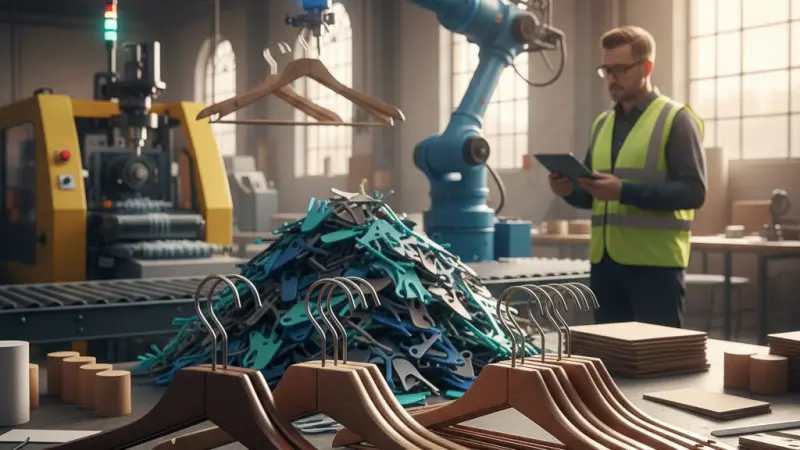
In the grand tapestry of the British economy, few objects are as ubiquitous yet frequently overlooked as the humble coat hanger. From the high-street boutiques of London's Regent Street to the industrial-scale wardrobes of the hospitality sector, coat hangers represent a vital cog in the UK’s retail and manufacturing infrastructure. The coat hanger manufacturing sector is not merely about plastic or wood; it is a sophisticated industry involving precision engineering, material science, and high-volume logistics. As we move further into the 2020s, the importance of this sector has only intensified, driven by the resurgence of physical retail and the booming "pre-loved" clothing market.
The economic footprint of the coat hanger industry in the UK is significant. While many perceive it as a low-margin commodity market, the reality involves a high degree of technical expertise and a robust supply chain that supports thousands of jobs. Whether it is a bespoke wooden hanger for a Savile Row tailor or a million-unit order of recycled plastic hangers for a supermarket chain, the demand remains constant. For those looking to navigate this market, understanding the nuances of manufacturing is essential. Utilizing a uk business directory can often be the first step for procurement officers seeking to identify local manufacturers who can meet specific British Standards for durability and safety.
In this guide, we will explore the intricate world of hanger production, from the raw materials sourced in the North of England to the global distribution networks that keep the UK fashion industry afloat. We will delve into how design influences garment longevity, the economics of bulk buying, and why the "Made in Britain" stamp is reclaiming its prestige in the manufacturing landscape. For small businesses and industrial giants alike, the right hanger is more than a utility—it is a brand statement and a logistical necessity.
The Landscape of Coat Hangers in the UK
The UK coat hanger market has undergone a dramatic transformation over the last decade. Historically, the industry was dominated by domestic timber-based manufacturing, particularly in regions with strong woodworking traditions like the Midlands and Yorkshire. However, the late 20th century saw a shift toward mass-produced injection-moulded plastic. Today, we are witnessing a "third wave" where sustainability and high-end aesthetics are driving a return to diverse material usage and local production.
Current market estimates suggest that the UK garment care and accessory market is worth hundreds of millions of pounds, with coat hangers making up a substantial portion of non-garment retail spend. Post-pandemic, the landscape has shifted; with the rise of e-commerce, there has been a secondary surge in the demand for shipping-ready, durable hangers that can withstand the rigours of the "last-mile" delivery process. Key manufacturing hubs remain active in the West Midlands and parts of Lancashire, where proximity to chemical and plastic processing plants provides a competitive advantage.
Post-pandemic recovery has also highlighted the fragility of long-distance supply chains. Many UK retailers, having faced months of delays for imported stock, are now turning back to domestic suppliers to ensure stability. This "on-shoring" trend has benefited local manufacturers who can offer shorter lead times and lower carbon footprints. To find these domestic partners, many procurement leads now rely on a uk online business directory to verify the credentials of UK-based factories and wholesalers. This shift isn't just about logistics; it’s about a renewed British focus on quality control and the ability to visit manufacturing sites to ensure ethical labor practices are being upheld.
Comprehensive Services Breakdown
The modern coat hanger manufacturer offers far more than a one-size-fits-all product. The services provided within this niche are highly specialized, catering to different sectors of the economy.
1. Material Specialization
Manufacturers generally categorize their offerings by material:
Wooden Hangers: The premium choice. Often made from sustainable beech, lotus, or cedar. Services include "anti-slip" notch cutting and bespoke branding via laser engraving.
Metal & Wire Hangers: Essential for dry cleaners and high-volume laundries. These are manufactured using high-speed wire bending machines.
Plastic & Composite Hangers: These involve injection moulding. Advanced manufacturers now offer "Bioplastic" options or hangers made from 100% recycled ocean plastics.
2. Design and Prototyping
For high-end fashion brands, a hanger is part of the product experience. Manufacturers provide CAD design services to create custom shapes that support specific shoulder widths or delicate fabrics.
This ensures that garments don't lose their shape while on display or in storage.
3. Bulk Procurement and Logistics
Bulk buying is the lifeblood of the industry. Manufacturers offer tiered pricing models where "the more you buy, the less you pay." However, managing the storage of 50,000 hangers is a challenge. Therefore, many top-tier providers offer "Stock & Call-off" services, where they store the bulk order and deliver it in smaller batches as needed.
When looking for these specialized providers, it is important to consult a business listing uk to see which companies offer these added-value services. Whether you are a boutique owner or a hotel chain manager, understanding the depth of service—from the initial material grain to the final delivery schedule—is what separates a successful procurement strategy from a costly mistake.
How to Choose the Right Service Provider
Selecting a manufacturing partner in the UK requires more than just looking at a price list. Because coat hangers are often used in public-facing environments (like hotels or retail stores), the quality and safety of the product are paramount.
Accreditations and Standards
Look for manufacturers who adhere to ISO 9001 (Quality Management) and ISO 14001 (Environmental Management). In the UK, checking for FSC (Forest Stewardship Council) certification is non-negotiable if you are purchasing wooden hangers. This ensures the wood is sourced from responsibly managed forests.
Insurance and Liability
Ensure your provider has robust Product Liability Insurance. A snapped hanger in a retail environment that causes injury or damages a £5,000 gown can lead to significant legal headaches. Verified manufacturers will always be transparent about their insurance coverage.
Reputation and Reviews
In the digital age, a company's local reputation is visible through their online footprint. Before signing a long-term contract, check local business listings uk to read peer reviews and see how they handle customer service. A manufacturer might have the best prices, but if their delivery reliability is poor, it will cost your business more in the long run.
Local Expertise
There is an undeniable benefit to working with a local provider. The ability to speak the same "business language," understand UK tax requirements, and have a shared understanding of the British retail calendar (such as prepping for the Christmas rush) is invaluable.
Industry Challenges & Future Outlook
The coat hanger industry faces a pivotal moment. The biggest challenge currently is the "Plastic Backlash." With the UK government's focus on Net Zero and the tightening of plastic packaging taxes, manufacturers are being forced to innovate.
The Sustainability Shift
We are seeing a move toward "Circular Economy" models. Some UK manufacturers are now implementing "Hanger Take-Back" schemes, where they collect broken or unwanted hangers from retailers, regrind the material, and mould them into new products. This reduces waste and appeals to the environmentally conscious British consumer.
Technological Advancements
Automation is also changing the factory floor. Robotic arms now handle the sorting and packaging of hangers, reducing human error and increasing speed. Furthermore, the integration of RFID tags directly into hangers is becoming a trend for high-end retail, allowing for real-time inventory tracking.
Regulatory Changes
Post-Brexit regulations regarding material imports and chemical usage (REACH standards) continue to evolve. Manufacturers must stay agile to ensure their products remain compliant. For a list of companies currently leading the way in sustainable manufacturing, checking a business listing uk can provide insights into which firms have updated their service offerings to meet these new green benchmarks.
Business Tips for Coat Hangers Professionals
If you are a manufacturer or a specialized wholesaler in this sector, your product quality
is only half the battle. In a competitive UK market, visibility is everything.
Digital Visibility and SEO
Modern B2B buyers start their journey on Google. If your factory is located in Leicester but doesn't appear when someone searches for "Leicester Hanger Manufacturer," you are losing revenue. Investing in a professional website and ensuring you are listed on uk service listings is critical.
Niche Marketing
Don't just sell "hangers." Sell "solutions for bridal boutiques" or "heavy-duty storage for coat-check venues." By specializing your marketing, you become the authority in that sub-sector.
Networking and Local Presence
Attend trade shows like the "Retail Expo" in London, but also maintain a strong digital presence in your local community. Local businesses prefer to support local suppliers. Being active on a uk verified business listings platform helps build that trust and proves that your business is a legitimate, tax-paying entity in the UK.
Content Marketing
Write about the benefits of different materials. Explain why a 45cm hanger is better for men's suits than a 42cm one. Educational content builds authority and improves your organic search rankings, making it easier for buyers to find you.
Wrapping Up & Local Page Integration
The coat hanger manufacturing industry is a cornerstone of the UK's commercial infrastructure. As we have explored, it is an industry defined by its ability to blend traditional craftsmanship with modern sustainability and technological innovation. From the initial design phase to the complexities of bulk distribution, every step requires precision and a deep understanding of the market.
For British businesses looking to thrive in this sector—or for those looking to buy from it—the key to success lies in connection. In a crowded digital landscape, finding a reliable, verified partner can be daunting. This is where Local Page UK becomes an indispensable tool. As a premier find local businesses uk platform, it bridges the gap between expert manufacturers and the businesses that need them.
By focusing on quality, sustainability, and local collaboration, the UK coat hanger industry is well-positioned for a prosperous future. Whether you are manufacturing the next generation of eco-hangers or seeking a reliable bulk supplier for your retail empire, the right information and the right connections are your most valuable assets.
Boost Your Visibility with Local Page UK
In the competitive coat hanger and manufacturing sector, being invisible is equivalent to being out of business. To reach procurement officers, retail managers, and boutique owners across the country, you need a strong digital footprint. We invite all UK-based manufacturers, wholesalers, and service providers to claim their business listing uk today. By joining our network, you enhance your local SEO, build trust through verified data, and ensure that when someone searches for your services, your name is at the top of the list.
FAQs
What are the most durable materials for bulk coat hanger manufacturing?
In the UK market, durability often depends on the intended use. For heavy-duty industrial or hospitality use, solid beechwood or high-grade chrome-plated steel are the gold standards. Beechwood offers excellent tensile strength and doesn't warp under the weight of heavy winter coats.
For high-volume retail, high-impact polystyrene (HIPS) is commonly used because it provides a balance between cost-effectiveness and shatter resistance. Many manufacturers are now also turning to glass-reinforced plastic for maximum longevity. Choosing the right material ensures a lower replacement rate, which is a key consideration for any business involved in bulk procurement.
How does the "Hanger Take-Back" scheme work in the UK?
This is a sustainability initiative where manufacturers or large retailers collect used or broken plastic hangers from consumers and store branches. These items are then transported to a recycling facility where they are sorted by polymer type, cleaned, and shredded into "regrind." This recycled material is then mixed with a small percentage of virgin plastic to create new hangers. It’s a closed-loop system that significantly reduces the environmental impact of the fashion industry. Many businesses find that participating in these schemes enhances their brand reputation and helps meet their corporate social responsibility (CSR) targets.
What is the standard size for a professional coat hanger?
While sizes vary, the standard width for a standard adult hanger in the UK is typically 42cm to 45cm. A 42cm hanger is generally considered "universal" and fits most female and smaller male garments. For tailored menswear and suits, a 45cm or even 47cm "broad-end" hanger is preferred to provide proper support to the shoulder pads. Using the wrong size can lead to "shoulder nipples" or fabric stretching, which can ruin expensive stock. Specialty manufacturers also produce petite (38cm) and children’s (30cm) sizes to cater to specific market segments.
Why is FSC certification important when buying wooden hangers?
The Forest Stewardship Council (FSC) certification ensures that the timber used in manufacturing comes from forests that are managed in a way that preserves biological diversity and benefits the lives of local people and workers. For UK businesses, buying FSC-certified hangers is often a requirement for government contracts and large-scale corporate tenders. It provides a transparent audit trail from the forest to the wardrobe. Without this certification, there is a risk that the wood could be linked to illegal logging or deforestation, which can lead to significant PR damage for a brand.
Can I brand my coat hangers for a small boutique?
Yes, branding is a standard service offered by most UK manufacturers. For wooden hangers, laser engraving or pad printing are the most popular methods. Laser engraving provides a premium, permanent feel that won't fade over time. For plastic hangers, hot foil stamping or silk-screen printing are more common. Branding your hangers turns a utility item into a marketing tool, ensuring your store's name remains in the customer's mind every time they open their wardrobe. To find suppliers who offer low-minimum order quantities for branding, it is helpful to search through Localpage.
What are the benefits of anti-slip notches on hangers?
Anti-slip notches are small indentations on the arms of a hanger designed to hold the straps of dresses, skirts, or camisoles. In a retail environment, these are essential for preventing garments from falling onto the floor, which can lead to staining or damage. Some premium hangers also use "soft-touch" rubber coatings or velvet flocking on the shoulders to provide additional grip for silk and other delicate fabrics. For bulk buyers, specifying the type of notch or grip required is a vital part of the design process to ensure the hangers are fit for purpose.
Is there a difference between a coat hanger and a suit hanger?
Absolutely. A standard coat hanger is usually slim to save space in a wardrobe or on a rail. A suit hanger, however, is much thicker, specifically at the ends (the "shoulder"). This thickness mimics the shape of a human shoulder, which is crucial for maintaining the structure of a suit jacket's padding. Furthermore, suit hangers usually feature a sturdy, often ribbed, trouser bar to prevent trousers from sliding off. Investing in proper suit hangers is essential for any high-end tailor or premium hotel that wants to provide a superior guest experience.
How can I reduce shipping costs when buying hangers in bulk?
Hangers are "high-volume, low-weight" items, meaning they take up a lot of space but aren't very heavy. This can make shipping expensive. To reduce costs, look for "stackable" designs that nest into each other, reducing the number of boxes required. Buying from a UK-based manufacturer also eliminates the high costs of sea freight and customs duties. Additionally, many manufacturers offer "flat-pack" shipping for certain types of wire or clip hangers. Consolidating your orders into fewer, larger deliveries can also help you negotiate better rates with logistics providers.
Are metal hangers bad for clothes?
Thin, cheap wire hangers can be detrimental to heavy garments because they can distort the fabric and leave permanent creases. However, high-quality, thick-gauge metal hangers (such as those used in industrial settings or high-end minimalist boutiques) are perfectly safe. The key is the thickness of the metal and the quality of the finish. Chrome-plated or powder-coated metal hangers are smooth and won't snag delicate threads. If you are using metal hangers for long-term storage, ensure they are of a sufficient gauge to support the weight of the item without bending.
What should I look for in a hanger for delicate fabrics?
For delicate materials like silk, chiffon, or lace, you should look for "flocked" or "padded" hangers. Flocked hangers have a velvet-like coating that provides a gentle grip without the need for clips or notches that might snag the fabric. Padded hangers, often covered in satin, provide a soft cushion that prevents any sharp angles from pressing into the garment. For bulk buyers in the bridal or lingerie sectors, these specialty hangers are a necessity to ensure that expensive items remain in pristine condition during both display and transport.
How do clip hangers work for trousers and skirts?
Clip hangers feature two adjustable clips on a horizontal bar. These clips are usually lined with rubber or felt to provide a secure grip without leaving "pressure marks" on the fabric. In manufacturing, the strength of the spring in the clip is a critical quality factor; it must be strong enough to hold a heavy denim skirt but gentle enough not to damage fine wool. For retail use, "quick-release" clips are often preferred to allow staff to move stock quickly. High-quality clip hangers are essential for any organized retail display.
Why is the "Made in Britain" label becoming more popular for hangers?
The "Made in Britain" label is a mark of quality, ethical manufacturing, and environmental responsibility. Following global supply chain disruptions, UK retailers are increasingly valuing the reliability of local factories. Domestic manufacturing also means a significantly lower carbon footprint due to reduced transport distances. Furthermore, UK factories must adhere to strict UK labour laws, providing buyers with peace of mind regarding the ethical treatment of workers. For many consumers, supporting British industry is also a powerful brand story that can be leveraged in marketing.
What is the lead time for a custom hanger order?
Lead times vary depending on the complexity of the order and the location of the manufacturer. For standard, unbranded hangers held in stock, delivery within the UK can be as fast as 24 to 48 hours. For custom-branded or bespoke-shaped hangers, the lead time is typically 4 to 8 weeks. This allows for the creation of custom moulds (for plastic) or the setup of engraving machinery. It is always advisable to plan your hanger procurement at least a quarter in advance, especially if you are preparing for a new store opening or a seasonal collection launch.
How do I maintain and clean professional hangers?
Wooden hangers should be wiped with a slightly damp cloth to remove dust; avoid using harsh chemicals that could strip the varnish or finish. Metal hangers can be cleaned with a standard metal polish if they begin to dull.
For flocked or velvet hangers, a lint roller is the most effective way to remove dust or stray threads. In a high-turnover retail environment, hangers should be inspected regularly for splinters or cracks. Maintaining your hangers not only keeps your garments safe but also ensures your store always looks professional and well-cared for.
Where can I find a list of verified UK hanger suppliers?
Finding a verified supplier is crucial to avoid low-quality counterfeits or unreliable brokers. The most efficient way to source local, reputable manufacturing partners is to use a dedicated directory. These platforms allow you to filter by region and specialty, ensuring you find a partner that fits your specific needs. For a comprehensive and trusted list of British service providers and manufacturers, we recommend using Local page. This ensures you are dealing with established businesses that have a proven track record in the UK market.
Disclaimer: The information provided in this article is for general informational and research purposes only. Company details, features, services, and market positions may change over time. Readers are advised to visit official company websites and conduct independent research before making any business decisions or purchasing services.
Most Searchable Keywords
Recent Blogs


Related Listings

Categories
- Accountants (295)
- Advertising Agencies (559)
- Architects (149)
- Automobiles (377)
- Beauty (300)
- Carpenters (146)
- Cleaning Services (387)
- Dentists (189)
- Driving (62)
- Electricians (215)
- Energy (8)
- Event Organiser (686)
- Finance (602)
- Guide (3374)
- Health (2207)
- Information technology (206)
- Legal Services (354)
- Logistics (6)
- Maintenance (65)
- Manufacturing (35)
Sponsored Listings in Travel Agencies


Related Blogs

Meet the Fair Work Agency Changing UK Work Ru...
Read this insightful article "Meet the Fair Work Agency Changing UK Work Rules in 2026" to expand your knowledge!

Collective Redundancy Errors Now Carry Higher...
Read this insightful article "Collective Redundancy Errors Now Carry Higher 2026 Penalties" to expand your knowledge!

Explore Dog Friendly Walks in the Cotswolds f...
Read this insightful article "Explore Dog Friendly Walks in the Cotswolds for 2026" to expand your knowledge!
Questions & Answers – Find What
You Need, Instantly!
How can I update my business listing?
Is it free to manage my business listing?
How long does it take for my updates to reflect?
Why is it important to keep my listing updated?
