
Cost of Living Payments: What Still Exists Now
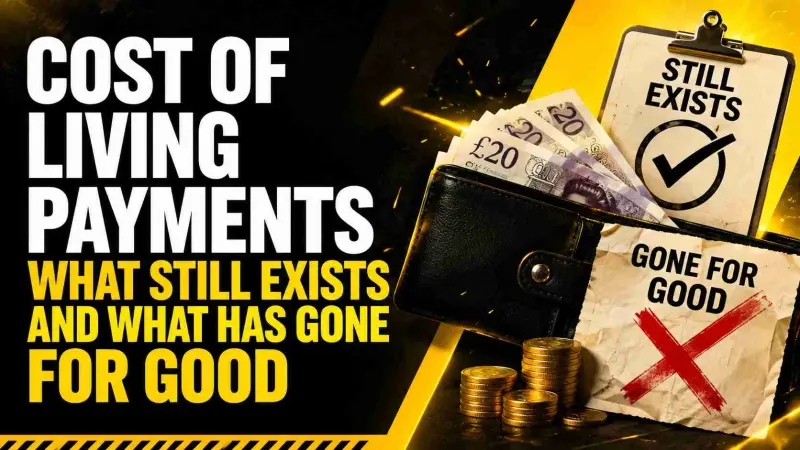
If you are still waiting for another Cost of Living Payment, there is an important change to understand: the UK government is not planning to make any more of the national Cost of Living Payments that were paid between 2022 and 2024.
Those payments helped millions of households deal with rapidly rising food, energy and household costs. But the scheme has now ended. The final £299 payment for eligible low-income households was made in early 2024, and the government has confirmed that no further Cost of Living Payments are planned.
That does not mean all cost-of-living support has disappeared.
Other forms of help remain available, including Winter Fuel Payments, Cold Weather Payments, the Warm Home Discount, Pension Credit and support through local councils. In England, the former Household Support Fund has also been replaced by the new Crisis and Resilience Fund from April 2026.
The key is knowing which payments have genuinely ended, which schemes have changed, and which support you may still be able to claim.
What Cost of Living Payments have ended, what support replaced them, and what can households still get?
What were the Cost of Living Payments?
The Cost of Living Payments were temporary, tax-free payments introduced by the UK government to help households facing exceptional increases in living costs.
They were not a permanent benefit. Instead, they were additional payments linked to eligibility for certain existing benefits or tax credits.
During the 2023–24 programme, eligible households receiving means-tested benefits could receive three payments of:
- £301
- £300
- £299
Together, these amounted to up to £900 for eligible households.
There was also a separate £150 Disability Cost of Living Payment for eligible people receiving qualifying disability benefits. Pensioner households receiving a qualifying Winter Fuel Payment could receive an additional £300 Pensioner Cost of Living Payment.
The scheme therefore became a significant source of temporary financial help for people receiving benefits such as Universal Credit, Pension Credit and certain tax credits.
But the scheme was always intended as temporary support.
Are Cost of Living Payments still being made in 2026?
No. The national Cost of Living Payment scheme has ended, and the Department for Work and Pensions says it is not planning to make any more Cost of Living Payments.
This is one of the most important points for anyone searching online for a new £300, £500 or £900 Cost of Living Payment.
The previous payments should not be confused with other government support that happens to help with living costs.
For example, a person might receive a Winter Fuel Payment, Cold Weather Payment or local council crisis payment. These are separate schemes with different eligibility rules.
So if you see a headline promising a new universal Cost of Living Payment, check the information carefully before assuming it applies to you.
Why did the payments stop?
The Cost of Living Payments were introduced as part of a temporary response to exceptional cost pressures.
The 2023–24 programme was designed around specific qualifying periods and benefits. Once the final payment was made in early 2024, there was no automatic continuation of the scheme.
The government has since moved towards other forms of support rather than continuing the same nationwide lump-sum payment model.
That includes help with energy bills, pensioner support, targeted benefit payments and locally delivered assistance.
This distinction matters because the end of Cost of Living Payments does not mean the end of cost-of-living assistance.
Which Cost of Living Payments are gone for good?
The following national payments should now be treated as historical schemes rather than current benefits:
| Former payment | Status |
|---|---|
| £301 Cost of Living Payment | Ended |
| £300 Cost of Living Payment | Ended |
| £299 Cost of Living Payment | Ended |
| £150 Disability Cost of Living Payment | Ended |
| £300 Pensioner Cost of Living Payment | Ended |
| £900 three-payment package | Ended |
The government’s current guidance confirms that the final Cost of Living Payments related to qualifying periods in 2023, with the last £299 payments generally being made in February 2024.
There is therefore no current application for a new £299 or £300 Cost of Living Payment.
What support still exists?
Although the old scheme has ended, several important forms of assistance remain.
The most relevant include:
- Winter Fuel Payment
- Cold Weather Payment
- Warm Home Discount
- Pension Credit
- Crisis and Resilience Fund support in England
- Local welfare assistance
- Council Tax support
- Energy and household-bill assistance
The right option depends heavily on your age, income, benefits, household circumstances and where you live.
Is Winter Fuel Payment still available?
Yes. Winter Fuel Payment continues, but its eligibility rules are different from the old Cost of Living Payment system.
For winter 2026–27, people born on or before 27 June 1960 could receive between £100 and £300 to help with heating costs. Most eligible people are expected to receive the payment automatically, generally in November or December 2026.
There is also an important income rule.
If your total individual income is above £35,000, HMRC will recover the Winter Fuel Payment. The government says this can happen through changes to your tax code or through Self Assessment. Your partner's income does not count towards your individual income for this purpose.
This means Winter Fuel Payment should not be described as a replacement for the old Cost of Living Payment. It is a separate pensioner-focused heating payment.
Does everyone over State Pension age get Winter Fuel Payment?
Not necessarily.
Eligibility depends on factors including your date of birth and circumstances during the qualifying week.
For 2026–27, the qualifying week is 21 to 27 September 2026.
Most eligible people who receive certain benefits, including State Pension, Pension Credit, Universal Credit,
PIP and Attendance Allowance, should not need to make a separate claim.
People who do not receive one of the relevant benefits may need to claim in certain circumstances.
What about Scotland?
Scotland has different arrangements for some forms of winter support.
People living in Scotland cannot receive the UK Winter Fuel Payment and may instead qualify for the Pension Age Winter Heating Payment.
Likewise, Scotland does not use the Cold Weather Payment system used in England and Wales.
This is why location matters when researching cost-of-living support.
Is Cold Weather Payment still available?
Yes, Cold Weather Payments remain available in England and Wales.
The scheme provides £25 for each seven-day period when the average temperature in the relevant area is recorded or forecast to be 0°C or below for seven consecutive days.
The 2025–26 Cold Weather Payment season ran from 1 November 2025 to 31 March 2026.
Eligible people can receive the payment automatically if they receive certain benefits, including:
- Pension Credit
- Universal Credit
- Income-related ESA in qualifying circumstances
- Support for Mortgage Interest
There is no need to apply simply because the weather becomes cold.
This is another important difference from the old Cost of Living Payment. Cold Weather Payment is triggered by specific weather conditions and benefit eligibility, rather than being a fixed national lump sum.
What replaces Cold Weather Payment in Scotland?
People living in Scotland cannot receive Cold Weather Payments.
Instead, eligible households may receive an annual Winter Heating Payment, which is not dependent on a particular cold-weather trigger.
Is the Warm Home Discount still available?
Yes.
The Warm Home Discount is another form of support that remains separate from Cost of Living Payments.
Rather than putting cash directly into your bank account, it provides a £150 discount on an eligible household's electricity bill.
The scheme has different eligibility arrangements across Great Britain.
For England and Wales, qualifying benefits can include Universal Credit, Housing Benefit, income-related ESA, income-based JSA and Pension Credit, subject to the scheme's rules.
The scheme for winter 2025–26 has closed and is scheduled to reopen in October 2026.
The important distinction is simple:
Cost of Living Payment = cash payment.
Warm Home Discount = reduction on an energy bill.
They should not be treated as the same benefit.
What happened to the Household Support Fund?
The Household Support Fund has also changed.
In England, the Household Support Fund ended in March 2026 and has been replaced by the Crisis and Resilience Fund.
The new fund began on 1 April 2026 and covers the period through March 2029.
This is particularly important for households looking for emergency help.
The Crisis and Resilience Fund is intended to support people facing financial shocks and help households build longer-term financial resilience.
Local authorities can use the funding for several types of support, including:
- Crisis Payments
- Housing Payments
- Financial resilience services
- Community coordination
The government allocated more than £858 million to English local authorities for the 2026–27 Crisis and Resilience Fund, as shown in the official grant determination.
Can you get a Crisis Payment if you are not receiving benefits?
Potentially, yes.
Unlike some benefit-linked support, eligibility for local Crisis and Resilience Fund assistance depends on the rules established by the relevant council.
The official government guidance says support is aimed at people who are vulnerable or unable to pay for essentials, and you do not necessarily have to be receiving benefits to receive help.
Councils have discretion over how their schemes operate, so eligibility, application processes and available support can vary between areas.
This is one reason it is worth checking your own council rather than relying on a generic social media post about a supposed nationwide payment.
Could local council support replace the old £900 payment?
No — at least not in the sense of providing every eligible household with an equivalent £900 payment.
The Crisis and Resilience Fund is a different model.
It is locally administered and designed to respond to financial hardship and emergencies rather than automatically paying everyone who receives Universal Credit or another qualifying benefit.
For example, a council might provide help with essential household costs or operate a crisis-payment scheme for people facing a sudden financial shock.
Another council may have different application rules.
The government's guidance specifically gives councils discretion over how funding is used within the framework.
Therefore, households should not assume that receiving Universal Credit automatically means receiving a fixed local payment.
Why Pension Credit matters more than many people realise
For older households on a low income, Pension Credit can be particularly important because it can unlock or support access to other forms of help.
From April 2026, the standard Pension Credit minimum guarantee is:
- £238 a week for a single person
- £363.25 a week for a couple
Additional amounts can apply depending on circumstances.
Pension Credit is not a Cost of Living Payment.
However, qualifying for Pension Credit can have wider financial consequences because it may affect eligibility for other support, including certain heating and household-cost schemes.
This is why someone who thinks they are "just above" the threshold should still consider checking their entitlement rather than assuming they cannot qualify.
What should you do if you are struggling with living costs now?
If your household budget is under pressure, do not focus only on whether another Cost of Living Payment is coming.
A better approach is to check the support that applies to your particular circumstances.
Step 1: Check your existing benefits
Review whether you are receiving everything you are entitled to.
Potentially relevant benefits can include Universal Credit, Pension Credit, PIP, Attendance Allowance, Housing Benefit and other forms of support.
Step 2: Check energy support
Look at the Warm Home Discount and other available energy assistance.
From April 2026, the government also introduced measures intended to remove an average of £150 from household energy costs, automatically, as part of wider cost-of-living support.
Step 3: Check your local council
If you are struggling to pay for food, energy, water, essential goods or housing costs, check what your council provides through its local support schemes.
In England, this may include Crisis and Resilience Fund assistance.
Step 4: Check pensioner support
If you are of pension age, investigate Pension Credit and Winter Fuel Payment rather than assuming the old £300 Cost of Living Payment will return.
Step 5: Check your nation's rules
England, Scotland, Wales and Northern Ireland do not always use the same schemes.
A benefit or local support programme available in England may operate differently elsewhere in the UK.
What are the biggest mistakes people make?
One of the most common mistakes is confusing a genuine government scheme with an old payment being recycled in a social media post.
Be particularly cautious about claims such as:
- "New £900 Cost of Living Payment confirmed"
- "Everyone on Universal Credit gets £300"
- "£500 Cost of Living Payment arriving this month"
- "Apply now for the new DWP Cost of Living Payment"
The official DWP guidance currently says that it is not planning to make any more Cost of Living Payments.
Another mistake is assuming that all support is automatic.
Some benefits are automatic once eligibility is established. Other local schemes require an application.
Finally, do not assume that one payment replaces another.
Winter Fuel Payment, Cold Weather Payment, Warm Home Discount, Pension Credit and Crisis Payments have different purposes and rules.
What could happen to cost-of-living support in the future?
The direction of travel is now different from the emergency-payment approach used during the 2022–24 period.
Rather than relying on repeated nationwide lump-sum Cost of Living Payments, current support is increasingly spread across existing benefits, energy-bill measures and targeted local assistance.
The introduction of the Crisis and Resilience Fund in England is a clear example. It combines funding for crisis support and housing assistance while also placing greater emphasis on financial resilience.
That does not mean another national payment is impossible in the future.
A future government could introduce additional temporary support if economic conditions required it.
But there is currently no official confirmation of a new nationwide Cost of Living Payment matching the £299, £300 or £900 packages from the previous scheme.
The safest approach is therefore to distinguish confirmed support from speculation.
Key Insights
- The national Cost of Living Payment scheme has ended. DWP says it is not planning further payments under the scheme.
- The last major low-income payment was the £299 instalment, generally paid in February 2024.
- Winter Fuel Payment continues for eligible pension-age households, with 2026–27 payments ranging from £100 to £300 before any recovery based on income.
- Cold Weather Payments remain available in England and Wales when qualifying cold-weather conditions occur.
- The Warm Home Discount remains available, with the scheme reopening in October 2026.
- England's Household Support Fund has been replaced by the Crisis and Resilience Fund from April 2026.
- Pension Credit remains particularly important because it can provide income support and may connect eligible households to other assistance.
- Always check official government or council information before acting on claims about new payments.
FAQ
1. Are Cost of Living Payments still being paid in 2026?
No. The national Cost of Living Payment scheme ended after the final payments relating to the 2023–24 programme, and the DWP says it is not planning any more Cost of Living Payments.
2. Will there be a new £300 Cost of Living Payment?
There is currently no official confirmation of a new nationwide £300 Cost of Living Payment. The previous £300 payment formed part of the temporary 2023–24 Cost of Living Payment programme.
3. Has the £900 Cost of Living Payment ended?
Yes. The £900 figure referred to three means-tested Cost of Living Payments of £301, £300 and £299 during the 2023–24 programme. That package has ended.
4. Is the £299 Cost of Living Payment still available?
No. The £299 payment was the final instalment of the main 2023–24 means-tested Cost of Living Payment programme, with most payments made in February 2024.
5. Is Winter Fuel Payment still available?
Yes. Eligible people born on or before 27 June 1960 can receive between £100 and £300 for winter 2026–27, subject to the scheme's rules.
6. Is Cold Weather Payment still available?
Yes. In England and Wales, eligible people can receive £25 for each qualifying seven-day period of very cold weather. Scotland has a different Winter Heating Payment arrangement.
7. Has the Household Support Fund ended?
In England, the Household Support Fund ended in March 2026. It has been replaced by the Crisis and Resilience Fund, which began on 1 April 2026.
8. Can I still get help from my local council?
Yes. Local councils can provide assistance with essential costs such as food, energy, water and housing, depending on their local scheme and your circumstances.
9. Do I need to be receiving benefits to get council cost-of-living support?
Not necessarily. Government guidance says Crisis and Resilience Fund support in England can be aimed at vulnerable people or those unable to afford essentials, including people who are not receiving benefits. Local eligibility rules apply.
10. Is the Warm Home Discount still available?
Yes. The Warm Home Discount provides a £150 discount on eligible energy bills. The scheme has closed for the current period and is scheduled to reopen in October 2026.
11. Can Universal Credit claimants still receive cost-of-living help?
Yes, but not through the former national Cost of Living Payment. Universal Credit can be relevant to schemes such as the Warm Home Discount, Cold Weather Payment and certain local council assistance, depending on the eligibility rules.
12. Is Pension Credit still available in 2026?
Yes. From April 2026, the standard Pension Credit minimum guarantee is £238 a week for a single person and £363.25 for a couple, before applicable additional amounts.
13. Will another Cost of Living Payment come back in the future?
It is possible for governments to introduce temporary support in response to future economic conditions, but there is currently no official announcement of another national Cost of Living Payment.
14. Why do some websites say a new Cost of Living Payment is coming?
Old payment information is frequently republished online, sometimes without clearly stating that the scheme has ended. Always check the date and compare claims with current GOV.UK guidance before assuming a payment is genuine.
15. Where should I check for current cost-of-living support?
Start with GOV.UK and your local council. The appropriate support can depend on your benefits, age, income, household circumstances and whether you live in England, Scotland, Wales or Northern Ireland.
Final Thoughts
The biggest change is straightforward: the Cost of Living Payments that millions of households received between 2022 and 2024 are no longer an ongoing benefit.
There is no current nationwide £299, £300 or £900 payment to apply for.
But that does not mean households facing financial pressure have run out of options.
Winter Fuel Payment, Cold Weather Payment, Warm Home Discount, Pension Credit and local assistance remain important parts of the support system. In England, the new Crisis and Resilience Fund has also replaced the Household Support Fund and provides a different route to help for people facing financial difficulty.
The most useful step is therefore not to wait for a rumoured new payment.
Check the support that exists now, particularly if your circumstances have changed.
And if you are on a low income, do not overlook benefits such as Pension Credit or local council assistance simply because you previously received a Cost of Living Payment. The schemes are different, and being ineligible for one does not automatically mean you are ineligible for another.
Disclaimer: The information provided in this article is for general informational and research purposes only. Company details, features, services, and market positions may change over time. Readers are advised to visit official company websites and conduct independent research before making any business decisions or purchasing services.
Most Searchable Keywords
Recent Blogs

Related Listings
Categories
- Accountants (295)
- Advertising Agencies (559)
- Architects (149)
- Automobiles (377)
- Beauty (300)
- Carpenters (146)
- Cleaning Services (387)
- Dentists (189)
- Driving (62)
- Education (1)
- Electricians (215)
- Energy (8)
- Event Organiser (687)
- Finance (602)
- Guide (3390)
- Health (2207)
- Information technology (206)
- Legal Services (361)
- Logistics (6)
- Maintenance (65)
Sponsored Listings in Shopping


Related Blogs

Cold Weather Payment £25: Postcodes & Payment...
Read this insightful article "Cold Weather Payment £25: Postcodes & Payment Dates" to expand your knowledge!
Cost of Living Payments: What Still Exists No...
Read this insightful article "Cost of Living Payments: What Still Exists Now" to expand your knowledge!

Household Support Fund: How to Claim Council...
Read this insightful article "Household Support Fund: How to Claim Council Cash Help" to expand your knowledge!
Questions & Answers – Find What
You Need, Instantly!
How can I update my business listing?
Is it free to manage my business listing?
How long does it take for my updates to reflect?
Why is it important to keep my listing updated?
